Field notes
How to Catch Brown Crab: Pots, Bait & UK Rules
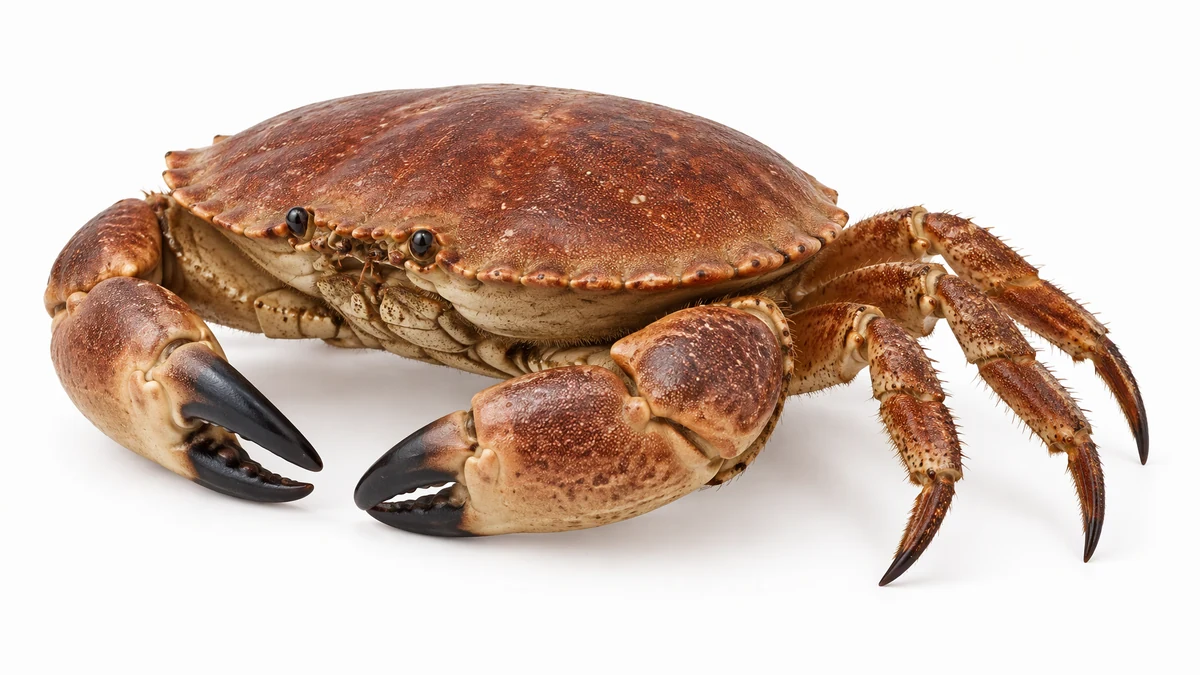
How to Catch Brown Crab
The brown crab, or edible crab, is the heavy-shelled prize of British inshore fishing. It is the crab behind dressed crab, crab sandwiches and bisque, and it is caught by two very different groups: potters working rocky ground from a boat, and families dropping baited nets off a pier. Learning how to catch brown crab means picking the method that fits your access, then learning the tide, the ground and a rulebook that changes around the UK coast. Read the full Brown Crab species profile for identification, range and biology; this guide is about catching them.
Best Time to Catch Brown Crab
The best time to catch brown crab is late spring through autumn, when the crabs are feeding hard and in peak condition. The UK fishery runs all year, so there is no hard closed season for males in most areas, but quality and landings follow the same pattern.
Spring wakes the fishery up as the water warms and crabs move out of their winter shelters to feed. Summer and early autumn are the peak: longer days, warmer water and heavy feeding before winter. Winter slows everything. Crabs are still catchable in deeper water, but the weather limits boat days and the catch is thinner.
The berried-hen calendar matters as much as the weather. Females carrying eggs are most common in winter and early spring, and those are the months when potters return the most females. If you are potting for the table, plan around late spring onward, when the females you release are fewer and the males are full.
Water temperature is the practical switch. Brown crab are most active between roughly 7 and 17°C, which covers most of the UK year, but feeding picks up noticeably once the water passes about 10°C in spring. Day to day, crabs feed mostly at night, so pots set overnight and hauled at first light tend to outperform pots checked at midday. Tides matter too: a spring tide with good movement carries scent and keeps crabs travelling, while slack water on a neap tide is slow.
Best Gear for Brown Crab
Brown crab gear splits into boat gear and shore gear, and both are simple.
| Gear | What it does |
|---|---|
| Pot or trap | The main boat method: a baited trap with funnel entrances, weighted and marked with a float |
| Pot line and float | Lets you set, haul and find the pot; marked with your details where required |
| Drop net | A flat net on a frame, lowered from a pier or harbour wall and lifted quickly |
| Hand line | A baited line you draw up slowly with a drop net underneath |
| Measuring gauge | Checks carapace width against the local minimum size |
| Gloves | The crusher claw is not a joke |
| Bucket, cooler and damp seaweed | Keeps the catch alive and cool on the way home |
For boat potting, an inkwell or parlour pot is the standard. Parlour pots have a compartment that keeps crabs away from the bait, which reduces cannibalism and losses. Weight the pot so it sits flat, and use a float line long enough for the biggest tide you expect, not the tide on the day.
Shore gear is cheaper. A drop net on a rope, baited with a fish head, lowered off a pier and lifted every few minutes catches crabs that come to investigate. It is a slow, social method and a good way to learn where crabs move. Check local byelaws before you set anything: many harbour authorities and IFCA districts regulate shore crabbing, and some require a permit for pots.
Best Bait for Brown Crab
The best bait for brown crab is fresh, oily fish. Fish heads, frames and carcasses are the classic choice, and mackerel, herring or squid all work. The crab is a shell-cracker that hunts by smell, so a bait that leaks oil and blood into the current does the job.
Whole or halved fish heads are the potter's standard because they are tough, cheap and stay in the pot. Fish frames from a fishmonger are excellent and often free. Squid is tougher still and useful in pots that will soak for several days. Some anglers use chicken carcasses, but fish is the more traditional and more reliable bait around the UK.
Presentation is simple: bait needs to be secured so crabs work at it rather than drag it out. Use a bait bag or tie the bait into the pot. Fresher is better, but frozen bait is fine if it is still oily; avoid bait that has been thawed and refrozen until it is pale and scentless.
For drop nets, a fish head tied to the centre of the net is all you need. Lower it, let it sit for a few minutes, then lift slowly and steadily. Crabs hold on to a good bait, so a smooth lift keeps them in the net.
Brown Crab Rigs
A brown crab rig is either a pot setup or a shore setup. These three cover most of the fishing.
The parlour pot rig. A weighted parlour pot on a length of sinking line, with a float and a marker at the surface. Bait the compartment, set the pot on rocky or mixed ground, and soak it over a tide or overnight. This is the most productive method and the one commercial potters use.
The drop-net rig. A baited drop net on a hand line, fished from a pier, harbour wall or rocks. Lower the net to the bottom, keep a little tension, and lift every few minutes. It is the classic family method and needs no boat.
The hand-line and net rig. A baited line lowered from a pier, drawn up slowly when you feel weight, with a dip net ready underneath. Crabs grip the bait, so the trick is steady tension all the way to the surface. It is slower than a drop net but catches wary crabs that ignore a flat net.
Whichever rig you use, set it where crabs naturally hunt: rocky crevices, ledges, mussel beds and mixed ground. A pot on clean sand will fish, but a pot beside a rock ledge fishes better.
How to Catch Brown Crab, Step by Step
- Check the rules for your area. Size limit, female rules, pot permits and tags differ between England, Scotland, Wales, Northern Ireland and individual IFCA districts.
- Pick the ground. Rocky, mixed or mussel ground in roughly 10 to 50 metres is ideal for pots. Look for structure on the sounder.
- Bait up properly. Fish heads or frames, tied in or bagged, so the crab has to work for it.
- Set on a tide you can handle. Set pots so they fish through a full tide, and use enough line for the biggest tide in the cycle.
- Soak overnight or over a tide. A 12 to 24 hour soak is typical; longer soaks suit parlour pots and tough bait.
- Haul gently. Bring the pot up steadily and have a bucket ready. Crabs that fall out at the surface are lost.
- Measure and sex every crab. Carapace width against the local minimum, males only where required, berried hens back.
- Keep the catch cool and alive. Damp seaweed, shade and a cool box. Never leave crabs in the sun.
Where to Catch Brown Crab
Brown crab live along the northeast Atlantic coast, from Norway and the British Isles south through France, Spain and Portugal to Morocco, plus the Mediterranean. The North Sea is the largest single production area, and the species is central to UK, Irish, French and Norwegian fisheries.
They favour coastal ground from about 15 to 650 feet, over rock, sand and mixed bottom. By day they shelter in crevices and under ledges; at night they move out to feed. That makes rocky structure and the edges of mussel beds the best targets.
Around the UK, the classic grounds are the rocky coasts of Devon and Cornwall, the Welsh coast, western Scotland and the Northern Isles, plus the southern North Sea. Potters work inshore reefs and offshore banks, often in 10 to 50 metres. Shore crabbers do best from piers and harbour walls with clean, hard bottom nearby and a bit of current to carry scent.
Females migrate to spawn, moving to deeper or offshore water and carrying their eggs for months. That is one reason the best female-free fishing is often inshore in late spring and summer, before the spawning migration.
Brown Crab Regulations and Safety
Brown crab rules vary across the UK and change with management decisions. As of 2025, the minimum size in England is 140 mm carapace width, measured across the widest part of the shell. Scotland, Wales and individual Inshore Fisheries and Conservation Authority districts can set their own minimums and byelaws, and some areas protect females entirely. Across Europe, each country sets its own minimum landing size.
Berried hens must be returned alive in UK waters, and a soft-shell crab that has just moulted should go back too. Many areas restrict the taking of all females. Pot and trap rules, tagging and effort limits apply, and recreational potters in some districts need a permit. Check with the Marine Management Organisation or your local IFCA in England, Marine Scotland in Scotland, the Welsh Government in Wales, and BIM or the SFPA in Ireland.
On safety, the brown crab is not venomous, but it is one of the more painful crabs to handle. The crusher claw can break a whelk shell and will do the same to a finger. Hold the crab from behind, gripping the rear of the carapace with the claws facing away, and wear a glove. A chilled crab is slower and safer to handle.
One food-safety note: the brown meat inside the shell can accumulate cadmium, and UK advice suggests regular eaters, and especially vulnerable groups, limit how much they eat. White claw and leg meat does not carry the same concern. Cook crabs thoroughly and keep them cold.
Common Mistakes and Brown Crab Fishing Tips
- Measuring by eye. A legal crab looks small until you put a gauge across it. Measure every one at the widest point.
- Keeping berried hens. Protected in UK waters and the future of the fishery. Check under the abdomen and put them back.
- Keeping soft-shells. A crab that has just moulted is watery and vulnerable. Return it.
- Setting on sand. Pots fish better on rock, mixed ground and mussel beds. Find structure.
- Too little line. A pot set for a neap tide will disappear under a spring tide. Allow for the biggest tide.
- Stale bait. Pale, washed-out bait stops drawing crabs. Fresher and oilier is better.
- Leaving crabs in the sun. Keep them cool, damp and shaded, and cook or chill them promptly.
- Ignoring local byelaws. Pot permits, tags and female rules change by district. Check before you set gear.
FAQ
What is the best time to catch brown crab? Late spring through autumn for peak condition and landings. The UK fishery runs year-round, but winter weather limits boat days and berried hens are most common in winter and early spring.
What bait for brown crab works best? Fresh oily fish: fish heads, frames and carcasses, plus mackerel, herring or squid. Secure it in the pot so crabs work at it instead of dragging it out.
What are the best brown crab fishing techniques from shore? A baited drop net off a pier or harbour wall, lifted slowly every few minutes, or a hand line with a dip net. Fish rocky ground with some current.
Do you need a licence to catch brown crabs in the UK? Recreational potting can need a permit or tag depending on the IFCA district, and shore crabbing is regulated by some harbour authorities. Check local byelaws before you fish.
How big must a brown crab be? 140 mm carapace width in England. Scotland, Wales and local districts can differ, and some areas protect females entirely.
How long should you soak a brown crab pot? Overnight or over a tide, roughly 12 to 24 hours, is typical. Parlour pots with tough bait can soak longer.
Related Articles
- How to Catch Snow Crab — the deep, cold-water trap fishery from the other side of the Atlantic.
- Snow Crab — the species profile behind that fishery.
- Dungeness Crab — the brown crab's Cancridae cousin on the Pacific coast.
- How to Catch Blue Crab — a lighter, faster crab and a good first pot.
- European Seabass — an inshore predator from the same UK coastline.
Learning how to catch brown crab is mostly about ground, bait and timing. Set a well-baited pot on rocky or mixed bottom, give it a tide, measure every crab against the 140 mm rule, and return the berried hens. Do that, and the reward is one of Europe's great eating crabs, dressed and on the plate the same day.
About the author and how this was tested
About the author
FishermanGuy
Bank, boat and kayak angler · fishing, crabbing and shrimping since 2021
I buy the gear, fish it for a season and write down what failed. No sponsored verdicts, no free-sample flattery. Every rig on this page has landed fish in water I can point at on a map.
How this was tested
- Every rig gets at least six trips on the same water before it is published.
- Gear is bought at retail. Free samples are labelled in the first paragraph.
- Dates show first publication and the last time the page was updated.