Field notes
How to Catch Snow Crab: Traps, Bait & Timing
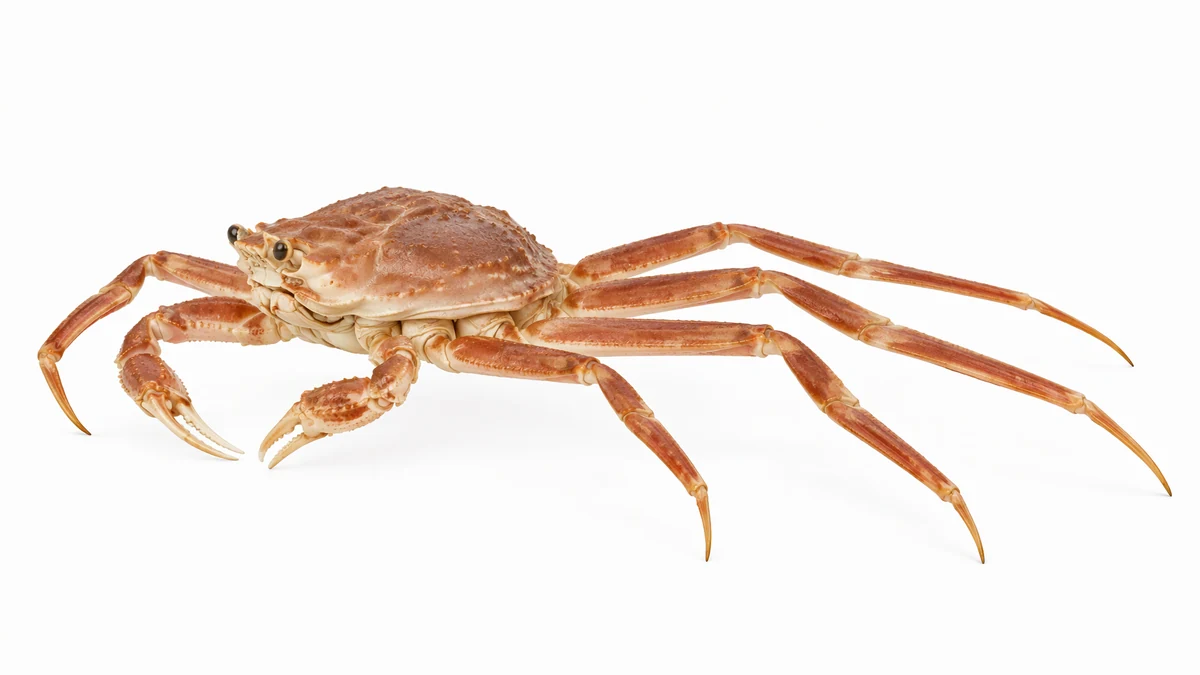
How to Catch Snow Crab
Snow crab is the animal behind those long, slender leg clusters on the seafood counter, and catching one yourself is a different game from chasing blue crabs off a dock. The species lives deep and cold, commonly a few hundred feet down at water temperatures near freezing, and almost every snow crab sold comes from a commercial trap fishery. Recreational access is narrow in Alaska and limited to specific openings in Atlantic Canada, so learning how to catch snow crab means learning the trap method properly and knowing the rules before you leave the wharf. Read the full Snow Crab species profile for identification, range and biology; this guide covers the catching side.
Best Time to Catch Snow Crab
The best time to catch snow crab is the cold half of the year, once the summer moult is finished and the males are carrying full meat. Biology sets the calendar more than any rulebook.
In the Bering Sea, the Alaska season has traditionally opened around October 15 and run into winter. In Atlantic Canada, seasons are set by zone and often fall in spring through summer. Both timetables exist for the same reason: the fishery wants hard-shell males after they have completed their terminal moult, the final shed after which a mature male never grows again. A "new-shell" male that has just finished that moult is packed with meat; an old-shell crab of the same width is often lighter and worth less. Fish after the moult, not during it.
Water temperature is the other cue. Snow crab stay active between roughly 30 and 39°F (−1 to 4°C), which is why this is a winter business and why weather, not the crab, usually decides whether you go. A forecast with 25-knot winds and freezing spray will shut down a small boat long before the crab stop feeding. The Bering Sea stock collapse that closed the 2022 Alaska season is a reminder that the season can change overnight; check ADF&G's current announcement rather than a calendar from last year.
Best Gear for Snow Crab
Snow crab gear is trap gear. There is no rod, reel, or hook in the picture, and that surprises people who come to it from other crab fisheries. You are setting a baited trap on the bottom, leaving it to soak, and hauling it back.
| Gear | What it does |
|---|---|
| Trap or pot | Holds the bait and the crabs; commercial pots are large conical or box frames with funnel entrances |
| Bait canister | Keeps oily bait secure so crabs pick at it instead of dragging it out |
| Sinking groundline | Connects a string of pots along the bottom |
| Buoy line and float | Marks the end of the string and lets you haul it |
| High-flyer | A tall marker flag with your licence number, set above the buoy |
| Hauler | Powered winch for lifting heavy pots from deep water |
| Sorting table and calipers | Lets you grade and measure quickly without handling crabs twice |
| Gloves and insulated hold | Protect your hands and keep the catch cold |
Commercial boats run strings of pots, often ten or more on a groundline, with a buoy and high-flyer at each end. A hauling winch is not optional in 200 feet of water; a pot full of crabs and wet line is heavy, and hauling by hand is how people get hurt.
Recreational gear follows the same logic at smaller scale: one or two pots on a sinking line, a single buoy, and a tag where the rules require one. In most jurisdictions there is no open recreational snow crab fishery at all, and where an opening exists it is tightly limited, so confirm with ADF&G or Fisheries and Oceans Canada before you buy gear. A trap you are not allowed to set is an expensive ornament.
Best Bait for Snow Crab
The best bait for snow crab is oily fish, and plenty of it. Herring, mackerel, squid, cod racks, and fish frames all work. The commercial fleet typically loads chopped or whole oily fish into a canister or mesh bag so the scent leaks out while the bait stays put.
Cold water is the reason bait quality matters so much here. Scent disperses slowly at 35°F, so a weak bait barely reaches the crab. Fresh, fatty fish that has not been repeatedly thawed and refrozen is worth the extra cost. Some crews brine bait to firm it up, and squid is often added because it stays on the hook and in the bag longer than soft fish.
Bait quantity beats any secret recipe. A fist-sized wad will fish for a day; a full canister will keep working through a multi-day soak. Change bait when it has washed out to white fibre with no smell left. On a typical cold-water soak of 24 to 72 hours, most boats rebait every set rather than gamble on a second soak with tired bait.
Snow Crab Rigs
A snow crab rig is a bottom trap setup, and three versions cover the fishery.
The single-pot rig. One trap, a three-point bridle to keep it level, a length of sinking line to the surface, a buoy, and a high-flyer above it. This is the simplest legal setup and the one a small boat can handle. Set it, mark the GPS position, and come back after a soak.
The string rig. Several pots spaced along a groundline, anchored at both ends and marked with a buoy and high-flyer at each end. This is how the commercial fleet fishes. The groundline must sink and stay clear of other gear, and spacing depends on the ground: tighter on a known crab lane, wider when prospecting.
The tagged personal-use rig. Where a limited recreational or personal-use opening exists, the setup is a single pot with the required tag and a buoy marked with the licence number. The tag is the licence; a pot without one is illegal gear.
Whichever rig you use, set it upwind and let the boat drift as the gear goes down, so the line lays out straight instead of tangling on itself. A rig that lands in a heap fishes poorly and hauls worse.
How to Catch Snow Crab, Step by Step
- Confirm the season, licence and tags. Rules change by area and by year. Do this before you fuel the boat, not at the launch ramp.
- Read the sounder for soft ground. Look for mud and mixed bottom in the right depth band. Hard rock and coral are poor crab ground and snag traps.
- Bait heavy and secure the canister. Load oily fish until the canister is full, and check the latch. A canister that pops open feeds the crabs for free.
- Set upwind and space the pots. Lay gear out along the contour rather than across it, and keep clear of other strings.
- Mark every set. Record GPS positions for each buoy. Gear that drifts in a blow is gear you will never find.
- Soak one to three days. In near-freezing water, a short soak undersells the pot. Give the scent time to work.
- Haul slowly and sort on deck. Bring the pot up steadily, empty it into a sorting tray, and get crabs out of the sun and wind fast.
- Measure, sex, and release. Measure carapace width with calipers, keep legal males only, and put females and shorts back immediately.
Where to Catch Snow Crab
Snow crab live on deep, soft ground across the cold North Pacific and North Atlantic. In the Pacific they range through the Bering Sea, the Sea of Okhotsk, and northern Japanese waters. In the Atlantic they occur off Greenland and Iceland, through the Gulf of St. Lawrence, Newfoundland, and the Scotian Shelf, and into the Barents Sea.
The depth range runs from about 65 to 2,600 feet, with the densest commercial concentrations in a few hundred feet. Crab gather on mud and mixed bottom where the cold water sits, so temperature is as good a guide as depth. A sounder shows the contour; a temperature profile tells you whether the cold layer is where you think it is.
This is not a shore fishery. The grounds sit miles offshore, the water is deep, and the weather turns fast. A seaworthy boat, a working radio, and a forecast you trust are part of the gear list. Small boats should pick their days and stay inside their range.
Snow Crab Regulations and Safety
Snow crab rules differ by country and shift with the stock. As of 2025, the Alaska Bering Sea fishery managed by ADF&G uses a minimum carapace width of about 78 mm, males only, under an individual fishing quota system. Canada's Department of Fisheries and Oceans sets minimum sizes by area, around 95 mm in many zones, along with trap limits and male-only rules. Norway and Russia manage Barents Sea crab under their own regimes.
Treat every number as a snapshot and confirm it with the agency before you fish: ADF&G in Alaska, DFO in Canada, and the national authority in Europe. The 2022 Bering Sea closure and the low quotas since show how quickly a season can disappear.
Safety is the part that kills people. Snow crab is fished in winter, on icy decks, in heavy weather. Wear a PFD or immersion suit, keep the deck clear of ice, and never stand in a bight of line while the hauler runs. Pots come up heavy and swing; crushed hands and knocked-down crew are common injuries. Stability matters too, because a stack of pots on the rail raises the centre of gravity. Go with an experienced skipper, watch the forecast, and treat a missed trip as cheaper than a bad one.
Common Mistakes and Snow Crab Fishing Tips
- Measuring the wrong thing. The limit is carapace width, not leg span. Calipers across the shell, every crab, every time.
- Keeping females. Mature females are protected throughout the fishery. Learn the wide abdomen and release them without debate.
- Chasing old-shell crabs. A big old-shell male can be lighter than a smaller new-shell one. Shell condition is part of the grade.
- Short soaks in cold water. Scent moves slowly near freezing. A few hours is not a soak; a day or more is.
- Weak or loose bait. Oily fish in a secure canister, or you are feeding the bottom.
- Setting on rock. Traps snag, crab avoid it, and gear is lost. Find the mud.
- Ignoring the weather window. The crab will still be there next week. The boat may not be.
- Letting the catch warm up. Ice or chilled seawater from the moment the pot comes aboard.
FAQ
What is the best time to catch snow crab? Late autumn through winter in Alaska, where the Bering Sea season has traditionally opened around October 15, and spring through summer by zone in Atlantic Canada. Fish after the summer moult, when new-shell males carry full meat.
What bait for snow crab works best? Oily fish: herring, mackerel, squid, cod racks and fish frames, packed into a bait canister. Fresh bait matters in near-freezing water because scent travels slowly.
What snow crab fishing techniques work in deep water? Baited traps set on soft bottom in a few hundred feet, soaked for one to three days, and hauled with a winch. Commercial boats fish strings of pots; small boats fish one or two.
Can you catch snow crab recreationally? In most areas, no. The fishery is commercial and quota-managed, and recreational access is very limited. Where an opening exists it needs a licence, tags, and strict size, sex and trap rules.
How deep do you set snow crab pots? Snow crab range from about 65 to 2,600 feet, with the best commercial concentrations in a few hundred feet over mud. Match the depth to where the cold water sits.
How long should you soak a snow crab pot? At least 24 hours in cold water, and two to three days is normal. Shorter soaks waste scent and undersell the gear.
Related Articles
- How to Catch Brown Crab — Europe's big edible crab, potted in much shallower water.
- Brown Crab — the species profile behind that fishery.
- Dungeness Crab — a Pacific cousin with the same male-only, minimum-size logic.
- Red King Crab — the giant snow crab is most often compared with.
- How to Catch Blue Crab — a far easier crab for a first pot.
Learning how to catch snow crab comes down to cold water, oily bait, and patience with the paperwork. Set a well-baited trap on soft ground, give it a proper soak, measure every crab across the carapace, and put the females back. Do that within the season and the quota, and a winter day on deep water can end with a cooler of the best crab the north has to offer.
About the author and how this was tested
About the author
FishermanGuy
Bank, boat and kayak angler · fishing, crabbing and shrimping since 2021
I buy the gear, fish it for a season and write down what failed. No sponsored verdicts, no free-sample flattery. Every rig on this page has landed fish in water I can point at on a map.
How this was tested
- Every rig gets at least six trips on the same water before it is published.
- Gear is bought at retail. Free samples are labelled in the first paragraph.
- Dates show first publication and the last time the page was updated.