Field notes
How to Catch Smelt: Night Runs, Tiny Rigs and a Lamp
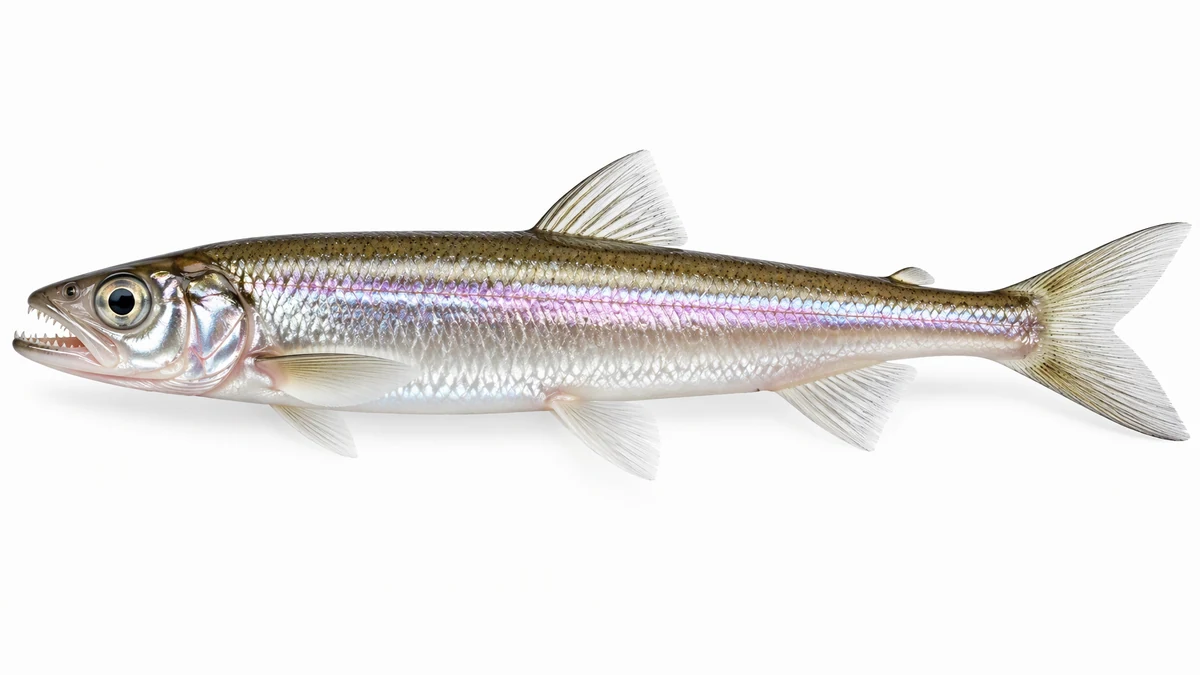
How to Catch Smelt
Smelt is a small fish with a short season and a devoted following. For a few weeks in late winter and spring, shoals of slender silver fish push up estuaries and rivers to spawn, and coastal families have fished them at night with lamps and nets for generations. Learning how to catch smelt is less about casting skill and more about timing, light and local rules: find the run, fish after dark, and keep everything small. Read the full Smelt species profile for identification, range and biology.
Best Time to Catch Smelt
Smelt are cold-water fish, comfortable between roughly 5 and 15°C. The European smelt lives in coastal water and estuaries as an adult and runs up rivers to spawn, and that run is the whole basis of the fishing.
The best time to catch smelt is late winter through spring, roughly February to May depending on latitude and water temperature, on the rising tide after dark. Fish gather at river mouths and wait for the right conditions, then push upstream in shoals. A dark, mild night with a flooding tide is as good as it gets.
The run does not happen on a fixed date. It follows water temperature and tide, and local anglers track it year by year. A cold late winter pushes the run back; a mild spell brings it forward. Watch river levels, water temperature and the local reports rather than the calendar.
Time of night matters. Smelt move under cover of darkness, and the busiest hours are usually the first few after dusk and the period around high water. On a bright moonlit night the fish may hold deeper or run later.
After spawning, adults drop back downstream to estuaries and coastal water, and the fishing fades. Summer smelt are still there, but they are dispersed, deeper and far less catchable from the bank.
Rain and river flow change everything. A spate can bring a run on or shut it down, and a clean, steady river is easier to fish than a flooded one. Check the gauge before you drive.
Best Gear for Smelt
Smelt gear is the lightest in sea fishing. The fish are 10–20 cm, the baits are tiny, and a heavy rod is worse than useless.
| Component | Smelt-ready choice |
|---|---|
| Rod | 7–9 ft light spinning rod, 2–8 lb class; or a long whip from a pier |
| Reel | 1000–2500 size fixed spool |
| Main line | 4–8 lb mono or 0.06–0.10 mm braid |
| Hook | Size 8–12, fine wire, or a tiny sabiki |
| Weight | 1/8–1/2 oz, just enough to hold in the tide |
| Lights | Headtorch plus a lamp or float light over the water |
| Extras | Bucket, dip net, cool bag, towel, spare rigs |
A light rod with a soft tip lets you feel a smelt take a bait it can barely swallow. A stiff rod bounces the bait out of its mouth.
The line should be fine. Smelt are line-shy in clear water, and 4–6 lb mono casts a tiny bait better than 15 lb braid. On a pier or wall, a long whip or a light float rod is ideal.
The lamp is the most important piece of kit. Smelt orient to light, and a lamp over the water draws plankton, which draws the fish. A headtorch alone is not enough; you want a light source you can leave hanging just above the surface.
Carry a dip net even if you plan to fish rod and line. Where netting is legal, it is far more effective than a hook on a busy run, and it is the traditional method in much of Europe.
Keep a bucket of clean water and a cool bag. Smelt are delicate and spoil quickly.
Best Bait for Smelt
The best bait for smelt is tiny. A sliver of worm, a scrap of fish, or a single maggot on a size 10 hook will catch them, and a small sabiki with luminous beads or tiny flies will catch several at once.
- Worm sliver. A 1 cm piece of ragworm or lugworm threaded on a fine hook. Enough scent to attract, small enough to swallow.
- Fish scrap. A sliver of mackerel, herring or smelt belly. Oily and tough.
- Maggot. A single maggot is a classic freshwater-style bait and works well in estuaries.
- Small shrimp. A tiny piece of shrimp or prawn matches the natural diet.
- Sabiki flies. Tiny feathered or luminous hooks, fished under the lamp, are the volume method.
What bait for smelt works best depends on the water. In a coloured estuary, scent matters and a worm or fish sliver is better. In clear water under a lamp, a tiny fly or a luminous bead draws a reaction strike.
Lures are a minor part of European smelt fishing, but a small jig or a tiny spoon will take fish when they are aggressive. In North America, ice fishing with tiny jigs and spikes is the classic approach for rainbow smelt, and the same principle applies: small, bright and slow.
Keep the bait fresh and the hook sharp. A smelt has a large mouth for its size, but the bait still needs to look edible.
Smelt Rigs
The smelt rig is a light rig for small fish, and it should be tied on fine line with small hooks.
Sabiki rig under a lamp (the volume rig).
- Tie 4–6 lb mono or light braid to a snap swivel.
- Clip on a small sabiki with four to six size 10–12 hooks on short droppers.
- Add a 1/8–1/4 oz weight to the bottom.
- Hang a lamp just above the water and lower the rig into the lit column.
- Lift and drop slowly, and swing fish into a bucket as they come.
The lamp is the rig's engine. Fish gather in the light, and the sabiki fishes the whole lit column rather than one depth.
Single hook under a float. For rod-and-line fishing, thread a small float above a 1–2 ft hooklength, add a size 10 hook and a worm sliver, and let it drift in the current. A float shows the take and keeps the bait at a set depth.
Bottom rig for a running tide. Where the flow is strong, use a small running ledger: a 1/4–1/2 oz lead on the main line above a swivel, a 1 ft hooklength and a size 10 hook. It keeps the bait down in the flow where smelt travel.
Tie several spare rigs before dark. Smelt fishing happens in a hurry, and retying in the dark wastes the run.
How to Catch Smelt, Step by Step
- Find the run. River mouths, estuary channels, pier lights and the first riffles above the tide are the classic spots.
- Set up before dark. Rig the rod, fill the bucket, and hang the lamp while you can still see.
- Fish the light. Lower the rig into the lit water, or cast just beyond it and work the bait back through.
- Keep it small and slow. Tiny baits, slow lifts, and short pauses. Smelt are not fast chasers in cold water.
- Watch for the tap. A smelt take is a quick vibration or a float dipping under. Strike fast.
- Swing, do not lift. Most smelt can be swung straight into the bucket on a light rod.
- Handle gently. Smelt are delicate; unhook over the bucket and drop them in.
- Keep them cool. Into a cool bag with ice as soon as the bucket fills.
- Respect the run. Take what you will eat, release the rest, and stop when the fishing slows.
Netting is a different technique. Work a dip net slowly through the lit water or along the edge of the channel, lift it steadily, and empty it into the bucket. On a busy run, one good sweep can fill a meal. Never net a river that is closed, and never net more than you will use.
From a pier, the sequence is simpler: hang a lamp, drop a sabiki, and lift steadily. The fish do the rest.
Timing is everything. The run can last an hour or a night, and the best fishing often happens in a short window around high water. Be ready before it starts.
Where to Catch Smelt
Where to catch smelt is cold, clean coastal water and the rivers that feed it. The European smelt lives along the north-east Atlantic coasts, from Iceland and Norway down through the North Sea, the British Isles, the Channel and the Atlantic coast of France. It is common in the Baltic and its estuaries, and there are landlocked populations in lakes across northern Europe.
- River mouths and estuary channels. The gathering point before the run.
- The first riffles above the tide. Smelt push into shallow, gravelly water to spawn.
- Pier lights and harbour lamps. Fish gather in the lit water after dark.
- Shallow gravel bars. Adhesive eggs are laid on gravel, stones and plants, and fish hold nearby.
- Lakes with landlocked populations. Some smelt never see the sea and spawn at lake margins or in inflowing streams.
Smelt are sensitive to pollution, barriers and low oxygen, and many river populations have declined where rivers have been straightened, dammed or polluted. That makes local knowledge essential: the run on one river may be strong while the next is dead.
Fish where the current is clean and steady, and avoid spots below industrial outfalls or in stagnant water.
Smelt Regulations and Safety
Smelt rules are local, and they matter. In parts of Europe, smelt are protected or subject to closed seasons, especially in rivers where populations are fragile. In the Baltic and some estuaries, smelt support commercial and recreational fisheries with their own rules on gear, season and size. In the UK, smelt are a species of conservation concern in some rivers, and local bylaws can restrict netting.
As of 2025, check with the relevant national or regional fisheries authority before you fish. Netting rules in particular vary from river to river, and a legal net in one estuary can be illegal in the next. Last verified: November 2025.
The first safety issue is freshness. Smelt spoil quickly, and a fish that has been dead too long loses its cucumber smell and turns soft. Eat them the day you catch them or freeze them promptly. Freshwater and estuarine fish can carry parasites, so cook smelt rather than eating them raw.
The second is the water. Smelt are caught at night, on slippery banks, often in cold weather and rising tides. A headtorch, a companion and a life jacket near deep water matter more than any fish. Dip-netting from a wet rock at two in the morning is exactly the situation where people fall in.
Keep your footing, fish with someone else, and never stand on a structure you have not tested. Cold water and dark water are a bad combination.
Common Mistakes and Smelt Fishing Tips
- Fishing in daylight. Smelt run at night. A lamp and a late start beat an early one.
- Baits too big. A smelt has a small stomach. Use a 1 cm sliver, not a whole worm.
- Heavy line. Fine line casts tiny baits and fools shy fish.
- Ignoring the tide. The run follows the flood. Fish the rise, not the ebb.
- No lamp. Light is the attractor. Without it, you are fishing blind.
- Warm storage. Smelt soften fast. Ice them immediately.
- Netting illegally. Check the bylaws before you unpack a net.
- Over-harvesting. Take a meal, not a bucketful you will throw away.
A few smelt fishing tips: hang the lamp low and close to the water so the lit column is tight; fish the edge of the light rather than the brightest centre; and keep a spare sabiki rigged in case a tangle costs you time.
If the fish are there but not biting, change the depth before you change the bait. Smelt often hold a foot or two above the bottom, and a rig lowered too deep misses them.
Finally, smelt is one of the best small fish to eat. Fried whole in seasoned flour, the bones soften and the whole fish disappears. That is the reward for a cold night on a dark river.
FAQ
What is the best time to catch smelt? Late winter to spring, February to May, on the rising tide after dark. Water between 5 and 15°C and a dark, mild night are ideal.
What bait for smelt should I use? A 1 cm sliver of worm, a scrap of fish or a single maggot on a size 10 hook. A tiny sabiki with luminous beads is the volume method.
What are the best smelt fishing techniques? Fish at night under a lamp, keep the bait tiny and slow, and strike the quick tap. Where legal, a dip net is more effective than a rod.
What is the best smelt rig? A four- to six-hook sabiki with size 10–12 hooks and a 1/8–1/4 oz weight, fished under a lamp. A float rig works when the current is slow.
Where can you catch smelt? In river mouths, estuary channels and the first riffles above the tide, along cold north-east Atlantic coasts, the Baltic and landlocked lakes.
How should you cook smelt? Fried whole in seasoned flour or batter is classic; the small bones soften, so the fish can be eaten head to tail.
Related Articles
- How to Catch Mackerel — a fast school fish that shares the same cold coasts.
- How to Catch Taimen — a predator from the northern rivers where small fish matter.
- How to Catch Whiting — a winter fish for anglers who like a cold night out.
- Smelt species profile — identification, habitat, diet and spawning.
- All species profiles
Smelt is a small fish with a big tradition. Find the run, hang a lamp, and keep the bait tiny. That is how to catch smelt, and why a cold spring night on an estuary still fills buckets and dinner plates after generations of fishing.
About the author and how this was tested
About the author
FishermanGuy
Bank, boat and kayak angler · fishing, crabbing and shrimping since 2021
I buy the gear, fish it for a season and write down what failed. No sponsored verdicts, no free-sample flattery. Every rig on this page has landed fish in water I can point at on a map.
How this was tested
- Every rig gets at least six trips on the same water before it is published.
- Gear is bought at retail. Free samples are labelled in the first paragraph.
- Dates show first publication and the last time the page was updated.