Field notes
How to Catch Taimen: Big Flies, Deep Pools and Patience
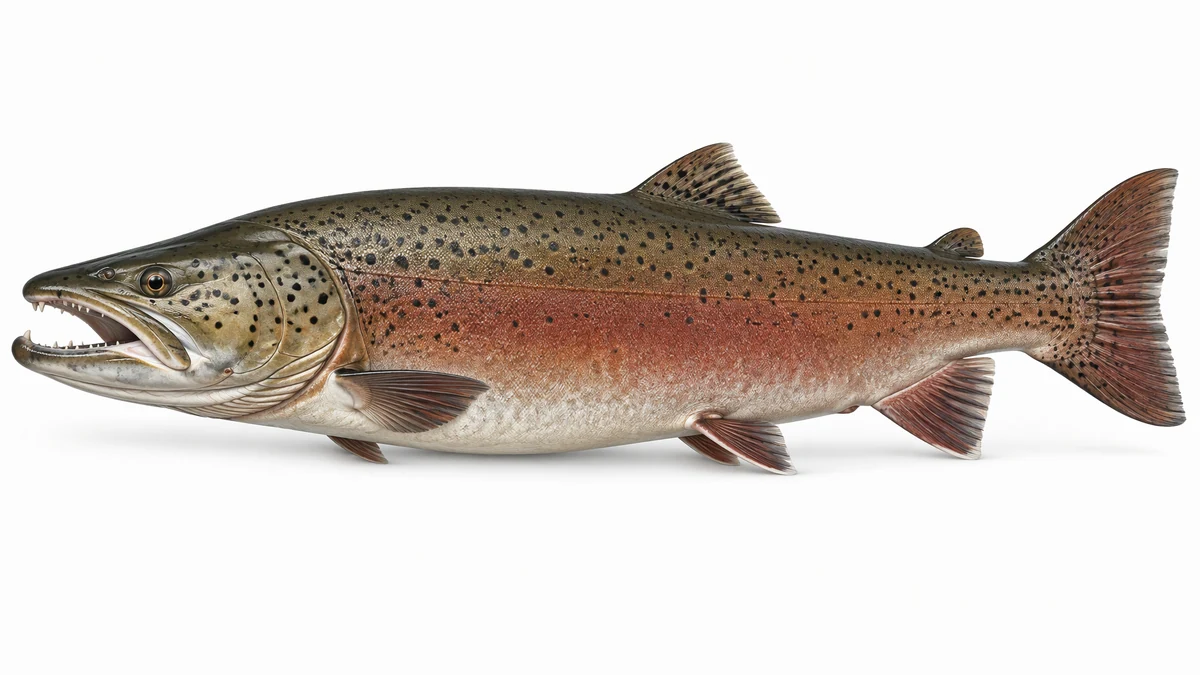
How to Catch Taimen
Taimen is the fish that makes a long trip worth it. It is the largest salmonid that spends its whole life in fresh water, a metre-long ambush predator with a pike's temper and a trout's shoulders, and it lives in some of the wildest rivers left in Asia. Learning how to catch taimen is mostly a lesson in water reading, patience and restraint: find the deep pool, fish it slowly, and put the fish back. Read the full Taimen species profile for identification, range and biology.
Best Time to Catch Taimen
Taimen live in cold, fast, oxygen-rich rivers and connected lakes. They are comfortable between roughly 8 and 18°C, and they seek out the coldest water they can find when a river warms in summer. That single fact shapes the whole season.
The best time to catch taimen is shortly after ice-out in spring, and again in autumn before the rivers freeze. In spring, the fish are hungry after winter and moving toward spawning tributaries. In autumn, they feed hard before the cold sets in, and the biggest fish of the year often come in September and early October.
Summer is the hard season. When water temperatures climb toward the top of the range, taimen push upstream into spring-fed pockets or drop into the deepest, most oxygenated pools, and they become very difficult to tempt. Fishing early and late in the day, or waiting for a cold snap, is more productive than grinding through the heat of midday.
Time of day matters. Taimen are ambush predators that also patrol, and the low light of dawn and dusk brings them out of the deepest lies and up toward the surface. A mouse pattern fished at last light is a classic for a reason.
Water clarity and level decide the details. A rising, coloured river after rain can switch the fishing on; a low, clear, warm river can shut it down.
Best Gear for Taimen
Taimen gear has one job: turn a very big, very strong fish away from a snag in a fast current. Light tackle is not noble here. It is a way to lose fish and exhaust them to the point of harm.
| Component | Taimen-ready choice |
|---|---|
| Rod | 9 ft, 9–10 wt fly rod, or 7–8 ft heavy conventional rod, 20–30 lb class |
| Reel | Large-arbor fly reel with a strong drag, or a 5000–8000 size fixed spool |
| Main line | Weight-forward floating or sink-tip fly line; 40–50 lb braid on conventional |
| Leader | 3–4 ft of 30–40 lb mono or fluoro, or a wire bite trace on conventional |
| Lures | 15–25 cm streamers, mouse patterns, big plugs, spoons, swimbaits |
| Hooks | Strong, heavy-gauge, barbless where required |
| Extras | Large rubber-mesh net, long-nose pliers, hook-out, wading belt, staff |
The fly rod is the traditional tool, and a 9 or 10 weight with a sink-tip line covers most taimen water. You need enough backbone to cast a 20 cm streamer into wind and enough butt section to lift a big fish out of a current.
On conventional tackle, a heavy baitcasting or spinning rod rated for 20–30 lb is the minimum. A 40–50 lb braid main line, a short 30–40 lb leader and, where toothy fish are likely, a light wire trace complete the setup.
Wading kit is safety kit. A belt and a staff matter more than any lure on a remote Siberian river.
Best Bait for Taimen
The best bait for taimen is a big meal, presented where a big fish expects it. Taimen eat fish first, and large adults add rodents, frogs and ducklings. Match that.
- Streamers. A 15–25 cm streamer in black, olive or white is the core fly. Articulated patterns with a wide, slow action work in cold water.
- Mouse patterns. Foam or deer-hair mice fished at dusk are the classic surface take. A bow wave and a boil is the whole point.
- Plugs and swimbaits. Big minnow plugs, jointed swimbaits and 20 cm soft plastics cover water faster than a fly and suit conventional tackle.
- Spoons and spinners. Large, heavy spoons and spinners work in deep, fast pools where a floating line cannot reach.
- Natural bait. Where legal, a large dead fish or a bunch of worms will catch taimen, but in most of the range natural bait is restricted or banned.
What bait for taimen works best depends on the water. In a deep pool under a rapid, a heavy spoon or a sinking swimbait gets down to the fish. On a long glide at dusk, a mouse or a waking streamer is better.
Size is not a problem. A 20 cm lure is not too big for a metre-long taimen. Small lures catch small fish, and small taimen are not why anyone travels to these rivers.
Keep the lure natural in action. Taimen are used to prey that moves with the current, wounded or struggling. A lure that swings, pauses and flutters looks right; one that spins constantly looks wrong.
Taimen Rigs
The taimen rig is built around the swing. The fly or lure should cross the lie broadside, moving with the current, so a fish holding in the pool sees it coming.
Swung streamer (the standard fly rig).
- Attach a weight-forward floating or sink-tip line to 100 yards of backing on a strong reel.
- Tie a 3–4 ft leader of 30–40 lb mono or fluoro.
- Add a 15–25 cm streamer on a strong, heavy-gauge hook, barbless where required.
- Cast across and slightly downstream, mend the line upstream, and let the streamer swing through the lie.
- Follow the swing with the rod tip, and hold on at the end of it, where the fly straightens and rises.
The end of the swing is where most taimen take. The fly speeds up and rises as the line comes tight, and a fish that has followed it across the pool commits.
Heavy swimbait or plug rig. On conventional tackle, tie 40–50 lb braid to a 30–40 lb leader with a snap. Clip on a 20 cm jointed swimbait or a big minnow plug. Cast uptide, let it sink, and retrieve slowly with a wide side-to-side action, ticking the lure along the edge of the deep water.
Spoon or spinner rig. For deep, fast pools, add a heavy spoon or a large spinner on a short leader. Cast across the current, let it swing down and around, and retrieve just fast enough to keep the blade turning.
Whatever the rig, keep the connection strong. Taimen live in snaggy water, and a fish that reaches a boulder or an undercut bank will cut a light leader.
How to Catch Taimen, Step by Step
- Read the river. Look for deep pools below rapids, undercut banks, boulders and the tail of long glides. Big taimen hold in the same lie for years.
- Approach quietly. Fish close water first, from a low angle, and keep the rod low. A taimen in a clear pool sees everything.
- Cover the lie properly. Cast across the current, mend, and let the fly or lure swing through the whole holding area, not just the middle.
- Fish it slowly. Taimen are ambush predators in cold water. A slow, broadside presentation beats a fast retrieve.
- Watch the end of the swing. The take often comes as the lure straightens and rises. Do not lift early.
- Set the hook hard. Taimen have bony mouths. A firm, sweeping strike drives a heavy hook home.
- Keep the rod bent. A big taimen will run, jump and head for structure. Apply steady side pressure and turn it before it reaches the snag.
- Land it fast. A long fight exhausts a fish that may be 20 years old. Use the net, keep the fish in the water, and do not lift it by the jaw.
- Release it carefully. Keep it wet, support the body horizontally, remove the hook with pliers, and hold it facing the current until it swims away.
The most common failure is rushing the water. Anglers who cover a pool in five minutes catch far fewer fish than those who fish it slowly, with a pause at the end of every swing.
At dusk, switch to a surface pattern and fish it slowly across the pool. The take is often a bow wave rather than a splash, and striking too soon pulls the fly away from a fish that has not closed its mouth yet.
Where to Catch Taimen
Where to catch taimen is the cold, clean, fast water of northern Asia. The species ranges across the great Siberian systems, including the Yenisei, Lena and Amur, into Mongolia's Eg and Delger Moron rivers, parts of Kazakhstan, the Russian Far East, and north-eastern China, including the Irtysh system in Xinjiang and the upper Heilongjiang.
- Deep pools below rapids. The classic taimen lie. The pool gives depth, oxygen and a conveyor belt of food.
- Undercut banks. Big fish sit tight to the bank, out of the current, waiting to ambush.
- Boulder fields. Structure breaks the flow and creates holding pockets.
- Pool tails. Where a deep pool shallows into a riffle, food funnels past a waiting fish.
- Connected lakes. Big taimen use lakes linked to rivers, and a fish rolling at the surface in still water is a sight worth the trip.
Within a river, the biggest fish are territorial and may hold the same pool for years.
Access is the real constraint. Taimen rivers are remote, often reached by helicopter, raft or long drive, and many are strictly protected. Fish with a licensed operator who knows the local rules, and expect to travel a long way for a few chances.
Taimen Regulations and Safety
Taimen regulations are stricter than for almost any fish in this series, and they matter more. The species is listed as Vulnerable on the IUCN Red List and is protected or tightly managed across its range. In Mongolia, sport fisheries are largely catch-and-release with barbless hooks. In Russia and China, taimen are protected and angling is restricted or prohibited in many waters.
As of 2025, check the exact rules for the country and river before you travel. Rules change, enforcement varies, and a taimen on the bank can be a legal problem as well as an ecological one. Fish with a licensed guide, use barbless hooks where required, and assume every fish must be released unless you have written confirmation otherwise. Last verified: November 2025.
The conservation logic is simple. Taimen mature late, often at five to seven years, they may not spawn every year, and they can live 20 to 30 years. A population recovers slowly.
Handling is a safety issue too. Taimen teeth are large, sharp and present on the jaws, the roof of the mouth and the tongue, and a big fish shaking its head beside a boat can open a hand. Never put fingers near the mouth of an unhooked fish. Use long-nose pliers and a hook-out, support the body horizontally, and keep the fish in the water.
The environment is the bigger hazard. Taimen rivers are remote, cold, fast and far from help. Wading a heavy current in a Siberian spring is a serious undertaking. Wear a wading belt, carry a staff, fish with a partner, and treat a fall in 8°C water as a survival problem.
Common Mistakes and Taimen Fishing Tips
- Rushing the pool. Fish the lie thoroughly. Taimen do not chase far.
- Lure too small. Big fish eat big meals. A 10 cm lure is a trout lure.
- Fishing midday in summer. Warm water pushes fish deep and sulky. Fish early, late and in cold snaps.
- Light leader. Taimen live in snags. 30–40 lb is a starting point.
- Lifting by the jaw. It damages the fish. Support the body horizontally.
- Keeping a fish. In most of the range, it is illegal and always wrong.
- Ignoring the swing. The take often comes at the end. Fish it out.
- No release plan. Wet mat, pliers, net and a plan before the fish is landed.
A few taimen fishing tips from the water: fish the shady side of a pool first; change the angle of the swing before you change the fly; and if a fish follows without taking, rest the pool for ten minutes and try a smaller or darker pattern.
Watch the birds and the surface. A taimen rolling or slashing at baitfish shows where fish are holding, and a mouse take at dusk is worth waiting for.
Finally, treat every taimen as a breeding adult. Measure it in the water, photograph it quickly, and release it well. The fish is worth more in the river than on a wall.
FAQ
What is the best time to catch taimen? Shortly after ice-out in spring and again in autumn, in water between about 8 and 18°C. Dawn and dusk are best, and summer heat shuts the fishing down.
What bait for taimen works best? Large streamers, mouse patterns and 15–25 cm swimbaits or plugs. Match the size of the local forage; a 20 cm lure is not too big.
What are the best taimen fishing techniques? Read the pool, cast across the current, and swing the fly or lure slowly through the lie. The take often comes at the end of the swing.
What is the best taimen rig? A 9–10 wt fly rod with a sink-tip line, a 3–4 ft leader of 30–40 lb and a 15–25 cm streamer. On conventional tackle, 40–50 lb braid and a 20 cm swimbait.
Where can you catch taimen? In cold, fast rivers across northern Asia: Siberia, Mongolia, Kazakhstan, the Russian Far East and north-eastern China. Access is usually remote and guided.
Can you keep a taimen? Almost never. The species is Vulnerable and protected or managed as catch-and-release across most of its range. Check the rules before you travel.
Related Articles
- How to Catch Smelt — a cold-water forage fish from the same northern rivers.
- How to Catch Mackerel — a saltwater change of pace for river anglers.
- How to Catch Brown Trout — a salmonid of a very different size and habit.
- How to Catch Arctic Grayling — another cold-river species that shares taimen water.
- Taimen species profile — identification, habitat, diet and records.
- All species profiles
Taimen is a fish of wild water and patience. Find the deep pool, swing a big fly through it slowly, and put the fish back. That is how to catch taimen, and why the anglers who do it properly come home with a photograph and a story rather than a trophy.
About the author and how this was tested
About the author
FishermanGuy
Bank, boat and kayak angler · fishing, crabbing and shrimping since 2021
I buy the gear, fish it for a season and write down what failed. No sponsored verdicts, no free-sample flattery. Every rig on this page has landed fish in water I can point at on a map.
How this was tested
- Every rig gets at least six trips on the same water before it is published.
- Gear is bought at retail. Free samples are labelled in the first paragraph.
- Dates show first publication and the last time the page was updated.