Field notes
Taimen: Identification, Habitat & Diet
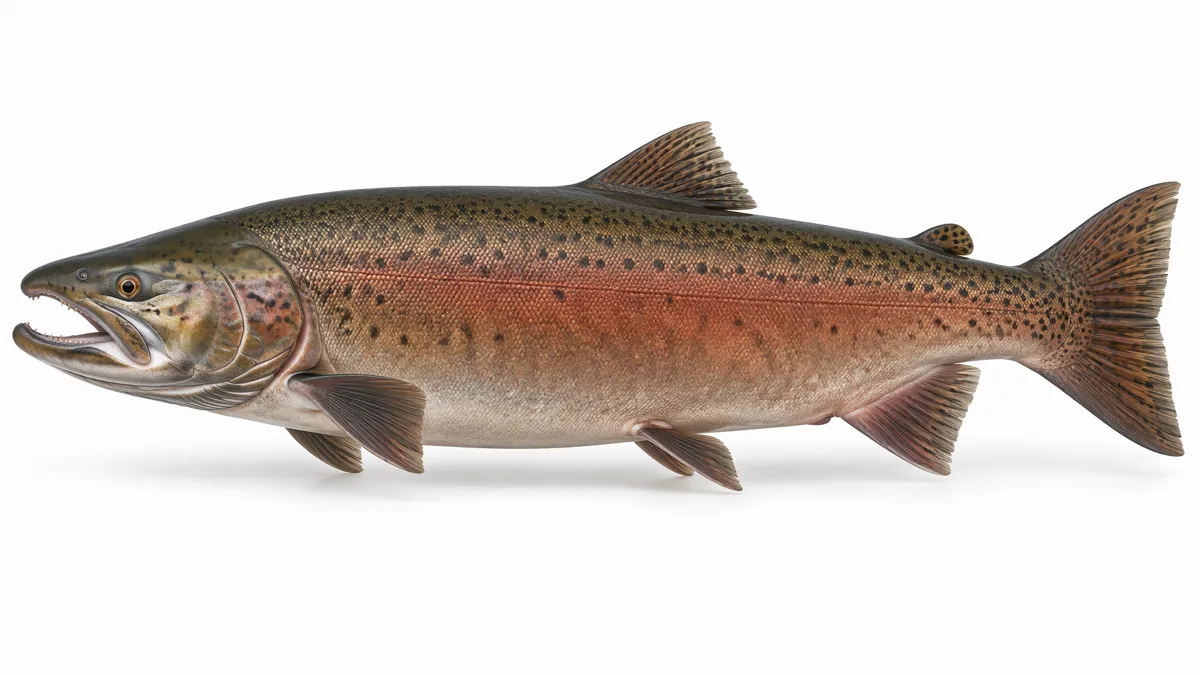
Taimen: Identification, Habitat & Diet
The taimen is the largest salmonid that lives entirely in fresh water, and it carries the kind of reputation that makes grown anglers whisper. A metre-long fish that eats mice, ducks, and other fish, holds in the deepest pool of a cold Siberian river, and fights like something from another era. It is also rare, slow-growing, and protected across much of its range, so the modern taimen is a catch-and-release fish first and a trophy second. This profile covers taimen identification, habitat, diet, size, records, how it differs from salmon, and how to catch one responsibly.
Quick ID Card
| Field | Details |
|---|---|
| Scientific name | Hucho taimen |
| Common names | Taimen, Siberian taimen, taimen salmon, "big red fish" in parts of China |
| Family | Salmonidae (salmon, trout and char) |
| Typical size | 28–40 inches (70–100 cm); 7–20 lb (3–9 kg) |
| Maximum size | Over 5 ft (1.5 m) and 40–45 kg (90–100 lb); giants near 2 m are reported but exceptional |
| Water type | Cold, fast, oxygen-rich fresh water; rivers and connected lakes |
| Depth range | Surface to deep pools, often 2–10 m |
| Active water temperature | Roughly 46–64°F (8–18°C) |
| Difficulty | Hard to find, hard to hook, very hard to land |
| Best season | Shortly after ice-out in spring, and again in autumn |
How to Identify a Taimen
Taimen identification starts with the head. A taimen has a long, slightly flattened head, a big mouth that extends well past the eye, and teeth that are large enough to see clearly. The lower jaw is heavy and often hooked upward in older fish. The body is elongated and muscular, more pike-like than a typical trout, and the tail is broad and slightly forked.
Colour varies with water and age. Young fish are silvery with dark parr marks. Adults tend to be olive-green or bronze on the back, fading to a reddish-copper or yellowish flank, with a pale belly. Small dark spots are scattered over the body, and the fins can be reddish or grey. There is a small adipose fin on the back near the tail, a signature of the salmon family.
The combination that matters is this: a salmonid shape, a very large mouth, strong teeth, and a size that quickly leaves trout behind. A 30-inch fish is a young taimen; a 40-inch fish is a good one; anything over a metre is a fish of a lifetime.
Taimen vs Salmon and Trout
Taimen belong to the same family as salmon and trout, which is exactly why people mix them up. The differences are behavioural as much as physical.
| Feature | Taimen | Atlantic or Pacific salmon |
|---|---|---|
| Sea-run behaviour | Stays in fresh water | Migrates to sea and back to spawn |
| Body shape | Elongated, pike-like, huge mouth | More streamlined, smaller mouth |
| Typical size | 70–120 cm, up to 40 kg+ | Species-dependent, usually smaller |
| Teeth | Large and obvious | Smaller, less prominent |
| Diet | Fish, rodents, birds | Fish, squid, crustaceans at sea |
| Spawning | Spring, in rivers | Autumn or spring, depending on species |
The closest confusion in Europe is with the huchen or Danube salmon (Hucho hucho), a separate species restricted to the Danube basin. The taimen is the Siberian and Amur relative, with a wider range across northern Asia. In Asia, taimen are also confused with lenok (Brachymystax), which are smaller, more trout-like, and lack the huge mouth and heavy teeth of a mature taimen.
One practical rule: if the fish has the shoulders of a trout but the head and teeth of a small pike, and it came from a cold river in Siberia, Mongolia, or northern China, you are probably looking at a taimen.
Is the Taimen Dangerous?
Taimen are not venomous, but they are one of the few freshwater fish that can genuinely hurt an angler. The teeth are large, sharp, and present on the jaws, the roof of the mouth, and the tongue. A big taimen shaking its head beside a boat or on a gravel bar can open a hand or a forearm.
Handle them with respect. Use a large rubber-mesh net, keep the fish in the water where possible, and support the body horizontally rather than lifting by the jaw. Never put fingers near the mouth of an unhooked fish. Long-nose pliers and a proper hook-out tool are basic kit, not luxuries.
The environment is the bigger hazard. Taimen rivers are remote, cold, fast, and often far from help. Wading a heavy current in a Siberian spring is a serious undertaking: wear a wading belt, carry a wading staff, and fish with a partner. A fall in 8°C water is a survival problem, not an inconvenience. Add the remoteness of the places where taimen live, and the margin for error is thin.
Where Do Taimen Live?
Taimen habitat is cold, clean, fast-flowing water. The species ranges across northern Asia: the great Siberian river systems such as the Yenisei, Lena, and Amur; Mongolia's Eg and Delger Moron rivers; parts of Kazakhstan; the Russian Far East; and northeastern China, including the Irtysh system in Xinjiang and the upper Heilongjiang (Amur). The fish in the knowledge base for this profile come from exactly those Chinese waters, where taimen are rare and strictly protected.
Within a river, taimen are creatures of structure and depth. They hold in deep pools below rapids, along undercut banks, behind boulders, and at the tail of long glides where food is funnelled toward them. Big fish are territorial and may occupy the same pool for years. They also use large lakes connected to rivers, which is how the old stories of lake monsters grew up: a 1.5-metre taimen rolling at the surface is enough to start a legend.
Water temperature sets the map. Taimen are comfortable between about 8 and 18°C, and they seek out the coldest, most oxygen-rich water in summer. When a river warms, the fish move upstream or into spring-fed pockets. In winter, they drop into deep holding pools and become very hard to catch.
Habits and Diet: What Do Taimen Eat?
What do taimen eat? Almost anything with a pulse, and quite a lot that once had one. The core diet is fish: lenok, grayling, dace, chub, juvenile salmonids, and smaller taimen. Large adults add rodents, frogs, ducklings, and other water birds. A taimen's mouth is built to engulf prey, and the teeth are built to hold it.
Taimen are ambush predators with a wandering streak. They hold in a lie, wait for food to come to them, and then strike with explosive speed. But they also patrol, especially at dawn and dusk, and they will rise to the surface to take a mouse or a struggling fish. That surface take is the moment fly anglers dream about: a bow wave, a boil, and a heavy fish turning away with the fly.
When do taimen spawn? Spawning happens in spring, usually after ice-out, when adults move upstream into smaller tributaries and gravel riffles. The female cuts a redd in the gravel, the eggs are buried, and the adults drop back downstream. Taimen mature late, often at five to seven years, and they do not necessarily spawn every year. They are long-lived fish, with individuals reaching 20 to 30 years or more, which is one reason populations recover so slowly from pressure.
Size, Records and Regulations
How big do taimen get? Most adult fish run 70 to 100 cm and 3 to 9 kg. A 120 cm taimen is a magnificent fish, and anything over 130 cm is exceptional. The very largest reported fish approach 1.5 to 2 m and 40 to 45 kg, but a fish of that size is a once-in-a-lifetime event, not a realistic expectation.
The world record taimen on rod and reel is a fish of roughly 40 kg (about 90 lb), and record-class fish come from a handful of remote rivers where the species is protected and released. Because taimen are so slow-growing and so heavily protected, record-hunting is discouraged; the modern ethic is measure, photograph, release.
Regulations are strict and they matter more here than for almost any other fish in this series. The taimen is listed as Vulnerable on the IUCN Red List, and it is protected or tightly managed across its range. In Mongolia, sport fisheries are largely catch-and-release with barbless hooks; in Russia and China, taimen are protected and angling is restricted or prohibited in many waters. As of 2025, check the exact rules for the country and river before you travel, because a taimen on the bank can be a legal problem as well as an ecological one. Last verified: November 2025.
The best bait for taimen is a big meal. Large streamers, mouse patterns, and articulated flies work on the fly rod; big minnow plugs, spoons, spinners, and swimbaits work on conventional tackle. Match the size of the local forage: a 20 cm lure is not too big for a metre-long taimen.
How to catch taimen: find the deep pools and the structure, fish slowly, and cover the water properly. Cast across the current and let the fly or lure swing through the lie, then hang on. Taimen often take at the end of the swing or on the pause, and the take can be violent. Use heavy leaders, a strong hook, and a rod with enough backbone to turn a big fish away from a snag. Land them fast, keep them wet, and release them carefully. A taimen is worth more in the river than on a wall.
FAQ
How big do taimen get? Most adults are 70–100 cm and 3–9 kg. Fish over 1.5 m and 40 kg exist but are extremely rare, and anything over a metre is a trophy.
What is the world record taimen? The IGFA all-tackle record is a fish of roughly 40 kg (about 90 lb). Larger fish are reported, but record-hunting is discouraged because the species is protected.
Where do taimen live? In cold, fast rivers and connected lakes across northern Asia: Siberia, Mongolia, Kazakhstan, the Russian Far East, and northeastern China.
What do taimen eat? Fish such as lenok, grayling, and dace, plus rodents, frogs, and water birds. Large taimen are ambush predators that also patrol at dawn and dusk.
Taimen vs salmon: what is the difference? Taimen stay in fresh water, grow much larger, and have a pike-like head and big teeth. Salmon migrate to sea and back.
When do taimen spawn? In spring, after ice-out, in upstream gravel riffles. They mature late, at five to seven years, and may not spawn every year.
What is the best bait for taimen? Large streamers and mouse flies, or big minnow plugs, spoons, and swimbaits. Match the size of the local fish.
How do you catch taimen? Fish deep pools and structure, swing the fly or lure through the lie, and be ready for a violent take. Use heavy tackle and release the fish.
Related Articles
- Murray Cod — another huge freshwater ambush predator with a cult following.
- Smelt — a cold-water forage fish that shares some of the same northern rivers.
- Mackerel — a saltwater speedster for anglers who fish both fresh and salt.
- All species profiles
Taimen are the reason some anglers travel to the end of the road and beyond. Learn the big mouth and the heavy teeth, respect the cold water, and treat every fish as a breeding adult. Catch a taimen, release it well, and you have touched one of the great survivors of the freshwater world.
Ready to catch one? Read our step-by-step guide: How to Catch Taimen.
About the author and how this was tested
About the author
FishermanGuy
Bank, boat and kayak angler · fishing, crabbing and shrimping since 2021
I buy the gear, fish it for a season and write down what failed. No sponsored verdicts, no free-sample flattery. Every rig on this page has landed fish in water I can point at on a map.
How this was tested
- Every rig gets at least six trips on the same water before it is published.
- Gear is bought at retail. Free samples are labelled in the first paragraph.
- Dates show first publication and the last time the page was updated.