Field notes
How to Catch Tigerfish: Wire, Lures & Fast Water
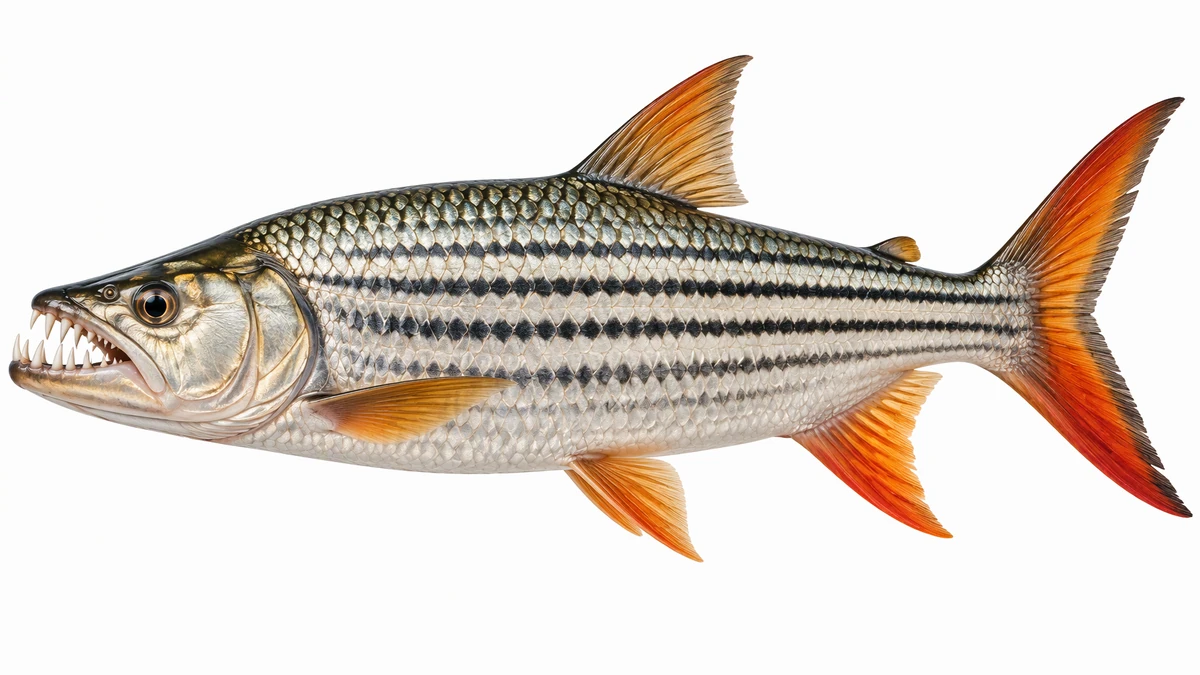
How to Catch Tigerfish
Learning how to catch tigerfish is a lesson in controlled violence. This is the silver, striped characin that made the Zambezi famous, a fish with a mouth full of interlocking canines and a habit of throwing a lure back at the boat with a head shake. It hunts in fast water, strikes like a freight train, and jumps hard enough to throw a hook on the first run. Most visiting anglers lose a lure or two before they land anything. For identification, biology and the piranha comparison, read the full Tigerfish species profile; this guide is about putting one in the net.
Best Time to Catch Tigerfish
The best time to catch tigerfish follows the water. These fish like warm, oxygen-rich flow, and they are most active between roughly 22 and 30°C (72–86°F). When the water is cold and dirty, they become harder to find and less willing.
Season drives everything in southern Africa. The prime window is the late dry season, when the water clears and the fish concentrate in the remaining channels, then again when the first rains stir the system. Clear water helps both the fish and the angler — you can see the seams and the surface activity, and the fish hunt more confidently.
Time of day centers on the edges. Tigerfish feed hard at first light and again in the late afternoon, and a surface feeding frenzy can erupt any time baitfish get pushed up. Dawn and dusk are the safest bets, but do not ignore a mid-morning bust-up if you see birds and splashing.
Weather and flow matter as much as temperature. A rising, slightly coloured river after rain can turn the fish on, pushing baitfish and predators together. Stable, clear water with good flow is ideal. Dirty flood water shuts things down until it clears. Watch the river level — a sudden rise changes where the fish sit within hours.
Best Gear for Tigerfish
Tigerfish gear revolves around one non-negotiable fact: their teeth shred line. Everything else is built around surviving the bite.
| Component | Tigerfish-ready choice |
|---|---|
| Rod | Fast-action rod with enough backbone to turn a jumping fish |
| Reel | Smooth-drag reel with line capacity matched to 30–50 lb braid |
| Main line | 30–50 lb braid |
| Leader | Wire trace in the 30–40 lb class, sometimes heavier |
| Hooks | Strong single hooks where rules require them; quality trebles on hard lures |
| Extras | Long-nose pliers or jaw spreaders, wire cutters, a landing net, gloves |
Braid gives you the strength and sensitivity to set a hook into a bony, toothy mouth and to turn a fish away from structure. The wire trace is essential: a tigerfish will cut through 20–30 lb nylon as if it were cotton. Thirty to forty pounds of wire is the standard starting point, and some anglers go heavier in waters with big fish.
The rod needs real backbone to control a jumping, head-shaking fish, and the reel needs a smooth drag. Some reserves and operators require single hooks or barbless hooks, so check before you rig. Carry long-nose pliers or a jaw spreader for unhooking, and keep your hands well away from the mouth at all times.
Best Bait for Tigerfish
The best bait for tigerfish is a live baitfish on a wire trace. That is the classic, and it triggers the predatory response these fish are built for.
Natural bait. A live baitfish roughly 10–15 cm long, hooked through the back or the lips and fished on a strong wire trace, is hard to beat. Dead bait works too, but it does not provoke the same aggressive response. In waters where baitfish are the staple, a lively bait presented in the current is deadly.
Artificial lures are the other half of the equation, and they cover water and produce spectacular surface action. Metal spoons, large swimbaits, flukes and topwater plugs all catch fish, especially when retrieved fast. The classic tigerfish strike comes on the drop or on a sudden change of speed, so keep the lure moving and be ready to strike hard. When a shoal is driving baitfish to the surface, cast into the edge of the frenzy and hold on.
Match the bait to the local forage and size it for the fish you expect. Tigerfish have big mouths and are not shy about big meals, but a lure that is too large can put off pressured fish. Carry a mix of spoons, swimbaits and topwater, and let the fish's mood on the day decide.
Tigerfish Rigs
A tigerfish rig is mostly about one thing: delivering a bait or lure on a wire trace that survives the teeth. These setups cover live bait and lures.
Live bait rig. Run your braid to a wire trace and a strong single hook, and hook the baitfish through the back or lips so it swims naturally in the current. A small sinker or a free-lined presentation lets the bait work the seam. Keep the trace long enough that the teeth cannot reach your braid.
Spoon and hard-lure rig. Attach a metal spoon or hard lure directly to the wire trace with a strong snap or loop. No extra hardware — keep the connection simple and strong, and check the wire after every fish for kinks and nicks.
Soft-plastic and swimbait rig. Rig a fluke or swimbait on a strong hook with the trace in front, and fish it fast through current seams and eddies. The trace protects against the teeth on the strike, and the fast retrieve triggers reaction bites.
Whichever rig you choose, inspect the wire trace constantly. A kinked or frayed trace fails on the next fish, and a lost lure is the least of your worries when the fish is still attached.
How to Catch Tigerfish, Step by Step
- Find the current seam. Tigerfish hunt where current does something interesting: rapids, riffles, eddies, sandbanks, confluence seams and channel mouths. That is where baitfish get pushed together.
- Look for surface activity. A feeding frenzy is visible from a distance. Birds and splashing baitfish tell you exactly where to cast.
- Cast upstream or across the flow. Present the lure or bait so it swings naturally through the seam, or cast into the edge of a bust-up and retrieve through it.
- Retrieve fast. Speed triggers tigerfish. Burn spoons and swimbaits back, and be ready for the strike on the drop or on a change of pace.
- Strike hard. Those teeth and that bony mouth need a firm hookset. Drive it home.
- Keep the rod tip low during jumps. A jumping tigerfish throws hooks easily. Bowing the rod slightly reduces the chance of losing it.
- Play the fish with a smooth drag. Set the drag a little lighter than you would for a similar-sized bass, because the first run is explosive. Let the fish run, then win it back.
- Land and unhook safely. Use a net, keep your fingers away from the mouth, and unhook with long-nose pliers or a jaw spreader. Never grab the leader with a bare hand.
The strike and the first run are the whole game. Anticipate the hit, set hard, and stay calm through the jumps. Most lost fish come from a slack line or a grabbed leader, not from a lack of power.
Where to Catch Tigerfish
Where to catch tigerfish means heading to warm, oxygen-rich flowing water across central and southern Africa. Hydrocynus vittatus is widespread, with strong populations in the Zambezi, Okavango, Limpopo, Rufiji and Congo systems, and in large reservoirs such as Lake Kariba and Cahora Bassa. The goliath tigerfish, a different and much larger species, is more restricted to the Congo basin and Lake Tanganyika.
Within a river, fish the places where current creates an edge. Rapids, riffles, eddies, sandbanks, confluence seams and channel mouths concentrate baitfish and the predators that hunt them. Big fish also patrol deep pools below rapids and the edges of drop-offs in lakes. Tigerfish are open-water hunters, not structure-huggers — they use current and light to trap prey rather than sitting in cover like a bass.
Juveniles live in quieter water among marginal vegetation and flooded grass before moving into the main flow. On the Zambezi, the best fishing typically comes in the late dry season as the water clears, and again when the first rains arrive. Fish with a guide on unfamiliar water, use a life jacket, and treat the river — with its hippos and crocodiles — with more respect than you treat the fish.
Tigerfish Regulations and Safety
Tigerfish rules vary by country and by water, and they change. In the Zambezi and Okavango regions, catch-and-release is encouraged and often required for trophy fish, and some operators and reserves run strict single-hook or barbless rules. National agencies set the rules in their waters: the Zambian Department of Fisheries, the Zimbabwe Parks and Wildlife Management Authority, the Namibia Ministry of Environment, Forestry and Tourism, and South Africa's Department of Forestry, Fisheries and the Environment. As of 2025, check the current licence, bag limit and closed-season requirements before you travel.
The safety side is about the teeth and the water. Tigerfish are not venomous and do not hunt people, but a hooked fish is a genuine hazard — a 5 kg fish can remove a finger and cut through heavy nylon. Use a wire trace, never put a hand near the mouth, and unhook with long-nose pliers or a jaw spreader while keeping the head pointed away from your body. If you must lift the fish, hold it behind the gill cover with a wet cloth.
The environment adds its own risks. Zambezi and Congo tributaries carry hippos, crocodiles, fast water and remote country. Fish with a guide, wear a life jacket, and stay alert on the bank and in the boat. A fish thrashing in a boat with treble hooks attached is the real danger, not the fish in the water.
Common Mistakes and Tigerfish Fishing Tips
- Skipping the wire trace. The number one mistake. Mono and braid lose to those teeth. Use 30–40 lb wire or heavier.
- Retrieving too slowly. Speed triggers tigerfish. Burn the lure back and be ready on the drop.
- High-sticking during jumps. Keep the rod tip low so a jumping fish cannot throw the hook.
- Grabbing the leader. A bare hand on a wire trace near a thrashing fish is asking for a cut. Use pliers.
- Fishing dead water. Find current seams, eddies and bust-ups. Fish the places baitfish get concentrated.
- A locked drag. Set the drag a little light for the explosive first run, then adjust.
- Ignoring local hook rules. Many reserves require single or barbless hooks. Check before you fish.
- Underestimating the environment. Hippos and crocodiles are a bigger threat than the fish. Stay alert.
FAQ
What is the best time to catch tigerfish? The late dry season into the first rains, when the water clears and fish concentrate, plus dawn and dusk each day. Water around 22–30°C (72–86°F) keeps them active.
What bait for tigerfish works best? A live baitfish of about 10–15 cm on a wire trace. Metal spoons, swimbaits, flukes and topwater plugs also work when retrieved fast through current.
What are the best tigerfish fishing techniques? Fish current seams and eddies, cast upstream or across the flow, retrieve fast, strike hard, and keep the rod tip low during jumps. Always use a wire trace.
How big do tigerfish get? Most H. vittatus run 40–75 cm and 2–8 kg. A fish over 90 cm is exceptional. The goliath tigerfish, a different species, reaches about 1.5 m and 50 kg.
What is the world record tigerfish? The IGFA all-tackle record for Hydrocynus vittatus is roughly 31 lb (about 14 kg). Check the IGFA listing for the current mark and line-class details.
Do you need a wire trace for tigerfish? Yes. Tigerfish teeth cut through nylon and braid with ease. A 30–40 lb wire trace, sometimes heavier, is standard.
Learning how to catch tigerfish comes down to a wire trace, a fast retrieve through the right current seam, a hard hookset and a calm fight through the jumps. Get those right, fish with respect for the river, and you will understand why anglers keep coming back to the Zambezi.
Related Articles
- How to Catch Piranha — the other famous toothy characin, and a very different fish.
- How to Catch Nile Perch — another African predator from the same waters.
- How to Catch Arapaima — South America's air-breathing giant.
- How to Catch Golden Perch — Australian warm-water structure fishing.
- Read the full Tigerfish species profile
About the author and how this was tested
About the author
FishermanGuy
Bank, boat and kayak angler · fishing, crabbing and shrimping since 2021
I buy the gear, fish it for a season and write down what failed. No sponsored verdicts, no free-sample flattery. Every rig on this page has landed fish in water I can point at on a map.
How this was tested
- Every rig gets at least six trips on the same water before it is published.
- Gear is bought at retail. Free samples are labelled in the first paragraph.
- Dates show first publication and the last time the page was updated.