Field notes
European Seabass: Identification, Habitat & Diet
European Seabass: Identification, Habitat & Diet
The European seabass (Dicentrarchus labrax) is the inshore predator that European anglers plan their weekends around. It is called branzino in Italy, loup de mer in France, robalo in Spain, and simply bass in Britain, where it has become the country's most talked-about saltwater sport fish. Silver, deep-bodied, and hard-fighting, it patrols surf beaches, estuaries, harbours, and rocky points from Norway to Morocco. This profile covers European seabass identification, habitat, diet, size, records, how it differs from striped bass, and how to catch one.
Quick ID Card
| Field | Details |
|---|---|
| Scientific name | Dicentrarchus labrax |
| Common names | European seabass, bass, branzino, loup de mer, robalo |
| Family | Moronidae (temperate basses) |
| Typical size | 12–24 inches (30–60 cm); 1–7 lb (0.5–3 kg) |
| Maximum size | About 40 inches (1 m) and 12 kg (26 lb) |
| Water type | Coastal salt water, estuaries, harbours, surf beaches |
| Depth range | Surface to about 30 m, occasionally deeper |
| Active water temperature | Roughly 50–68°F (10–20°C) |
| Difficulty | Moderate to hard; pressured fish are wary |
| Best season | Spring through autumn; winter in warmer parts of the range |
How to Identify a European Seabass
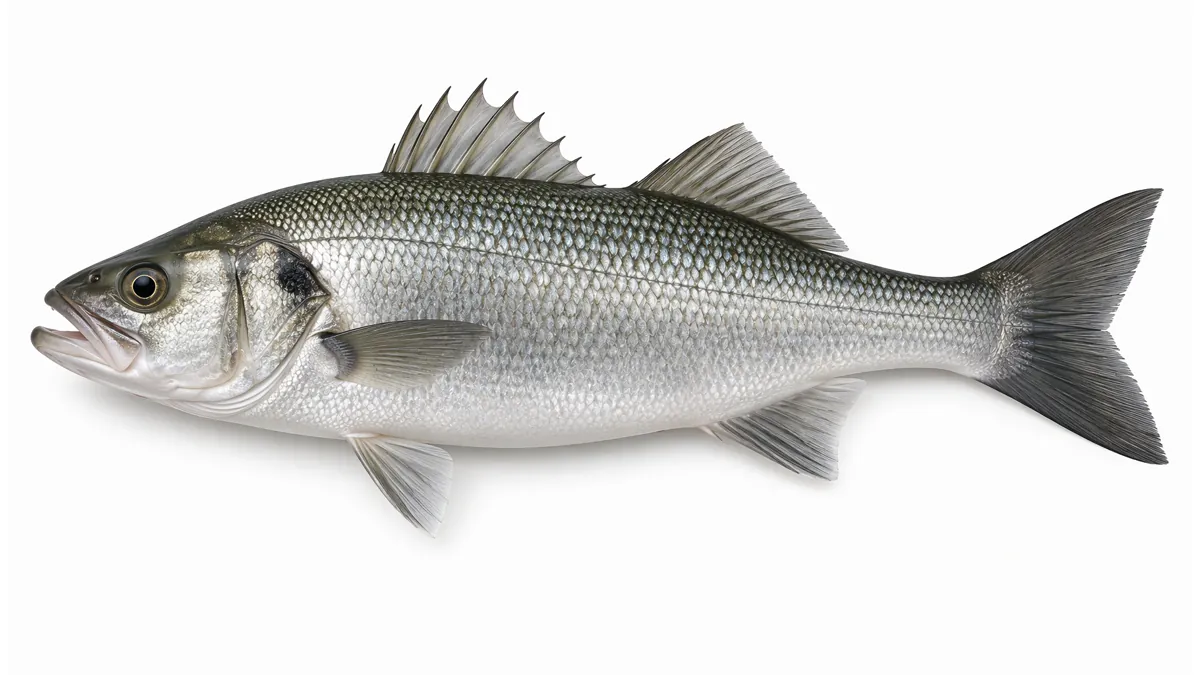
European seabass identification is about the overall shape and the fins. The body is deep and silvery, with an olive-grey or blue-grey back and a bright silver belly. The scales are small, and the skin feels smooth compared with a striped bass. The head is large, the mouth is wide, and the lower jaw protrudes slightly.
There are two dorsal fins, well separated. The first is spiny, with about eight or nine sharp rays; the second is soft and longer. The anal fin has three spines, and the tail is forked. The gill cover has a sharp spine at the top rear corner, which is a handling hazard, and there is usually a faint dark blotch at the upper edge of the gill cover.
The key negative feature is what you do not see. A European seabass has no horizontal stripes. That single point separates it from a striped bass at a glance, and it also separates it from the smaller and more colourful wrasse that share the same rocky marks.
Juveniles are slimmer and more silvery than adults, and they often gather in estuaries and harbours. They can be confused with thin-lipped grey mullet, which have a smaller mouth, a blunter head, and a different fin arrangement. Check the mouth and the dorsal fins, and the identification is clear.
European Seabass vs Striped Bass
European seabass and striped bass (Morone saxatilis) belong to the same family, Moronidae, and they are often compared because both are big, hard-fighting inshore predators. They are different species on different continents.
| Feature | European seabass | Striped bass |
|---|---|---|
| Stripes | None; plain silver flanks | Seven or eight bold dark stripes |
| Range | Northeast Atlantic, Mediterranean, Black Sea | Atlantic coast of North America; stocked elsewhere |
| Body shape | Deep, but less stout than a striper | Stout and deep, especially big fish |
| Maximum size | About 12 kg (26 lb) | Can exceed 30 kg (70 lb) |
| Gill-cover mark | Faint dark blotch | No blotch; sharp spine |
| Habitat | Coastal Europe, estuaries, surf, rocks | Coastal America, rivers, reservoirs |
The stripes are the field test. A silver fish with no stripes, caught in Europe, is a seabass. A silver fish with seven or eight stripes, caught in America, is a striped bass. The family resemblance explains why both fight so well and why both respond to similar lures.
Anglers sometimes confuse European seabass with the farmed fish sold as "Chilean seabass," which is actually a completely different deep-water species, the Patagonian toothfish. That is a market name, not a taxonomic one. If the fish came from a European beach, it is not a toothfish.
Is the European Seabass Dangerous?
European seabass are not venomous, and they have no poison spines. The hazards are mechanical. The gill cover ends in a sharp spine, the dorsal fin is spiny, and the teeth are small but rough enough to rasp skin.
The gill-cover spine is the one that draws blood. When you handle a bass, slide a wet hand under the belly and support the fish; do not push fingers under the gill cover. If you use a lip grip, support the body with the other hand so the fish's weight does not tear the jaw. A wet towel is useful for bigger fish.
Bass fishing often happens at night, on rocks, in surf, or from small boats. Those conditions are the real risk. Wear a life jacket on rocks and in boats, use a headlamp, and never turn your back on the sea. A falling tide can strand an angler on a sandbar, and a rising tide can cut off a rocky point. Check the tide table before you commit to a mark.
Cold water is the other hazard. European seabass fishing continues into autumn and winter, and a fall into cold water is a medical emergency, not a refreshing dip. Dress for immersion and fish with a partner when you can.
Where Do European Seabass Live?
European seabass habitat is the coastal fringe of the northeast Atlantic, from Norway and the British Isles south through France, Spain, and Portugal to Morocco, plus the Mediterranean and the Black Sea. They are inshore fish, rarely far from land, and they use a wide range of habitats: surf beaches, shingle banks, estuaries, salt marshes, harbours, breakwaters, rocky headlands, and the mouths of rivers.
Where do European seabass live in the water column? Mostly in the top 30 m, and often much shallower. Big bass can be found in the wash of a beach, around rocks in white water, or under harbour lights at night. Smaller fish gather in estuaries and shallow bays, where the water is warmer and food is plentiful.
The species tolerates a wide range of salinity, which is why estuaries matter so much. Juveniles use brackish creeks and lagoons as nurseries, and adults move in and out with the tide to feed on crabs, shrimp, and small fish. Some bass populations are largely resident, while others migrate along the coast, moving north in summer and south or offshore in winter.
Water temperature shapes the season. Bass are most active from about 10 to 20°C, and they feed hard in spring and autumn. In summer, they move into shallow water at night and into deeper, cooler water during the day. In winter, they slow down and gather in deeper water, though mild winters keep some fish feeding all year in the south and west of the range.
Habits and Diet: What Do European Seabass Eat?
What do European seabass eat? Fish and crustaceans, taken in the surf, around structure, and in estuaries. Sandeels, smelt, small mullet, sand gobies, and juvenile pollack are all on the menu, along with crabs, prawns, ragworm, and squid. Big bass are opportunists, and they will take whatever is abundant and vulnerable.
Bass hunt by sight and by ambush. In surf, they use the wash and the white water to get close to baitfish; around rocks, they hold in the current and strike as prey is swept past; in estuaries, they patrol the edges of channels on the flooding tide. Low light is an advantage, which is why dawn, dusk, and night are the best times.
When do European seabass spawn? Spawning takes place in winter and early spring, roughly January to March, in offshore water or along exposed coasts. The eggs are pelagic and drift with the current, and the larvae move inshore as they grow. In the Mediterranean, spawning timing shifts with local conditions, but the pattern is similar.
Bass are slow-growing and long-lived. Females mature later than males and grow larger, and big fish are usually old females. A 10-pound bass may be 15 years old or more, which is why the species is vulnerable to heavy harvest and why catch-and-release has become the norm in much of Europe.
Size, Records and Regulations
How big do European seabass get? Most rod-caught fish are 1 to 7 pounds, and a 10-pound bass is a good fish anywhere. The species can reach about 1 m and 12 kg (26 lb), though fish of that size are rare and usually very old.
The world record european seabass on rod and reel is a fish in the high teens of pounds, in the region of 8 to 9 kg depending on the record list. The species maximum of about 12 kg is well above the record, which reflects how few big bass survive to old age.
Regulations are the most important part of bass fishing in Europe. The EU and UK minimum conservation reference size for European seabass is 42 cm (about 16.5 inches). Recent measures have also included a recreational bag limit, commonly two bass per angler per day, and a spawning-season restriction in February and March in Atlantic waters. These measures have been renewed and adjusted year by year, and the details differ between countries and between commercial and recreational sectors.
As of 2025, check the current rules before you fish. In England, the Marine Management Organisation (MMO) and CEFAS publish the sizes, bag limits, and closures; Natural Resources Wales and Marine Scotland cover their waters; in Ireland, Inland Fisheries Ireland (IFI) publishes bass rules; in France, Spain, Portugal, and other EU states, the national authority does the same. Bass is a tightly managed species, and the rules can change at short notice. Last verified: November 2025.
The best bait for european seabass is live or fresh natural bait: live sandeel, mackerel strip, squid, peeler crab, and ragworm. Fished on a running ledger or a float, these baits cover beaches, rocks, and estuaries. On the artificial side, surface lures, shallow-diving plugs, soft plastics on jig heads, and metal lures all catch bass, especially in low light and moving water.
How to catch european seabass: find moving water, fish low light, and keep a low profile. In surf, cast parallel to the beach and work a surface lure or a soft plastic through the wash. On rocks, fish the edges of white water and the current seams. In estuaries, fish the flooding tide around channel edges, bridge pilings, and moored boats. Bass are wary in clear, calm water; a bit of colour and a bit of chop improve the odds.
Use light to medium spinning tackle for lures, with a braided main line and a fluorocarbon leader. For bait, a longer rod and a running ledger cover more ground. Play fish firmly but not brutally; bass have soft mouths, and a heavy hand pulls the hook. Release fish carefully, supporting the body and reviving them in the shallows before letting them go.
FAQ
How big do European seabass get? Most are 1–7 pounds. A 10-pound fish is a trophy, and the species maximum is about 1 m and 12 kg (26 lb).
What is the world record European seabass? Record lists differ, but the biggest rod-caught fish are in the high teens of pounds, around 8–9 kg.
Where do European seabass live? Along the northeast Atlantic coast from Norway to Morocco, plus the Mediterranean and Black Sea. They use beaches, estuaries, harbours, and rocky marks.
What do European seabass eat? Sandeels, smelt, small mullet, gobies, crabs, prawns, ragworm, and squid. They hunt by sight in low light and moving water.
European seabass vs striped bass: how do you tell them apart? A striped bass has seven or eight bold horizontal stripes; a European seabass is plain silver with a faint dark blotch on the gill cover. They also live on different continents.
When do European seabass spawn? In winter and early spring, roughly January to March, in offshore or exposed coastal water. The eggs drift with the current.
What is the best bait for European seabass? Live sandeel, mackerel strip, squid, peeler crab, and ragworm. Surface lures and soft plastics cover the artificial side.
How do you catch European seabass? Fish moving water at dawn, dusk, or night, cast parallel to the beach or along rock edges, and keep a low profile. Check the current size and bag rules first.
Related Articles
- Atlantic Cod — the cold-water heavyweight of the same European coast.
- Atlantic Herring — a baitfish that bass and their prey follow.
- Turbot — a flatfish for the same saltwater angler.
- Zander — a freshwater predator with a similar low-light habit.
- All species profiles
The European seabass is a fish of tides, white water, and fading light. Learn the plain silver flank and the spiny dorsal, respect the 42 cm rule and the bag limits, and fish the edges where bait and current meet. The reward is one of Europe's great inshore sport fish, and a fight that keeps anglers coming back long after the sun has gone.
Ready to catch one? Read our step-by-step guide: How to Catch European Seabass.
About the author and how this was tested
About the author
FishermanGuy
Bank, boat and kayak angler · fishing, crabbing and shrimping since 2021
I buy the gear, fish it for a season and write down what failed. No sponsored verdicts, no free-sample flattery. Every rig on this page has landed fish in water I can point at on a map.
How this was tested
- Every rig gets at least six trips on the same water before it is published.
- Gear is bought at retail. Free samples are labelled in the first paragraph.
- Dates show first publication and the last time the page was updated.