Field notes
Zander: Identification, Habitat & Diet
Zander: Identification, Habitat & Diet
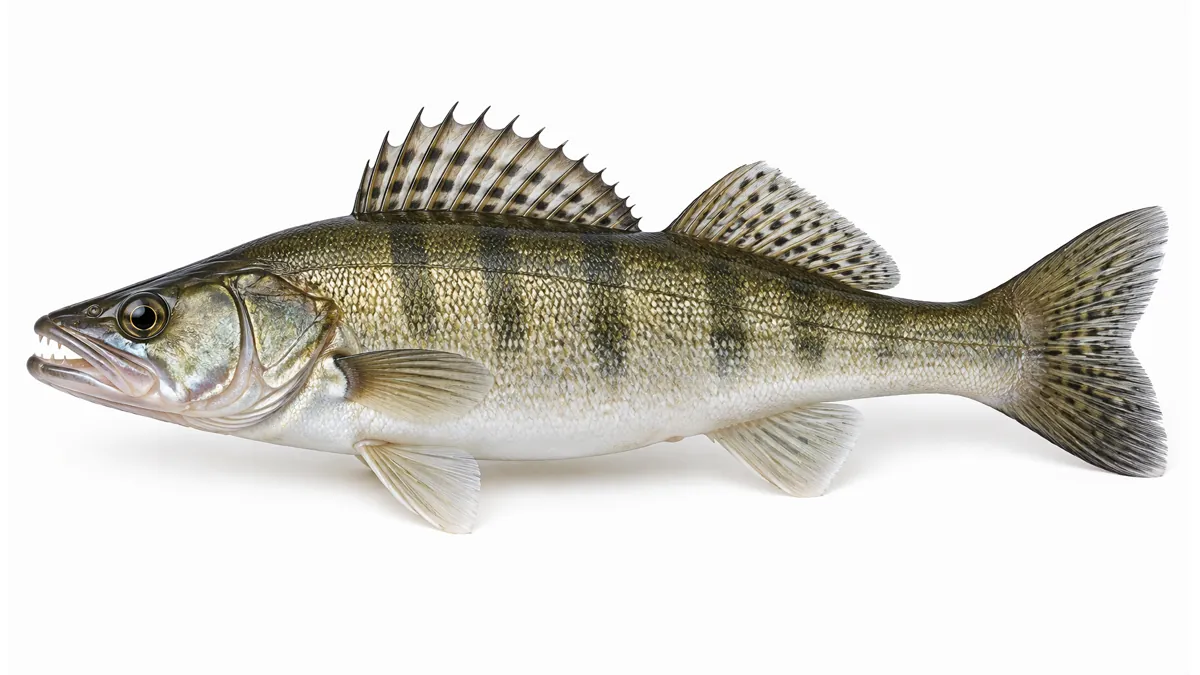
The zander (Sander lucioperca) is Europe's answer to the walleye: a slim, hard-eyed predator with a spiny first dorsal, a mouth full of teeth, and a habit of feeding when the light goes. It is called pikeperch in much of Europe, sandacz in Poland, and zander in Britain, where it has spread through the canal system and become a cult target for lure anglers. This profile covers zander identification, habitat, diet, size, records, how it differs from walleye, and how to catch zander.
Quick ID Card
| Field | Details |
|---|---|
| Scientific name | Sander lucioperca |
| Common names | Zander, pikeperch, sander, sandacz |
| Family | Percidae (perches) |
| Typical size | 16–28 inches (40–70 cm); 2–7 lb (1–3 kg) |
| Trophy size | 30 inches plus; double-figure weights are exceptional |
| Water type | Rivers, canals, lakes, and reservoirs; turbid or low-light water |
| Depth range | Surface to about 30 m in deep lakes |
| Active water temperature | Roughly 59–77°F (15–25°C) |
| Difficulty | Moderate; locating fish matters more than the lure |
| Best season | Spring after spawning and autumn; dawn, dusk, and night |
How to Identify a Zander
Zander identification is about the head, the fins, and the eye. The body is long and slightly compressed, built like a perch that went to the gym. The back is olive-grey to bronze, the flanks are paler, and the belly is white. Dark vertical bars or blotches run down the sides, though they fade in older fish and in murky water.
The fins are the giveaway. There are two dorsal fins: a spiny first dorsal with sharp rays, and a soft second dorsal set well back. The anal fin has two or three spines, and the tail is forked. The gill cover ends in a sharp spine, which is one of the reasons zander are handled with care. The mouth is large, the jaws are lined with small canine teeth, and there is no barbel.
The eye is the feature most anglers remember. Zander have a reflective layer behind the retina, the tapetum lucidum, which makes the eye shine like glass when light hits it. That adaptation is built for hunting in low light, and it is why zander feed so well at dusk and after dark.
Juveniles can be mistaken for perch, which share the spiny dorsal and the barred flanks. Perch have a much deeper body, bold dark stripes, and red lower fins; zander are longer, duller, and lack the red. A young zander also lacks the white tip on the lower tail lobe that a walleye shows.
Zander vs Walleye
Zander and walleye (Sander vitreus) are close cousins, and they look so similar that anglers who know one can usually read the other. The differences are small but reliable.
| Feature | Zander | Walleye |
|---|---|---|
| Lower tail tip | No white tip | Distinct white tip on the lower lobe |
| Maximum size | Larger; fish over 10 kg are recorded | Usually smaller, rarely over 10 kg |
| Range | Europe and western Asia; introduced to Britain | North America |
| Body bars | Faint dark bars, often faded in adults | More mottled, with a golden tone |
| Habitat | Turbid rivers, canals, lakes | Rivers and lakes, often clearer water |
The white tail tip is the fastest test. If the lower lobe of the tail is white, it is a walleye. If it is plain, and the fish came from a European canal, it is a zander. Size helps too: a 12-pound fish is almost certainly a zander, because walleye rarely reach that weight.
Zander are also confused with pike, especially by anglers who see a long fish with teeth. Pike have a single dorsal fin set far back near the tail, a duck-bill snout, and light spots rather than dark bars. Once you have seen both, the difference is obvious.
Is the Zander Dangerous?
Zander are not venomous. They have no poison glands and no sting. The hazards are mechanical: sharp teeth, a spiny first dorsal, and a gill cover that ends in a point.
A zander's teeth are small but numerous and rough, and a finger pushed into the mouth will come out shredded. The gill-cover spine can open a cut on the back of a hand. Hold the fish across the back with the spiny dorsal folded down, or use a lip grip and support the belly. A wet cloth helps with bigger fish.
Night fishing, which is when zander feed best, brings its own risks. Banks are uneven, water is black, and a headlamp is essential. On rivers, check the flow and the bank before you cast in the dark, and never fish a swollen river alone. On canals, watch for moored boats and towpaths shared with cyclists.
Zander also have a reputation for being delicate after capture. They fight hard, tire quickly, and can be slow to recover. Keep them in the water, unhook quickly with forceps, and release them head-first into the current. If you are keeping a fish for the table, dispatch it quickly and cool it down.
Where Do Zander Live?
Zander habitat is slow-flowing and still fresh water. The native range covers central and eastern Europe, from the Rhine and Danube east through Poland, the Baltic states, and Russia, including the Volga and Ural systems. They have been introduced widely beyond that range: to Britain, where they spread through the canal network after Victorian introductions, and to France, Spain, the Netherlands, and other countries, often into reservoirs and large rivers.
They prefer water with some colour and some depth, and they avoid bright shallows in the middle of the day. In rivers, zander hold in deep pools, around bridge pilings, locks, and bends, and along the edge of the current. In canals, they sit near moored boats, bridge holes, and the deeper channel. In lakes and reservoirs, they follow drop-offs, submerged structures, and the thermocline in summer.
Where do zander live in the water column? Mostly near the bottom, but not glued to it. They hunt upward as well as along the bed, and in clear water they can be found well off the bottom chasing shoals of roach and smelt. In summer, when the surface warms, big fish often drop into cooler, deeper water and feed at night.
Water temperature drives activity. Zander are most active from about 15 to 25°C, and they slow down sharply in winter. The best fishing is usually from spring into autumn, with a peak in the weeks after spawning and another in autumn as fish feed up before winter.
Habits and Diet: What Do Zander Eat?
What do zander eat? Fish. Roach, perch, ruffe, smelt, bream, and the young of their own kind make up most of the diet, along with the occasional crayfish. Zander are pursuit predators with a big mouth and a fast strike, and they prefer prey that is the right size to swallow whole.
The hunting pattern is built around light. Zander have excellent low-light vision, and their glassy eyes give them an edge at dusk, dawn, and through the night. During the day they hold in shade, deep water, or coloured water, and they are much harder to catch. That is why so many zander are caught in the last hour of light or after dark.
Zander are social when small and solitary when big. Juvenile fish gather in shoals, often with perch, and feed on small prey. Adult fish hold individual territories around structure and become more cannibalistic as they grow. A big zander will eat a smaller one without hesitation.
When do zander spawn? Spawning happens in spring, usually April to June, when the water reaches about 12 to 14°C. Fish move into shallow water and lay eggs on roots, gravel, stones, or submerged vegetation. The male builds and guards a nest, fanning the eggs and chasing away predators until they hatch. That parental care is unusual among European freshwater predators and is one reason spawning sites are sensitive to disturbance.
Zander grow faster than perch but slower than pike. Females grow larger than males, and the biggest fish are usually old females. A 10-pound zander is a fish of many years, and a 20-pound fish is a rarity anywhere in Europe.
Size, Records and Regulations
How big do zander get? Most adults run 40 to 70 cm and 1 to 3 kg. A 10-pound fish is a good zander anywhere, and a fish over 10 kg (22 lb) is exceptional. The species maximum is around 1 m, with larger fish reported from big continental rivers and reservoirs.
The world record zander depends on which national list you read. British rod-caught records sit in the high teens of pounds, and continental records from large rivers and reservoirs run into the low twenties (roughly 9–11 kg). Record lists differ because zander are managed separately in each country, and some records are not submitted to international bodies.
Regulations are local and vary a lot. In Britain, zander are treated as coarse fish, with no national closed season, but many fisheries ban keeping them or require catch-and-release. In Germany, Austria, and parts of eastern Europe, zander have a closed season in spring and a minimum size, and anglers may need a permit that specifies the rules for the water. In France and Spain, zander are often managed as a sport fish in reservoirs with their own size and bag limits.
As of 2025, check the rules for the exact water you plan to fish. National agencies such as the Environment Agency in England, Natural Resources Wales, and the relevant state or federal fisheries authority in mainland Europe publish the framework, but the fishery owner often adds stricter rules. Last verified: November 2025.
If you want the wider picture, the European Inland Fisheries and Aquaculture Advisory Commission (EIFAAC) and national angling bodies publish guidance on zander management, but the water in front of you is governed by local rules.
The best bait for zander is a small to medium fish, either live or dead, fished near the bottom. Roach, smelt, and small bream work well, and a dead bait on a simple running rig is a classic approach. On the artificial side, soft plastic shads on jig heads, jerkbaits, crankbaits, spinners, and vibration baits all catch fish. Zander are not fussy about colour, but they are fussy about presentation: a lure that runs true and stays in the strike zone beats a fancy one that does not.
How to catch zander: fish low light, fish structure, and fish slowly. In rivers, cast to bridge pilings, lock walls, and the edge of the current, and work soft plastics along the bottom. In canals, jig shads around moored boats and bridge holes. In lakes, find the drop-off and fish it at dusk with a swimbait or a jig. Keep the lure in the water and keep it slow; zander often follow before they commit, and a pause is what triggers the bite.
FAQ
How big do zander get? Most are 40–70 cm and 1–3 kg. A 10-pound fish is a trophy, and fish over 10 kg (22 lb) are exceptional, with a maximum around 1 m.
What is the world record zander? Record lists vary by country. British records sit in the high teens of pounds; continental records run into the low twenties (roughly 9–11 kg).
Where do zander live? In slow rivers, canals, lakes, and reservoirs across central and eastern Europe, and introduced populations in Britain, France, Spain, and elsewhere.
What do zander eat? Fish: roach, perch, ruffe, smelt, bream, and small zander. They hunt most actively at dusk, dawn, and night.
Zander vs walleye: how do you tell them apart? A walleye has a white tip on the lower tail lobe; a zander does not. Zander also grow larger and live in Europe rather than North America.
When do zander spawn? April to June, when the water reaches about 12–14°C. Males guard nests in shallow water.
What is the best bait for zander? A small live or dead fish fished near the bottom, or soft plastic shads, jerkbaits, and spinners on the artificial side.
How do you catch zander? Fish structure in low light, work lures slowly along the bottom, and add pauses. Bridges, locks, and drop-offs are key spots.
Related Articles
- European Seabass — a saltwater predator with a similar low-light habit.
- Turbot — a flatfish ambush hunter for anglers who fish both fresh and salt water.
- Atlantic Cod — a cold-water predator with a very different fight.
- Atlantic Herring — a saltwater baitfish that supports the coastal food web.
- All species profiles
The zander is a fish of edges and fading light. Learn the white tail tip test, find the bridges and drop-offs, and fish slow when the sun goes down. The reward is a hard strike, a head-shaking fight, and one of the best-eating freshwater fish in Europe.
Ready to catch one? Read our step-by-step guide: How to Catch Zander.
About the author and how this was tested
About the author
FishermanGuy
Bank, boat and kayak angler · fishing, crabbing and shrimping since 2021
I buy the gear, fish it for a season and write down what failed. No sponsored verdicts, no free-sample flattery. Every rig on this page has landed fish in water I can point at on a map.
How this was tested
- Every rig gets at least six trips on the same water before it is published.
- Gear is bought at retail. Free samples are labelled in the first paragraph.
- Dates show first publication and the last time the page was updated.