Field notes
Flats Fishing Techniques
Flats Fishing Techniques
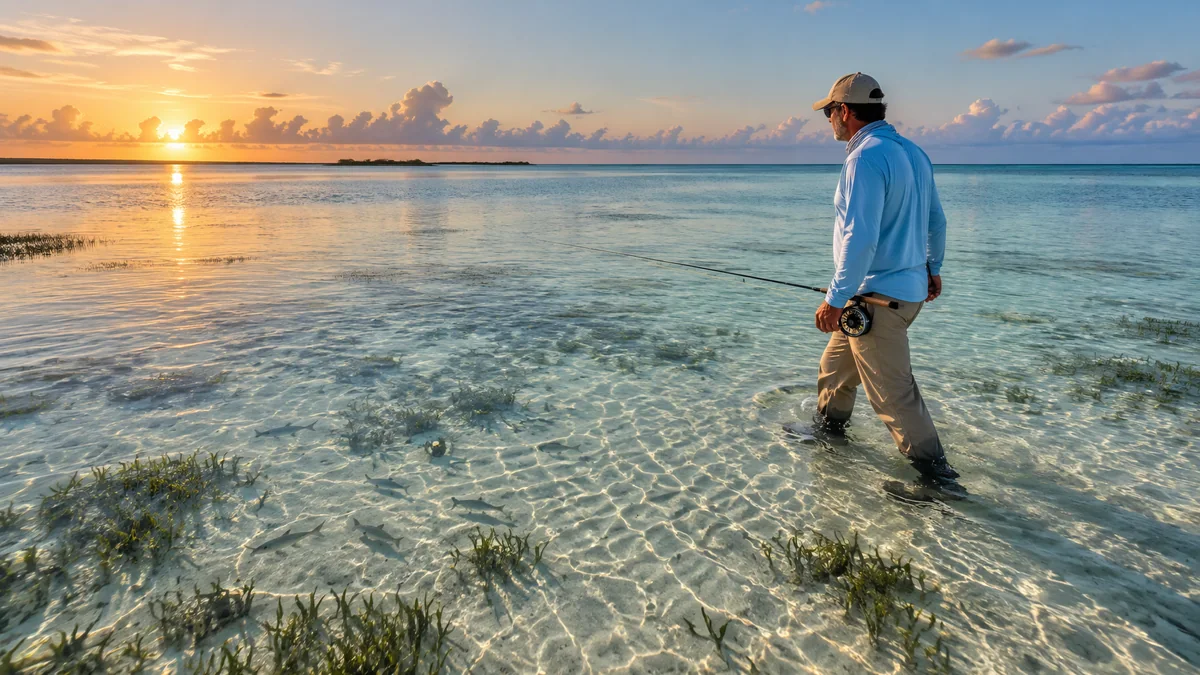
Flats fishing is hunting more than it is casting. The water is shallow enough that fish are visible, close enough that they spook at a bad cast, and shallow enough that everything you do — the boat, your shadow, the splash of a lure — matters. The payoff is some of the most visual, exciting fishing in saltwater: watching a tail break the surface, leading a fish with a cast, and seeing it eat. Good flats fishing techniques come down to three things: knowing when fish use the flat, approaching without spooking them, and presenting a lure or fly that lands where the fish will meet it. This guide covers all three, plus the species details and the mistakes that send fish running.
Understand What a Flat Is and Why Fish Use It
A flat is a shallow expanse of sand, mud, or grass — usually one to four feet deep — that borders deeper water in a bay, lagoon, or backcountry. Fish come onto flats for food and safety. The bottom holds crabs, shrimp, worms, and small baitfish. The shallowness offers protection from larger predators, and the sun warms the water, which fish seek after cool nights.
Because flats are shallow, they are also fragile. A boat running across one pushes a wake that spooks every fish within sight, and a careless angler who wades through a school can shut down an area for an hour. Treat a flat like a deer blind: the approach is half the hunt.
Not all flats fish the same. Grass flats hold more food and more fish than bare sand. Flats with potholes, sand holes, and edges against deeper water concentrate fish. A flat next to a channel or pass draws fish moving between deep water and the shallows. Learn the shape of the flat before you fish it.
Time the Tide and the Light
Tide is the first variable on a flat. Most fish move onto flats to feed as the tide floods, because rising water lets them reach food that was dry or too shallow at low tide. The best window is often the first half of the incoming tide, when fish push up onto the flat and feed confidently.
A falling tide pulls fish off the flat and back toward channels and deeper edges. That can still be good fishing, especially at the mouths of creeks and drains where fish wait for food to wash out, but the fish are usually fewer and more concentrated.
Low tide exposes the flat and leaves fish in potholes, channels, and the edges of deeper water. It is a good time to learn the bottom — walk or idle the flat and note where the holes and grass edges are — and a good time to fish the water that remains.
Light matters as much as tide. A high sun with the light at your back lets you see fish and bottom, and it throws your shadow behind you rather than across the water. Early and late, the low sun is beautiful but makes fish harder to spot; use the light angle carefully and let polarized lenses do the work.
Approach With Stealth
The fastest way to ruin a flat is to announce yourself. Fish in shallow water are tuned to vibration, shadow, and splash, and they leave before you see them.
Use a push pole, a trolling motor on its lowest setting, or drift with the wind. Cut the engine well short of the flat and pole or drift in. Keep noise to a minimum — no dropped anchors, no slammed hatches, no loud voices. Approach with the sun in front of you so your shadow does not fall on the water you are fishing, and keep the boat off the flat's edge until you have scanned it.
Wading anglers should move slowly and shuffle their feet to avoid stepping on stingrays and to avoid sending shockwaves through the flat. Fish the edges and the potholes rather than tramping across the middle. If you see a fish and it has not seen you, stop. Let it settle, then plan the cast.
Sight Fishing: Find the Fish Before You Cast
On a good flat you can see fish, and seeing them changes everything. Learn the signs:
- Tails. A redfish or bonefish feeding on the bottom tips its tail out of the water — "tailing." A tail is the most reliable sign there is.
- Mud plumes. A fish rooting in the bottom kicks up a puff of mud. Follow the plume to the fish.
- Pushing water. A fish moving in very shallow water pushes a small wake or bulge — a "push."
- Nervous water. Bait flicking at the surface, or ripples with no wind, mark fish activity.
- Daisy chains. Groups of fish cruising and milling in a pattern, often tarpon or bonefish, are visible from a distance.
Wear polarized sunglasses with a lens color suited to the bottom — amber for grass and sand, gray for bright glare. Scan far ahead, not at your feet, and look for movement and color rather than a perfect fish shape. A dark shape, a flash, or a shadow that moves against the bottom is often enough to start a stalk.
Present the Fly or Lure Correctly
Once you see a fish, the cast is a geometry problem. Do not cast at the fish; cast ahead of it, on the path it is traveling, and let it swim into the lure. A lure that lands on a fish's head spooks it; a lure that lands several feet in front and moves away triggers a chase.
Land the lure softly. A heavy splash in shallow water sends fish running, so use a sidearm cast, a lower trajectory, and enough line control to stop the lure before it hits hard. Weedless soft plastics, small jigs, spoons, and shrimp or crab imitations all work, depending on the species and the bottom.
Retrieve with the fish in mind. For a cruising fish, strip or reel just fast enough to stay ahead of it, then slow down as it closes. For a tailing fish, cast beyond the tail and bring the lure into the feeding zone. When the fish follows, do not speed up — many fish eat a lure that pauses or falls. Watch the fish, not the rod tip; the take is often a flash, a turn, or the lure disappearing.
Match the Technique to the Species
Different flat fish demand different approaches.
Redfish are the classic tailing target in the South. On a flooding tide they root in the grass for crabs and shrimp, tails up. A weedless plastic, a gold spoon, or a live shrimp cast ahead of the tail works; a slow, bottom-oriented retrieve keeps the lure in the strike zone.
Bonefish are wary, fast, and often found on light sand or grass flats. Long, accurate casts and small shrimp or crab imitations, retrieved quickly, are the standard. They spook easily, so the approach matters more than the lure.
Permit are among the hardest shallow-water targets, often refusing anything but a near-perfect presentation. Crab imitations fished slowly on the bottom are the classic, and patience is part of the technique.
Speckled trout use flats to feed, especially in low light. A topwater lure at dawn over a grass flat, or a soft plastic worked slowly, covers water and draws strikes.
Tarpon cruise flats in warm months, often in groups, and take large flies and lures fished ahead of the school. They are a specialized pursuit, but the same lead-the-fish rule applies.
Common Mistakes on the Flats
- Running the flat. A wake spooks everything. Pole or drift in, and cut the motor early.
- Casting at the fish. Lead the fish and let it swim to the lure.
- Fishing dead low water. Fish leave the flat as water drops. Follow the tide, or fish the drains.
- Too heavy a leader. Clear, shallow water makes fish leader-shy. Downsize tippet and leader.
- Ignoring the sun and shadow. Your shadow can spook fish before your lure lands. Keep the sun in front of you.
- Splashing the lure. Shallow water amplifies every splash. Land soft.
- Moving too fast after a spook. Give the flat time to settle before you fish it again.
FAQ
What is the best tide for flats fishing? A flooding tide is usually best, especially the first half, because fish push onto the flat to feed. Falling water concentrates fish at drains and edges. Low tide is best for scouting the bottom.
Can you fish flats from shore? Yes, where a flat is reachable from a beach, point, or causeway. Wade carefully, shuffle your feet, and fish the edges and potholes. A boat or kayak opens much more flat water.
What are the signs of fish on a flat? Tailing fish, mud plumes, pushing water, nervous bait, and cruising groups are the main ones. Polarized glasses and a high sun make them easier to see.
Do you need a boat to fish the flats? No, but a shallow-draft boat, skiff, or kayak lets you reach productive flats and pole quietly. Wading covers water a boat cannot.
What is the best lure for flats fishing? It depends on the species and bottom. Weedless soft plastics, gold spoons, small jigs, and shrimp or crab imitations cover most situations; fly anglers use shrimp and crab patterns.
Flats fishing rewards patience and observation more than power. Learn the tide, approach quietly, and put the lure where the fish is going rather than where it is. For the water around the flat, see how to fish a bay and inshore fishing basics; for the fish, start with redfish, summer flounder, and tarpon, or browse the Inshore & Bay category.
About the author and how this was tested
About the author
FishermanGuy
Bank, boat and kayak angler · fishing, crabbing and shrimping since 2021
I buy the gear, fish it for a season and write down what failed. No sponsored verdicts, no free-sample flattery. Every rig on this page has landed fish in water I can point at on a map.
How this was tested
- Every rig gets at least six trips on the same water before it is published.
- Gear is bought at retail. Free samples are labelled in the first paragraph.
- Dates show first publication and the last time the page was updated.