Field notes
How to Fish a Bay
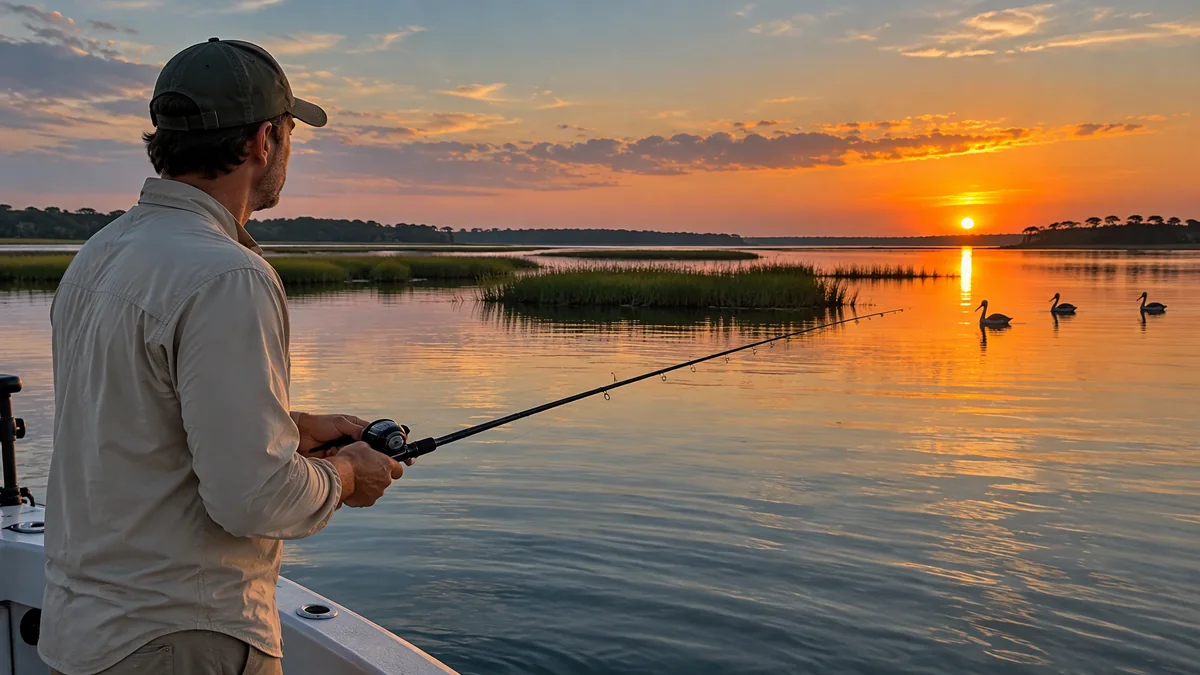
How to Fish a Bay
A bay is the most forgiving saltwater classroom there is, and also one of the most tide-dependent. Protected from open-ocean swell, a bay holds a mix of inshore species — redfish, speckled trout, flounder, snook in the south, striped bass in the north — around structure you can actually see: points, channel edges, grass flats, oyster bars, docks, and passes. The variable is water movement. Bays breathe with the tide, and fish feed when that water is moving. Learning how to fish a bay is mostly learning to time the tide and read where the current squeezes against structure. Get those two right and the rest — tackle, lures, bait — falls into place.
Read the Tides Before You Plan the Trip
Tide is the first decision, not the last. On most bays, the strongest feeding windows come in the hours around a moving tide — roughly the middle of the incoming or outgoing, when current is steady rather than the slack water at dead high or dead low.
Pull a tide chart for your bay before you go and note three things:
- The stage. An incoming tide pushes bait and clear water into the bay; an outgoing tide pulls it out through passes and drains. Both can fish well, but the spots differ.
- The range. Spring tides (larger swings around new and full moons) move more water and usually fish better than neap tides with small swings.
- The wind. Wind against tide stacks up choppy, muddy water; wind with tide flattens it. A hard wind can cancel a good tide or rescue a slack one.
Plan your day around the moving water rather than around a clock. If you only have a few hours, fish the two hours on either side of the strongest current, and use slack tide to run, eat, or scout new water. How to read current explains how to spot flow lines, eddies, and seams from the boat or the bank.
Find the Edges: Points, Channels, Flats, and Passes
A bay looks like open water, but fish are almost always on an edge. The productive edges are the same handful everywhere:
- Channel edges and drop-offs. Dredged channels and natural channels concentrate current, and fish sit on the edges where shallow meets deep to ambush bait.
- Points and bars. A point that runs into the channel or a sandbar that drops into deeper water gives fish a place to feed and retreat.
- Grass flats. Seagrass and shoal grass hold shrimp, crabs, and baitfish. Fish the potholes, edges, and sand holes inside the flat, especially on a rising tide.
- Oyster bars and rock. Hard structure holds bait and cuts current; redfish and sheepshead work the edges.
- Passes and inlets. Where the bay exchanges water with the Gulf or ocean, current is strongest and predators line up on the downcurrent side.
- Docks, bridges, and jetties. Shade, current breaks, and structure in one package.
Birds are a shortcut. Diving terns and pelicans working an area usually mark bait being pushed to the surface, and gamefish are rarely far below. So are mullet jumping and shrimp popping along a shoreline. Find the bait, and you have narrowed the bay to a few hundred yards.
Set Up Tackle for Bay Water
Bay tackle sits between freshwater and offshore: heavy enough for a redfish or striped bass, light enough to cast all day and fool leader-shy fish in clear water.
A 7-foot medium-power spinning rod with a 2500- to 3000-size reel handles most bay fishing. Spool with 15- to 20-pound braid and add a 20- to 30-pound fluorocarbon leader for abrasion around oyster bars and docks; downsize the leader to 12- to 15-pound in clear, calm water. For live bait, a circle hook in the appropriate size — matched to your state's rules — sets in the corner of the mouth and reduces gut-hooking.
Carry a small spread rather than a full box:
- 1/8- to 3/8-ounce jig heads with 3- to 5-inch paddletail swimbaits.
- A couple of spoons, including a gold one for stained water.
- A topwater walking bait for dawn.
- A suspending jerkbait for clear water and cool seasons.
- Soft plastics for Texas-style or jighead presentation around structure.
If you are starting from zero, inshore fishing basics covers the gear in more depth, and best inshore lures ranks the lures by situation.
Fish Moving Water
The single biggest upgrade in bay fishing is fishing the current instead of casting into still water. When tide is moving, position yourself so your lure or bait drifts naturally with the flow past structure, rather than against it.
From a boat, anchor or drift so you can cast uptide and let the lure sweep down past a point, channel edge, or dock. From the bank, fish the downcurrent side of a point or bridge piling, where the eddy forms and predators wait. A jig hopped along the bottom on a moving tide covers water and stays in the strike zone longer than a fast, horizontal retrieve.
Watch the lure, not just the rod tip. A strike often shows as the line jumping or stopping before you feel anything. Reel down until you feel weight, then set the hook with a firm sweep rather than a violent jerk, which is especially important with circle hooks and soft-mouthed fish.
Cover Water With Lures and Baits
Lures are for finding fish; bait is for catching the ones that will not chase. A workable day uses both.
Start with a search bait — a paddletail swimbait on a jig head, a spoon, or a twitchbait — and fan casts across a flat, point, or channel edge. When you get a strike or see fish, slow down and work that area thoroughly with a soft plastic, a jig, or live bait.
Live bait remains the most reliable option in a bay, especially for beginners and for big redfish, snook, and striped bass. Live shrimp, pilchards, mullet, and pinfish all work. Freeline a lively bait with the current, or fish it under a popping cork or a slip float near structure. A simple Carolina-style rig with a circle hook lets a bait sit on the bottom near a channel edge. Chumming lightly with cut bait or crushed shrimp can pull fish to you on a slow tide.
Match lure color to water clarity: natural baitfish patterns in clear water, brighter chartreuse, white, and gold in stained water. Speed matters as much as color — a slow, steady retrieve often out-fishes a fast one in cool water.
Common Mistakes on the Bay
- Fishing slack tide. Dead water is dead water. Plan around the moving hours even if it means an early start.
- Anchoring on the spot instead of uptide. Position so your presentation drifts naturally past structure.
- Line and leader too heavy. Bay fish in clear water see thick leader. Downsize before you decide the fish are gone.
- Running across the flat. Wakes and engine noise spook shallow fish and muddy the water you were about to fish.
- Ignoring the birds and bait. Diving terns and nervous mullet tell you where the action is faster than sonar.
- Skipping the rules. Slot limits, bag limits, and closed seasons for redfish, trout, snook, and striped bass vary by state and change. Check current regulations before you keep fish; an expired or missing license is its own problem, covered in do you need a fishing license.
FAQ
What is the best tide to fish a bay? Moving water beats slack water almost everywhere. The middle of the incoming or outgoing tide is usually strongest, with the last of the incoming and first of the outgoing often best around passes and drains.
Can you fish a bay from shore? Yes. Bridges, piers, jetties, seawalls, and points with channel access all produce. Shore anglers do best on moving tides and around structure they can reach with a long cast.
What is the best bait for bay fishing? Live shrimp is the most universal, with live pilchards and mullet close behind. For artificials, a paddletail swimbait on a jig head covers the most situations.
Do you need a boat to fish a bay? No, but a boat or kayak expands access to flats, passes, and channel edges. Many bays fish well from shore and piers, especially where deep water is close to land.
When is the best season for bay fishing? It depends on the species and the region. In southern bays, spring through fall is prime for redfish, trout, and snook; northern bays fish well from spring through late fall for striped bass. Best time of day to fish covers daily timing.
Bay fishing rewards planning more than most inshore styles. Learn the tide, find the edge, and let the current do the work. From there, go deeper with flats fishing techniques, the species guides for redfish, spotted seatrout, and flounder, or browse the Inshore & Bay category.
About the author and how this was tested
About the author
FishermanGuy
Bank, boat and kayak angler · fishing, crabbing and shrimping since 2021
I buy the gear, fish it for a season and write down what failed. No sponsored verdicts, no free-sample flattery. Every rig on this page has landed fish in water I can point at on a map.
How this was tested
- Every rig gets at least six trips on the same water before it is published.
- Gear is bought at retail. Free samples are labelled in the first paragraph.
- Dates show first publication and the last time the page was updated.