Field notes
How to Fish a Spinnerbait
How to Fish a Spinnerbait
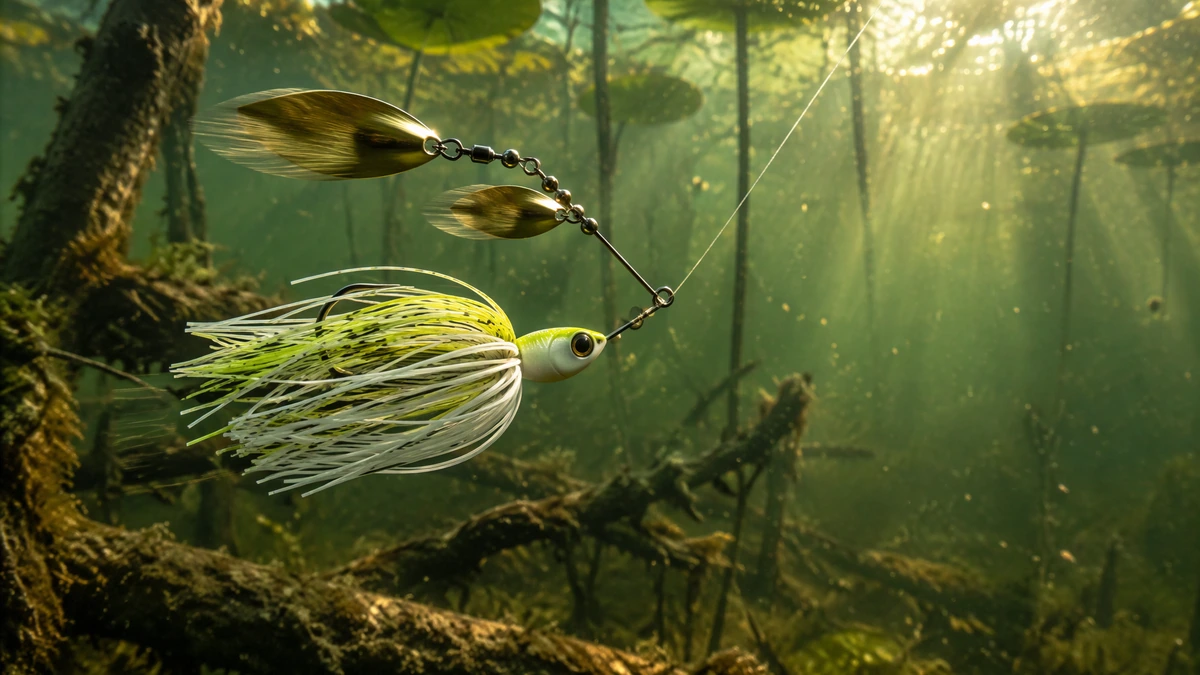
A spinnerbait is one of the most forgiving lures in freshwater and one of the most misunderstood. It is a wire frame with a weighted head, a skirt, and one or more spinning blades, and it does several things at once: it flashes, it vibrates, it tracks through cover without hanging, and it can be fished from the surface down to deep grass. That versatility is why it catches bass, pike, and even inshore fish across a wide range of conditions. It is also why so many anglers fish it one way — cast and reel — and wonder why it stops working. Learning how to fish a spinnerbait means matching the blade, weight, and retrieve to the water in front of you, and fishing it where it can bump into something.
Understand What a Spinnerbait Does
To a fish, a spinnerbait reads as a baitfish or a ball of fleeing forage. The skirt gives it a body, the blades throw flash and vibration, and the wire frame keeps it upright and lets it deflect off wood, rock, and grass rather than snagging. That deflection is the heart of spinnerbait fishing: the lure ticks a branch or a dock piling, changes direction, and triggers a reaction strike from a fish holding beside the cover.
Because it is a reaction bait, it works best when fish are willing to chase — warm water, moving weather, low light, stained water, and wind. In cold, clear, high-pressure conditions, a spinnerbait is not the first tool out of the box, but it can still produce if you slow it down and fish it tight to cover.
Choose Spinnerbait Weight, Blades, and Skirt
Three variables do most of the work: weight, blade type, and skirt color.
Weight controls depth and how fast the bait falls. A 1/4-ounce bait fishes shallow and slow and suits clear water and finicky fish. A 3/8-ounce is the all-around choice for most bass water. A 1/2-ounce handles wind, deeper water, and heavier cover, and 3/4-ounce and up is for punching through thick grass or fishing deep ledges.
Blade type sets the sound and flash:
- Colorado blades are round and push a lot of water. They thump, which helps in stained water, low light, cold water, and at night.
- Willow blades are long and narrow, throwing flash with less drag. They suit clear water and fast retrieves.
- Indiana blades sit between the two — a good compromise when you are unsure.
- Tandem setups (one willow, one Colorado) combine flash and thump; double willow is for speed; a single big Colorado is a night and muddy-water bait.
Skirt color should match the forage. White, chartreuse, and shad patterns cover most situations; black and blue works in low light and dirty water; crawfish colors work around rock and wood. Add a trailer — a split-tail grub, a small swimbait, or a chunk — to bulk up the profile and add action on the pause.
Tie It On and Add the Right Trailer
Spinnerbaits are usually fished on 15- to 20-pound fluorocarbon, which gives abrasion resistance around cover and enough stiffness to help the bait deflect. Braid works in heavy grass, and monofilament gives treble hooks a little give on violent strikes. A medium-heavy, fast-action rod in the 6½- to 7-foot range loads well for long casts and has the backbone to move fish out of cover.
Tie with a Palomar or improved clinch knot, and check the line just above the knot after every contact with cover; a nicked leader is the most common reason a good fish comes unbuttoned. The fishing knots category covers both knots. Some anglers add a small snap or snap swivel for quick changes; a swivel also reduces line twist on long casts, but it adds a hardware point where weeds collect.
Thread the trailer onto the hook so it hangs straight. A trailer that is too long masks the hook point and kills hooksets; keep it roughly the length of the skirt or slightly shorter.
Fish It Around Cover
A spinnerbait in open water is a wasted cast. Fish it where it can bump something: grass edges, laydowns, dock pilings, stump fields, rock points, and brush.
The pattern is cast past the cover, then retrieve so the bait runs into it. When you feel the blade ticking grass or the frame glancing off a branch, do not pull away — keep the retrieve steady and let the bait deflect. That contact is what triggers strikes. Fish parallel to grass lines and dock edges, and cast tight to the shade line under a dock rather than into the middle of the opening.
In grass, the goal is to keep the bait ticking the tops of the weeds. If it fouls, reel faster or switch to a heavier bait that runs deeper and cleaner. Around wood, slow down and let the bait crawl and deflect; around rock, fish the bait down the slope so it knocks against the structure.
Work Through Four Core Retrieves
The retrieve is where most anglers leave fish behind. Four speeds cover nearly every situation:
Slow-roll. Cast, let the bait sink to the depth you want, and reel just fast enough to keep the blades turning. This is the cold-water and deep-cover retrieve; it keeps the bait in the strike zone and gives fish time to commit.
Burn. Reel fast enough to bulge or wake the bait near the surface. This is for warm water, active fish, and covering water fast. It is also deadly over shallow grass in low light.
Yo-yo. Let the bait sink, rip it upward with the rod, then let it fall on a semi-tight line. The lift-and-flutter imitates a fleeing baitfish and triggers fish following the lure.
Kill it. Cast over a piece of cover, reel a few turns, then stop the bait and let the blades helicopter down. Many strikes come on that fall, so watch the line and reel down before setting the hook.
Vary speed and cadence before changing lures. A spinnerbait that gets follows but no strikes usually needs a pause, a direction change, or a different blade, not a different bait.
Match the Bait to Season and Water
Spinnerbaits track the seasons well.
In spring, fish shallow flats and spawning areas with 3/8-ounce baits and willow blades, and slow-roll along wood and grass edges. In summer, fish early and late around grass and shade, burning a bait over the tops, or slow-roll deep ledges at midday. In fall, baitfish school and bass feed heavily; a faster retrieve around creek mouths and points can be excellent. In winter, downsize, slow down, and fish deep structure with a Colorado blade.
Water color drives blade choice. Stained or muddy water calls for a big Colorado blade and dark or bright colors; clear water calls for willow blades, natural colors, and a smaller profile. Wind and clouds usually improve the spinnerbait bite because they break up light and give fish cover to ambush.
This same bait that catches largemouth also catches smallmouth, pike, and even redfish and seatrout in the salt, so do not file it under one species. See the largemouth bass guide, smallmouth bass guide, and northern pike guide for species-specific tweaks, and best soft plastics and topwater fishing basics for the baits that complement it in the box.
Common Spinnerbait Mistakes
- Fishing it in open water. No cover, no deflection, fewer strikes. Fish it where it can bump something.
- Reeling too fast in cold water. Slow-rolling keeps the bait in the strike zone; a fast retrieve skims over cold fish.
- Wrong blade for the water. A willow blade in muddy water is nearly invisible; a big Colorado in clear water can be too much.
- Line too heavy for clear water. Fluorocarbon in the right size matters; 20-pound line in gin-clear water costs bites.
- Never checking the line or hooks. Contact with cover nicks line and dulls hooks. Retie and sharpen.
- One speed all day. If you are getting follows and no strikes, change retrieval before changing lures.
FAQ
What color spinnerbait is best? Match the forage: white, chartreuse, and shad patterns in clear water; black, blue, and bright colors in stained water and low light.
Can you fish a spinnerbait in grass? Yes, and it excels there. Keep it ticking the tops of the grass and fish the edges; a heavier bait runs cleaner in thick cover.
What size spinnerbait should I use? 3/8-ounce is the all-around size; go lighter in shallow clear water and heavier in wind, deep water, or thick cover.
Do you need a trailer on a spinnerbait? Not always, but a split-tail grub or small swimbait adds profile and action, especially on slow retrieves and in stained water.
Will bass hit a spinnerbait at night? Yes. A big Colorado-blade bait slow-rolled around cover is a proven night lure, especially in summer.
A spinnerbait rewards contact fishing and speed control more than any single trick. Learn to feel the blade, fish it into cover, and change retrieves until the fish tell you what they want. From there, how to fish a lake and best lures for pond fishing put it in context, and the Baits & Lures category collects the rest of the box.
About the author and how this was tested
About the author
FishermanGuy
Bank, boat and kayak angler · fishing, crabbing and shrimping since 2021
I buy the gear, fish it for a season and write down what failed. No sponsored verdicts, no free-sample flattery. Every rig on this page has landed fish in water I can point at on a map.
How this was tested
- Every rig gets at least six trips on the same water before it is published.
- Gear is bought at retail. Free samples are labelled in the first paragraph.
- Dates show first publication and the last time the page was updated.