Field notes
How to Set Up an Ice Fishing Rig
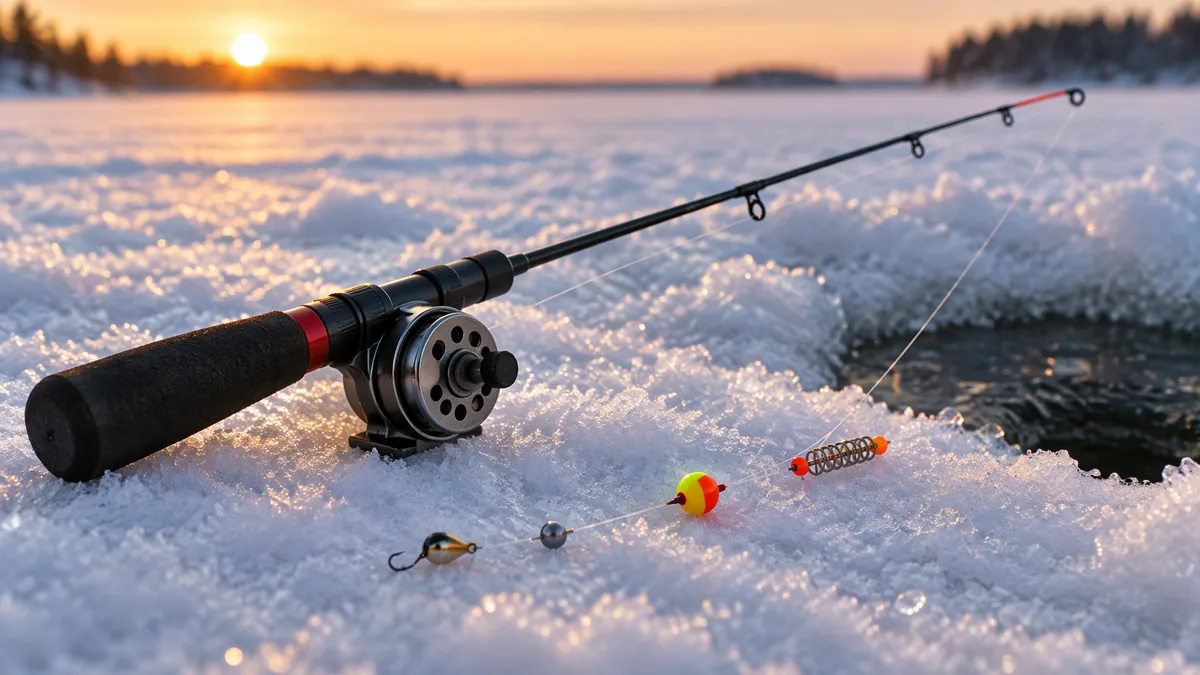
How to Set Up an Ice Fishing Rig
An ice fishing rig is a short rod, a light line, and a small bait dropped through a hole, and the difference between a good day and a long one usually comes down to how those pieces are matched. Ice fishing strips away casting distance and most lure action; what remains is depth control, a natural presentation, and a bite indicator you can actually see. That makes the setup matter more, not less. A rig built for perch will not hold a pike, and a rig built for pike will not show a light panfish bite. This guide walks through the rod, line, three core rigs — jigging, deadstick or tip-up, and float — plus the knots and leaders that keep the whole thing together.
Choose the Ice Fishing Rod, Reel, and Line
Ice rods are short by design: 24 to 36 inches is the common range, because you fish sitting or kneeling over a hole and need to see the tip. A light or ultralight rod with a sensitive tip covers panfish and perch; a medium rod with more backbone handles walleye; a heavier rod or a tip-up handles pike.
Reels are a matter of taste. Small spinning reels work fine, but inline reels have become common because they hang under the rod and reduce line twist, which matters when you are dropping a tiny jig straight down. Whatever you choose, the drag needs to be smooth — a winter fish on 3-pound line does not tolerate a sticky drag.
Line choice drives everything else:
- Panfish and perch: 2- to 4-pound monofilament or fluorocarbon. Light line sinks fast and lets a small jig fall naturally.
- Walleye: 6- to 8-pound fluorocarbon, or a braid main line with a fluorocarbon leader for better feel.
- Pike: 20- to 30-pound braid with a steel or heavy fluorocarbon leader, because a pike will cut light line without slowing down.
Fluorocarbon earns its place under the ice. It is nearly invisible in clear water, resists abrasion on hole edges, and sinks, which keeps small baits from planing. If you are new to spooling, how to spool a reel covers the mechanics, and how to rig a rod and reel shows how the pieces go together before you head out.
Set Up a Jigging Rig
The jigging rig is the one you hold and work. It is also the simplest:
- Tie a small jig directly to the line, or to a tiny snap swivel if you plan to change jigs often.
- Add a bait: a spike, waxworm, mousie, or a piece of minnow. Thread it so the hook point stays exposed.
- Drop it to the bottom, reel up a turn or two, and jig with short, sharp lifts followed by a pause.
Jig size should match the fish and the bait. A 2- to 4-millimeter tungsten jig gets down fast and shows up on sonar, which is why it is popular for panfish. For walleye, a 1/8- to 1/4-ounce jig or a jigging spoon tipped with a minnow head is a better match.
The retrieve is a rhythm, not a random shake. Lift the rod tip a few inches, let the jig fall on a semi-tight line, and pause long enough for a following fish to commit. Most ice bites come on the fall or the pause, so watch the line where it meets the water and feel for a tick that does not belong.
Set Up a Deadstick or Tip-Up Rig
A deadstick is a second rod, left in a holder, fishing a stationary bait while you jig with the first. It is the quiet partner that catches fish that will not chase. Set it with a small jig or plain hook, a split shot, and a live minnow, suspended a foot or two off the bottom under a float or with the rod tip as the indicator.
For pike, the tip-up takes over. A tip-up is a frame with a spool of line and a flag that trips when a fish takes. The standard pike rig runs:
- 30- to 50-pound braided or Dacron line on the spool.
- A steel leader or heavy fluorocarbon leader, because pike teeth shred everything lighter.
- A quick-strike rig: two treble hooks on a short wire trace, one near the head and one near the tail of a large dead bait or sucker.
- A weight heavy enough to hold the bait down but light enough that a pike can swim off with it.
Set the bait a foot or two off the bottom over weed edges and drop-offs, and give pike room — they often take the bait and run before they turn it. Check your state rules on tip-up numbers, allowable bait, and pike seasons before you set a spread; they vary widely.
Add a Float or Spring Bobber
Ice bites are often too light to feel, especially from suspended crappie and perch. Two tools fix that.
A spring bobber is a thin wire or spring that attaches to the rod tip and bends when a fish lifts or holds the jig. It turns a bite you cannot feel into one you can see.
A slip float works when fish are suspended above the bottom. Thread a bobber stop onto the line, add a bead, slide on a small slip float, then a split shot and your jig. Set the stop so the bait hangs at the depth where fish show on sonar, and adjust as the school moves up or down. The float also keeps a live minnow from burying itself in the weeds.
Make the Connections: Knots and Leaders
Cold hands and tiny hooks make knot tying the weak link in most ice rigs. Practice the two or three knots you actually use until you can tie them with gloves on.
- Palomar knot to jigs and swivels — strong, simple, and forgiving with light line.
- Improved clinch knot for tying on hooks and snaps when the eye is easy to thread.
- Loop knot for jigs when you want a little more action on the fall.
Check the line above the knot after every fish; ice, hole edges, and pike teeth all abrade line. Retie if it feels rough. The fishing knots category has step-by-step guides for each of these.
Match the Rig to the Species and the Lake
The same hole can hold perch, walleye, and pike, and each wants a different setup.
- Panfish and perch: ultralight rod, 2- to 4-pound line, tiny tungsten jig, spike or waxworm, spring bobber. Fish weed edges and basins. The yellow perch guide and crappie guide break down locations.
- Walleye: medium rod, 6- to 8-pound fluorocarbon, jigging spoon or jig with a minnow head, fished near bottom on points and channel edges at low light. See how to catch walleye.
- Pike: heavy rod or tip-up, braid and steel leader, large dead bait. Fish weed edges and drop-offs. See how to catch northern pike.
If you are still choosing lures, best ice fishing lures narrows the box, and ice fishing basics covers the broader approach.
Common Rigging Mistakes
- Line too heavy. Heavy line kills small-jig action and shows fish a visible rope in clear water.
- Jig too big for the bait and the fish. A panfish cannot eat a walleye jig; match the profile to the target.
- No leader for pike. A light fluorocarbon leader will still get cut. Use steel or heavy fluoro.
- Float set at the wrong depth. If fish show on sonar but you get no bites, move the bait to their level.
- Drag too tight. A winter fish on light line needs a smooth drag; a locked spool means a broken line at the hole.
- Ignoring the ice. No rig matters if the ice is unsafe. Read ice fishing safety before your first trip of the season and check thickness as you go.
FAQ
What is the best line for ice fishing? For panfish, 2- to 4-pound fluorocarbon or mono; for walleye, 6- to 8-pound fluorocarbon; for pike, braid with a steel leader. Match line to the fish, not to the lake.
Do you need a special rod for ice fishing? Yes. Ice rods are short and sensitive, built to fish straight down over a hole. A summer rod can work in a pinch but will feel heavy and miss light bites.
How deep should I fish through the ice? Start near the bottom on breaklines and points, then adjust upward if fish show suspended. A flasher or sonar makes this much faster.
Can you use a tip-up for walleye? Yes. A tip-up with a minnow or a dead bait works for walleye, though many anglers prefer a deadstick rod for better hooksets.
How many tip-ups can you set? That is set by state regulation and varies widely. Check your state agency's rules before you put out a spread, along with bait and season restrictions.
Rigging is only half of it — safety and location decide whether you get to use the rig at all. Start with ice fishing basics, then browse the Ice Fishing category for season, safety, and lure guides.
About the author and how this was tested
About the author
FishermanGuy
Bank, boat and kayak angler · fishing, crabbing and shrimping since 2021
I buy the gear, fish it for a season and write down what failed. No sponsored verdicts, no free-sample flattery. Every rig on this page has landed fish in water I can point at on a map.
How this was tested
- Every rig gets at least six trips on the same water before it is published.
- Gear is bought at retail. Free samples are labelled in the first paragraph.
- Dates show first publication and the last time the page was updated.