Field notes
Ice Fishing Safety: What You Must Know
Ice Fishing Safety: What You Must Know
Ice fishing safety starts with an uncomfortable fact: no ice is guaranteed safe, and the anglers who get into trouble are usually the ones who assumed it was. A lake that held a foot of ice last week can develop a pressure ridge, an open spring, or a slush pocket overnight. The margin between a normal day and an emergency is usually a few inches and a few seconds. This guide covers how to measure ice instead of guessing, where thin ice hides, the gear that buys you time, and exactly what to do in the first minute after a breakthrough — whether it happens to you or to someone nearby.
How Thick Does Ice Need to Be?
State agencies publish similar guidelines for new, clear ice. They are rules of thumb, not guarantees, and local conditions always override them.
- About 4 inches — generally enough for one person on foot, spread out.
- About 5 to 6 inches — commonly cited for snowmobiles and ATVs.
- About 8 to 12 inches — commonly cited before a car or light truck, and even then only where local authorities allow vehicles.
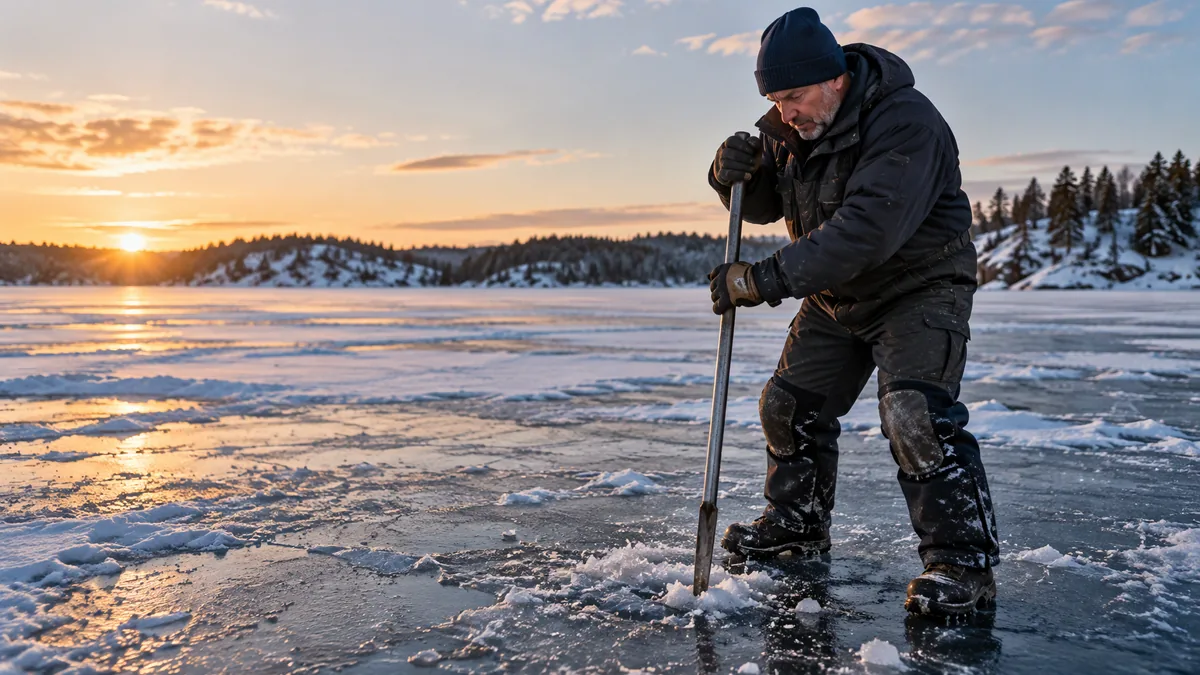
Two details matter more than the number. First, clear blue ice is stronger than white ice. White, snow-flecked ice contains air and can be roughly half as strong for the same thickness, so six inches of white ice is not the same as six inches of black ice. Second, thickness must be measured in several places, not eyeballed from the ramp. Use a spud bar to test as you walk or drill a hole with an auger and measure with a tape or ice gauge.
New ice near shore is often thicker or thinner than the middle. Ice over a channel can be thinner than ice over a bay. The number that matters is the number under your feet, at the spot you are standing on.
Ice Is Never Uniform
The most dangerous ice is the ice that looks fine. Several features create weak spots:
- Inlets, outlets, and moving water. Current eats ice from below. Creek mouths and spillways can stay open or paper-thin long after the rest of the lake locks up.
- Springs and gas holes. Groundwater upwellings keep a patch thin, sometimes capped with snow that hides it.
- Pressure ridges. These seams of broken, refrozen ice can be several feet high and hide open water or slush along the crack.
- Around bridges, docks, and islands. Structures absorb sun and create current, so ice forms later and melts earlier.
- Snow-covered slush. Heavy snow insulates ice from the cold and adds weight, pushing water up through cracks. A gray, slushy surface is a warning, not a path.
- Early and late season. First ice and last ice are the most unpredictable. Late-season ice rots from the inside and loses strength even while it still looks thick.
A thaw followed by a refreeze is another red flag. Meltwater drains, refreezes cloudy and weaker, and can leave hidden voids. Treat any ice you have not personally checked as unproven, no matter how many tracks cross it.
Gear That Buys You Time
Safety gear does not prevent a breakthrough. It shortens the time you spend in the water, which is what actually matters.
- Ice picks worn around the neck. Two handles with sharp spikes, stored where you can reach them without fumbling. They are the single most important piece of ice safety gear.
- A float suit or a PFD. A float coat keeps you at the surface and traps warmth. Many ice anglers wear one under a shell.
- A throw rope in a bag you can deploy with one hand, plus a length of rope or a ladder for rescue.
- A spud bar for testing ice ahead of your steps.
- A fully charged phone in a waterproof pouch, and a whistle to signal for help.
- A dry bag with spare clothes left on shore or in the vehicle.
- A fishing partner. Two people can help each other; one person alone has to solve everything with cold hands.
Carry this gear on every trip, including short ones on ice you think you know. The ice fishing basics guide covers the rest of a starter setup, and how to set up an ice fishing rig handles tackle once you are safely on the ice.
What to Do If You Go Through
The first minute decides the outcome. Cold shock, not hypothermia, is what kills most people quickly — the abrupt gasp and panic that comes with plunging into near-freezing water.
- Control your breathing. Keep your head above water and take slow breaths. The gasp reflex passes in seconds if you do not fight it.
- Turn toward the ice you came from. That ice already held your weight, so it is the most likely place to climb out.
- Use your ice picks. Plant both spikes into the ice surface, kick your feet, and pull your chest onto the shelf.
- Get horizontal and roll or crawl. Do not stand up immediately; the ice at the edge is weak. Distribute your weight and move away from the hole.
- Get dry and warm fast. Change clothes, get into a shelter or vehicle, and call for help. Watch for confusion and slurred speech, which signal hypothermia.
If someone else goes through, resist the urge to run out to them. Call emergency services, then reach with a rope, ladder, tree limb, or anything long that keeps you off the weak ice. Throw, don't go. A rescuer who falls in turns one victim into two.
Vehicles, Shelters, and Carbon Monoxide
Driving on ice is a calculation many anglers get wrong. Even at the thickness local authorities allow, ice strength varies, and a vehicle concentrates weight in one spot. If you drive out, follow local guidance, keep windows down and seatbelts off, space vehicles well apart, and never park near a pressure ridge or an inlet.
Shelters bring a different hazard: carbon monoxide. Propane heaters, lanterns, and stoves produce odorless gas. A sealed flip-over or hub shelter can concentrate it within minutes. Leave a vent open, avoid running a heater while you sleep, and consider a battery-powered CO alarm small enough for a tackle box. Headaches, nausea, and drowsiness in a heated shelter are warnings, not signs to tough it out.
Weather, Darkness, and Going Alone
Wind chill drives frostbite faster than air temperature suggests. Cover exposed skin, and check the forecast for wind, not just degrees. Snow squalls can erase the shoreline in minutes, so carry a compass or a charged phone with a map, and learn the direction back to the ramp before you walk out.
Ice at night can be safer to walk on — colder, less sun — but hazards are harder to see. A headlamp, a spare battery, and a route you already walked in daylight reduce the risk. If you fish alone, tell someone where you are going and when you expect to return, and stick to that plan. A check-in call is the difference between a rescue and a search.
Common Mistakes on Hard Water
- Following old tracks. A trail from last week proves someone walked there then, not that it is safe now.
- Testing one hole. Thickness changes across a lake. Check along your route.
- Fishing alone with no plan. No partner, no check-in, and no one who knows where to look.
- Drinking alcohol. It impairs judgment and speeds heat loss.
- Stomping to test ice. If it is weak, stomping is how you go through. Use a spud bar.
- Crowding one spot. Grouped anglers add weight to a small area, especially near a shack or vehicle.
- Ignoring late-season rot. Warm days, rain, and refreezes weaken ice from below while the surface still looks solid.
FAQ
How many inches of ice is safe for ice fishing? About 4 inches of clear ice is the common threshold for a person on foot, with more for machines and vehicles. Check your state agency's guidance and measure the ice where you plan to stand.
Is white ice as strong as clear ice? No. White ice traps air and is weaker for the same thickness, often estimated at about half the strength of clear blue ice. Treat it with more caution.
How do I test ice thickness? Use a spud bar as you walk, or drill with an auger and measure with a tape or ice gauge. Test several spots along your route, especially near inlets, points, and structure.
What should I do if my dog falls through? Do not crawl out after it. Call for help, use a rope or long pole to guide the dog to solid ice, and keep your own weight off the weak edge.
Is ice safe right after it snows? Snow insulates ice and hides weak spots and slush. Fresh snow does not make ice stronger; it can make it harder to read. Probe as you go.
Safety habits let you enjoy the hard-water season instead of gambling through it. Once the ice checks out, the best ice fishing lures and species guides like yellow perch and walleye help turn a safe trip into a productive one. Browse the Ice Fishing category for the rest of the winter tactics.
About the author and how this was tested
About the author
FishermanGuy
Bank, boat and kayak angler · fishing, crabbing and shrimping since 2021
I buy the gear, fish it for a season and write down what failed. No sponsored verdicts, no free-sample flattery. Every rig on this page has landed fish in water I can point at on a map.
How this was tested
- Every rig gets at least six trips on the same water before it is published.
- Gear is bought at retail. Free samples are labelled in the first paragraph.
- Dates show first publication and the last time the page was updated.