Field notes
Best Baits for River Fishing
Best Baits for River Fishing
The best baits for river fishing are the ones that move through current the way real food does. A river gives you a narrow strike zone and constantly tests whether your bait looks natural, and the wrong bait — or the right bait rigged wrong — gets swept out of that zone before a fish ever sees it. This guide covers the live, cut, and artificial baits that work in moving water, which species each one targets, and how to rig and drift them naturally — plus how to adjust when the river runs high and muddy or low and clear.
How Moving Water Changes Bait Choice
In a lake you can cast, wait, and work a bait back at your own pace. In a river the water sets the pace. Fish sit facing upstream and let the current deliver food, so a bait that tumbles, spins, or drags against the flow reads as wrong and gets ignored.
That shapes everything about bait selection. First, the bait has to survive current. Soft, fragile baits tear off the hook in fast water; tougher baits like crayfish, cut bait, and plastics hold up. Second, weight has to match the flow. Enough weight to reach the bottom without anchoring the bait is the goal, because a bait pinned in one spot looks dead. Third, size matters more than in still water. A bait that is too large catches too much current and drifts unnaturally, so downsize when the water is fast or clear.
The most reliable river baits share one trait: they can be drifted at the speed of the current on a semi-tight line.
Best Live Baits for Rivers
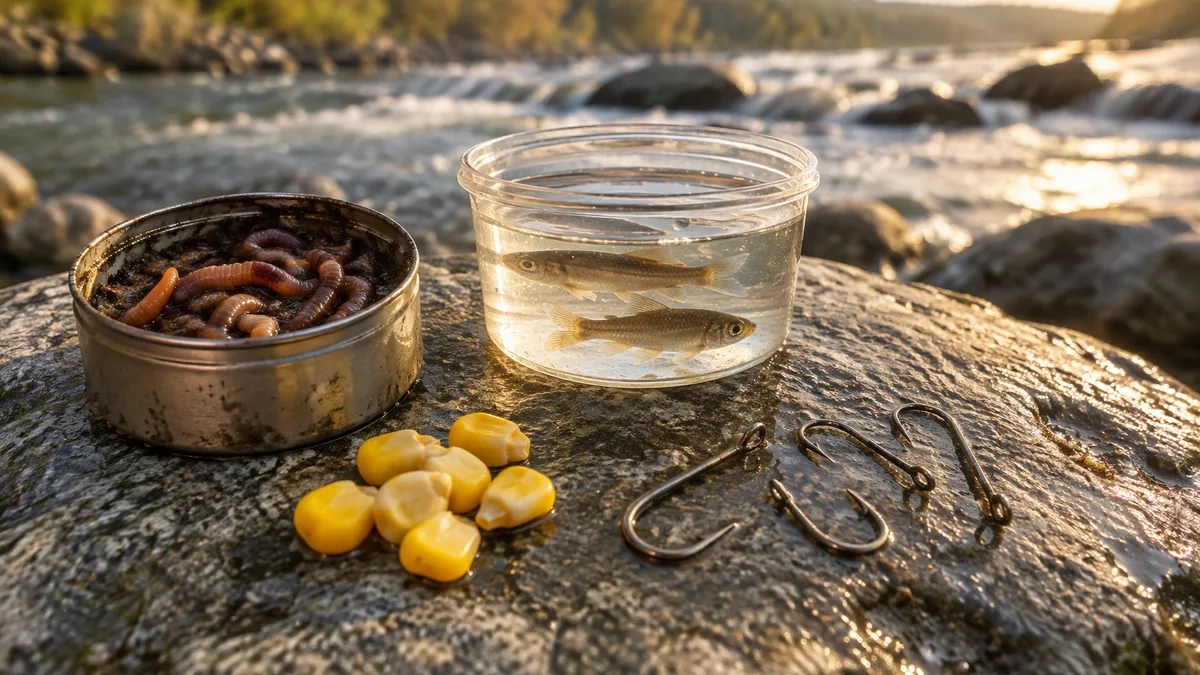
Live bait is hard to beat in a river because it moves on its own. Even a worm on a hook wiggles in current in a way no lure copies.
- Nightcrawlers and earthworms. The most universal river bait there is. Thread a whole worm onto the hook and leave a tail hanging to wiggle, or bunch it up for catfish. Drift it with a split shot or a slip sinker for smallmouth bass, walleye, channel catfish, and trout.
- Live minnows. Hook them through the lips or just under the dorsal fin and fish them free-lined in a riffle or under a float along a seam. Smallmouth bass, walleye, and northern pike all take minnows, and a lively minnow out-fishes a dead one by a wide margin.
- Crayfish. The smallmouth bass staple. Hook a small crayfish through the tail and drift it along rocky bottom. Bass that ignore plastics will often eat a real crayfish.
- Leeches. A favorite for walleye and bass in darker water. Hook a leech once through the sucker and drift it slowly.
- Hellgrammites and large grubs. Natural river insects that trout and smallmouth eat. Hard to find unless you collect them, but deadly where they occur.
- Salmon eggs. In cold rivers with trout and salmon runs, cured eggs drifted under a float are a standard.
- Shrimp and cut-up baitfish. Where legal, fresh shrimp and chunks of baitfish work for catfish and striped bass in tidal rivers.
Many jurisdictions restrict moving live baitfish between waters, and some ban certain species outright, so check the rules before you buy bait.
Best Cut and Prepared Baits
For catfish and carp, cut and prepared baits often out-fish everything else because scent does the work in cloudier water.
- Fresh cut bait. Chunks of shad, sucker, skipjack, or other oily baitfish are the top catfish bait on most rivers. Fresh is the whole game — cut bait that has gone soft and washed out catches far less. Hook it through a tough section so it stays on in current, and change it when it stops bleeding scent.
- Chicken liver. A classic for channel catfish. Liver is soft and tears off easily, so wrap it with bait thread or use a bait sack to keep it on the hook.
- Dough baits and dip baits. Made for catfish and carp, these stay on the hook in current and put out a strong scent trail. They work best fished on the bottom in slower water.
- Corn and prepared grains. Effective for carp and some trout, but rules vary by water. Some trout streams restrict or ban corn and other prepared baits, so confirm before you use it.
Keep prepared baits cool; heat turns cut bait rancid fast.
Best Artificial Baits for Rivers
Artificials let you cover water and avoid the hassle of keeping bait alive. The ones that work in rivers track straight in current and imitate something the river actually holds.
- Inline spinners. The blade spins in current and throws flash and vibration, and the weighted body tracks straight even in flow. Trout and smallmouth bass eat them, and they are one of the easiest lures to fish in a river.
- Soft plastics on jigheads. Grubs, swimbaits, and tubes hopped or swam along the bottom are a river staple for smallmouth and walleye. Use just enough jig weight to hold contact with the bottom without dragging.
- Crankbaits and minnow-style plugs. Work them through runs and along pool edges where fish stage. In current, cast upstream and let the plug swim down naturally.
- Spoons. A simple wobbling spoon is a proven trout and salmon lure, and it casts well into wind and across fast water.
- Finesse plastics. In clear, pressured rivers, a small tube, Ned-style bait, or weightless soft plastic drifted naturally will get bites when bigger lures spook fish.
Match the lure to the forage: brown and orange plastics and small jigs for crayfish rivers, silver spinners and minnow plugs for baitfish rivers.
Rigging Baits for a Natural Drift
The rig matters as much as the bait. A perfect bait dragged out of the strike zone by too much weight catches nothing.
For bottom baits, a slip sinker rig is the workhorse. An egg or bullet sinker slides on the main line above a bead and swivel, with a leader down to the hook. A fish can pick up the bait and move off without feeling the weight, which is why it works so well for catfish, carp, and big walleye. How to rig a slip sinker walks through the setup step by step.
For live minnows and eggs, a float rig holds the bait at a set depth and telegraphs the take. Set the bait just above the bottom or at the depth fish are holding, and let it travel through the run.
Weight is the constant adjustment. Use the lightest weight that lets you reach the strike zone, then mend your line so the current does not bow it and drag the bait. How to read current explains where the seams and slack water are, and how to fish a river covers drift control in detail. Hook the bait with the point exposed, and check it after every drift.
Adjusting Baits to Season and Clarity
A river changes with rain and the calendar, and the best bait changes with it.
When the river is high and muddy, fish move tight to the bank and into slow eddies because the main flow is too strong and too dirty to feed in. Go bigger, darker, and smellier: fresh cut bait, whole worms, and scented prepared baits. Fish close to shore and behind current breaks. When the river is low and clear, the opposite applies. Fish get spooky, so downsize bait and line, use natural colors, and make longer, softer casts into deeper pools and shaded pocket water.
Season sets the pattern on top of that. In spring, warming water and higher flows pull fish toward riffles and spawning areas, and live bait fished in current works well. In summer, low, clear water pushes fish deep or into oxygenated riffles, and the best bite is early and late. In fall, cooling water and dropping levels concentrate fish as they feed hard before winter, which is the time for bigger baits. In winter, slow down, fish deep holding water, and go small with live bait or finesse plastics.
Common Mistakes
- Using too much weight. Overweighted baits snag, stall, and lose their natural drift. Add only enough to reach the zone.
- Bait that is too big for the current. A large bait in fast water tumbles out of control. Downsize when the flow is strong.
- Fishing old or dead bait. Fresh cut bait and lively minnows out-fish stale ones badly. Replace bait often.
- Ignoring bait restrictions. Live baitfish transport, bait bans on some trout waters, and gear restrictions vary by river. Check the rules first.
- Wrong hook size. A hook too small for the bait cannot gap past it on the hookset; too large and the bait tears apart. Match hook to bait.
- Never checking the bait. A bait stripped or balled up on the hook is wasted water. Check it after every drift or cast.
FAQ
What is the best bait for river fishing? There is no single answer, because it depends on species, season, and water clarity. For all-around reliability, nightcrawlers drifted naturally catch the widest range of fish. For catfish, fresh cut bait is the top choice; for smallmouth, crayfish and live minnows are hard to beat.
Are live baits better than lures in a river? Often yes in cold or high water, when fish want an easy meal and a natural presentation. Lures are better for covering water and finding active fish. Many anglers carry both and switch based on what the river is doing.
What bait should I use for river smallmouth bass? Crayfish, live minnows, and soft plastics on jigheads are the core baits. Smallmouth relate to rock and current, so drift or hop these along the bottom near current breaks.
What is the best bait for river catfish? Fresh cut bait — shad, skipjack, or sucker — is the standard. Chicken liver and whole worms also work, especially for channel catfish in slower water.
Can I use corn for river fishing? In many places yes, and it works for carp and stocked trout. But some waters restrict or ban prepared baits, so check the local regulations before using it.
From here, match your bait to a target. Rivers are smallmouth water across much of North America — see how to catch smallmouth bass — and hold walleye in deeper pools (walleye) and channel catfish in slower runs (channel catfish). Trout anglers can chase brown trout and rainbow trout, while carp and pike round out the list. For more on presentation, read river fishing techniques, and browse the Rivers & Streams category.
About the author and how this was tested
About the author
FishermanGuy
Bank, boat and kayak angler · fishing, crabbing and shrimping since 2021
I buy the gear, fish it for a season and write down what failed. No sponsored verdicts, no free-sample flattery. Every rig on this page has landed fish in water I can point at on a map.
How this was tested
- Every rig gets at least six trips on the same water before it is published.
- Gear is bought at retail. Free samples are labelled in the first paragraph.
- Dates show first publication and the last time the page was updated.