Field notes
River Fishing Techniques That Work
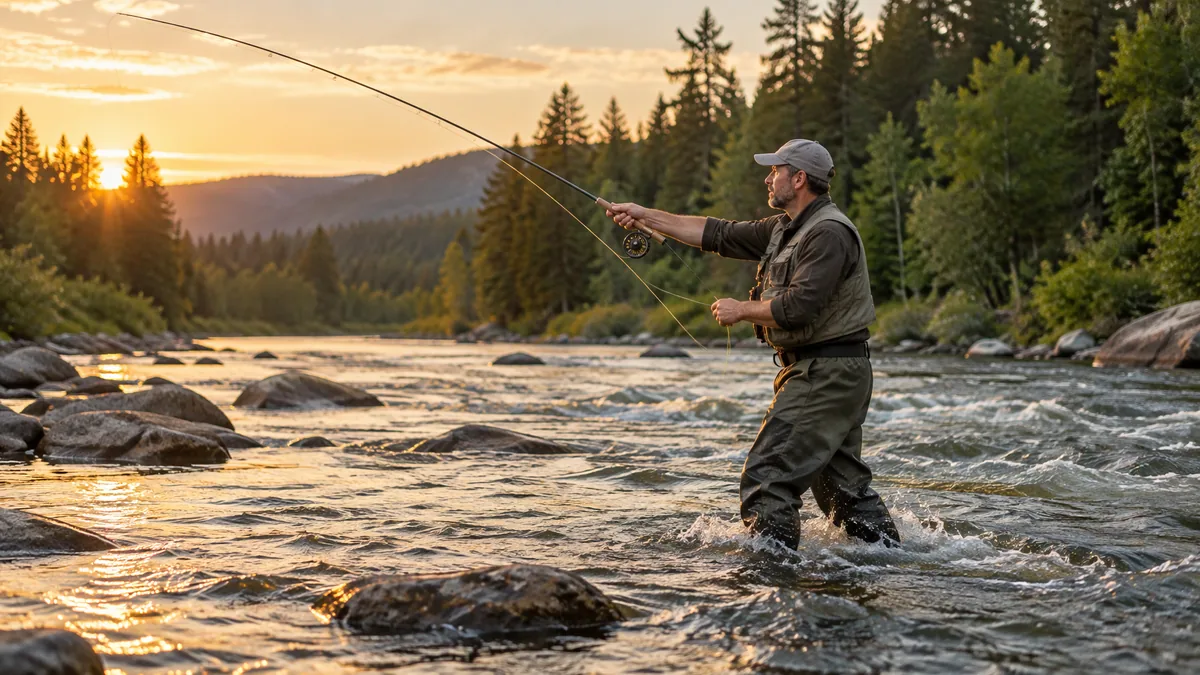
River Fishing Techniques That Work
River fishing rewards anglers who work with the current instead of against it. Fish in a moving river are positioned by flow: they hold where food arrives without forcing them to fight the water, and the most effective river fishing techniques are built around that single fact. Whether you are drifting a bait through a seam, swinging a spinner past a boulder, or bouncing a jig down the face of a deep run, the goal never changes. You want your offering to look like natural food moving at natural speed, delivered where a fish is already facing. This guide covers the techniques that catch river fish across the country, from reading the water to choosing the right presentation for each piece of current, plus the mistakes that keep anglers fishing empty water all day.
Read the Water Before You Fish
Current is the whole puzzle. Before you make a cast, spend a few minutes reading the surface and predicting where fish will be. A river repeats the same handful of features: riffles, runs, pools, seams, and eddies. Learn to spot them and you can read almost any water.
A riffle is shallow, fast, broken water over rock or gravel. It is high in oxygen and a feeding zone, but the water is too shallow and quick for fish to rest in for long. A run is the steady stretch where current moves at a uniform speed, and a pool is the deep, slower water below a riffle where fish hold and rest. The pattern riffle, run, and pool repeats down the length of almost every river, so what you learn in one stretch applies in the next.
The seam is the most important feature to find. A seam is the visible line where fast water meets slow water, often showing as a glassy band beside a riffle or a foam line trailing behind a rock. Bait gets funneled along seams, and predators sit just inside the slow side, facing upstream to pick off whatever drifts past. An eddy is the calm, swirling pocket behind any object that breaks the flow: a boulder, a bridge piling, a fallen tree. Fish tuck into eddies to save energy and dart out to feed. The surface skills transfer directly from still water, so how to read water is worth a review even if you only fish rivers.
Master the Dead Drift
The dead drift is the foundation of river fishing. Instead of casting out and reeling in, you cast upstream or up and across, then let the current carry the bait down at the same speed as the flow. A bait that drifts naturally looks like food. A bait dragged against the current on a tight line looks like a warning.
Two things make a drift look natural. The first is weight. Use just enough to reach the strike zone without dragging the bottom; too little and the bait skips along the surface, too much and it snags and stalls. Adjust the weight to the depth and speed of the water in front of you.
The second is line control. As your line crosses fast water to reach slower water, the current bows it downstream and pulls the bait off course. You fix that with a mend, a quick flip of the rod that lays a curve of line upstream so the current has slack to eat before it starts dragging the bait. Mending is the difference between a drift that looks alive and one that looks towed.
Watch the line, not just the float. Many river bites show as a sudden stop, a twitch, or the line going slack. Set the hook when the drift changes in a way the current alone cannot explain. For floating presentations, a float or strike indicator holds the bait at a set depth and telegraphs the take; for bottom presentations, a sliding sinker or split shot lets the bait bounce along the riverbed while the weight anchors the rig.
Present Lures in Current
Lures need to be worked differently in a river than in a lake. The current is a free motor, and the goal is to let it do the swimming while you steer.
Inline spinners are the simplest current lure. Cast up and across, let the blade start turning as the lure swings down and across the flow, then hold a slow, steady retrieve. The spinner tracks straight, flashes, and covers a seam or the edge of a riffle efficiently. Soft plastics on jigheads are more versatile: hop them along the bottom, swim them through seams, or let a heavier jig sweep under a current tongue. Crankbaits and minnow-style plugs cover runs and pool edges when fish are keyed on baitfish.
Casting angle matters as much as the lure. Cast upstream and the lure comes back toward a fish that is facing you, which is the natural presentation. Cast downstream and you are chasing fish from behind. Work the edges of current breaks rather than the dead center of flow, because that is where fish sit and where your lure stays visible longest. If you want to compare natural bait with artificials, live bait vs lures breaks down when each has the edge in moving water.
Fish Eddies and Structure
Current breaks hold river fish, and the bigger the break, the better. Any object that interrupts the flow creates a pocket of calmer water downstream of it, and fish use those pockets as rest stops between feeding runs.
Target the seam at the edge of an eddy rather than its dead center. Fish sit on the slow side of that line and dart into the fast water to grab food, so a lure or bait that slips along the seam gets seen. Undercut banks, where the current has carved the soil out from under the bank, are prime holding water too: fish hide in the shadow and dash out for food, so cast tight to the bank and let your bait drift along it. Log jams and root balls are cover and current break in one package; work the downstream edge and the pockets around the wood.
Work the Bottom in Deep Runs
When fish hold deep in a run or pool, you need to get your bait down to them. Two presentations cover most of it.
A sliding sinker rig, with the weight above a swivel and a leader to the hook, lets you hold bottom in fast water while the bait moves naturally. A fish that picks up the bait feels little resistance because the line slides through the weight. Split shot pinched a foot or two above the hook does the same job on a lighter scale. The other approach is a jig or a weighted soft plastic dragged and bounced along the bottom, lifting and dropping with the rod tip so it ticks structure without hanging up. In both cases, slow is right: a bait that crawls through the strike zone beats one that races through it.
Adjust to Water Level and Season
A river changes with rain, snowmelt, dam releases, and the calendar, and so does the fishing. Ignoring water level is one of the fastest ways to waste a trip.
High, muddy water pushes fish tight to the bank and into slow eddies, because the main current is too strong and too dirty to feed in. Fish close to shore and behind structure, and use bigger, darker, more visible baits so fish can find them in low clarity. Low, clear water does the opposite: fish get spooky and slide into deeper pools and shaded pocket water, and you need to downsize line and bait and make longer, softer casts.
Season sets the pattern on top of that. In spring, warming water and higher flows pull fish toward riffles and spawning gravel. In summer, low, clear water pushes fish deep or into oxygenated riffles, and the bite is best early and late. In fall, cooling water concentrates fish in deeper holding water as they feed hard before winter. Best time of day to fish explains how light and weather shift that window. If a dam releases upstream, the level can rise fast and without warning, so know the release schedule, watch for a rising, dirty edge, and never wade a tailwater without an exit route.
Common Mistakes
- Fishing the middle of the river. The most productive water is almost always the edge: a seam, a bank, a current break. Fish the margins before the center.
- Casting downstream. River fish face upstream, so cast upstream or across and let the current bring your bait toward them naturally.
- Never mending the line. A tight, bowed line drags your bait out of the zone. Learn to mend and your drift will look alive.
- Too much weight. Enough to reach the zone is plenty. Overweighted rigs snag, stall, and lose their action.
- Standing in the spot you should be fishing. Wading straight into a pool spooks fish. Fish the near water first, then wade upstream as you go.
- Ignoring the regulations. Seasons, size limits, bait restrictions, and catch-and-release rules vary by water and change often. Check the current rules for your river before you fish.
FAQ
What is the best bait for river fishing? There is no universal answer, but live bait such as worms, minnows, and grubs drifted naturally is the most reliable across species. For artificials, inline spinners and soft plastics cover most river situations.
Can you fish a river without a boat? Yes. Wading and bank fishing is how most anglers fish rivers. Focus on access with structure: bridge pilings, riffles, pool heads, and undercut banks you can reach from shore.
How do I know where the fish are in a river? Look for the edge between fast and slow water. Fish hold in the slower water beside a current seam, facing upstream. Pools, eddies, and current breaks behind structure are the highest-percentage spots.
Do I need special line for river fishing? Not necessarily, but thin, sensitive line helps you feel a drift and reach deeper water. Braid with a fluorocarbon leader is a strong all-around choice around rocks and wood.
From here, target a species that suits your river. Rivers are smallmouth water in much of North America, so see how to catch smallmouth bass; cold, fast rivers are trout country, and rainbow trout are a classic target. For bigger fish, try walleye in deeper pools or striped bass in tidal rivers. If you are still learning the broader picture, how to fish a river covers the fundamentals, and the Rivers & Streams category collects the rest.
About the author and how this was tested
About the author
FishermanGuy
Bank, boat and kayak angler · fishing, crabbing and shrimping since 2021
I buy the gear, fish it for a season and write down what failed. No sponsored verdicts, no free-sample flattery. Every rig on this page has landed fish in water I can point at on a map.
How this was tested
- Every rig gets at least six trips on the same water before it is published.
- Gear is bought at retail. Free samples are labelled in the first paragraph.
- Dates show first publication and the last time the page was updated.