Field notes
Reef Fishing Techniques
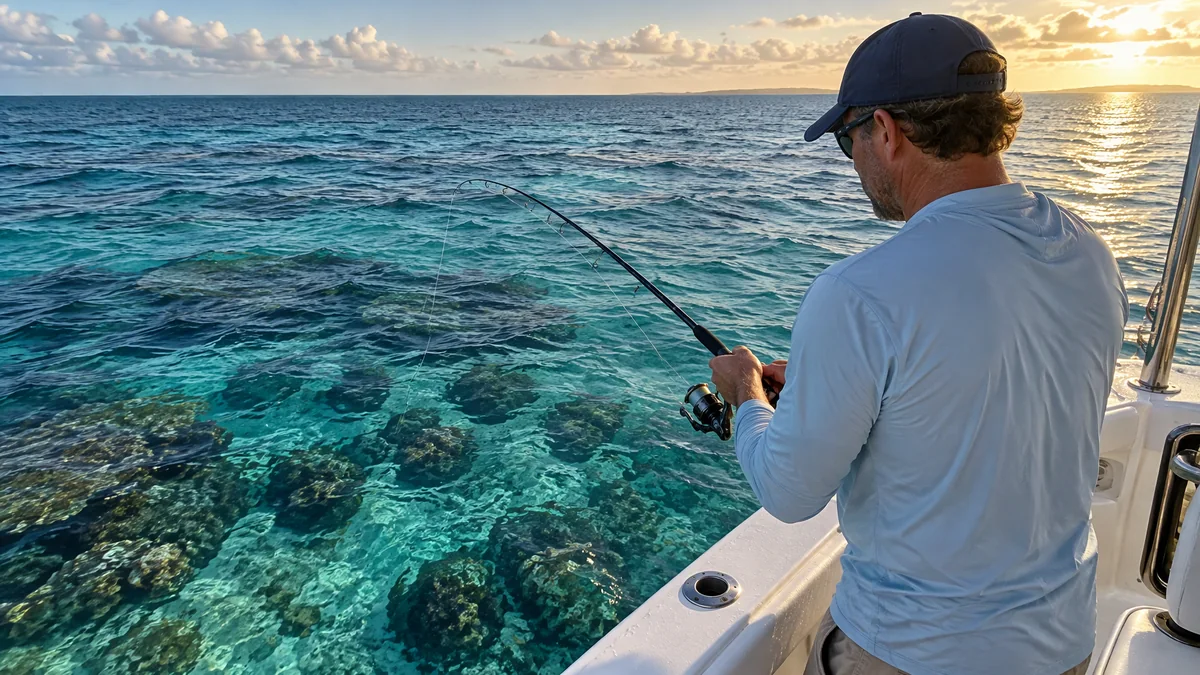
Reef Fishing Techniques
Reef fishing is a game of geography. Natural ledges, rock piles, coral heads, wrecks, and artificial reefs all concentrate fish for the same reason: structure gives them cover, food, and a place to ambush prey. The anglers who catch consistently are the ones who find that structure, put the boat in the right spot relative to the current, and present a bait that looks like it belongs there. Reef fishing techniques are less about casting far and more about positioning, rigging, and feel. This guide covers how to find the edge on a sounder, how to hold the boat over it, the bottom rigs and jigging methods that catch reef fish, and how to keep fish out of the rocks once they are hooked.
Find the Edge on the Sounder
Reef fish relate to edges: the lip of a ledge, the edge of a wreck, the sand-to-rock transition. That edge is where bait gets pushed against structure and where predators wait. Your job is to see it before you drop a line.
Watch the bottom trace on your sonar. A hard, rising line that suddenly drops is a ledge or a rock. A wreck or a reef ball shows as a distinct block or mound off the bottom. Fish often read as marks tight to the structure or as a separate arch just above it. Mark the spot, then set up so your drift or anchor position lets you fish that specific edge rather than the featureless bottom around it.
Depth change is the other cue. The difference between the top of a ledge and its base might be only a few feet or a good deal more, and the fish are usually on the deeper side or right on the drop. Learn the shape of the structure on a calm day and you can return to it precisely when the fishing matters.
Position the Boat Over the Reef
Where you stop the boat decides whether your bait reaches the fish. The current runs along the bottom, so you want to set up upcurrent of the structure and let your offering settle down onto the edge.
Anchoring upcurrent is the most controllable approach on smaller features and in moderate current. Drop anchor well upcurrent of the mark and let out line until the boat settles with the reef behind you, so your lines fall back onto the structure. For larger areas, wreck fishing, or deeper water, drifting is often more productive: line up the drift so it carries your bait across the productive edge rather than past it. Some anglers use a drift-and-drop method, holding the boat in gear to slow the drift over a small spot.
Getting the boat position right is half the job, and it is where a sounder and a marker help most. Watch the structure as you approach, note which way the current sets, and plan the drop before you commit. On a slow day, moving the boat a few feet can be the difference between fishing empty water and fishing the edge.
Bottom Rigs for Reef Fish
Reef bottom fishing uses simple, strong rigs that get bait down fast and keep it in contact with structure.
The knocker rig is a favorite around rocks. An egg sinker slides on the main line above a swivel, with a short leader and a single hook below. The sinker knocks along the bottom and telegraphs structure through the rod, while the bait trails behind it. When a fish eats, the line slides through the sinker and the fish feels little resistance.
The dropper-loop or chicken rig carries one or two hooks on short loops above a heavier sinker. It presents bait close to the bottom at more than one height, which suits snapper and other fish that feed just off the structure. A standard two-hook bottom rig does the same job with droppers and a bank sinker.
Use enough sinker weight to reach bottom and hold it in the current, and no more. Heavy mono or fluorocarbon leader in the 30-to-60 pound class gives abrasion resistance around rock, and circle hooks reduce gut-hooking on fish you plan to release. Match hook size to the target, then check your leader for fraying after every fish and every contact with the rocks.
Jigging the Reef
Vertical jigging is one of the most direct reef techniques and one of the most fun. Drop a metal jig or a weighted soft plastic to the bottom, then work it up through the water column with sharp, rhythmic lifts of the rod and a controlled drop back down.
The strike usually comes on the fall, so stay attentive when the jig is dropping and keep a light thumb on the spool. Speed up, slow down, or change the rhythm until you find what the fish want that day. A slow, deliberate lift-and-drop suits fish that are sluggish; a fast, aggressive rip triggers reaction strikes when they are feeding hard.
Jigs also cover water efficiently. You can fan-cast across a wreck or drift a jig over a ledge to find where the fish are holding, then switch to bait once you find them. Use a jig heavy enough to reach the structure quickly and stay in contact with the bottom during the drop and retrieve.
Bait on the Reef
Natural bait remains the most reliable choice on structure. Live bait is hard to beat for big snapper, grouper, and other predatory reef fish, because a live baitfish swimming naturally on the edge is exactly what they are hunting. Hook it through the back or the nose so it swims upright, and let it work on a knocker rig or a fish-finder setup near the structure.
Fresh cut bait is the durable alternative. Chunks of fish, squid, and strips stay on the hook through multiple drops and bleed scent into the current. Cut bait is especially good when fish are keyed on scent and when the current is pushing a trail off the reef. Match the size of the bait to the size of the fish you expect: a big bait deters smaller fish and appeals to the bigger ones, while a small bait gets more bites but fewer trophies.
Match presentation to the current. In strong current, heavier weight and a streamlined bait reach bottom; in light current, lighter tackle and a livelier presentation work better.
Keep Fish Out of the Rocks
The hardest part of reef fishing happens after the hookset. Reef fish head straight for structure, and a fish that reaches a ledge or a wreck can cut you off in seconds.
The fix is to take control immediately. On the hookset, reel down and drive the hook home, then turn the fish and pump it up away from the bottom rather than letting it run back into the rocks. Keep steady pressure, keep the rod loaded, and do not give line you do not have to give. A high rod angle lifts the fish over the structure, and a smooth, strong drag lets the fish run when it must without letting it reach cover. Around heavy rock, heavier leader and a faster, more direct approach land more fish; around lighter structure, you can ease off and enjoy the fight. The offshore fishing basics guide covers the broader boat-handling picture.
Common Mistakes
- Fishing off the structure. Reef fish live on the edge. Anchor or drift so your bait lands on the structure, not on the sand beside it.
- Sinker too light for the current. If your bait never reaches bottom, you are not fishing the reef. Add weight until you feel the structure.
- Letting a hooked fish run. Reef fish head for the rocks. Turn them early and pump them up before they reach cover.
- Heavy tackle for small fish. Match your leader and hooks to the target. Too heavy costs you bites on pressured fish.
- Ignoring the drift direction. Set up so the drift carries your bait across the productive edge, not past it.
- Skipping the rules. Reef closures, size limits, and bag limits, especially for snapper and grouper, vary by region and season. Check current regulations before you fish.
FAQ
What is the best depth for reef fishing? It varies widely, from shallow inshore reefs to deep offshore ledges. What matters more than a specific depth is finding structure that holds bait and fish, and presenting your bait on the edge of that structure.
Do you anchor or drift when reef fishing? Both work. Anchor upcurrent on small features and in manageable current for precise control; drift over large areas, wrecks, or deep water to cover more ground.
What is the best bait for reef fishing? Live bait is the top choice for big predatory reef fish, with fresh cut bait and squid as durable, reliable alternatives. Match bait size and presentation to the current and the fish you expect.
What pound leader should I use on a reef? Many anglers use 30-to-60 pound leader around rock and wreck structure, going heavier in abrasive, snaggy areas. Lighter leader gets more bites but gives up abrasion resistance.
How do I stop reef fish from cutting me off? Turn the fish immediately after the hookset, keep steady pressure, and pump it up away from the bottom. Heavy leader and a strong drag help, but fast, decisive control matters most.
To go further, browse the Offshore & Reef category or the wider Saltwater Fishing section. The species guides go deeper on specific targets: see how to catch red snapper, how to catch coral trout, how to catch cobia, and how to catch giant trevally.
About the author and how this was tested
About the author
FishermanGuy
Bank, boat and kayak angler · fishing, crabbing and shrimping since 2021
I buy the gear, fish it for a season and write down what failed. No sponsored verdicts, no free-sample flattery. Every rig on this page has landed fish in water I can point at on a map.
How this was tested
- Every rig gets at least six trips on the same water before it is published.
- Gear is bought at retail. Free samples are labelled in the first paragraph.
- Dates show first publication and the last time the page was updated.