Field notes
Pier Fishing Basics
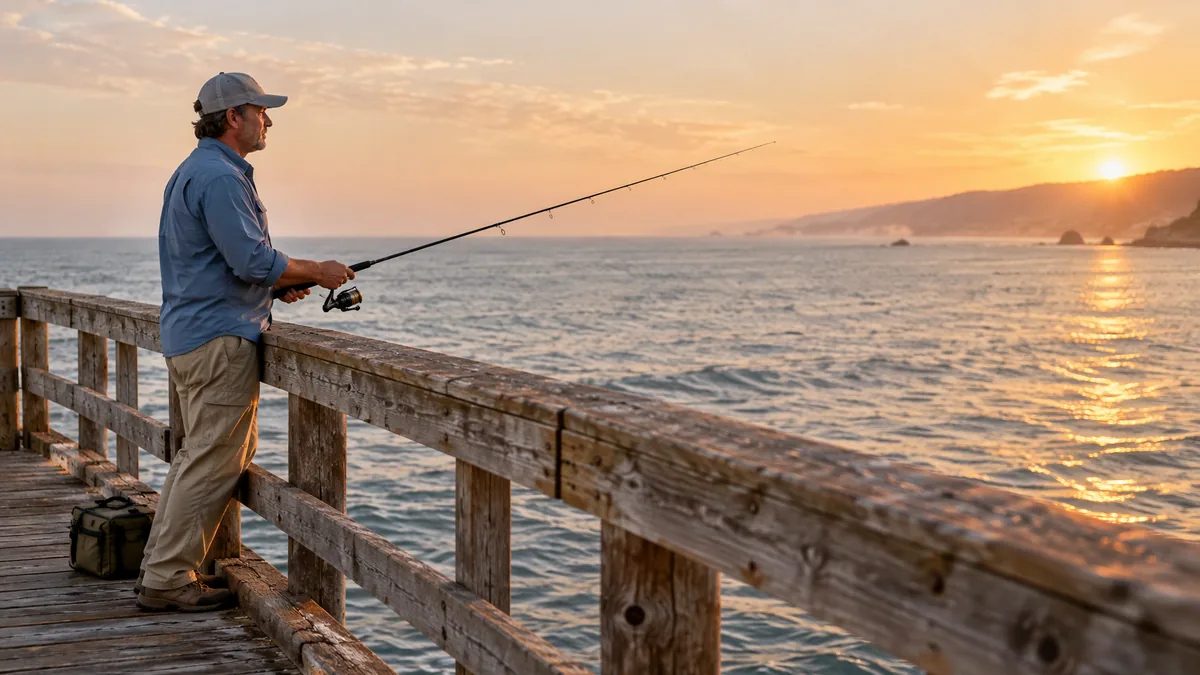
Pier Fishing Basics
A pier gives shore anglers something they rarely get otherwise: deep saltwater, structure, and access all in one place. That makes pier fishing basics surprisingly simple to learn. You do not need a boat, and you do not need to cast to the horizon, because the fish are often already gathered around the pilings beneath your feet. What you do need is an understanding of how fish use a pier, the rigs that present bait around structure, and a little patience with the tide. Get those right and a public pier can out-fish a lot of open beach. This guide covers the gear, the water reading, the rigs, the baits, and the timing that turn a casual pier trip into a plan.
Gear That Fits a Pier
Pier tackle sits between surf and boat gear. You often fish straight down or at a short angle to structure, but you may also want distance when fish push out past the end of the pier.
A spinning rod in the 7-to-9-foot range handles most pier fishing well. It is long enough to cast past the pilings and to lift a fish up to the deck, and short enough to manage in tight quarters. Pair it with a 3000-to-5000 size spinning reel with a smooth drag and enough line capacity for a fish that runs. Braid in the 15-to-30 pound class adds sensitivity and cuts current, and a fluorocarbon leader of 20 to 30 pounds gives abrasion resistance around pilings and mussel-covered structure.
The rest of the kit is simple. Bring a pier net or a bridge net if the deck is high, long-nose pliers, a rag or towel, a bait knife, and a bucket. A pier cart or a backpack keeps it manageable when you have a walk to the fishing spot. If you are building a first saltwater outfit, fishing for beginners gear covers the essentials, and surf fishing for beginners explains the overlapping beach gear.
Read the Pier and the Tide
The pier itself is a fish magnet, and the water around it tells you where fish will be. Pilings break the current and collect food, so fish hold tight to structure and pick off whatever washes past. The shadow line a pier casts is a feeding lane, especially in bright sun, and the deep water under the end of the pier often holds bigger fish than the shallows inshore.
Current is the other half of the puzzle. On a moving tide, water sweeps past the pilings and creates eddies and seams much like a river does. Fish face into that current and wait for food. On slack water, when little is moving, the bite usually slows. Look for the current-edges around pilings, the darker deep water, and any bait flickering near the surface or birds working nearby.
Tide timing sets the schedule. The moving stages of a rising or falling tide usually beat the dead slack in between, because moving water is what pushes bait and triggers feeding. Incoming water often brings cleaner water and fresh bait toward the pier; outgoing water drains the flats and pulls bait out past the structure. Pair the tide with light level using best time of day to fish, since dawn and dusk are strong on any tide. The reading skills are the same ones you use from the beach, so how to read water is a useful companion.
The Rigs That Cover a Pier
Two or three simple rigs handle almost everything a pier throws at you.
The bottom rig is the workhorse. A sliding sinker or a bank-style sinker sits above a swivel, with one or two hooks on short leaders below. It holds bait on or near the bottom where species like whiting, croaker, and flounder feed. When fish are hugging structure, drop it straight down beside a piling rather than casting far.
The float rig presents bait up in the water column, which suits fish that feed higher and keeps your bait off snaggy bottom. A sliding float above a split shot and a small hook lets live shrimp or a live baitfish swim naturally at a set depth; adjust the stop so the bait rides just above the structure. Freelining is the third option: no weight at all, just a live bait allowed to swim with the current. It is deadly for pelagic and mid-water fish when they are around the pier.
Match hook size to bait and target, and keep leaders simple. Check them for abrasion after every fish and after every snag, because pilings and shells rough up line fast.
Bait and Lures for Pier Fish
Fresh natural bait is the most reliable choice on a pier. Live shrimp is the universal bait that nearly everything eats. Cut bait such as mullet, menhaden, or mackerel stays on the hook through repeated casts and bleeds scent into the current. Squid strips, sand fleas, and small live baitfish round out a basic selection.
Artificials shine when fish are actively feeding. Sabiki rigs catch baitfish and small species by the handful. Metal spoons and jigs cast far and imitate baitfish, and small bucktail jigs work around structure. Soft plastics on jigheads produce around pilings, and topwater plugs draw strikes at dawn and dusk when predators push bait to the surface.
Match bait to what is around. For whiting and croaker, small hooks with shrimp or fish strips on the bottom keep rods bending. For redfish and striped bass, live bait and cut bait near structure are strong. Pelagic visitors like mackerel and bluefish respond to fast-moving spoons and jigs. The species guides go deeper: see how to catch whiting, how to catch redfish, and how to catch summer flounder.
Fish Around Pilings and Structure
Pier fishing is structure fishing, and how you work that structure decides your catch. Fish the near pilings first, dropping bait straight down before you cast far. Fish often sit within a few feet of the deck, and a bait lowered quietly beside a piling beats a long cast into open water.
Work the shadow line and the current seam at the edge of the pilings. Let a float rig or a freelined bait drift with the current past the structure rather than fighting it. When you hook a fish near a piling, apply steady side pressure to steer it away from the wood instead of letting it wrap you up. Keep the rod tip up and the line tight, and use the net early on a high deck rather than trying to swing a heavy fish over the rail.
If the pier has a T or an L at the end, the corners and the deep water off the end usually hold more and bigger fish than the straight run. Move along the pier and fish the edges of structure rather than standing in one spot all day. When you want to cast further, how to cast a fishing rod will tighten your accuracy, which matters more than raw distance around a crowded pier.
Common Mistakes
- Casting past the fish. The fish are often right under the pier. Fish the near pilings before bombing a cast into open water.
- Fishing slack water all day. A dead tide fishes poorly. Plan around the moving stages of the tide.
- Too-heavy gear for the target. Around pilings you need abrasion resistance, but line and hooks that are too heavy cost you bites from smaller, pressured fish.
- Ignoring other anglers. A pier is shared space. Cast with awareness, keep your line out of neighbors' lanes, and mind your back cast.
- Skipping the net. A high pier and a heavy fish do not mix with a straight lift. Use a net and release fish quickly and carefully.
- Forgetting the rules. Bag limits, size limits, and gear restrictions vary by state and change often. Check the current regulations before you fish.
FAQ
What can you catch on a pier? It depends on the region and season, but common pier catches include whiting, croaker, flounder, redfish, striped bass, mackerel, bluefish, sheepshead, and a range of small bottom fish. Pelagic species pass by the end of the pier at certain times of year.
Do you need a special rod for pier fishing? A 7-to-9-foot spinning rod covers most situations. A longer rod helps with distance and lifting fish, while a shorter one is easier to manage in a crowd.
What is the best bait for pier fishing? Live shrimp is the most universal bait. Cut bait and squid strips are durable and reliable, and sabiki rigs or small jigs catch bait and small species when fish are active.
Is pier fishing good at night? Yes. Many piers fish well after dark, when predators move in and crowds thin out. Bring a headlamp, watch your footing, and follow any pier-specific rules about night access.
How do you keep bait down beside a piling? Use a bottom rig with enough sinker to hold position in the current, and drop it straight down rather than casting. Adjust weight until the rig stays where you put it.
To go further, browse the Surf & Pier category or the wider Saltwater Fishing section. If you want to fish from a boat instead of a pier, inshore fishing basics picks up where the pier leaves off.
About the author and how this was tested
About the author
FishermanGuy
Bank, boat and kayak angler · fishing, crabbing and shrimping since 2021
I buy the gear, fish it for a season and write down what failed. No sponsored verdicts, no free-sample flattery. Every rig on this page has landed fish in water I can point at on a map.
How this was tested
- Every rig gets at least six trips on the same water before it is published.
- Gear is bought at retail. Free samples are labelled in the first paragraph.
- Dates show first publication and the last time the page was updated.