Field notes
Carolina Rig Basics
Carolina Rig Basics
The Carolina rig is one of the great bottom-fishing setups, and carolina rig basics are easy to learn and hard to outgrow. It is a soft-plastic presentation built to cover water, find structure, and keep a bait riding just off the bottom where bass and other fish feed. The rig gets its name from its two-part design: a weight that slides freely on the main line, then a leader and hook trailing behind it. That simple layout does two useful things at once. The heavy weight keeps you in contact with the bottom and tells you what the bottom is made of, while the light leader lets the bait move with a natural, darting action that a nose-hooked weight cannot. This guide covers what the rig is, how to assemble it, how to choose its parts, and how to fish it along structure.
What a Carolina Rig Is and When to Use It
A Carolina rig separates the weight from the bait. The sinker rides on the main line above a swivel, and a leader runs from the swivel to the hook. When you drag the rig, the weight stays on the bottom and the bait trails behind it on a length of line, free to float, dart, and glide.
That separation is why the rig is so effective for covering water. You can cast it out, drag it across a flat or along a ledge, and feel the bottom through the rod while the bait does its own thing behind the weight. It excels when fish are spread out and you need to find them, when you want to probe deeper structure on a long cast, and when you want a subtle presentation that still reaches fish holding tight to the bottom. It is a go-to for bass on points, humps, channel edges, and deep flats, and it works for other bottom-oriented species too.
The Parts of a Carolina Rig
The rig uses a handful of components, and each one has a job. Understanding them makes it easy to tune the rig to the day.
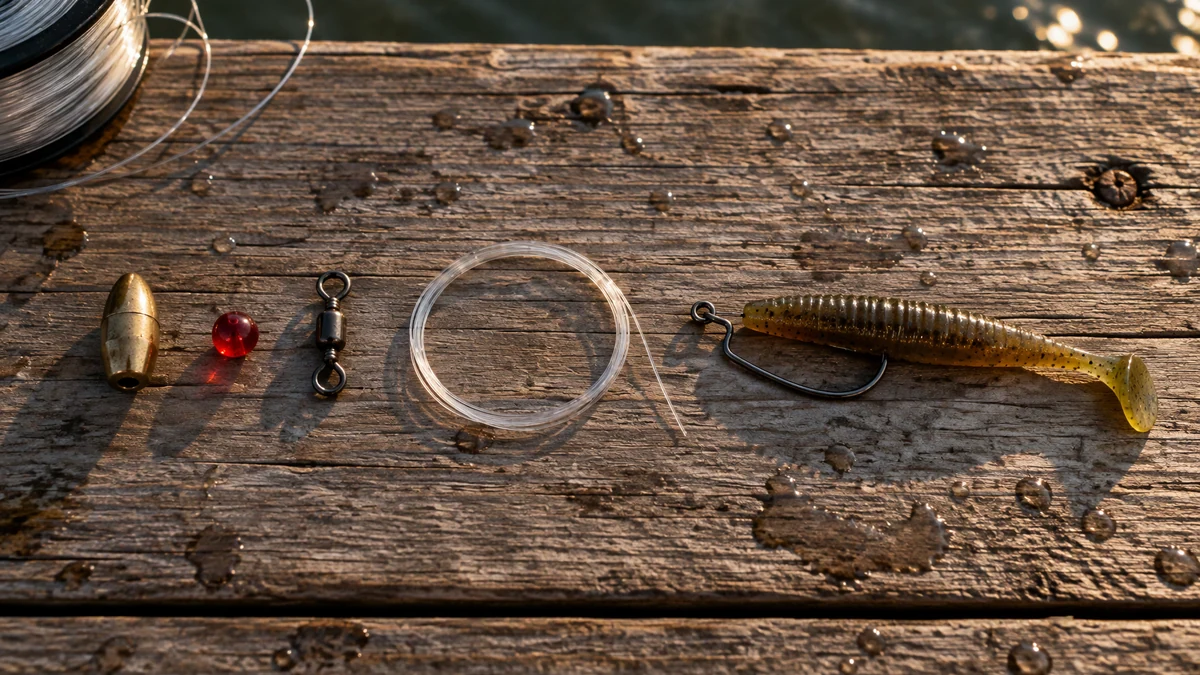
- The weight. An egg sinker or a bullet-style weight slides freely on the main line. Its job is to hold bottom and transmit feel. Heavier weights fish deeper and in wind; lighter weights fish shallower and slower.
- The bead. A glass or plastic bead sits between the weight and the swivel. It protects the knot from the sliding weight and adds a soft click when the weight bumps it, which can draw attention.
- The swivel. A barrel swivel connects the main line to the leader. It stops the weight from sliding down to the hook and helps reduce line twist.
- The leader. A length of line from the swivel to the hook. The leader is what gives the bait its freedom, and its length changes the presentation.
- The hook. An offset worm hook, an extra-wide-gap hook, or a straight-shank hook rigged with a soft plastic. The hook and bait are what the fish actually eat.
Each part is simple, but sizes and lengths change how the rig fishes, as the next two sections cover.
How to Assemble a Carolina Rig
Assembly takes a minute once you have done it a few times. Work on a clean stretch of line and check each connection as you go.
- Slide the egg sinker onto your main line, pointed end first so it slides freely.
- Add the bead directly below the sinker.
- Tie the main line to one eye of the barrel swivel using a strong knot you trust.
- Cut a leader to your chosen length and tie one end to the other eye of the swivel.
- Tie your hook to the free end of the leader.
- Rig your soft plastic on the hook, Texas-style, so the point is buried and the bait is weedless.
Check the knots, wet them before you cinch them down, and trim the tags. The rig should slide freely through the weight and bead so a fish can take the bait without feeling the sinker. For the hook knot itself, see the knots category for options that suit your line type.
Weights, Leaders, and Hooks
The three variables that matter most on a Carolina rig are weight, leader length, and hook style, and each one tunes the rig to conditions.
Weight is about depth, wind, and feel. A heavier sinker reaches bottom faster, holds in wind and current, and gives you more feel through the rod; it is the right call for deep water and long casts. A lighter sinker lands softer and fishes shallower or slower, which helps around spooky fish and in calm, clear water. Carry a range and change as the conditions change.
Leader length controls how high and how freely the bait rides. A longer leader lifts the bait higher off the bottom and gives it more room to dart, which suits active fish and cleaner bottoms; a shorter leader keeps the bait tighter to the bottom and is easier to control around cover. Many anglers carry several pre-tied leaders of different lengths so they can switch without retying the whole rig.
Hook choice should match your bait and target. An offset worm hook and a straight-shank hook both work well; choose the size so the hook gap clears the body of your plastic. A bait that is too big for the hook will not hook fish cleanly, and a hook that is too large looks unnatural. Match the plastic to the forage and the fish you expect, and keep a few sizes on hand.
How to Fish a Carolina Rig
Fishing the rig well is mostly about patience and feel. It is not a fast presentation, and the bites are often subtle.
Cast to your target and let the rig settle to the bottom. Then drag it. The classic retrieve is a slow pull of the rod tip, followed by reeling down the slack and repeating, so the weight hops or slides along the bottom while the bait trails behind. Keep the line reasonably tight so you can feel the weight ticking structure, and pay attention to what the bottom feels like: rock, gravel, sand, and weed each feel different, and structure changes are where fish concentrate.
When the weight bumps something or the bottom changes, pause. A lot of Carolina rig bites come on the pause, when the bait settles or darts after the weight stops. Watch the line and feel for a tap, a tick, or a sudden heaviness. When you feel weight, reel down and sweep the rod to drive the hook home. Because the fish may have moved with the bait, a firm, sweeping hookset is better than a quick snap.
Cover water steadily. Fan your casts across a flat or along a ledge and work the whole productive zone before moving. The rig's strength is thorough coverage, so resist the urge to make a few casts and move on. If you want the broader picture of fishing a lake with this kind of approach, how to fish a lake is a useful companion.
Carolina Rig vs Texas Rig
The Carolina rig and the Texas rig are close cousins, and the comparison clarifies when to use each.
A Texas rig puts the weight directly above the hook with no leader, so the bait and weight move together and the rig stays compact. That makes the Texas rig the better choice for pitching into heavy cover, flipping, and fishing tight to brush, docks, and grass, where a long leader would tangle or hang up. It is a close-quarters, cover-oriented setup.
A Carolina rig separates the weight and bait with a leader, so the bait rides free and higher, and the rig covers open water and structure more efficiently. That makes it the better choice for fishing points, humps, ledges, and flats where fish are spread out and you want to cover ground. The Texas rig wins in the thick stuff; the Carolina rig wins on open structure and long casts. Many anglers carry both and switch as the water dictates. If you want the compact version, how to tie a Texas rig walks through it step by step, and live bait vs lures is worth a look if you are deciding between plastics and natural bait.
Common Mistakes
- Leader too short. A leader that is too short turns the rig into a Texas rig and kills the free-swinging action that makes it work. Give the bait room.
- Weight too heavy for the depth. A sinker that is far heavier than needed lands hard and kills feel. Match weight to depth, wind, and current.
- Dragging too fast. The Carolina rig is a slow presentation. Rushing the retrieve skips the pause where most bites come.
- Not pausing on structure. When the weight bumps a rock, ledge, or change in bottom, stop and let the bait settle. That is where fish eat.
- Weak hookset. Fish often move with the bait. Reel down and sweep firmly instead of snapping.
- Ignoring the regulations. Seasons, size limits, and gear rules vary by water. Check current regulations before you fish.
FAQ
What is a Carolina rig used for? It is a bottom-fishing setup for soft plastics, used mainly to cover water and find fish on points, humps, ledges, and flats. It keeps the bait riding just off the bottom while the weight stays in contact with structure.
How long should a Carolina rig leader be? Leader length varies with conditions. Shorter leaders keep the bait tight to the bottom around cover; longer leaders lift the bait and give it more freedom on open structure. Carry several lengths and adjust.
What weight should I use on a Carolina rig? Match the weight to depth, wind, and current. Heavier sinkers reach deep water and hold in wind; lighter sinkers fish shallow and slow. Change weight as conditions change.
Is a Carolina rig the same as a Texas rig? No. A Texas rig keeps the weight directly above the hook, which suits heavy cover. A Carolina rig uses a leader to separate the weight and bait, which suits open structure and covering water.
Can you fish a Carolina rig from the bank? Yes. It casts well and covers water from shore, making it a good choice for bank anglers probing points, ledges, and deep edges they cannot reach on foot.
To go further, browse the Rigs & Terminal Tackle category or the wider Freshwater Fishing section. For the fish this rig is built around, see the largemouth bass guide, smallmouth bass guide, and spotted bass guide.
About the author and how this was tested
About the author
FishermanGuy
Bank, boat and kayak angler · fishing, crabbing and shrimping since 2021
I buy the gear, fish it for a season and write down what failed. No sponsored verdicts, no free-sample flattery. Every rig on this page has landed fish in water I can point at on a map.
How this was tested
- Every rig gets at least six trips on the same water before it is published.
- Gear is bought at retail. Free samples are labelled in the first paragraph.
- Dates show first publication and the last time the page was updated.