Field notes
Pond Fishing for Beginners
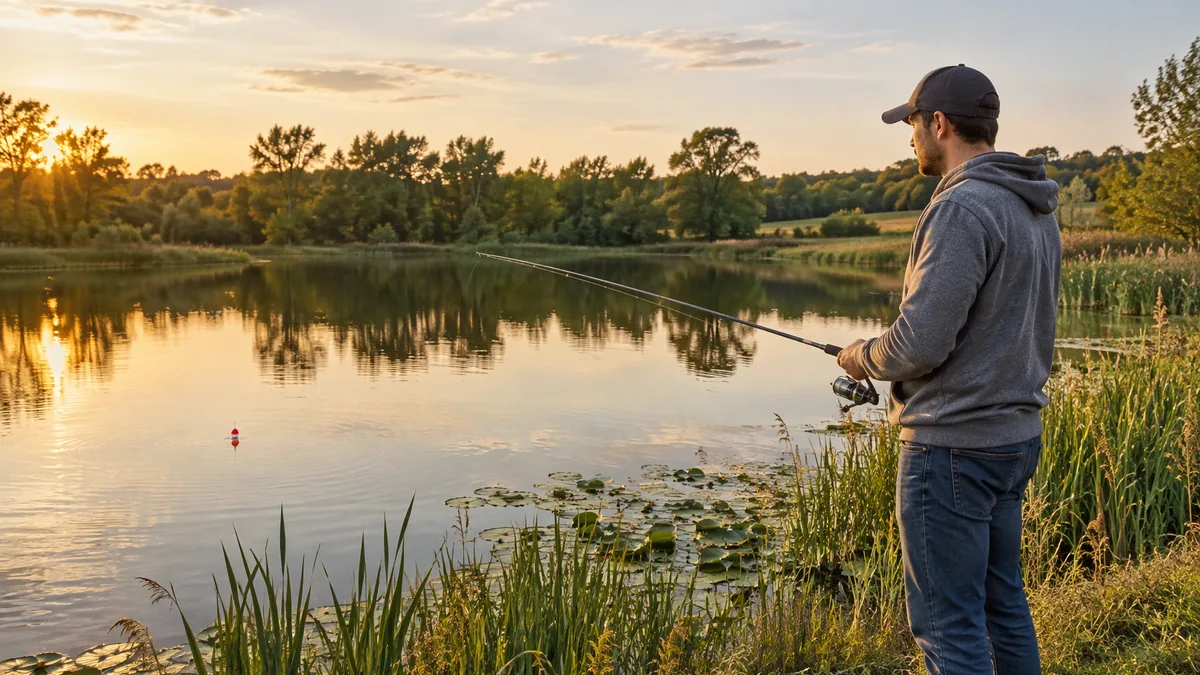
Pond Fishing for Beginners
Pond fishing for beginners is the simplest kind of fishing there is, and that is exactly why it works as a starting point. A pond is small enough to read in one walk around the bank, shallow enough that you rarely need special gear to reach fish, and usually holds bluegill, bass, crappie, and catfish that are not heavily pressured. The catch is that small water concentrates both fish and mistakes: the same few yards of shoreline get fished hard, and a noisy approach or the wrong bait sends everything back under the lily pads. This guide covers the tackle worth buying, where fish actually sit in a pond, two rigs that handle almost every situation, and the habits that separate a steady bite from an empty afternoon.
Start With Pond Fishing Gear That Fits Small Water
You do not need much. A 6½- to 7-foot medium-power spinning rod with a 2500-size reel handles everything from bluegill to a decent largemouth. Spool it with 8- to 10-pound monofilament, or 15- to 20-pound braid with an 8-pound fluorocarbon leader if the water is clear and the fish are wary. Lighter line casts small baits farther and sinks faster, and pond fish rarely demand heavy tackle.
From there, a small box covers the bases:
- Hooks in sizes 6 to 2 for panfish, 1/0 to 3/0 for bass.
- Split shot and a few 1/8- to 1/4-ounce jig heads.
- Bobbers — a few clip-on floats and one slip float.
- Small soft plastics: 3- to 5-inch worms and grubs in natural colors.
- A couple of compact spinnerbaits or small crankbaits for covering water.
Skip the giant tackle box and the heavy baitcasting setup for now. A single rod, a pocket of terminal tackle, and a container of worms will out-fish a carload of gear while you are still learning where the fish are. If casting is new to you, spend twenty minutes on how to cast a fishing rod before you blame the pond for a slow day.
Find the Cover Inside the Pond
A pond looks uniform from the bank, but the fish are piled into a small fraction of it. Look for anything that breaks up the bottom or the surface:
- Weed edges and lily pads hold shade, oxygen, and insects, and panfish sit right against them.
- Docks and piers cast shade and collect food; fish suspend under them even in the middle of the day.
- Brush piles, fallen trees, and rock piles are bass magnets, especially where they drop into deeper water.
- Inflows and culverts bring fresh water and food after rain.
- Points and drop-offs, even small ones, let fish slide between shallow feeding flats and deeper safety.
The pattern to remember is the edge. Fish gather where two things meet — weeds and open water, shade and sun, shallow and deep. Fish parallel to those edges rather than casting into the middle of the pond and hoping. If the pond is larger than you expected, the same reading skills scale up; how to find fish in a lake explains the deeper version of this search.
Rig a Bobber and a Bottom Bait
Two rigs cover nearly every pond situation, and both take a minute to tie.
The bobber rig is the beginner's workhorse. Tie a hook to the end of the line, pinch a split shot a few inches above it, and clip a bobber above that so the bait hangs at the depth you want. A worm, cricket, or minnow under a bobber catches bluegill, crappie, perch, and bass while you watch the float instead of staring at the rod tip. Set the bobber so the bait rides just above the weeds or a foot off the bottom; adjust it until you stop snagging and start getting bites.
The bottom rig is a simple Texas-style setup: a hook with a soft plastic or a worm, a small bullet weight above it, and the point of the hook buried in the plastic so it slides through cover. Cast it to a brush pile or weed edge, let it sink, and drag it slowly along the bottom with short lifts of the rod tip. This is the rig that catches pressured bass and catfish that ignore a bobber.
Keep the knots simple but reliable. A Palomar or improved clinch knot at the hook is enough for pond-size fish; the fishing knots category has step-by-step tying guides if you want to practice at home.
Match Baits to What Ponds Hold
Live bait is the fastest way to learn a pond because it does the convincing for you. Nightcrawlers and red worms catch everything that swims; crickets are deadly on bluegill in summer; minnows draw crappie and bass. Hook worms so the point comes out once and the bait stays lively, and keep them cool and shaded on the bank.
Once you can catch fish on bait, small lures let you cover more water and avoid the constant re-baiting:
- Small jigs tipped with a plastic or a piece of worm for panfish and crappie.
- 3- to 5-inch soft plastics rigged Texas-style for bass around cover.
- Compact spinnerbaits and squarebill crankbaits to hunt active fish along the bank.
- Tiny topwater poppers at dawn and dusk when bass push bait against the shore.
Color matters less than size and speed on most ponds. When the bite is slow, go smaller and slower before you change color. The best lures for pond fishing guide sorts these by season and water clarity.
Fish the Bank Quietly and in Order
Pond fish spook easily in shallow, clear water. Walk softly, keep a low profile, and avoid standing right on the edge where your shadow falls across the water. Cast before you step, not after.
Fish the bank in a deliberate order instead of random casts. Start with the closest water and fan casts across it, then work outward. Hit the high-percentage spots first — a dock, a weed point, a brush pile — and give each a few careful casts with both a moving bait and a slow one before moving on. If a spot produces nothing after a thorough pass, keep walking. A pond is small enough that you can cover the whole bank in an hour and find the one stretch that is holding fish.
Time of day matters more than most beginners expect. Early morning and late evening are strongest, and an overcast day can keep fish shallow and feeding all afternoon. Best time of day to fish explains how light and weather shift the bite.
Common Mistakes on Small Water
- Fishing the middle of the pond. Fish hug cover and edges; cast along them, not across open water.
- Too-heavy line and too-big hooks. Pond fish in clear water are leader-shy. Downsize before you decide the pond is empty.
- Crashing up to the bank. Noise and shadow push shallow fish out of casting range before you make a cast.
- Staying in one spot all afternoon. If a thorough pass produces nothing, move; ponds reward coverage.
- Keeping fish without checking the rules. Size and bag limits, and whether the pond allows harvest at all, vary by state and by water. Check before you keep anything, and see do you need a fishing license for the license basics.
- Handling fish badly. Wet your hands, support the body, and release quickly if you are not keeping fish; catch and release covers the details.
FAQ
What fish can you catch in a pond? Most ponds hold bluegill and other sunfish, largemouth bass, crappie, and channel catfish, plus carp and bullheads in many waters. Stocking varies, so ask locally or check your state agency's pond information.
Do you need a boat to fish a pond? No. Most pond fishing happens from the bank. A small kayak or float tube helps on larger ponds, but bank access plus careful walking covers plenty of water.
What is the best bait for pond fishing? A nightcrawler under a bobber is the most universal. For bass around cover, a Texas-rigged soft plastic or a small jig works better than bait.
How do you catch bass in a pond? Fish early and late, target cover edges with soft plastics and jigs, and slow down when the water is cold or pressured. The largemouth bass guide goes deeper.
Is pond fishing good for kids? It is the best place to start. Bluegill bite readily on worms under a bobber, which keeps young anglers interested. The bluegill guide and crappie guide cover the fish they are most likely to catch.
Once you can read a pond, moving to bigger water is a matter of scale rather than new skills. How to fish a lake is the natural next step, and the Lakes & Ponds category collects the rest of the freshwater guides.
About the author and how this was tested
About the author
FishermanGuy
Bank, boat and kayak angler · fishing, crabbing and shrimping since 2021
I buy the gear, fish it for a season and write down what failed. No sponsored verdicts, no free-sample flattery. Every rig on this page has landed fish in water I can point at on a map.
How this was tested
- Every rig gets at least six trips on the same water before it is published.
- Gear is bought at retail. Free samples are labelled in the first paragraph.
- Dates show first publication and the last time the page was updated.