Field notes
Best Lures for Pond Fishing (and When to Use Live Bait)
Best Lures for Pond Fishing (and When to Use Live Bait)
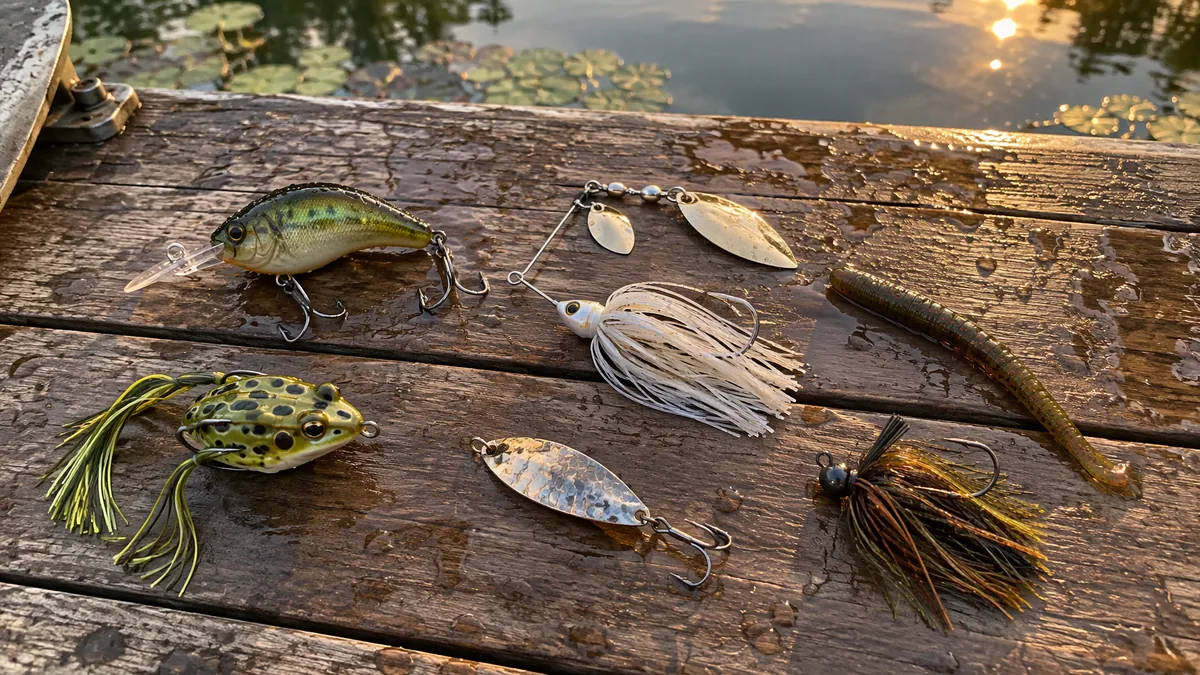
The best lures for pond fishing are rarely the flashiest ones in the tackle shop. Ponds are small, shallow, and often pressured, so the lures that work match what bluegill, bass, crappie, and catfish actually eat — small baitfish, insects, worms, and craws — and can be worked slowly around weeds, docks, and brush without snagging. A pond also gives fish plenty of chances to look at the same bait twice, which rewards a natural profile and a quiet presentation over raw attraction. This guide covers the five lure families worth carrying, how to choose size and color for the water in front of you, and the situations where live bait still beats hardware.
Why Pond Lures Are Different
A pond is a closed system. There is little current to sweep bait along, the water is usually warm and shallow, and the same fish see the same shoreline every day. Bass that live under a dock learn quickly what a chartreuse crankbait sounds like.
That changes lure selection in three ways:
- Go smaller. A 4-inch worm and a 1/8-ounce jig look like food in a pond. A 7-inch swimbait often looks like a mistake.
- Slow down. Pond fish are used to inspecting a bait before they commit. A fast, steady retrieve gets followed and refused.
- Stay natural. Clear pond water makes color and flash obvious. Natural greens, browns, and shad tones outperform neon most days.
Tackle matters as much as the lure. An 8- to 10-pound monofilament line, or 15- to 20-pound braid with a short 8- to 10-pound fluorocarbon leader, casts small baits cleanly and keeps them from spooking fish in shallow water. Accuracy beats distance in a pond; most bites come within a rod length of cover, not at the far bank. If casting is still new, work through how to cast a fishing rod before worrying about lure choice.
The Five Lure Families Worth Carrying
A small pond box does not need fifty baits. These five families cover bass, panfish, and the occasional catfish:
- Soft plastics — stick worms, curly-tail grubs, creature baits, and small swimbaits. The most versatile option and the one to learn first.
- Jigs — 1/16- to 1/4-ounce jig heads paired with grubs or trailers. Deadly on crappie and bluegill, and good for slow bass fishing around cover.
- Spinnerbaits — 1/8- to 3/8-ounce compact models that cover water and come through brush without hanging up.
- Crankbaits — squarebill and shallow-diving models that deflect off rocks and wood, plus lipless baits for open water.
- Topwater — small poppers, walking baits, and hollow-body frogs for dawn, dusk, and summer shade.
Add a few inline spinners and 2-inch grubs for bluegill, and that box will handle nearly every pond you walk up to. The pond fishing for beginners guide covers the basic rigs that pair with these lures.
Best Soft Plastics for Pond Water
Soft plastics win because they can be fished weedless, slowly, and in almost any depth. Four shapes do most of the work:
- Stick worms (Senko style) — rigged weightless and Texas-style, they fall with a subtle shimmy that bass hit on the drop. Green pumpkin and watermelon are the default colors.
- Curly-tail grubs — 2 to 3 inches on a 1/16-ounce jig head for crappie and bluegill, or 4 inches for bass.
- Creature baits and craws — best around rocks, brush, and spawning flats in spring.
- Paddle-tail swimbaits — 3 to 4 inches, slow-rolled along weed edges when bass are chasing bait.
Rig soft plastics weedless so the point of the hook stays buried in the plastic. That lets you cast into lily pads and brush instead of fishing around them. The soft plastics guide breaks down shapes and rigging in more detail, and how to tie a Texas rig shows the knot-and-weight setup that keeps the bait clean in cover.
The retrieve is simple: cast, let the bait sink on a semi-tight line, then lift the rod tip and let it fall again. Most pond bass eat on the fall, so watch the line for a twitch or a sideways movement rather than waiting to feel a hard tap.
Moving Baits for Active Fish
When bass are feeding rather than sulking, moving baits find them faster.
Spinnerbaits work best in wind, cloud cover, and stained water. A compact 1/8- to 3/8-ounce bait in white or chartreuse covers the bank quickly. Colorado blades thump in muddy water; willow blades flash in clear water. Fish it parallel to weed edges and let it tick the tops of cover — the strike usually comes as the bait deflects. How to fish a spinnerbait covers blade choice and retrieve speed.
Squarebill crankbaits dive a few feet and bounce off wood and rock, which triggers reaction strikes. Cast them at laydowns and dock pilings rather than open water.
Lipless crankbaits suit larger ponds and open flats where you want to cover water and find roaming fish.
Topwater is a dawn-and-dusk tool. A small popper or walking bait draws bass up through shallow water, and a hollow frog skips across lily pads where nothing else reaches. Keep a topwater basics refresher handy for hook-set timing; pond bass often swipe short and miss.
When Live Bait Beats Any Lure
There are days when a worm outperforms every lure in the box, and pretending otherwise wastes time.
- Bluegill and crappie are almost always easier on a nightcrawler or cricket under a bobber. The bluegill guide and crappie guide lean on live bait for good reason.
- Channel catfish feed heavily on scent. A nightcrawler or cut bait on the bottom beats artificial lures in most ponds. See how to catch channel catfish.
- Heavily pressured ponds — especially small suburban ponds — see so many lures that a real worm stands out.
- Kids and first-timers stay engaged when something is actually biting. A bobber and a worm teaches more about where fish live than a box of crankbaits.
The trade-off is re-baiting, storage, and the fact that live bait attracts panfish you may not want. The live bait vs lures comparison helps decide which to bring on a given day.
Size, Color, and Seasonal Choices
Pond fish respond to the calendar more than many anglers expect.
Spring — bass move shallow to spawn and feed on craws and bluegill. Texas-rigged creature baits, small spinnerbaits, and lipless crankbaits worked along warming banks produce.
Summer — fish feed at dawn and dusk and hide in shade during the day. Throw topwater early, then slow down with a weightless worm around docks, weed edges, and deeper brush. Bluegill spawn in waves and hammer small grubs and crickets.
Fall — bass feed heavily on shad and bluegill. Squarebills, spinnerbaits, and paddle-tail swimbaits in shad colors cover water and find schools.
Winter — everything slows. Downsize to a 3-inch grub on a light jig head or a dead-sticked worm, fish deeper water and sunny banks, and expect long pauses between bites.
For color, start natural in clear water (green pumpkin, watermelon, shad) and darker or brighter in stained water (black-blue, chartreuse, craw orange). Before changing color, change size and speed. Most slow days are a presentation problem, not a color problem.
Common Mistakes That Cost Bites
- Fishing the middle of the pond. Fish relate to cover and edges. Cast along the weed line, not across open water.
- Using bass-size baits for panfish. A 5-inch worm intimidates bluegill. Match the bait to the fish you expect.
- Heavy line in clear water. Thick line kills small-bait action and spooks shallow fish. Downsize before deciding the pond is empty.
- One lure all afternoon. Carry a slow bait and a moving bait, and switch when the first gets ignored.
- Burning the retrieve in cold water. Winter and post-front bass want a bait that barely moves. Slow down until you think it is too slow, then slow down more.
- Keeping fish without reading the rules. Pond rules vary by state and by owner. Check limits and access before you keep anything; do you need a fishing license covers the basics.
FAQ
What is the best lure for pond bass? A weightless Texas-rigged stick worm in green pumpkin is the most reliable starting point. It casts easily, falls slowly, and comes through cover without snagging. Add a compact spinnerbait for windy, active days.
Are soft plastics better than live bait in ponds? They are better for covering water and avoiding re-baiting. Live bait is better when fish are finicky, when you are targeting panfish, or when you are learning a new pond. Carry both.
What color lure should I use in a muddy pond? Dark, solid colors and baits with flash or vibration — black-blue plastics, chartreuse spinnerbaits, and rattling crankbaits. In muddy water, fish find baits by feel and sound more than sight.
Can I use saltwater lures in a pond? The soft plastics and small jigs cross over fine. Heavy saltwater plugs and big spoons are too large and too heavy for pond tackle and pond forage.
What size hook do pond lures need? Size 1/0 to 3/0 offset hooks for bass plastics, and size 6 to 2 for panfish baits. The fishing hook sizes chart matches hooks to bait size.
Once you know which lure family fits the water and the season, pond fishing becomes a matter of covering the bank quietly and repeating what works. Pair this guide with how to fish a lake when you move to bigger water, and browse the Lakes & Ponds category for the rest of the freshwater tactics.
About the author and how this was tested
About the author
FishermanGuy
Bank, boat and kayak angler · fishing, crabbing and shrimping since 2021
I buy the gear, fish it for a season and write down what failed. No sponsored verdicts, no free-sample flattery. Every rig on this page has landed fish in water I can point at on a map.
How this was tested
- Every rig gets at least six trips on the same water before it is published.
- Gear is bought at retail. Free samples are labelled in the first paragraph.
- Dates show first publication and the last time the page was updated.