Field notes
Topwater Fishing Basics
Topwater Fishing Basics
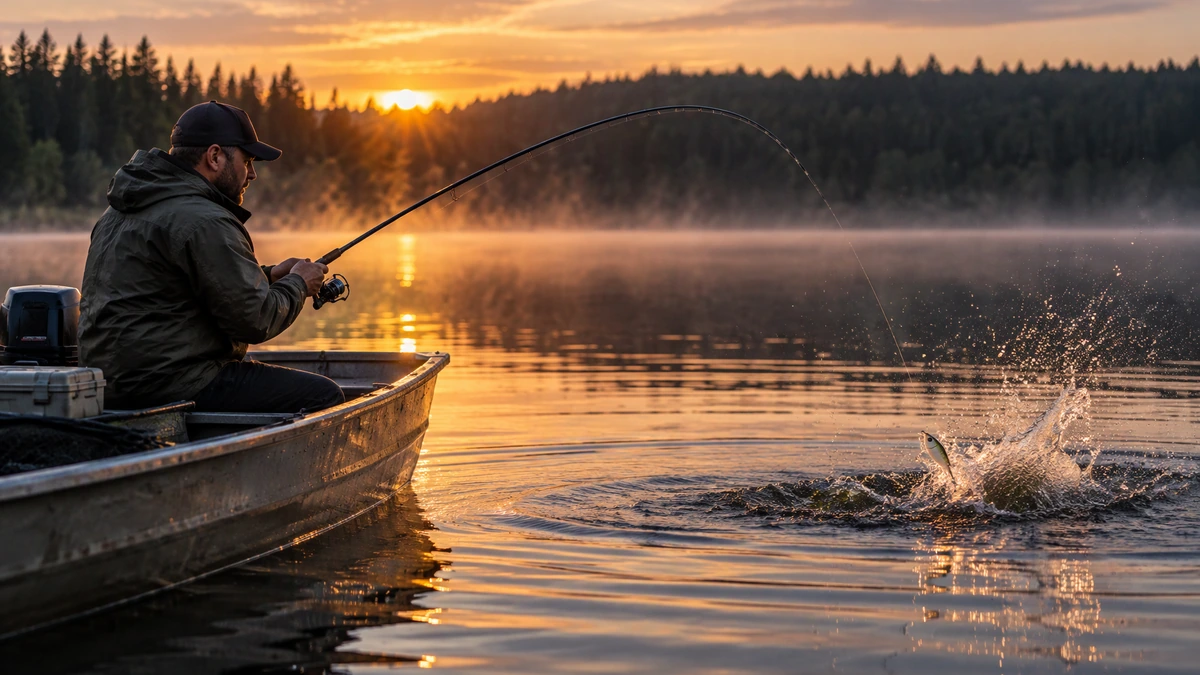
Topwater fishing is the most visual way to catch a fish. The lure stays on the surface, the fish commits in plain sight, and the strike happens where you can see it — a boil, a swipe, a lure disappearing in a swirl. That visibility is why anglers get hooked on it, and why so many miss fish: the strike is exciting enough to make you swing too early. Topwater fishing basics come down to three things: fishing it at the right time, working the lure so it looks alive, and waiting long enough to set the hook. Get those right and a handful of surface lures will catch bass, pike, striped bass, redfish, trout, and more. This guide covers the lures, the timing, the retrieves, and the mistakes that cost strikes.
What Counts as a Topwater Lure
Topwater lures float and work on the surface. They fall into a few families, each with its own action:
- Poppers have a cupped face that spits and pops when you snap the rod. They are precise, subtle lures for calm water and specific targets.
- Walkers (often called spook-style baits) zigzag side to side when you work the rod tip — the classic "walk-the-dog" action. They cover water and draw fish from a distance.
- Prop baits have spinning blades that churn the surface. They are loud and fast, good for covering water and for murky conditions.
- Buzzbaits are spinnerbaits built to run on top, with a blade that squeaks and churns. They are a search tool for bass around cover.
- Frogs are hollow-bodied and weedless, designed to be dragged over lily pads, mats, and slop where other lures cannot go.
- Wake baits run just under the surface, leaving a wake and a subtle disturbance rather than a splash.
The family you choose depends on the cover, the species, and the mood of the fish. A frog over a mat, a walker across a point, and a popper along a dock edge are three different tools for three different jobs.
The Right Time and Water
Topwater shines in low light. Dawn and dusk are the classic windows, when bait is active near the surface and predator fish are willing to look up. An overcast day can extend that window well into the morning, and a calm, humid evening can be excellent.
Water temperature matters, especially for bass. Topwater gets reliable once the water warms in spring and stays good through fall; in cold water, fish are slower and less willing to chase to the surface. Summer is prime, and summer nights can be some of the best topwater fishing of the year, especially with dark-colored lures and noisy retrieves.
Calm to lightly rippled water is ideal. A flat-calm surface makes fish easy to spook but also lets a subtle lure work; a light chop hides your lure's imperfections and gives fish a reason to look up. Hard wind and muddy, choppy water usually hurt topwater — that is the time to switch to subsurface lures.
Fish position matters too. Topwater works best over shallow cover, weed edges, points, flats, docks, and around schooling bait. In open, deep water, topwater draws fish up only when they are already active near the surface.
Work the Lure: Walk, Pop, Buzz, Wake
Each topwater family has a retrieve, and the retrieve is what makes it look alive.
Walking a walker. Point the rod tip down toward the water and make short, rhythmic snaps with slack line between them. The lure swings left, then right, as you repeat. The rhythm matters more than the force; a steady cadence with pauses triggers strikes, and the pause is often when a fish eats.
Popping a popper. Snap the rod tip to make the cup spit water, then pause. Vary the cadence — several sharp pops, then a long pause — until you find what the fish want. A popper is a target lure: cast it close to cover and work it slowly.
Buzzing a buzzbait. Cast it out and reel steadily, keeping the blade churning on the surface. Keep the rod tip up and the lure moving; a buzzbait that sinks or stalls loses its appeal. Slow down as it reaches cover and let the blade gurgle.
Dragging a frog. Cast onto the mat or pads and retrieve with a steady walk or hop, pausing in open holes. The pause is critical; fish often strike when the frog stops. Keep the rod tip up and the line tight enough to set the hook.
Waking a wake bait. A slow, steady retrieve keeps the lure just under the surface, leaving a V wake. This is a subtle presentation for pressured fish and clear, calm water.
Across all of them, vary speed and cadence before you change lures. Fish often tell you what they want through how they react.
The Hookset: Wait for the Weight
The most common topwater mistake is setting the hook too early. On a surface strike, you see the fish before you feel it, and the instinct is to swing. That instinct pulls the lure away from a fish that has not taken it yet.
The fix is to wait until you feel weight. Let the fish take the lure, turn, and load the rod; then reel down and set with a firm sweep. On treble-hook lures, a sweeping hookset is better than a violent overhead swing, which can pull hooks out or break light line. On frogs and other single-hook lures fished in heavy cover, a stronger hookset is needed to drive the hook through the plastic and into the jaw.
If a fish misses, do not reel in immediately. Twitch the lure once or twice in place — many fish come back for a second attempt. If that fails, follow up with a soft plastic in the same spot.
Tackle and Line
Topwater tackle is about matching the lure and the cover.
For treble-hook lures like poppers, walkers, and prop baits, a medium to medium-heavy rod with some give helps keep hooks from tearing out, and monofilament or a copolymer line provides stretch that cushions the strike. Braid is more sensitive but has no stretch, so use a softer rod or a looser drag if you fish braid with trebles.
For frogs and buzzbaits in heavy cover, a medium-heavy to heavy baitcasting rod with braided line is standard. Braid cuts through vegetation and gives you the power to pull a fish out of cover. That setup is also why the hookset is firmer with frogs.
Leader matters less on topwater than in clear subsurface fishing, but abrasion-resistant line still helps around cover. Check the line and hooks after every fish or snag; a bent hook or a nicked line is the usual reason a good fish comes off.
Common Mistakes
- Setting the hook too early. Wait for the weight, then sweep. This single fix catches more topwater fish than any lure change.
- Fishing topwater at midday in summer. Low light is the window. Fish dawn, dusk, and overcast.
- Too heavy a line with treble hooks. Heavy, stiff line limits lure action and can pull hooks. Match line to lure.
- Fishing in wind and chop. Topwater needs a workable surface. Switch to subsurface lures when it is rough.
- Not varying the retrieve. A steady cadence is a starting point. Change speed and pauses until fish respond.
- Ignoring the follow-up. A missed strike is not a lost fish. Twitch the lure again or cast a soft plastic.
- Cold water. Topwater is mostly a warm-water game. In cold water, fish are slow to rise.
FAQ
What is the best time for topwater fishing? Dawn and dusk are best, and overcast days extend the window. Summer nights can be excellent for bass. Low light and active bait are the signals.
What does "walk the dog" mean? It is the side-to-side zigzag action of a walker-style lure, created by rhythmic rod-tip snaps with slack line between them. The lure swings left and right as it moves toward you.
Should you set the hook immediately on a topwater strike? No. Wait until you feel the fish's weight, then set with a firm sweep. Setting on the splash usually pulls the lure away.
What is the best topwater lure for bass? There is no single answer, but a walker, a popper, a buzzbait, and a hollow-body frog cover most situations. Match the lure to the cover and the light.
Can you fish topwater at night? Yes. Dark-colored, noisy lures like prop baits, buzzbaits, and frogs work well at night, especially in summer. Fish slower and rely on sound and vibration.
Braid or monofilament for topwater? Braid for frogs and heavy cover, monofilament or copolymer for treble-hook lures where stretch helps keep hooks pinned. Match the line to the lure and the cover.
Topwater is a timing and patience game. Fish the low-light windows, work the lure with a rhythm, and wait for the weight before you swing. For more on lure choice and timing, see live bait vs lures, how to fish a spinnerbait, and best time of day to fish. Then take it to largemouth bass, smallmouth bass, northern pike, or striped bass, and browse the Baits & Lures category.
About the author and how this was tested
About the author
FishermanGuy
Bank, boat and kayak angler · fishing, crabbing and shrimping since 2021
I buy the gear, fish it for a season and write down what failed. No sponsored verdicts, no free-sample flattery. Every rig on this page has landed fish in water I can point at on a map.
How this was tested
- Every rig gets at least six trips on the same water before it is published.
- Gear is bought at retail. Free samples are labelled in the first paragraph.
- Dates show first publication and the last time the page was updated.