Field notes
Best Inshore Lures
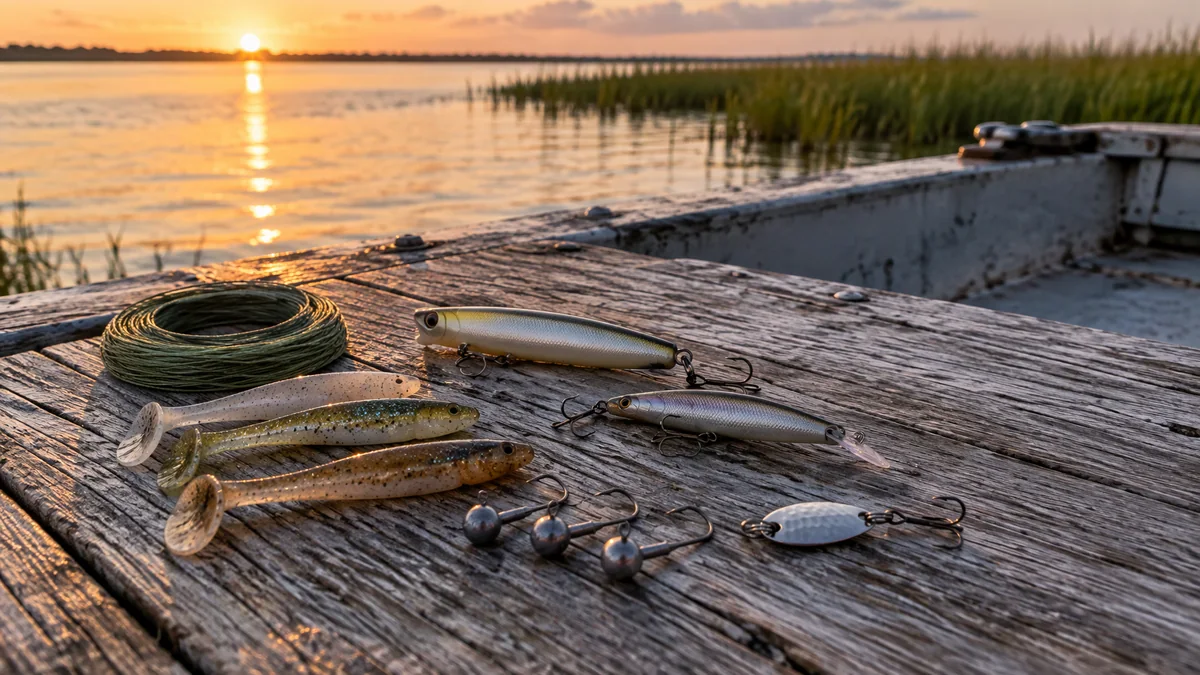
Best Inshore Lures
The best inshore lures share one trait: they can be worked slowly and naturally in shallow, moving water without fouling on oysters, grass, or dock pilings. Inshore fishing covers bays, estuaries, tidal creeks, and flats, where redfish, seatrout, flounder, snook, and striped bass feed on shrimp, crabs, and small baitfish. That prey list shapes the tackle box more than any brand or color trend. A handful of lure families — soft plastics on jigheads, topwater plugs, suspending twitchbaits, spoons, and bucktail jigs — will catch nearly everything that swims inshore. The variables that decide which one to tie on are tide, depth, structure, and water clarity.
What Makes an Inshore Lure Work
Inshore water punishes lures that only look good in a display bin. Salt corrodes cheap hardware, wind and current demand casting weight, and the bottom is often covered in shell, grass, or wood that snags exposed hooks.
The useful lures solve three problems at once:
- They match inshore forage. Shrimp, mullet, menhaden, and small crabs are the main menu. A lure that imitates one of them starts ahead.
- They can be fished at the right depth. Inshore fish may sit in two feet of water on a flat or twenty feet in a channel. Weight and dive depth have to match.
- They survive structure. Weedless rigging and durable hooks matter around oyster bars, grass edges, and pilings.
Equally important is the outfit behind the lure. A 7- to 7-foot-6-inch medium spinning rod with a 2500 or 3000 reel, 10- to 20-pound braid, and a 20- to 30-pound fluorocarbon leader covers most inshore work. The braid casts light lures into wind and transmits feel; the leader handles abrasion. The inshore fishing basics guide explains the full setup.
Soft Plastics and Jigheads
Soft plastics do the most work inshore because they can imitate shrimp, baitfish, and crabs with the same bait body and a change of jighead.
- Paddle-tail swimbaits — 3 to 5 inches, rigged on 1/8- to 1/2-ounce jigheads. A steady retrieve with occasional rod-tip twitches covers water and triggers reaction strikes.
- Jerk shads and flukes — slim profiles that dart and glide. Good over grass flats and around dock shadows.
- Shrimp imitations — straight-tail or segmented plastics that hop along the bottom for redfish and flounder.
- Curl-tail grubs — a classic on a jighead for seatrout and flounder, especially when fished slowly.
Jighead weight is the control knob. Use the lightest head that reaches the strike zone and holds near the bottom in the current. Too light and the lure sails; too heavy and it plows into grass or spooks fish in shallow water. The soft plastics guide covers body shapes, and how to catch redfish and how to catch summer flounder show species-specific retrieves.
A popping cork above a shrimp imitation is another inshore staple. The cork adds sound and keeps the lure at a fixed depth over grass, which helps when fish are spread out and wary.
Topwater and Suspending Baits
Topwater is the most exciting inshore category and one of the most productive at first light.
Walking plugs swing side to side with a rhythmic rod-tip cadence and draw seatrout, redfish, and snook up from shallow grass. Poppers chug and spit, which helps in low light and choppy water. Fish them over flats, along shorelines, and across points where bait is trapped. The strike is visual, and the hook-set is often the hardest part — wait until you feel weight before driving the hook. Topwater fishing basics covers cadence and timing.
Suspending twitchbaits are the quiet alternative. A jerk, a pause, and a slow sink imitate a wounded baitfish, and the pause is where fish commit. They shine around docks, bridges, and channel edges where fish hold in current but do not want to chase far.
Spoons, Jigs, and Metal
Metal lures cover distance and cut wind, which matters on open bays and beaches.
- Casting spoons in gold or silver flash and wobble. They are a standard for Spanish mackerel, bluefish, and striped bass chasing bait schools.
- Bucktail jigs fish deep current and structure. A trailer adds bulk and action.
- Vibration baits and lipless metals work when fish are suspended and aggressively feeding.
Match metal to the bait size. A small spoon draws strikes when fish are keyed on tiny bait; a larger one casts better in wind but can overwhelm pressured fish. How to catch striped bass covers when metal outproduces plastics in the Northeast surf and bay fisheries.
Match the Lure to Tide and Structure
Inshore fish position themselves around moving water. A lure that ignores the tide is fishing blind.
On a rising tide, bait pushes into creeks, onto flats, and around grass edges. Fish move shallow with it, and lighter jigheads and topwater become viable. On a falling tide, water drains off the flats and funnels through channels and passes. Fish stage at the mouths of creeks and on the downcurrent side of points, waiting for food to wash past.
The general rule is to fish upcurrent of structure and let the lure approach naturally. Cast beyond a dock piling, oyster bar, or bridge fender, then bring the lure back with the current. Weight the jig to hold bottom without dragging. On slack water, when current stalls, downsize, slow down, and expect a tougher bite. How to fish a bay and how to read current go deeper on these patterns, and flats fishing techniques covers the shallowest end of the spectrum.
Colors for Clear, Stained, and Dirty Water
Color matters, but not as much as depth and speed. Get the presentation right first, then fine-tune color.
- Clear water — natural tones: translucent shrimp, silver and gray baitfish, light green and brown. Fish can inspect the lure, so realism helps.
- Stained water — white, chartreuse, and pearl add visibility without looking unnatural. Gold and copper flash work on cloudy days.
- Dirty, muddy water — dark solid colors, chartreuse, and lures with vibration or rattle. Fish are hunting by feel and sound more than sight.
A simple inshore box can run on four or five colors per lure family. Buying every shade on the shelf catches anglers more often than fish. When the bite slows, change retrieve speed and depth before changing color.
Common Mistakes Inshore Anglers Make
- Too heavy a jighead. It kills action, snags grass, and spooks shallow fish. Carry several weights and swap as depth changes.
- Fishing slack tide. Moving water concentrates bait and predators. Plan around the tide, not just the clock.
- Straight, fast retrieves. Inshore fish follow and refuse. Add pauses, twitches, and direction changes.
- Heavy leader around clear, shallow fish. Step down the leader in clear water and accept the occasional cut around shell.
- Wrong hook size for the plastic. A hook that is too small lacks bite; too large kills action. The fishing hook sizes chart helps.
- Ignoring the rules. Slot limits and seasonal closures are common inshore. Measure fish quickly and check current regulations before keeping anything.
FAQ
What is the best all-around inshore lure? A 4- to 5-inch paddle-tail swimbait on a 1/4-ounce jighead is the most versatile starting point. It imitates baitfish, casts well, and can be fished slow or fast.
What lures work best for redfish? Soft plastics and gold spoons around oyster bars, grass edges, and creek mouths. Redfish feed on crabs and shrimp, so bottom-oriented presentations with pauses work well.
Do I need different lures for seatrout and flounder? The same soft plastics often catch both. Seatrout tend to suspend and chase; flounder lie on the bottom and prefer a slow drag or hop. Adjust jighead weight and retrieve rather than switching baits.
Are topwater lures worth using inshore? Yes, especially at dawn and dusk over flats and shallow grass. They are less effective in bright, calm, midday conditions.
How many lures do I actually need? A small box with paddle tails, jerk shads, a walking plug, a popper, a suspending twitchbait, a spoon, and a few bucktail jigs covers nearly every inshore situation. More colors help less than more jighead weights.
Start with presentation, then refine color and size as you learn the water. The Inshore & Bay category collects the related tactics, and the saltwater fishing category covers surf, pier, and offshore gear when you want to expand beyond the bay.
About the author and how this was tested
About the author
FishermanGuy
Bank, boat and kayak angler · fishing, crabbing and shrimping since 2021
I buy the gear, fish it for a season and write down what failed. No sponsored verdicts, no free-sample flattery. Every rig on this page has landed fish in water I can point at on a map.
How this was tested
- Every rig gets at least six trips on the same water before it is published.
- Gear is bought at retail. Free samples are labelled in the first paragraph.
- Dates show first publication and the last time the page was updated.