Field notes
Trolling for Offshore Fish
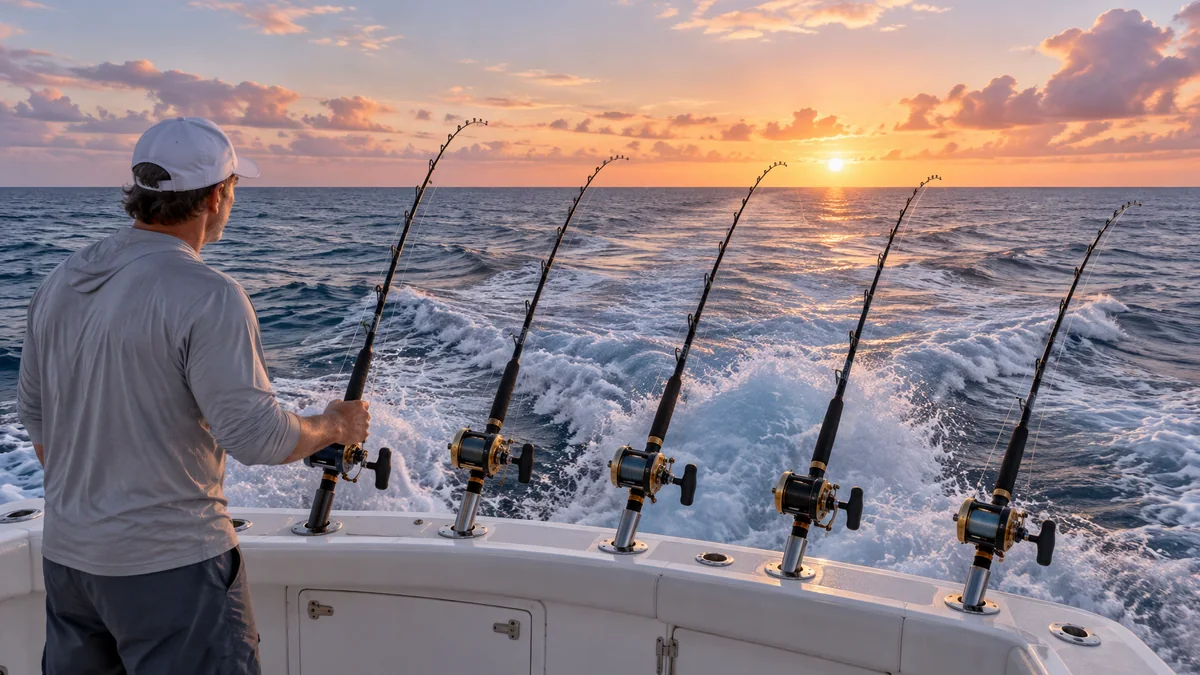
Trolling for Offshore Fish
Trolling for offshore fish is the most efficient way to cover the ocean when you do not know exactly where the fish are. Instead of anchoring over one spot and waiting, you drag a spread of lures and baits through the water at a chosen speed, letting the boat do the searching. Done well, trolling covers miles of open water, finds temperature breaks and weed lines, and puts baits in front of tuna, mahi, wahoo, marlin, and sailfish that would never see a stationary offering. Done poorly, it drags a tangle of identical lures through the prop wash at the wrong speed and catches nothing. This guide covers how to build a spread, where to run each bait, how fast to go, and how to read the ocean for the edges that concentrate fish.
Why Trolling Covers Water
Offshore fish are not evenly spread. They gather along edges: temperature breaks, current rips, color changes, weed lines, and bait concentrations. Those edges move, and a boat that stays put misses them. Trolling lets you follow the edge and present baits along its length.
Trolling also matches how pelagic fish feed. Tuna, wahoo, and marlin chase bait that is moving, and a lure or bait that tracks steadily through the water triggers a strike response. The boat's speed sets the pace, and the spread sets the depth and width of the search. The goal is not to drag baits randomly but to cover productive water with a pattern that looks like a school of bait.
Build a Spread That Covers Water
A spread is the arrangement of rods and lines behind the boat. The classic offshore spread uses several positions: flat lines close to the boat and low, long rigger lines set wide and far back, short rigger lines in between, and a shotgun or center line straight off the stern. Each position puts a bait at a different distance and angle, which covers more water and reduces the chance that all your baits pass the same fish.
Rods and reels should match the line class you are fishing. Lever-drag conventional reels in the 30 to 80-pound class cover most offshore trolling, with heavier gear for big tuna and marlin. Line counters help you repeat distances, especially when you find a pattern that works.
Start with four to six lines and learn to run them clean before adding more. A spread that tangles on every turn is worse than a simple one that tracks straight. Stagger the distances so no two baits run side by side, and keep the long rigger baits furthest out and the flats closest in.
Position Baits in Clean Water
The single most common trolling mistake is dragging baits in the prop wash. Turbulent, bubbly water behind the boat hides lures and makes them behave erratically. Baits need clean water to track straight and look natural.
Run the flats just outside the wash, with the long riggers further out and back. As a rough guide, short rigger baits run 20 to 40 feet behind the boat, long riggers 50 to 80 feet, and the shotgun line can run well over 100 feet back. Those distances are starting points, not rules; adjust until each bait is tracking in clear water and the spread looks like a scattered school.
Lure choice follows position. Skirted trolling lures, cedar plugs, and diving plugs all track well at trolling speed. On the long riggers, lighter skirts and plugs that skip and splash attract attention. On the flats, heavier lures that run straight and deep work better. A daisy chain or spreader bar can imitate a small school and is a good choice for a center or long position.
Tune Speed to the Species
Speed is the most important variable after spread geometry. Most offshore trolling happens between roughly 6 and 9 knots, but the right speed depends on the fish and the baits.
Mahi and tuna generally respond to a moderate troll in that range. Marlin and sailfish often prefer a slightly slower, steadier pace with baits that swim rather than skip. Wahoo are the exception: they are fast and often want a quicker troll, into the low teens. King mackerel and some coastal pelagics prefer slower speeds still.
Watch the baits, not just the GPS. A skirt that is skipping too much or blowing out is running too fast; a lure that sinks and drags is running too slow. Adjust throttle in small steps and watch how the spread responds. Zigzagging the boat changes lure speed and action without changing throttle, and the turn itself often triggers strikes as outside baits speed up and inside baits slow down.
Find the Edges: Birds, Weed Lines, and Temperature Breaks
Trolling is searching, and the search is about edges. Birds are the most visible sign. Frigatebirds and boobies circling or diving mark bait, and bait marks predators. Terns working a patch of water are worth a pass even if you see nothing else.
Weed lines and debris collect bait and shade, and mahi in particular relate to them. Temperature breaks and color changes, where two water masses meet, concentrate bait and predators. Current rips and tide lines do the same. A chartplotter with sea surface temperature helps, but your eyes and a few passes tell you more.
Structure matters offshore too. Ledges, humps, wrecks, and floating objects all hold fish. Troll past them at a distance that keeps baits in clean water, then turn and work the edges. Mark every strike on the chartplotter; fish often come from the same patch of water on the next pass.
The Hookup, Fight, and Boat Work
When a fish hits, resist the urge to strike hard, especially with circle hooks. Let the rod load and the line come tight, then come off the throttle slightly to help the hook set. Keep the boat moving forward so the other lines stay clear.
Clear the other lines quickly. A fish crossing a spread of tight lines will cut you off or tangle the whole set. Reel in the closest lines first and work outward, and have someone ready to clear the long riggers as the fish comes in.
Boat handling wins or loses fish. Turn toward the fish and keep a steady, moderate speed so the angler can gain line without the fish running straight away. For big fish, use a harness and keep the drag at strike; do not chase the fish with the throttle unless it is taking too much line. At boatside, lead the fish and use a gaff or a release tool depending on your plan. If you are releasing, keep the fish in the water and use a dehooking tool. Catch and release covers the handling details that give a released fish the best chance.
Common Trolling Mistakes
- Trolling too fast for the baits. A lure that blows out or skips erratically is not fishing. Match speed to the lure and the species.
- Running every rod the same lure. A spread of identical baits looks like one bait. Vary size, color, and action.
- Baits too close together. Tangles cost time and fish. Stagger distances and keep the spread wide.
- Dragging in the prop wash. Dirty water hides lures and kills action. Get every bait into clean water.
- Never turning. Straight lines cover water but do not change lure speed. Zigzags and turns trigger strikes.
- Not checking hooks and drags. Offshore fish are hard on tackle. Check points, knots, and drag settings before every trip.
- No plan for a double. Two fish at once can wreck a spread if nobody knows which line to clear first.
FAQ
How fast should you troll for offshore fish? Most offshore trolling runs between about 6 and 9 knots. Wahoo often want faster, into the low teens, while marlin and sailfish usually prefer a slower, steadier pace.
How far behind the boat should trolling lures run? Short rigger baits often run 20 to 40 feet back, long riggers 50 to 80 feet, and a shotgun line can run over 100 feet. The goal is clean water and a staggered spread, not a fixed number.
Can you troll with live bait? Yes. Slow-trolling live bait is a standard technique for king mackerel, sailfish, and other pelagics. It requires a slower speed and more careful bait handling than pulling lures.
What is a shotgun line? A shotgun line runs straight off the center stern, far behind the boat, and covers the water the other lines miss. It is often the first line to get hit when fish follow the spread.
Do you need outriggers to troll offshore? No, but they help. Outriggers spread the long lines wide and keep them out of the prop wash. A clean four-line spread without riggers will still catch fish.
If you are new to blue water, start with offshore fishing basics, and compare trolling with bottom work in reef fishing techniques. Species guides help you tune the spread: mahi-mahi and yellowfin tuna are classic trolling targets, while blue marlin and sailfish reward a slower, steadier presentation. The Offshore & Reef category collects the rest.
About the author and how this was tested
About the author
FishermanGuy
Bank, boat and kayak angler · fishing, crabbing and shrimping since 2021
I buy the gear, fish it for a season and write down what failed. No sponsored verdicts, no free-sample flattery. Every rig on this page has landed fish in water I can point at on a map.
How this was tested
- Every rig gets at least six trips on the same water before it is published.
- Gear is bought at retail. Free samples are labelled in the first paragraph.
- Dates show first publication and the last time the page was updated.