Field notes
Spinning vs Baitcasting Reels
Spinning vs Baitcasting Reels
Spinning vs baitcasting is the first real decision most anglers face when they buy a reel, and it is worth thinking through rather than guessing. Both reel types catch fish, and plenty of good anglers use both. The difference is in how they work, how they cast, and what they are good at, and once you understand those differences the choice becomes a matter of matching the reel to your fishing rather than picking a "winner." This guide breaks down how each reel functions, how they compare on casting, line handling, and power, which one to learn first, and the specific situations where one clearly beats the other.
How Each Reel Works
The two reels are built around fundamentally different designs.
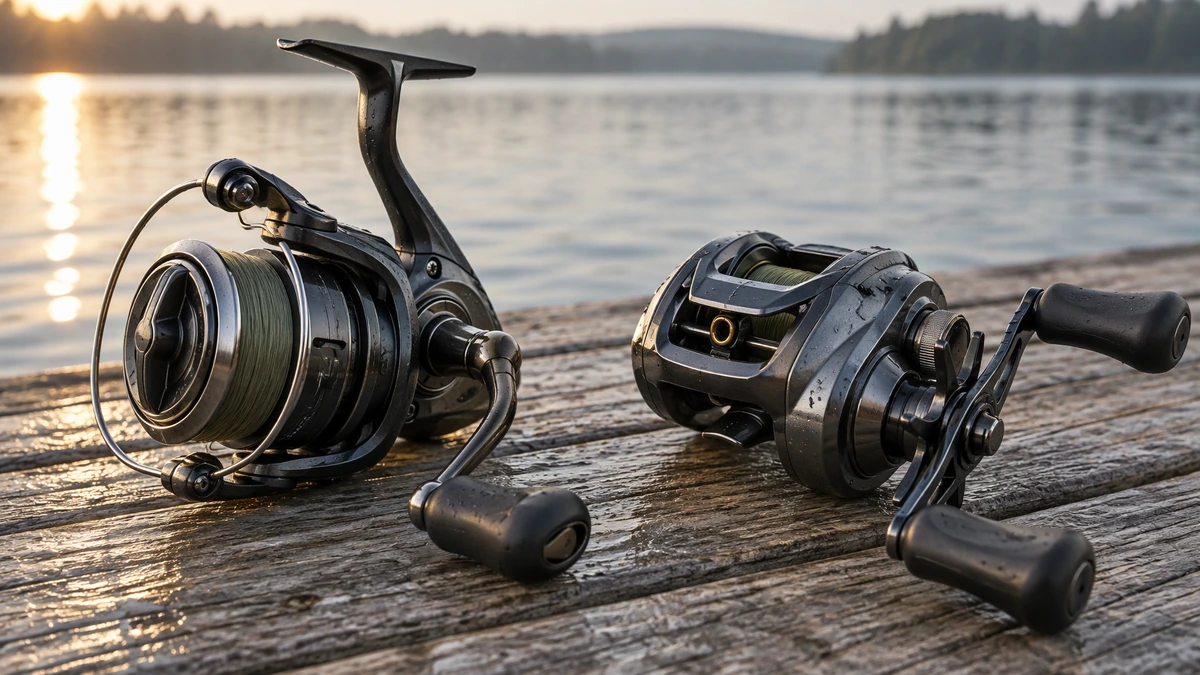
A spinning reel hangs underneath the rod. Its spool is fixed, and the line comes off the spool in loose coils as you cast, then is wound back on by a rotating bail and rotor. Gravity and the weight of the lure pull line off the spool, which is why spinning reels handle light lures so well. Because the spool does not spin during the cast, there is no spool to overrun, so the classic backlash that beginners fear is not part of the design.
A baitcasting reel sits on top of the rod. Its spool rotates during the cast, and the line peels off that spinning spool. That rotation is what gives baitcasters their accuracy and control, and it is also what causes backlash, or a bird nest, if the spool spins faster than the line can leave it. A baitcaster is thumb-controlled: your thumb on the spool manages the cast from start to finish. The two designs each have real strengths, and which one feels natural depends a lot on what you plan to throw.
Casting and Accuracy
The casting feel is the biggest practical difference.
Baitcasting reels are known for accuracy and for handling heavier lures with control. Because your thumb feathers the spool, you can stop a cast on a dime, skip a lure under a dock, or drop a bait tight to a target. That precision is why many bass and pike anglers favor baitcasters for pitching and flipping to cover. The tradeoff is a learning curve. Overruns happen, and they take practice to prevent.
Spinning reels are known for ease and for casting light lures a long way. A spinning outfit is the natural choice for finesse presentations, small baits, and any situation where you want to cast all day without managing a spinning spool with your thumb. The line coming off in coils means less precision on very light, short casts, but for most general fishing the accuracy is more than good enough. For either style, good mechanics matter more than the reel; how to cast a fishing rod covers the fundamentals that apply to both.
Line Handling
The way each reel manages line has a direct effect on your fishing day.
Spinning reels are prone to line twist. Because the line comes off the fixed spool in coils and is wound back on the same way, repeated casting and retrieving can put twist into the line, which shows up as loops, tangles, and wind knots. Spooling the reel correctly and using a swivel on rotating lures reduces the problem, but it is a fact of spinning tackle that baitcasters largely avoid.
Baitcasting reels feed line straight off a rotating spool, so line twist is minimal. That makes them a natural fit for braid, which performs well on a baitcaster and does not suffer the twist issues it can show on a spinning reel. The catch is that a baitcaster demands attention during the cast; a loose spool or a thumb mistake produces a backlash that can cost you minutes of picking. Both reel types handle mono and fluorocarbon fine, but the line you plan to use can tip the decision.
Power, Drag, and Techniques
On the water, each reel shines in different techniques.
Baitcasters generally win on power and on heavy, repetitive work. They sit on top of the rod, which keeps the rod and reel balanced when you are working big baits, pulling fish out of cover, or making repeated heavy casts. The thumb control and the rotating spool give a direct feel that suits power fishing: flipping and pitching, working big swimbaits, and winching fish away from structure.
Spinning reels win on finesse and on versatility with light tackle. They cast small, light lures that a baitcaster struggles to throw, they are easier to use in wind and in tight quarters, and they are forgiving for anglers who fish occasionally. Their drag systems are smooth and dependable, and they handle big fish on light line well because the drag lets a fish run. For drop-shotting, finesse soft plastics, small topwaters, and general-purpose fishing, a spinning reel is hard to beat.
Neither reel is "better." A bass angler might carry both: a baitcaster for pitching jigs into cover and a spinning rod for finesse. Your fishing style, not a spec sheet, should drive the choice. If you are still selecting a rod to pair with either reel, how to choose a fishing rod covers matching power and action to the reel and technique.
Which One to Learn First
For most beginners, a spinning reel is the easier and more forgiving place to start. The learning curve is short, backlash is not a concern, and a spinning outfit covers a huge range of fishing from panfish to bass to light saltwater.
A baitcaster is worth learning once you have the basics down and know you want the accuracy and power it offers, especially for bass, pike, and other cover-oriented fishing. The learning curve is real, but it is short with practice: start with heavier lures, set the spool tension and brakes conservatively, and keep your thumb lightly on the spool. Most anglers who put in a few sessions become comfortable quickly. If budget is tight, one good spinning outfit will fish more situations than one baitcaster, so it is the safer first buy. Whatever you choose, pairing it correctly and spooling it well matters; how to rig a rod and reel walks through getting the outfit ready.
Common Mistakes
- Buying a baitcaster as a first reel without practice. The learning curve is real. Beginners who skip the practice sessions get frustrated and give up on a good reel.
- Over-spooling either reel. Too much line on a spinning spool causes tangles; too much on a baitcaster causes backlashes. Leave a little room at the spool lip.
- Ignoring line twist on a spinning reel. Use a swivel on rotating lures and spool the line correctly to keep twist under control.
- Cranking the drag down hard on light line. A smooth, properly set drag is what lands big fish on light tackle. Do not lock it.
- Mismatching reel to lure weight. A baitcaster struggles with very light lures, and a heavy lure overloads a light spinning outfit. Match the reel to what you throw.
- Skipping maintenance. Salt, grit, and grime wear a reel out fast. Rinse after saltwater use and keep the drag and bearings clean.
FAQ
Is baitcasting harder than spinning? Yes, at first. Baitcasters require thumb control and produce backlashes while you learn. Spinning reels are more forgiving and easier for beginners.
Which is better for bass, spinning or baitcasting? Both catch bass. Baitcasters suit power fishing, pitching, and heavy cover; spinning reels suit finesse techniques and light lures. Many bass anglers use both.
Can you use braid on a spinning reel? Yes, but braid can show line twist on a spinning reel. Spool it tightly and use a leader and swivel where appropriate to manage twist.
Do baitcasters cast farther than spinning reels? Not necessarily. Spinning reels often cast light lures farther, while baitcasters offer more accuracy and control with heavier lures. Distance depends more on the angler and the setup than on the reel type alone.
What size reel should a beginner buy? A 2500-to-3000 size spinning reel covers most freshwater and light saltwater fishing and is a versatile first choice.
To go further, browse the Rods & Reels category or the wider Gear & Tackle section. If you are deciding what to chase with the outfit, the largemouth bass guide and smallmouth bass guide show how reel choice fits real fishing situations.
About the author and how this was tested
About the author
FishermanGuy
Bank, boat and kayak angler · fishing, crabbing and shrimping since 2021
I buy the gear, fish it for a season and write down what failed. No sponsored verdicts, no free-sample flattery. Every rig on this page has landed fish in water I can point at on a map.
How this was tested
- Every rig gets at least six trips on the same water before it is published.
- Gear is bought at retail. Free samples are labelled in the first paragraph.
- Dates show first publication and the last time the page was updated.