Field notes
Best Ice Fishing Lures
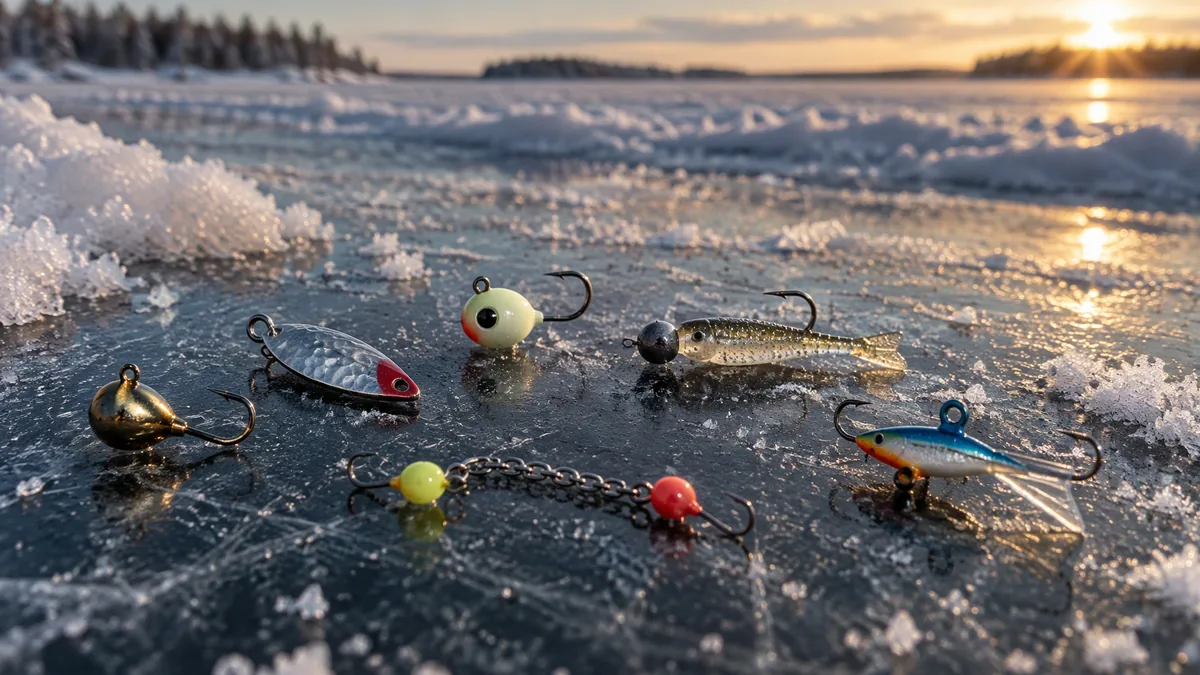
Best Ice Fishing Lures
The best ice fishing lures are not the fanciest ones in the catalog; they are the ones matched to the fish under your hole, fished at the right depth, and worked with the right cadence. Ice fishing compresses everything: a small hole, a short rod, cold water, and fish that are often slow and selective. That makes lure choice matter more than it does in open water, and it makes a small, well-chosen box more useful than a big one. This guide breaks down the main lure families, which ones suit which species, how size and color change the decision, and how to work each one so the lure actually gets bit.
Match the Lure to the Fish You Are Chasing
Start with the species, because the right lure for bluegill is the wrong lure for lake trout.
Panfish — bluegill, crappie, perch — are the core of most ice fishing. They eat small things: insect larvae, tiny minnows, zooplankton. Small jigs, tiny spoons, and small plastics are the tools, usually tipped with a waxworm or a spike.
Walleye fish bigger. They want minnows and larger-profile baits: jigging minnows, spoons, and jig-and-minnow combinations.
Northern pike are predators that will take a large spoon, a swimbait, or a big minnow under a tip-up. A wire or heavy fluorocarbon leader matters more than lure subtleties.
Lake trout roam deep structure and eat big forage. Tube jigs, large spoons, and swimbaits fished near the bottom are standard.
Trout and salmon in stocked waters will take small spoons and jigs, often higher in the water column than you expect. Match lure size to the forage in that lake, then adjust as the fish tell you what they want.
Jigs: The Bread and Butter
Jigs catch more ice fish than any other lure family, and tungsten has changed the game. Tungsten is denser than lead, so a tungsten jig of the same weight is smaller, sinks faster, and gives you more feel on the drop. That matters when fish are deep, pressured, or keyed on small bait.
The classic panfish jig is a small teardrop or round-head jig, roughly 1/64 to 1/32 ounce, dressed with a plastic tail or tipped with a waxworm. Horizontal jigs hang level in the water and are excellent for crappie and suspended fish; vertical jigs drop fast and work well near the bottom.
For walleye and perch, a larger jig — around 1/8 to 1/4 ounce — tipped with a minnow head or a whole small minnow is a staple. Carry several sizes of the same profile so you can downsize when fish get finicky without changing the look.
Jigging Spoons and Flutter Baits
A jigging spoon is a slab of metal that flutters and flashes on the fall. That flash and flutter trigger fish that ignore a static jig, especially walleye, perch, lake trout, and pike.
Spoons come in two broad styles. Longer, thinner flutter spoons fall slowly and swing wide, which is deadly for suspended fish. Shorter, heavier spoons drop fast and work better in current or deep water. Many ice spoons come with a chain and a single hook instead of a treble; the single hook is easier to unhook, snags less, and many anglers find it hooks just as well.
Tip a spoon's hook with a minnow head or a piece of worm to add scent and slow the fall slightly. The lift-and-drop cadence is simple: raise the rod a foot or two, let the spoon flutter down on a fairly tight line, pause, then repeat. Most strikes come on the fall or the pause.
Jigging Minnows, Rattle Baits, and Swimbaits
Jigging minnows are lipless, minnow-shaped lures weighted toward the head with a hook at the tail. They swim and dart on the lift and glide on the fall, and they are a top choice for walleye, perch, and pike. Work them with a sharper snap and a longer pause than a spoon; the glide is the trigger.
Small rattle baits and lipless cranks add sound and vibration, useful in stained water or when fish are aggressive. They are heavier and cover water fast, so they suit searching more than finesse.
Small swimbaits on a jig head have become a standard for walleye and lake trout. A paddletail or a minnow-profile plastic on a 1/4- to 1/2-ounce head, hopped off the bottom, imitates a fleeing baitfish. For lake trout, a white tube jig in the 1/2- to 1-ounce range fished on or near the bottom is hard to beat.
Size, Color, and Glow: Getting the Details Right
Two lures of the same shape can fish very differently based on size and color.
Size should match the forage. Tiny jigs for pressured panfish, bigger profiles for walleye and pike. When fish follow but will not commit, downsize before you change anything else.
Color splits into natural and reaction categories. Silver, gold, and natural baitfish patterns match forage in clear water. Chartreuse, orange, pink, and glow colors stand out in stained water or low light. Carry both ends of that range.
Glow lures charge under a flashlight or the sun and emit light in dark water, at dawn, dusk, and under the ice at night. Recharge them every few drops; the glow fades quickly.
Details — a rattle, a chain, a plastic tail, a touch of bait — are small adjustments that let you fine-tune without changing lure families. Change one thing at a time so you learn what the fish wanted.
How to Work an Ice Lure
Cadence is where most ice anglers leave fish on the table. The lure is often right; the motion is wrong.
Start with a snap-and-pause. Lift the rod sharply, let the lure fall, and pause long enough for it to settle. If fish follow but do not eat, shorten the lift and lengthen the pause. If they ignore it, try a slow quiver or a steady lift. Watch the flasher: when a fish rises to the lure and stops, hold the lure still — many winter fish take a motionless bait far more readily than a moving one.
Fish two presentations when the rules allow it: one rod you jig and one deadstick in a holder, usually a small jig or plain hook with a minnow under a spring bobber. The deadstick shows the lightest bite and covers fish that will not chase. Check your state's line limit before you set it up.
Common Mistakes With Ice Lures
- Fishing too big. Winter fish often want small. Downsize the lure before you decide the fish are not there.
- Line that is too heavy. Thick line kills small-lure action and shows fish a visible leader. Light line and a short fluorocarbon leader help.
- Jigging nonstop. Constant motion can spook cold fish. Snap, pause, and let the lure settle.
- No bait. A waxworm or minnow head often turns a look into a bite.
- Never changing anything. If a hole produces nothing after a few minutes, change depth, color, or size — or move.
- Ignoring the electronics. The flasher tells you whether fish are there and how they react. Watch it.
- Sitting in one hole. Mobility is the advantage of ice fishing. Drill and move until you find active fish.
FAQ
What is the best all-around ice fishing lure? A small tungsten jig tipped with a waxworm is the most versatile starting point, especially for panfish. For walleye and perch, a jigging spoon or jigging minnow is a strong all-round choice.
What size ice jig should I use for panfish? Roughly 1/64 to 1/32 ounce is the common range, with tungsten letting you fish small at depth. Go smaller when fish are pressured or the forage is tiny.
Do you need bait on ice fishing lures? It helps. Waxworms, spikes, and minnow heads add scent and slow the fall, and they often convert followers into biters. Some days a bare lure works, but bait is a reliable edge.
What color ice fishing lure is best? Match the water. Natural silver and gold in clear water; chartreuse, orange, pink, and glow in stained water or low light. Carry both and let the fish decide.
What is the best lure for walleye through the ice? Jigging minnows, flutter spoons, and a jig tipped with a minnow head are the standards. Fish them near bottom on deep structure and channel edges.
Start with a few proven jigs and one spoon, learn the cadence, and add lures as you learn your water. Ice fishing basics covers the full setup, and how to set up an ice fishing rig handles the terminal tackle. From there, target yellow perch, crappie, walleye, or lake trout, and browse the Ice Fishing category.
About the author and how this was tested
About the author
FishermanGuy
Bank, boat and kayak angler · fishing, crabbing and shrimping since 2021
I buy the gear, fish it for a season and write down what failed. No sponsored verdicts, no free-sample flattery. Every rig on this page has landed fish in water I can point at on a map.
How this was tested
- Every rig gets at least six trips on the same water before it is published.
- Gear is bought at retail. Free samples are labelled in the first paragraph.
- Dates show first publication and the last time the page was updated.