Field notes
Best Baits for Surf Fishing
Best Baits for Surf Fishing
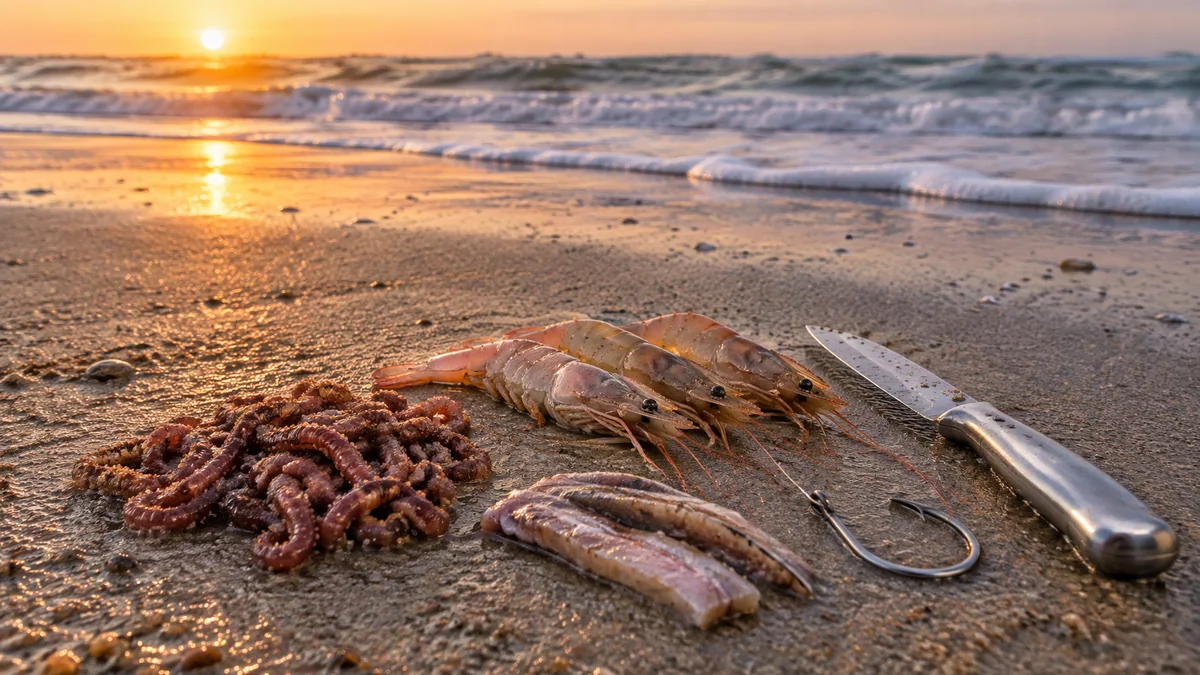
The best baits for surf fishing are the ones that survive the wash and still look like food when they land. The surf is a harsh place to present a bait: waves pound the shoreline, current sweeps sand and weed along the bottom, and a soft bait tears off the hook within a cast or two. What works is bait that stays put, puts out scent, and matches what the fish are already eating — sand fleas, shrimp, crabs, and small baitfish that live in the wash zone. This guide covers the natural baits and lures that produce in the surf, the rigs that keep bait on the hook, and how to match your choice to the season and the beach in front of you.
What Surf Fish Feed On
Surf fish are not randomly distributed. They patrol the troughs, cuts, and sloughs where the bottom drops off, because that is where the current concentrates food. The wash zone holds sand fleas, mole crabs, shrimp, and worms buried in the sand; slightly deeper water holds baitfish and the predators that chase them.
That tells you what to bait with. Fish that root in the sand — pompano, whiting, redfish, and sheepshead — feed heavily on crustaceans and worms. Fish that chase bait — bluefish, striped bass, and Spanish mackerel — take cut bait, live bait, and fast-moving lures. Match your bait to the fish you expect and the structure in front of you, then fish the edges of the trough rather than the dry sand.
Best Natural Baits for Surf Fishing
Natural bait is the surf standard because it stays on the hook and carries scent through dirty, moving water.
- Sand fleas (mole crabs). The premier bait for pompano, and excellent for redfish and whiting. They live right in the wash, so you can dig them from the sand as the water pulls back. Hook a small one through the shell at the leg socket, using a small, sharp hook.
- Shrimp. The most versatile surf bait. Fish head-on shrimp for redfish and black drum, and peeled shrimp for whiting and pompano. Fresh shrimp out-fish frozen, so keep them cool and change them when they turn soft.
- Cut mullet. A top bait for redfish and sharks. Cut chunks with the skin left on so they hold on the hook, and use fresh mullet when you can get it.
- Bunker (menhaden). Oily and bloody, which makes it a favorite for bluefish, striped bass, and sharks. Chunks or fillets both work; fresher is always better.
- Squid. Tough enough to stay on the hook through repeated casts, and a reliable bait for whiting and bluefish when nothing else is producing.
- Bloodworms and sandworms. Deadly on striped bass and whiting, but soft and expensive. Use bait thread or a small piece of elastic to keep them on the hook.
- Clams. A traditional striped bass bait, especially in the Northeast. Salty and tough, and they stay on the hook well.
Keep bait cold in a cooler and out of the sun. In warm weather, cut bait and shrimp spoil fast, and spoiled bait catches far less than fresh.
Best Artificial Lures for the Surf
Lures cover water faster than bait and let you find active fish. The surf rewards lures that cast far and track straight in current.
- Metal spoons. A long-casting spoon is the classic surf lure for bluefish, Spanish mackerel, and striped bass. Retrieve it fast with a steady wobble, or let it flutter on the drop.
- Bucktail jigs. A bucktail swam along a trough or off a jetty is a proven striped bass and redfish lure. Match jig weight to the current so it stays near the bottom without dragging.
- Soft plastic swimbaits. Paddletails and shad bodies on jigheads catch striped bass, redfish, and flounder. Work them slowly along the bottom or swim them through the wash.
- Topwater plugs. At dawn and dusk, a walking plug or popper draws explosive strikes from striped bass and bluefish feeding on the surface.
- Jerkbaits and minnow plugs. Good for striped bass and bluefish when bait is pinned against the beach.
Use a wire leader when bluefish or Spanish mackerel are around; their teeth cut through mono and fluorocarbon quickly. For everything else, a fluorocarbon leader is a good compromise between abrasion resistance and stealth.
How to Rig Surf Baits and Keep Them On
The surf destroys sloppy rigs. Two setups cover most situations.
The first is the fish-finder or slip sinker rig: a sliding sinker on the main line above a bead and swivel, with a leader and hook below. The sinker holds bottom while a fish can pick up the bait and move off without feeling the weight. How to rig a slip sinker covers the same principle in detail, and best surf fishing rigs compares it with the high-low and other surf setups.
The second is the high-low rig, which carries two hooks above a weight. It is the standard for pompano and whiting, often fished with small floats that lift the bait off the bottom and small circle hooks that hook fish in the corner of the mouth.
Sinker choice matters in the wash. A pyramid or sputnik-style sinker digs into sand and holds position; a round sinker rolls. Use enough weight to hold bottom without making the rig so heavy that it casts poorly.
Bait retention is the other half of the job. Use bait thread or elastic on soft baits, cut bait with the skin on, and a hook sized to the bait. Circle hooks reduce gut-hooking and are required in some fisheries, so check local rules. Casting distance also matters — how to cast a fishing rod will help you reach the trough without over-powering the cast.
Matching Baits to the Season and Beach
Surf fishing follows the bait, and the bait follows the season.
In spring, migrating striped bass and bluefish push along the beach chasing bunker and other baitfish, so cut bait, spoons, and swimbaits all produce. Summer brings whiting, pompano, croaker, and redfish into warmer water, and shrimp, sand fleas, and cut mullet are the core baits. Fall is the mullet run in many areas, when redfish, bluefish, and striped bass feed hard on migrating bait — a prime time for cut mullet and fast-moving lures. Winter fishing depends on your latitude; in warmer water, whiting and redfish remain, while colder beaches may still hold striped bass.
Read the beach as well as the calendar. Cuts, points, and the deeper water beside sandbars concentrate fish, and the edges of the wash are usually more productive than the dry sand. Surf fishing for beginners covers reading the beach in more depth, and pier fishing basics is worth a look if you fish structure instead of open sand.
Common Mistakes
- Bait that is too soft for the surf. Shrimp and cut bait tear off in the wash. Use fresh bait, bait thread, and skin-on chunks.
- Too little weight. A rig that rolls in the current never stays in the strike zone. Add weight until it holds.
- Ignoring the wash zone. Fish feed right where the waves break. Casting past the fish into bare water wastes the trip.
- Fishing spoiled bait. Heat and sun ruin bait fast. Keep it cold and replace it often.
- No wire leader around toothy fish. Bluefish and mackerel will cut light leaders. Switch to wire when they are present.
- Overlooking regulations. Striped bass, redfish, and other species have seasons, size slots, and bag limits that change by state. Check the current rules before you fish.
FAQ
What is the best bait for surf fishing? Fresh shrimp and fresh cut bait are the most reliable all-around choices. For pompano, sand fleas are best; for striped bass, bunker and clams are strong; for redfish, cut mullet and shrimp are hard to beat.
What is the best bait for pompano? Sand fleas, also called mole crabs, are the top pompano bait. Peeled shrimp and small pieces of cut bait also work, fished on a high-low rig with small hooks.
What bait should I use for redfish in the surf? Cut mullet, shrimp, and sand fleas are the standards. Fish them near troughs and cuts where redfish patrol for food.
Do I need bait, or can I use lures in the surf? Both work. Bait is better for soaking in one spot and for scent in dirty water; lures cover more water and find active fish faster. Many surf anglers carry both.
How do I keep bait on the hook in the surf? Use fresh bait, cut chunks with the skin on, bait thread or elastic on soft baits, and a hook sized to the bait. Check and replace bait after every few casts.
To target specific surf species, see how to catch redfish, whiting, striped bass, and summer flounder. Catching your own shrimp for bait is covered in how to catch shrimp, and live bait vs lures helps you decide which to throw. Browse the Surf & Pier category for more.
About the author and how this was tested
About the author
FishermanGuy
Bank, boat and kayak angler · fishing, crabbing and shrimping since 2021
I buy the gear, fish it for a season and write down what failed. No sponsored verdicts, no free-sample flattery. Every rig on this page has landed fish in water I can point at on a map.
How this was tested
- Every rig gets at least six trips on the same water before it is published.
- Gear is bought at retail. Free samples are labelled in the first paragraph.
- Dates show first publication and the last time the page was updated.