Field notes
Best Offshore Baits and Rigs
Best Offshore Baits and Rigs
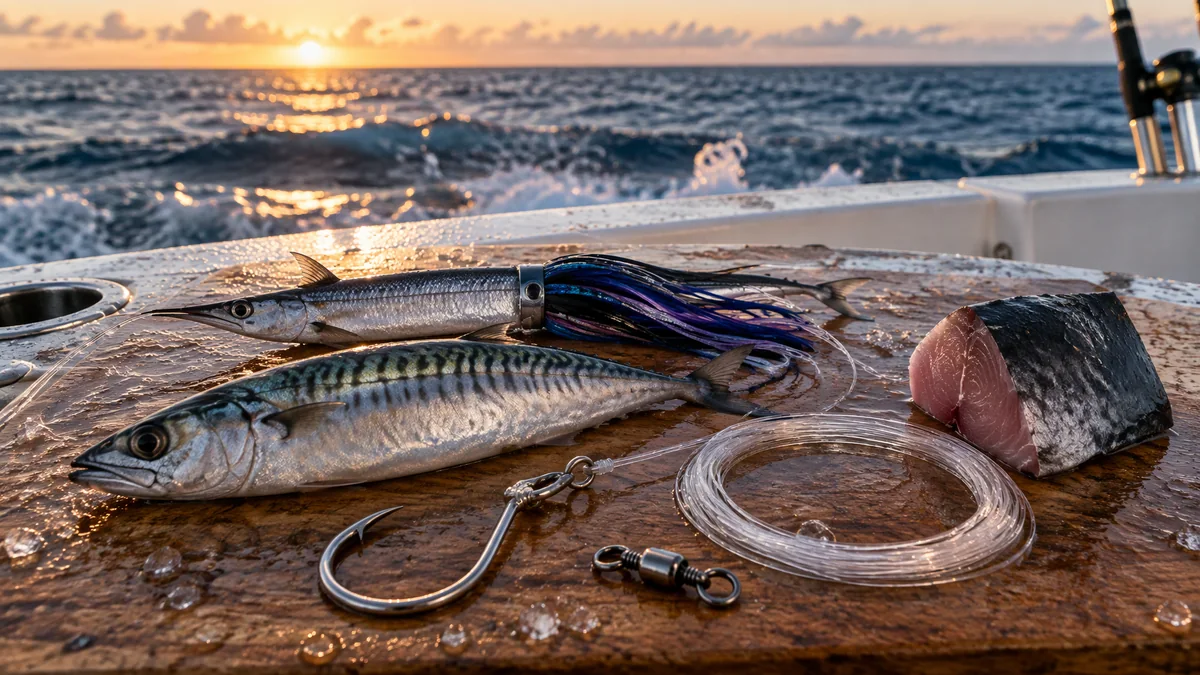
The best offshore baits depend on how you plan to fish, not on a single magic bait. Trolling calls for lures and rigged baitfish that swim convincingly at speed; bottom fishing wants fresh cut bait and live bait that sink to the reef; chunking and drift fishing depend on scent, chum, and a natural presentation on a circle hook. Pick the wrong bait for the method and even a boat full of premium baitfish will struggle. This guide breaks offshore baits down by technique, covers how to rig each one, and explains which baits suit tuna, mahi, billfish, and reef species — with the freshness and hook details that separate a good offshore bait from a wasted one.
Match the Bait to the Method
Offshore fishing is really several different fisheries that happen to share the same ocean. Trolling covers water at speed and needs baits and lures that track straight and trigger reaction strikes. Bottom fishing over reefs and wrecks needs bait that sinks fast, stays on the hook, and puts out scent. Chunking and drift fishing rely on chum to pull fish in close, then a natural, unweighted bait on a circle hook.
Before you choose a bait, decide which of those you are doing. A rigged ballyhoo that swims perfectly behind a boat at trolling speed is useless sitting on the bottom, and a chunk of cut bait will not troll. The sections below take each method in turn.
Best Baits and Lures for Trolling
Trolling is about coverage and speed, and the classic offshore trolling baits are built to swim.
- Rigged ballyhoo. The most widely used trolling bait offshore. A ballyhoo rigged with a pin rig or a nose hook and often covered by a skirt swims with a natural wobble that sails, mahi, tuna, and kingfish all eat. Rig it straight; a bait that spins or blows out will not get bit.
- Skirted trolling lures. Skirts imitate squid and baitfish and are the standard for blue marlin, sailfish, tuna, mahi, and wahoo. Match lure size to the target: large skirts for billfish, smaller skirts and pushers for tuna and mahi.
- Cedar plugs. Simple wooden plugs that track fast and catch tuna and mahi with no fuss. They are a good search bait when you are covering water.
- Diving plugs and minnow-style lures. These run below the surface and produce mahi, tuna, and kingfish. They are easy to deploy and cast well when fish show near the boat.
- Strip baits. Strips cut from bonito, mullet, or other baitfish, trolled behind a skirt or a hook, add scent and action for tuna and mahi.
Trolling speed matters. Ballyhoo and strip baits want a moderate speed so they swim rather than skip, while hard lures and cedar plugs tolerate faster speeds. Adjust until each bait is running clean, and watch the spread — a bait that is fouled or spinning is not fishing.
Best Baits for Bottom and Reef Fishing
Bottom fishing over reefs, wrecks, and ledges is a scent and durability game. The bait has to reach the bottom and stay there.
- Fresh cut squid. Tough, cheap, and effective. Squid stays on the hook through repeated drops and catches red snapper, grouper, and other reef fish.
- Fresh cut fish. Chunks or fillets of bonito, barracuda, mullet, or other oily fish are top baits for snapper, grouper, amberjack, and cobia. Fresh is critical — cut bait that has gone soft and washed out catches far less.
- Live bait. Pinfish, grunts, and small blue runners fished on a fish-finder or knocker rig are deadly for big snapper, grouper, amberjack, and cobia. A live bait also resists the pickers that strip cut bait.
- Vertical jigs. Metal jigs dropped and worked vertically catch amberjack, tuna, and large snapper and grouper. They are not bait, but they belong in any offshore box because they cover deep structure fast.
Use circle hooks where required, and size the hook to the bait and the fish. A heavy leader helps around reef structure, but do not go so heavy that finicky fish refuse the bait in clear water.
Best Baits for Chunking and Drift Fishing
Chunking is how many anglers catch tuna, and it is all about building a scent trail and presenting a natural bait in it.
Start by chumming with cut fish — small chunks and pieces of the same bait you plan to fish. Tuna, sharks, and mahi will rise up the chum line. Then drift an unweighted or lightly weighted chunk back in the slick on a circle hook and a fluorocarbon leader, letting it fall naturally. A chunk that tumbles down through the chum looks like just another piece of food, which is exactly the point.
Live bait is the other half of drift fishing. Blue runners, pilchards, goggle-eyes, and threadfin herring kept lively in a well are top baits for tuna, sailfish, kingfish, and cobia. Bridle-rig live baits so they swim naturally, and match the size of the bait to the fish you expect. Kite fishing, which suspends live baits on the surface, is a specialized sailfish and tuna technique worth learning if you fish those species often.
How to Rig Offshore Baits
Rigging is where good offshore bait is won or lost. A few principles cover most situations.
For trolling, rig ballyhoo straight with a pin rig or nose hook, and check that the bait swims without spinning before you put it in the spread. Skirted lures should be rigged with sharp hooks sized to the target, and billfish lures are often rigged with a single hook for cleaner releases.
For chunking and live bait, circle hooks are the standard for tuna and billfish because they hook fish in the corner of the mouth and are easier to release. Use a fluorocarbon leader in the 40-to-80-pound range for tuna, heavier for big billfish, and follow the line-class rules if you plan to submit a catch. Bridle live baits with waxed thread or a rubber band so the hook sits outside the bait and the bait keeps swimming.
Bait freshness is part of rigging. Keep baitfish on ice or in a slurry, keep cut bait cool and out of the sun, and change bait when it stops bleeding scent. A perfectly rigged bait that has gone soft will not out-fish a fresh one. If you need a refresher on hook sizing, fishing hook sizes explains the numbering.
Matching Baits to Target Species
Different offshore species want different baits, and matching them saves time.
- Tuna. Yellowfin, bluefin, bigeye, and albacore take live bait, chunks, cedar plugs, and jigs. Live bait and chunking are the top producers when fish are up and feeding.
- Mahi-mahi. Ballyhoo, cut bait, live bait, and small lures all work. Mahi are aggressive and often eat whatever is presented cleanly.
- Blue marlin and sailfish. Skirted lures and live bait are the standards. Both are commonly release-only, so rig for clean releases and check the rules.
- Swordfish. Deep-dropped squid and fish baits fished at night are the traditional approach.
- Cobia. Live bait, cut bait, and jigs, often around structure and rays.
- Red snapper and grouper. Fresh cut squid and fish, plus live bait for bigger fish.
- Mackerel and cod. Small lures, cut bait, and jigs, depending on the fishery.
For method-specific detail, see trolling for offshore fish and reef fishing techniques.
Common Mistakes
- Dull or wrong-sized hooks. Offshore fish have hard mouths. Sharp hooks sized to the bait and target are essential.
- Leader too heavy for clear water. Heavy leader adds abrasion resistance but can spook wary fish. Balance strength against visibility.
- Trolling at the wrong speed. A bait that skips or spins is not fishing. Adjust speed until every bait runs clean.
- Fishing soft, old bait. Fresh bait out-fishes stale bait badly. Keep it cold and replace it often.
- Mismatching bait to method. A trolling bait will not fish on the bottom, and a chunk will not troll. Choose bait for the technique.
- Ignoring regulations. Tuna quotas, billfish release rules, and circle-hook requirements vary by fishery. Check the current rules before you leave the dock.
FAQ
What is the best bait for offshore fishing? It depends on the method. For trolling, rigged ballyhoo and skirted lures are the standards. For bottom fishing, fresh cut squid and fish are the most reliable. For chunking, fresh chunks of oily fish drifted in a chum line are hard to beat.
What is the best bait for tuna? Live bait, fresh chunks, cedar plugs, and jigs all catch tuna. When fish are feeding on the surface, live bait and chunking usually out-produce everything else.
What is the best bait for mahi-mahi? Ballyhoo, cut bait, live bait, and small lures all work well. Mahi are aggressive feeders, so a clean, fresh presentation matters more than a specific bait.
Do you need live bait for offshore fishing? No. Cut bait, chunks, and lures catch plenty of fish. Live bait gives you an edge for tuna, sailfish, and big reef fish, but it is not required.
How do you keep offshore bait fresh? Keep baitfish on ice or in a saltwater slurry, keep cut bait shaded and cool, and change bait when it softens. For live bait, use a well with good water flow.
To put these baits to work, start with offshore fishing basics, then target yellowfin tuna, bluefin tuna, mahi-mahi, blue marlin, or red snapper. Browse the Offshore & Reef category for more.
About the author and how this was tested
About the author
FishermanGuy
Bank, boat and kayak angler · fishing, crabbing and shrimping since 2021
I buy the gear, fish it for a season and write down what failed. No sponsored verdicts, no free-sample flattery. Every rig on this page has landed fish in water I can point at on a map.
How this was tested
- Every rig gets at least six trips on the same water before it is published.
- Gear is bought at retail. Free samples are labelled in the first paragraph.
- Dates show first publication and the last time the page was updated.