Field notes
How to Catch Red King Crab: Pots, Bait & Alaska Rules
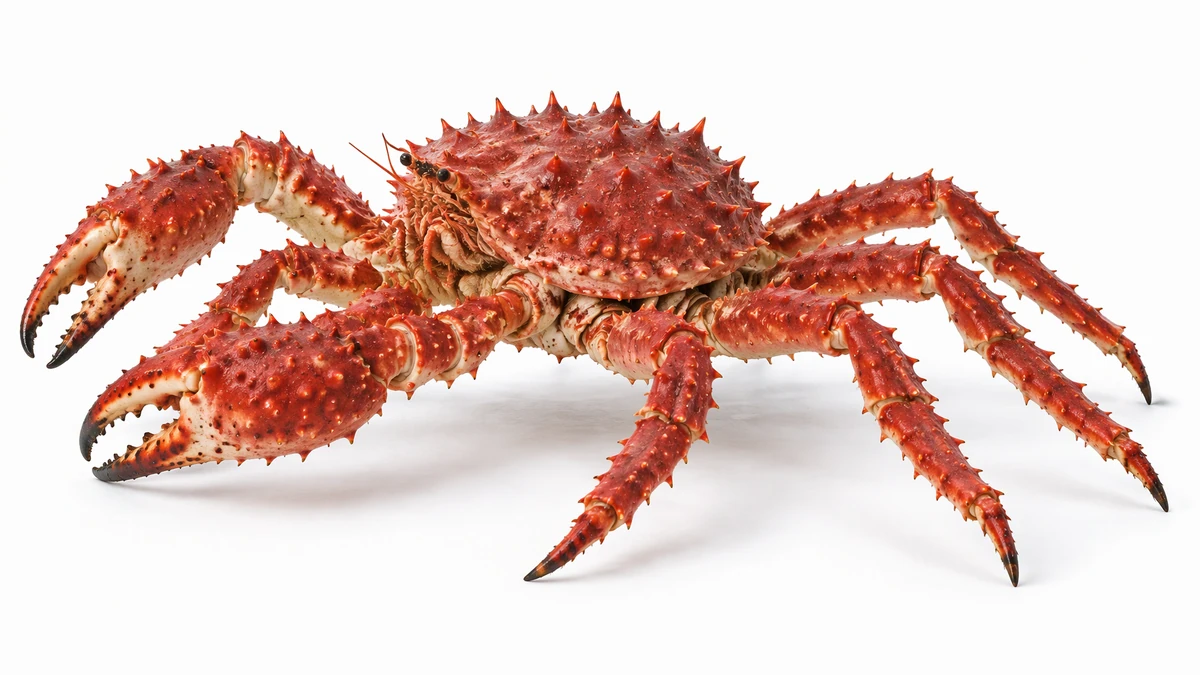
How to Catch Red King Crab
The red king crab is the celebrity crustacean of the North Pacific: a spiny, deep-red giant with a leg span that can rival a dinner table and a price tag to match. Catching one is a different proposition from catching a Dungeness or a blue crab. Red king crab are fished almost entirely with heavy commercial pots in cold, deep water, the stocks are tightly quota-managed, and recreational access is limited. Learning how to catch red king crab means understanding the pot fishery, the male-only size rule, and the season announcements that can shut the whole thing down. For identification, range, and biology, read the full Red King Crab species profile; this guide covers how the catching works and what the rules require.
Best Time to Catch Red King Crab
The best time to catch red king crab in Alaska is autumn through winter, when the Bristol Bay fishery traditionally opens around October 15 and runs into the colder months. That is the commercial season, and it is set by the Alaska Department of Fish and Game (ADF&G) year by year rather than fixed on a calendar.
The recent history shows why the date is never guaranteed. The Bristol Bay red king crab fishery was shut in 2021 and 2022 after a collapse in mature male abundance, and it reopened in 2023 under a much-reduced quota. As of 2025, the season and quota are announced annually and can be closed again if the stock does not improve. Anyone planning a trip checks ADF&G's current announcement first — not last.
The fish themselves follow cold water. Red king crabs prefer roughly 32 to 50°F (0–10°C) and migrate with the seasons, moving into shallower water in spring to moult and mate and back into deeper water in winter. In the Bering Sea, the great concentrations are in Bristol Bay and around the Aleutian Islands, which is where the commercial fishery is concentrated. Warm years and changing ocean conditions have been linked to poor recruitment, so the season is watched as closely as any fishery in the world.
Best Gear for Red King Crab
Red king crab gear is industrial. These are big, strong animals that live deep, and the pots, line, and handling equipment are built for commercial-scale work. Recreational anglers rarely target them because access is limited, and where it is allowed a licence, pot limits, and strict size and sex rules apply.
| Component | Red king crab-ready choice |
|---|---|
| Pot | Heavy commercial king crab pot, built to hold large crabs on the bottom |
| Line | Heavy pot line matched to depth, with a strong bridle and buoy system |
| Hauling | Hydraulic pot launcher and hauler on a commercial boat; manual hauling is not realistic at depth |
| Bait | Oily fish such as herring or cod, secured in the pot |
| Measuring tool | A crab gauge for carapace length |
| Extras | Heavy gloves, sorting table or live tank, ice, and full foul-weather gear |
A king crab pot is a large, heavy frame that sits flat on the bottom and holds crabs until it is hauled. The pots are baited, set in strings or clusters, and left to soak before being hauled back aboard. On a commercial boat, the work is done in freezing spray on a moving deck, and every piece of gear is sized for that reality.
For recreational anglers, the gear rules are restrictive and area-specific. If you are in a place where recreational harvest is allowed, the pot must meet local design and marking rules, and you will still need a licence. The size and sex rules do not change: only male crab above the minimum carapace length may be kept.
Best Bait for Red King Crab
The best bait for red king crab is fresh, oily fish, and herring and cod are the standard. Red king crabs are opportunistic predators and scavengers that eat sea stars, sea urchins, clams, mussels, barnacles, worms, small fish, and carrion, and they will gather around a food source in numbers.
Baits that work:
- Herring. Oily, tough, and classic. Herring holds in the pot and releases strong scent in cold water.
- Cod and fish frames. A cheap, effective bait that fills the pot and keeps working through a soak.
- Mixed fish and carcasses. A blend of oily fish and frames builds a scent trail that pulls crabs across the bottom.
Bait is secured inside the pot so it cannot be pulled out, and fresher is better in cold water where scent spreads more slowly. There is no artificial lure equivalent here: crabs respond to scent, and the bait is the whole game.
Because the fishery is commercial, bait is also a cost line. Big operations go through a lot of fish per trip, and the quality of the bait affects how quickly a pot fills.
Red King Crab Rigs
A red king crab "rig" is a pot system, not a rod-and-line setup. The configuration is straightforward in principle and demanding in practice.
The pot string. A heavy king crab pot is attached to a bridle and a pot line, with a buoy or a series of buoys at the surface. Pots are often set in strings along the bottom, each one baited and marked, so the boat can haul a line of gear efficiently. The line length must match the depth and current, and the buoy system must be strong enough to lift the gear without breaking off.
The bridle and line. The bridle spreads the load across the pot frame, and the line is sized for the weight of a full pot and the pull of the current. On a commercial boat, the line runs through a hydraulic hauler, and the pot is swung aboard and emptied onto a sorting table.
The bait setup. Bait is wired or clipped into the pot in a way that keeps it working through the soak. A pot that loses its bait early stops fishing.
Recreational variation. Where recreational harvest is allowed, a smaller pot on a weighted line, marked and buoyed to local rules, is the setup. The principle is the same — bait on the bottom, soak, haul, sort — but the scale is smaller and the rules are stricter.
Whatever the scale, the sorting step is part of the rig. Legal males go into a live tank or ice; females and undersize crabs go back over the side immediately.
How to Catch Red King Crab, Step by Step
- Confirm the season is open. Check ADF&G's current announcement for the area. If the fishery is closed or the quota is taken, there is no legal trip, recreational or commercial.
- Pick the ground. Red king crabs concentrate in cold, deep water over mud, sand, and mixed bottom, roughly 30 to 1,000 feet. In Alaska the great concentrations are in Bristol Bay and around the Aleutians.
- Bait and set the pots. Fill the pots with fresh herring or cod, secure the bait, and set the gear on the bottom with the buoys clearly marked.
- Soak the gear. Let the pots fish. The soak is set by the operation and the rules, and the pots are left to draw crabs in.
- Haul carefully. Bring the pots up steadily and swing them aboard without losing crabs over the side. On deck, watch your feet and hands around the heavy frames.
- Sort by sex and size. Check the abdomen and measure the carapace length. Only males at or above the minimum may be kept; females and undersize crabs go back at once.
- Handle and hold the catch. Legal crabs go into a live tank or onto ice. Keep them cool and alive until landing, and process them promptly.
- Cook or ship properly. King crab is almost always sold pre-cooked and frozen, and if you cook your own, cook it thoroughly.
Red king crab fishing techniques are industrial rather than sporting. The skill is in reading the bottom, setting gear efficiently, and sorting accurately under pressure.
Where to Catch Red King Crab
Where to catch red king crab means the cold North Pacific: the Bering Sea, the Gulf of Alaska, the Sea of Okhotsk, and the northern Sea of Japan. The species also occurs in the Russian Far East and, after a deliberate introduction in the 1960s, in the Barents Sea off Norway and Russia, where it has spread west.
Red king crabs prefer cold, deep water, roughly 30 to 1,000 feet, over mud, sand, and mixed bottom. They migrate with the seasons and with moulting and mating, moving into shallower water in spring and deeper in winter. In Alaska, Bristol Bay and the Aleutian Islands hold the great concentrations and the bulk of the commercial fishery.
Water temperature is the master variable. The species needs cold water, and its populations rise and fall with shifts in the Bering Sea ecosystem. Warm years and changing ocean conditions have been linked to poor recruitment and to the closures that have hit the fishery hard in recent years. That is why the map of where to fish is always read alongside the map of where the stock is healthy.
In the Barents Sea, Norway and Russia manage the introduced stock jointly, and Norway sets its own recreational and commercial rules. Wherever you fish, the local management authority is the final word on where and whether you can set a pot.
Red King Crab Regulations and Safety
The red king crab size limit in Alaska is 6.5 inches (165 mm) carapace length, measured on males only. Females are protected and must be released, and the legal catch is male crab above the minimum size. This is the same male-only, minimum-size principle used for Dungeness, scaled up to a much bigger and slower-growing animal.
The season is set by ADF&G. Bristol Bay traditionally opened around October 15, but the fishery was shut in 2021 and 2022 and reopened in 2023 under a reduced quota. As of 2025, the season and quota are announced year by year and can be closed again if the stock does not improve. The commercial fishery is managed under an individual fishing quota (IFQ) system with pot limits, and recreational harvest exists in some Alaska areas but is tightly restricted by gear, bag, and area rules and requires a licence.
As of 2025, verify all rules with ADF&G for Alaska and the Norwegian Directorate of Fisheries for the Barents Sea. Seasons, quotas, size limits, and gear rules change yearly.
Safety is serious on a king crab boat. A large crab's claws can crush fingers, the spiny carapace and legs draw blood, and the Bering Sea fishery is among the most dangerous in the world: heavy pots, icy decks, and brutal weather. Handle crabs from behind, gripping the rear of the shell, wear heavy gloves, keep your feet clear of swinging pots, and never trade safety for a pot. For consumers, buy from a reputable source and cook thoroughly.
Common Mistakes and Red King Crab Fishing Tips
- Assuming the season is open. Red king crab seasons are announced annually and can be closed entirely. Check ADF&G before planning anything.
- Keeping females. Females carry the eggs for roughly a year and are protected. They go back immediately.
- Measuring the wrong dimension. The Alaska rule is carapace length, not width. Use the right gauge the right way.
- Keeping undersize males. An undersized crab is the future of the fishery. Measure every crab, and release anything close to the line.
- Treating it like a casual recreational fishery. Access is limited and the gear is commercial-scale. If you are not set up for it, book a licensed operation rather than improvising.
- Ignoring weather. The Bering Sea is unforgiving. No quota is worth a dangerous trip.
- Rough handling. Spines and claws injure people and damage the catch. Handle crabs calmly and from behind.
- Overcooking. King crab is usually pre-cooked. Reheat gently rather than boiling it to rubber.
FAQ
What is the best time to catch red king crab? Autumn through winter in Alaska, traditionally from about October 15 in Bristol Bay. The season is announced yearly and has been closed or reduced in recent years.
What bait for red king crab works best? Fresh, oily fish — herring is the standard, with cod and fish frames as common alternatives. Bait is secured in the pot and replaced between soaks.
What are the best red king crab fishing techniques? Set heavy baited pots in cold, deep water, soak them, haul carefully, and sort by sex and size. It is an industrial pot fishery, not a rod-and-line one.
What is the best red king crab rig? A heavy commercial pot with a strong bridle, buoyed pot line, and hydraulic hauling. Recreational setups, where allowed, are smaller but follow the same pot-and-bait principle.
What is the red king crab size limit? 6.5 inches (165 mm) carapace length in Alaska, males only. Females must be released.
How big do red king crabs get? Adults are usually 3–8 kg (7–18 lb) with a leg span up to 1.5 m. Record animals reach about 12 kg (26 lb).
Why is red king crab so expensive? It is large, slow-growing, and tightly quota-managed, and recent stock closures cut supply. Legs and clusters command premium prices per pound.
Red king crab vs snow crab: what is the difference? Red king crab is much larger, with thick, meaty legs and big claws and a leg span to 1.5 m. Snow crab is smaller, with a rounder body and long, slender legs sold as clusters.
Learning how to catch red king crab is less about casting and more about cold water, heavy gear, and strict rules. Confirm the season with ADF&G, set baited pots in deep cold water, sort males by carapace length, and treat the stock as the slow-growing, long-lived resource it is. Caught that way, the king crab remains the crown jewel of the northern seas.
Related Articles
- How to Catch Dungeness Crab — a Pacific coast crab with a similar male-only, minimum-size system.
- How to Catch Blue Crab — an Atlantic and Gulf crab with a very different gear set.
- How to Catch Brown Crab — Europe's heavyweight edible crab.
- How to Catch Atlantic Cod — a cold-water neighbour in the northern fishery.
- Red King Crab species profile — identification, habitat, diet, and biology.
About the author and how this was tested
About the author
FishermanGuy
Bank, boat and kayak angler · fishing, crabbing and shrimping since 2021
I buy the gear, fish it for a season and write down what failed. No sponsored verdicts, no free-sample flattery. Every rig on this page has landed fish in water I can point at on a map.
How this was tested
- Every rig gets at least six trips on the same water before it is published.
- Gear is bought at retail. Free samples are labelled in the first paragraph.
- Dates show first publication and the last time the page was updated.