Field notes
How to Catch Dungeness Crab: Pots, Bait & Size Rules
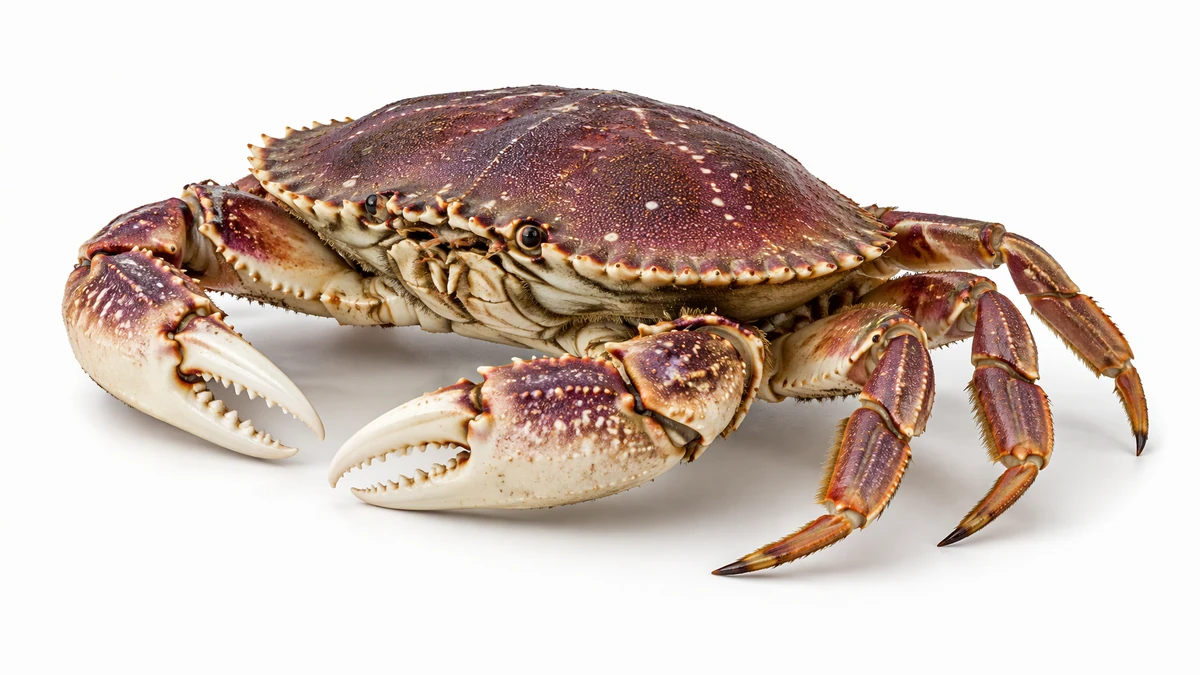
How to Catch Dungeness Crab
The Dungeness crab is the great eating crab of the North American Pacific coast, and one of the most rewarding shellfish to catch with simple gear. A broad purple-brown shell, white-tipped claws, and sweet, delicate meat make it a prize from Alaska to central California, and the fishery is built on a strict male-only, hard-shell, minimum-size system that keeps it healthy. Learning how to catch Dungeness crab is less about fishing skill and more about location, bait, soak time, and measuring every crab correctly. For identification, range, and biology, read the full Dungeness Crab species profile; this guide is about catching them.
Best Time to Catch Dungeness Crab
The best time to catch Dungeness crab is late autumn through spring, though the exact window varies by state and area. Seasons open and close by region, and they can be delayed for domoic acid testing, whale-entanglement risk, or stock assessments, so the calendar is set by the state agency rather than by the crab.
Within a season, late winter and spring can be prime. In many areas big males move into shallower water before the moult, which puts legal crabs within easier reach of pots and ring nets. Crabs are also most active at night and around the tides, moving across sand and eelgrass to feed.
Tide matters for the gear as much as the crab. Pots work best on a slack tide, when the current is not pushing the pot around or sweeping scent away, and a soak of a tide or a few hours is usually enough. Water temperature keeps the species on the cool end of the spectrum, roughly 45 to 60°F (7–15°C), so the best crabbing follows cold, productive coastal water.
Check the season opening for your specific area before you go. A delayed opening for toxin testing is a safety measure, not a sign the crab is bad, and the dates change year to year.
Best Gear for Dungeness Crab
Dungeness crabbing is gear-simple, and most of the kit is about handling, measuring, and safety rather than tackle. The three main approaches are a crab pot, a ring net, and shore-based snares or loops.
| Component | Dungeness-ready choice |
|---|---|
| Pot | Commercial-style round or square crab pot with a bait box and escape rings |
| Alternative | Ring net for shallow water, or crab snares/loops from shore |
| Line | 50–100 ft of sinking, weighted crab line matched to depth |
| Buoy | A clearly marked buoy with your name and licence details where required |
| Bait holder | Wire bait cage or bait box, wired securely inside the pot |
| Measuring tool | A crab gauge, used across the widest part of the carapace |
| Extras | Thick gloves, cooler, pliers, a scale, and a tape measure |
Pots out-fish ring nets in most situations because they hold crabs for a longer soak and protect the bait. Ring nets are cheaper, easier to handle from a small boat or kayak, and fine in shallow water where crabs are moving. Shore-based snares let you crab without a boat, but they cover less ground.
Whatever you use, the crab gauge is the most important tool in the kit. You will measure every crab, and a gauge that measures the widest part of the carapace is the only reliable way to stay legal.
Best Bait for Dungeness Crab
The best bait for Dungeness crab is fresh, oily fish or poultry. Dungeness are predators and scavengers that eat clams, mussels, small crabs, shrimp, worms, and fish, and they are strongly attracted to scent, so a bait that releases oil and smell into the current pulls crabs from a wide area.
Natural baits that work well:
- Fish carcasses. Salmon, rockfish, and other fish frames are classic Dungeness bait, especially when fresh. Wire them into the bait box so they cannot be pulled out.
- Chicken. Chicken parts are a long-standing bait on the West Coast, cheap and effective, and they hold together through a soak.
- Squid and mackerel. Oily and tough, these are good baits and easy to secure in a cage.
- Clams and mussels. These are natural prey, and crushed shellfish release strong scent.
A pot with fresh bait and a good scent trail will out-fish a poorly baited one every time, and re-baiting between soaks keeps the scent working. Do not overload the pot — a bait box that is packed too tight releases less scent than one with a little room for water to move through.
There is no real artificial option here. Crabs respond to scent, not flash, so the "lure" is a fresh, oily bait in a secure cage.
Dungeness Crab Rigs
A Dungeness "rig" is really a gear setup for putting bait on the bottom and retrieving crabs safely. These are the three main configurations.
The pot rig. Attach 50–100 ft of sinking, weighted crab line to the pot, with a clearly marked buoy on the surface end and a small weight above the pot to keep the line off the surface. Wire a bait cage inside the pot, check that the escape rings are open and legal, and make sure the pot is weighted enough not to shift in current. Set it on sand or mud, not rock, and mark the buoy with your details where the rules require it.
The ring net rig. A ring net is two hoops with netting between them and bait clipped in the centre. Lower it on a line, let it sit on the bottom, and pull it up quickly when crabs are feeding on the bait. Ring nets are best in shallow, calm water and on a slack tide.
The shore snare rig. From a pier or jetty, a crab snare or loop rig uses a weighted frame with loops of line that tangle the crab's legs when you pull. Bait the centre, cast out, let it settle, and retrieve slowly. Shore crabbing is limited by reach, but it is a legitimate way to take Dungeness without a boat.
In every setup, the retrieve is part of the rig. Pull steadily and keep the gear off the rocks, and have the gauge and cooler ready before the pot breaks the surface.
How to Catch Dungeness Crab, Step by Step
- Pick the right bottom. Look for sandy or muddy bottom, eelgrass edges, and the mouths of estuaries in 20 to 100 feet. Crabs avoid rocky, snaggy bottom that eats pots.
- Bait the pot well. Wire fresh fish carcasses, chicken, or squid into the bait cage so they cannot be pulled free, and leave a little room for scent to escape.
- Set on a slack tide. Lower the pot gently, keep the line clear, and set the buoy where you can see it. Slack water keeps the pot where you put it.
- Soak for a tide or a few hours. A tide-long soak is usually plenty. Longer soaks can work, but check your state's rules on soak time and pot tending.
- Pull steadily. Haul the line hand over hand or with a pot puller, keeping tension so the pot does not swing into rocks.
- Measure every crab. Use a crab gauge across the widest part of the carapace, from spine tip to spine tip. If it is under the minimum, it goes back.
- Keep only legal hard-shell males. Check the abdomen flap — broad and rounded means female, narrow and pointed means mature male — and release soft-shell crabs and females promptly.
- Cook thoroughly and skip the viscera. Boil or steam whole crabs for about 15–20 minutes until the shell turns bright orange-red. Do not eat the guts or "butter," where toxins concentrate.
Dungeness crab fishing techniques are mostly discipline. The catching is easy; the skill is measuring correctly, releasing the right crabs, and respecting closures.
Where to Catch Dungeness Crab
Where to catch Dungeness crab means the Pacific coast of North America, from the Aleutian Islands and the Gulf of Alaska south through British Columbia, Washington, Oregon, and California to about Point Conception. They favour sandy and muddy bottom, eelgrass beds, and the edges of estuaries, and they range from the intertidal zone out to about 750 feet, though most fishing happens in 10 to 300 feet.
Juveniles use shallow, nearshore water and estuaries as nursery habitat, while adults move into deeper water and migrate inshore and offshore with the seasons and with moulting. In many areas, big males move shallow in late winter and spring before the moult, which is when the crabbing can be best.
Look for bays, estuary mouths, and open sandy stretches where cold, productive water supports the clams, mussels, and small crabs that Dungeness eat. Avoid rocky reefs and heavy kelp, which snag pots and hold fewer Dungeness than clean sand and mud.
Dungeness Crab Regulations and Safety
The Dungeness crab size limit is the most important rule, and it varies by state. As of 2025, Washington (WDFW) and Oregon (ODFW) use a 6.25-inch (159 mm) minimum carapace width, measured hard-shell, male only. California (CDFW) uses 5.75 inches (146 mm), and Alaska (ADF&G) uses a 6.5-inch (165 mm) minimum for recreational Dungeness. Always measure with a crab gauge across the widest part of the shell, and always release females and soft-shell crabs.
Every West Coast state requires a licence to take Dungeness crab recreationally, and several require a catch record card to log your catch. Gear rules matter too: pots and ring nets must be marked with the owner's buoy and identification, and there are limits on pots per person and soak times. Seasons open and close by area and state, and they can be delayed for domoic acid testing, whale-entanglement risk, or stock assessments.
As of 2025, check the current rules before you go — use WDFW for Washington, ODFW for Oregon, CDFW for California, and ADF&G for Alaska.
Safety has two sides. On deck, a big male can deliver a hard pinch with those white-tipped claws, so handle crabs from the back, gripping the rear of the carapace, and wear a thick glove. On the plate, Dungeness crabs can accumulate domoic acid and other shellfish toxins, which state agencies monitor; that is why seasons sometimes open late. Cook crab thoroughly, never eat the viscera, and follow state health advisories.
Common Mistakes and Dungeness Crab Fishing Tips
- Keeping females. Females carry the eggs and must go back. Learn the broad, rounded abdomen flap before you start measuring.
- Keeping soft-shell crabs. A recently moulted crab has little meat and is recovering from the shed. If the shell feels papery, release it.
- Measuring the wrong way. The legal measurement is the widest part of the carapace, not the length of the shell. Use a gauge, not an eyeball.
- Setting on rock. Pots on rocky bottom snag, roll, and get lost. Set on sand or mud.
- Stale bait. Crabs follow scent, and old bait stops working. Re-bait between soaks.
- Ignoring toxin closures. A delayed season is a safety measure. Do not fish a closed area or take crabs during a domoic acid closure.
- Poor pot marking. Unmarked or poorly buoyed pots are illegal in most states and a hazard to other boaters and whales.
- Eating the viscera. Toxins concentrate in the guts and "butter." Clean the crab properly and cook it thoroughly.
FAQ
What is the best time to catch Dungeness crab? Late autumn through spring, varying by state and area, with late winter and spring often prime as big males move shallow. Seasons can be delayed for toxin testing.
What bait for Dungeness crab works best? Fresh fish carcasses, chicken, squid, and mackerel in a secure bait cage. Fresh, oily bait that releases scent out-fishes stale bait.
What are the best Dungeness crab fishing techniques? Set a baited pot on sandy or muddy bottom in 20–100 feet on a slack tide, soak a tide, then measure every crab and keep only legal hard-shell males.
What is the best Dungeness crab rig? A crab pot with a marked buoy, weighted line, and wired bait cage is the standard. Ring nets and shore snares work in shallow water.
What is the Dungeness crab size limit? Washington and Oregon use 6.25 inches (159 mm) carapace width; California uses 5.75 inches (146 mm); Alaska uses 6.5 inches (165 mm), as of 2025.
How big do Dungeness crabs get? Legal adults are 6–10 inches across the carapace. Large males reach about 9 inches and 4 pounds.
How do you cook Dungeness crab? Boil or steam whole crabs for about 15–20 minutes until the shell turns bright orange-red, then clean and serve. Cook thoroughly and skip the viscera.
Dungeness crab vs blue crab: what is the difference? Blue crabs are Atlantic and Gulf crabs with blue claws and long side spines. Dungeness have white-tipped claws, an oval purple-brown shell, and live on the West Coast.
Learning how to catch Dungeness crab is mostly about good bait, the right bottom, and honest measuring. Set a pot on clean sand, soak a tide, gauge every crab, release the females and soft-shells, and follow the state season and toxin advisories. Do that, and this cold-water crab rewards you with some of the best eating on either coast.
Related Articles
- How to Catch Red King Crab — the giant Alaska crab with its own size and season rules.
- How to Catch Blue Crab — the Atlantic and Gulf crab with a different gear and rules set.
- How to Catch Brown Crab — Europe's big edible crab, a cousin in spirit and in the pot.
- How to Catch Atlantic Cod — another cold-water species shaped by strict management.
- Dungeness Crab species profile — identification, habitat, diet, and biology.
About the author and how this was tested
About the author
FishermanGuy
Bank, boat and kayak angler · fishing, crabbing and shrimping since 2021
I buy the gear, fish it for a season and write down what failed. No sponsored verdicts, no free-sample flattery. Every rig on this page has landed fish in water I can point at on a map.
How this was tested
- Every rig gets at least six trips on the same water before it is published.
- Gear is bought at retail. Free samples are labelled in the first paragraph.
- Dates show first publication and the last time the page was updated.