Field notes
Rod and Reel Maintenance
Rod and Reel Maintenance
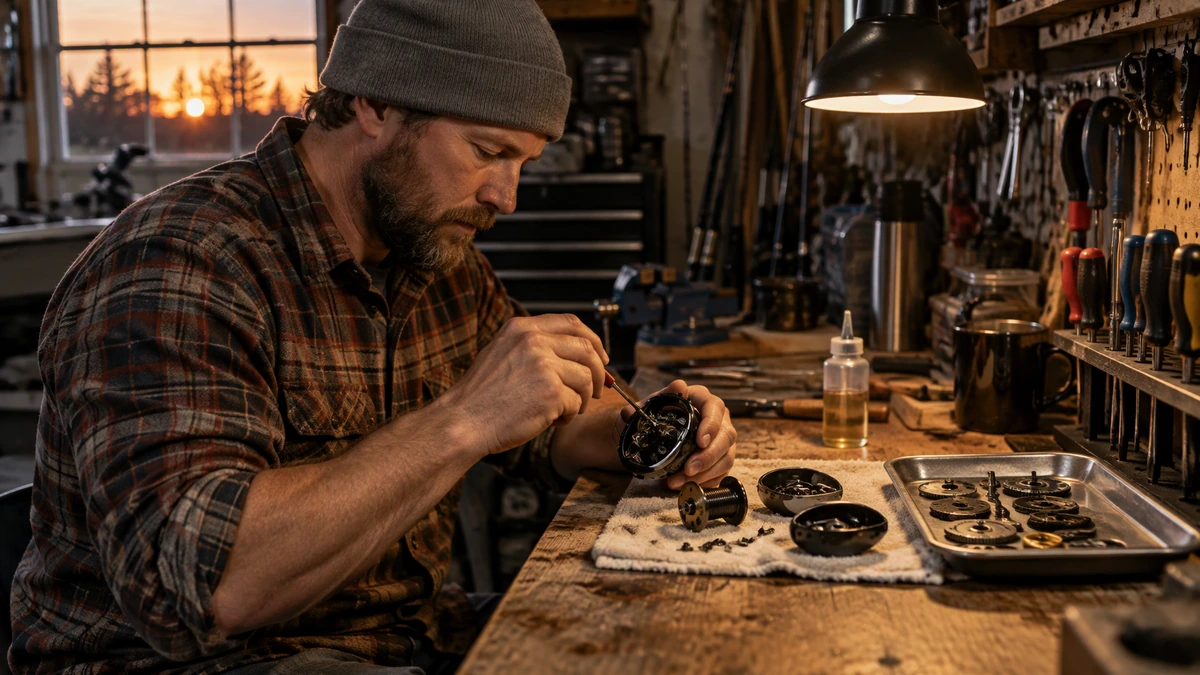
Good rod and reel maintenance is mostly a habit, not a project. A few minutes after each trip — a freshwater rinse, a wipe-down, a drop of oil in the right place — prevents most of the corrosion, grit, and drag problems that shorten a reel's life. Skip it, and salt, sand, and old grease quietly turn a smooth reel into a grinding one and a crisp rod into a broken tip. This guide covers a simple routine for both spinning and baitcasting reels, how to inspect a rod so a cracked guide does not cost you a fish, how to care for line, and how to store gear so it is ready next season.
Rinse Gear After Every Trip
The single most important maintenance step is also the easiest: rinse your gear in fresh water after every trip, especially after saltwater. Salt crystals are abrasive and corrosive, and once they work into a reel's bearings and drag they cause damage that no amount of oil can undo.
Rinse with gentle, low-pressure fresh water. Do not blast the reel with a hose, because high pressure forces water past seals and into the drag and gear case. Do not dunk the reel in a bucket, for the same reason. Rinse the rod and the outside of the reel, wipe everything dry with a soft cloth, and let it air-dry fully before storage.
Before you put the rod away, back off the drag. Leaving a drag tightened for weeks compresses the drag washers and weakens the spring, which shows up later as a jerky or inconsistent drag. Loosen it, rinse, dry, and then store.
Clean and Lubricate a Spinning Reel
A spinning reel needs light, regular attention rather than a full teardown every week. Use reel oil on bearings and reel grease on gears, and use each sparingly — excess lubricant attracts grit.
- Remove the spool and wipe away old line, sand, and grit from the spool and the area beneath it.
- Clean the spool shaft and put a thin film of oil on it so the spool moves freely.
- Oil the line roller and the bail assembly, which take the most salt and wear on a spinning reel.
- Put a drop of oil on the handle knob and check that the handle turns smoothly.
- Once a season, or after heavy use, open the gear case, clean out old grease, and apply a light coat of reel grease to the main gear.
Check the drag washers while you are in there. If the drag feels jerky or inconsistent, clean the washers and grease them lightly, or replace worn ones. If a full teardown feels beyond your comfort level, a professional reel service once a year or two is money well spent on a reel you rely on.
Clean and Lubricate a Baitcasting Reel
Baitcasting reels have more exposed moving parts, so they reward a little more attention. The good news is that the routine is still simple.
Remove the side plate and clean dust and grit from the spool and the inside of the frame. Put a single drop of reel oil on each spool bearing — one drop is enough, and more will only collect dirt. Clean and lightly grease the main gear, and oil the level wind mechanism, which is often the first part to get gritty. Check the drag washers the same way you would on a spinning reel.
Leave the braking system dry. Centrifugal brake blocks and magnetic brake surfaces are designed to run without lubricant, and oiling them can change how the reel behaves. Wipe them clean and leave them alone.
Reassemble carefully, make sure the spool spins freely, and reset the spool tension and brakes before your next cast. If you are new to these reels, spinning vs baitcasting explains the differences in how each is set up and maintained.
Care for Rod Blanks, Guides, and Handles
Rods fail at the guides and the tip far more often than in the middle of the blank, and most of those failures start with damage you can see if you look.
Run a cotton swab around the inside of every guide, including the tip top. If the cotton snags, the guide has a crack or nick, and that rough edge will fray and cut your line under load. Replace a damaged guide before it costs you a fish. Check the guide feet and wraps for cracks or loose thread, and check the tip top, which takes the most abuse.
Wipe the blank clean and inspect it for deep scratches or dings, especially near the tip. Wash cork handles with mild soap and water and dry them thoroughly; do not soak them. EVA foam handles clean up with mild soap as well. Check the reel seat for cracks and make sure the reel locks down tight.
Store rods where they are supported along their length, in a rack or case, rather than leaning in a corner where the tip can take a set or get stepped on. Heat is hard on rods, so keep them out of a hot car or a sunny window. If you are still choosing tackle, how to choose a fishing rod covers what to look for.
Line Care and When to Replace
Line is the cheapest part of your setup and the most common cause of lost fish, so treat it as a wear item.
Monofilament degrades from sunlight, heat, and age, and it takes a set — coiling and stiffening — over time. Replace mono at least once a season, and sooner if it feels rough, has visible nicks, or has been stored in heat. Braid lasts for years with care, but inspect it for fraying and fading, and cut back damaged sections. Fluorocarbon sits between the two: durable, but still worth replacing when it gets scratched or stiff.
Spool line under tension and avoid line twist, which causes wind knots and tangles. How to spool a reel walks through the correct method. After fishing, wipe the line down and let it dry before storage; wet line stored on a reel can rust the spool and degrade the line. Do not leave line in a hot car or direct sun for long periods.
Store Gear for the Offseason
Offseason storage is where a little effort pays off for years. Clean and dry everything first, then store it properly.
Loosen the drag on every reel and back off the spool tension on baitcasters. Store reels off the rods, or at least in a case, in a cool, dry place. Avoid damp basements and hot garages, both of which are hard on reels, line, and rod finishes. Hang rods or lay them flat in a rack so nothing leans on the tips.
If you fish saltwater hard, consider a professional service before storage so the reel goes away clean and lubricated. A reel that is stored wet, salty, and tight is a reel that will need parts next spring.
Common Mistakes
- Blasting reels with a hose. High pressure pushes water past seals into the drag and gears. Rinse gently.
- Dunking reels to clean them. Dunking drives salt and grit deeper. Rinse and wipe instead.
- Over-lubricating. Too much oil and grease collects grit and can gum up a reel. Use a little, in the right places.
- Using WD-40 as a lubricant. It is a solvent and water displacer, not a reel lubricant, and it can wash away proper grease. Use reel oil and reel grease.
- Storing with the drag tight. A compressed drag washer and spring lead to inconsistent drag later. Back it off.
- Never checking the guides. A cracked guide cuts line silently. Run a cotton swab through the guides regularly.
- Storing gear in a hot car. Heat damages line, rod finishes, and lubricants. Keep gear cool and dry.
FAQ
How often should I service a fishing reel? Rinse and wipe it after every trip, oil the key points regularly, and do a deeper clean and grease once a season or after heavy use. Reels fished hard in saltwater benefit from a professional service every year or two.
Can I use WD-40 on a fishing reel? Not as a lubricant. WD-40 is a solvent and water displacer, and it can wash away grease and attract dirt. Use purpose-made reel oil on bearings and reel grease on gears.
How do I clean a fishing rod? Wipe the blank and handles with mild soap and water, rinse the guides, and dry everything thoroughly. Run a cotton swab through each guide to check for cracks.
How long does fishing line last? Monofilament typically lasts about a season, less if stored in heat or sun. Braid can last several years with care, and fluorocarbon falls in between. Replace any line that is rough, nicked, or stiff.
Should I store reels with the drag tight or loose? Loose. Backing off the drag protects the drag washers and spring and keeps the drag smooth.
For the setup side of gear care, see how to rig a rod and reel and how to cast a fishing rod. Browse the Rods & Reels category for related guides.
About the author and how this was tested
About the author
FishermanGuy
Bank, boat and kayak angler · fishing, crabbing and shrimping since 2021
I buy the gear, fish it for a season and write down what failed. No sponsored verdicts, no free-sample flattery. Every rig on this page has landed fish in water I can point at on a map.
How this was tested
- Every rig gets at least six trips on the same water before it is published.
- Gear is bought at retail. Free samples are labelled in the first paragraph.
- Dates show first publication and the last time the page was updated.