Field notes
Palomar Knot: How to Tie the Strongest Hook Knot
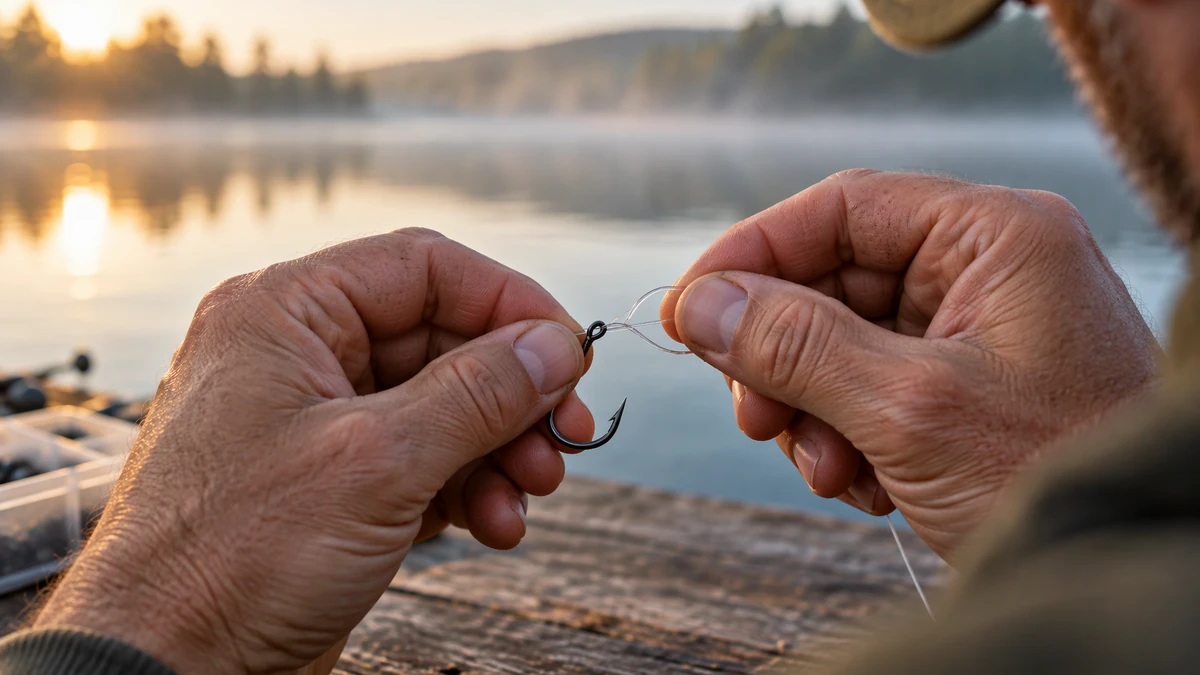
Palomar Knot: How to Tie the Strongest Hook Knot
The Palomar knot is one of the few fishing knots that is both fast to tie and consistently strong across line types. It doubles the line through the hook eye, which spreads the load over two strands and gives the knot a high retained strength in monofilament, fluorocarbon, and braid alike. For hooks, swivels, and small lures it is a default choice, and it is short enough to tie on a rocking boat. This guide covers what the Palomar is used for, how strong it really is, the steps to tie it correctly, the line types it suits, and the errors that cause it to fail.
What the Palomar Knot Is Used For
The Palomar attaches line to anything with an eye: hook eyes, swivel eyes, snap eyes, and the line tie on small to medium lures. It is most often seen on worm hooks for soft plastics, drop shot hooks, and jigheads, and it is the knot most bass anglers tie when rigging a Texas rig.
Its strengths are speed and simplicity. There are only a few motions, the knot is easy to inspect, and it does not require the careful coil counting of clinch-style knots. That makes it a good choice in poor light, cold weather, or whenever you are retying often.
The Palomar is a terminal knot only. It does not join two lines, and it is not a loop knot; the lure sits tight against the eye once the knot is seated.
Breaking Strength and Reliability
The Palomar is commonly cited as retaining 95 to 100 percent of line strength, and it regularly ranks near the top in independent knot tests, especially in braid. The doubled line through the eye is the reason. Load is shared by two strands instead of one, and the overhand knot seats against itself rather than cutting into a single line diameter.
Those figures assume a correctly tied knot in good line. A Palomar with a crossed strand, tied dry, or seated with a jerk will fail earlier. The knot is also sensitive to one specific error: if the loop is not passed completely over the hook, the knot will slip or come apart under load.
It is fair to describe the Palomar as one of the highest-retaining terminal knots available, with the caveat that any knot depends on the tie. For comparison with coil-style knots, see the improved clinch and San Diego Jam guides.
How to Tie a Palomar Knot Step by Step
- Double about six inches of line and pass the doubled loop through the hook eye, leaving several inches of tag beyond the eye.
- Tie a loose overhand knot with the doubled line, using both strands together, and leave the hook hanging from the loop below the knot.
- Pass the loop over the entire hook, clearing the point and the bend, so the hook ends up inside the loop. For a lure, pass the whole lure through the loop.
- Wet the knot with saliva or water, then pull the standing line and the tag end together to snug the overhand knot down.
- Slide the knot down against the eye, pull firmly to seat it, and trim the tag to about a sixteenth of an inch.
The order matters. The overhand is tied around the doubled line before the hook is passed through the loop. If you tie the overhand around the hook shank instead, you have not tied a Palomar.
Line Types the Palomar Handles
Braid. The Palomar is one of the most reliable braid knots. Braid is slippery and low-stretch, and knots that depend on friction between wraps can creep, but the Palomar locks the doubled braid against itself. It is widely used for braid-to-hook and braid-to-swivel connections.
Monofilament. Mono ties easily with the Palomar and holds well. The doubled line compensates for mono's stretch and its tendency to thin under load at a tight bend.
Fluorocarbon. The Palomar works in fluorocarbon, including heavier leader material, though stiff fluoro can make the overhand bulky. Wet it thoroughly, since fluoro is more sensitive to friction damage than mono.
One practical limit is line consumption. The Palomar uses roughly a foot of line per tie, more than a clinch, so retying often on a short leader means checking how much line remains.
Where the Palomar Stops Working
The Palomar is not the right knot for every situation. Passing a large lure through the loop is awkward, and big treble-hooked crankbaits, glide baits, and topwaters are easier to attach with a knot that does not require threading the whole lure. Heavy monofilament in the 30-pound-and-up range can also make the overhand stiff and hard to seat cleanly.
On long-shank hooks, especially offset worm hooks, the doubled line can sit at an angle at the eye. That is usually fine, but some anglers prefer a snell knot when they want the pull to run straight down the shank.
For line-to-line connections, the Palomar has no role at all; use a double uni or another join knot. And when a lure needs free movement, a loop knot such as the uni tied as a sliding loop is the appropriate tool.
Common Mistakes
- Not passing the loop fully over the hook. The hook must go completely through the loop. If the loop only clears the point, the knot pulls apart.
- Tying the overhand with a single strand. Both strands must be treated as one line. A stray single-strand wrap weakens the knot and makes it seat crooked.
- Tightening dry. Friction from a dry tighten can damage fluorocarbon and reduce mono strength. Wet the knot before you pull.
- Yanking instead of pulling smoothly. A sharp jerk can cross the strands inside the overhand. Pull the standing line and tag steadily until the knot seats.
- Leaving a short tag. Trim after the knot is seated, not before. A tag cut too early can slip back through the overhand.
- Tightening by the hook. Pulling the hook to cinch the knot twists the loop. Hold the hook and pull the standing line and tag.
FAQ
Is the Palomar knot really the strongest hook knot? It is among the highest-retaining terminal knots in many published tests, commonly cited at 95 to 100 percent, particularly in braid. Other knots test close to it, so the practical difference is small compared with tying the knot correctly.
Can you tie a Palomar knot with braid? Yes, and it is one of the better choices for braid. The doubled line through the eye resists the slipping that affects clinch-style knots in slippery, low-stretch line.
Does the Palomar work with fluorocarbon? It does, including heavier leader. Wet the knot well before tightening, because fluorocarbon is less forgiving of friction than monofilament.
How much line does a Palomar use? Plan on about a foot per tie. Tie it with a generous doubled section so the loop is large enough to pass over the hook or lure.
What if the hook will not fit through the loop? Use a knot that does not require passing the lure through a loop, such as the improved clinch or the San Diego Jam, both of which thread only the tag end through the eye.
For more terminal options, browse the Fishing Knots category, and match hook size to bait with the fishing hook sizes guide before you tie.
About the author and how this was tested
About the author
FishermanGuy
Bank, boat and kayak angler · fishing, crabbing and shrimping since 2021
I buy the gear, fish it for a season and write down what failed. No sponsored verdicts, no free-sample flattery. Every rig on this page has landed fish in water I can point at on a map.
How this was tested
- Every rig gets at least six trips on the same water before it is published.
- Gear is bought at retail. Free samples are labelled in the first paragraph.
- Dates show first publication and the last time the page was updated.