Field notes
Double Uni Knot: Joining Two Lines
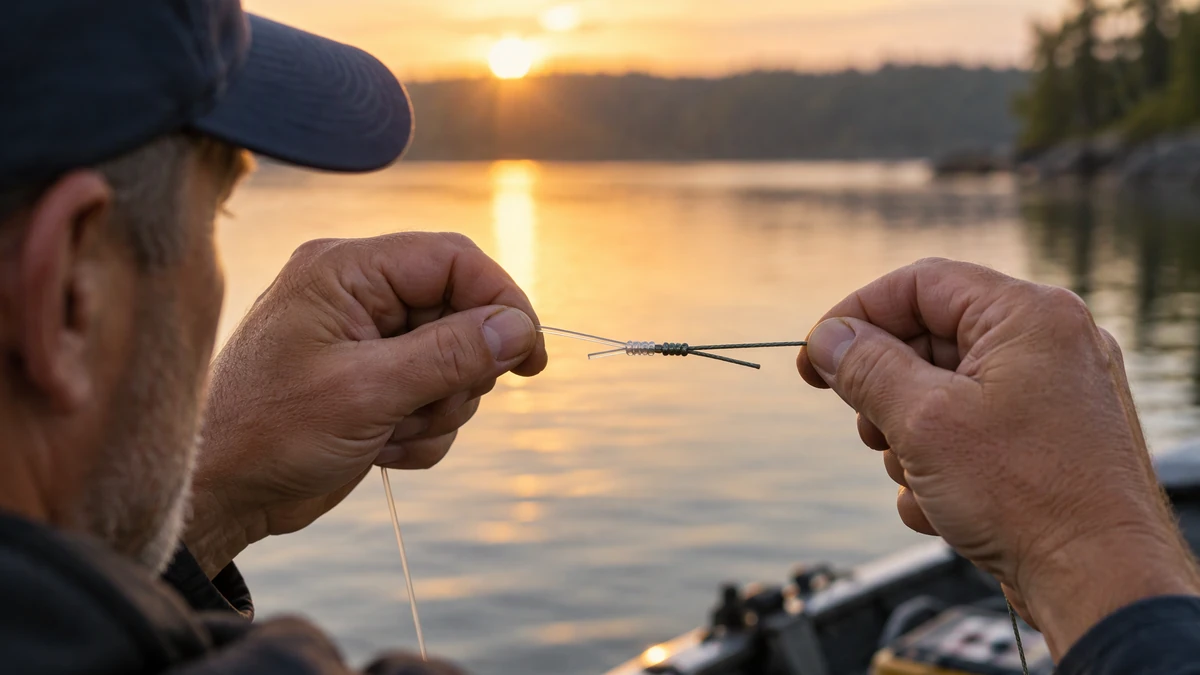
Double Uni Knot: Joining Two Lines
The double uni knot joins two fishing lines by tying a uni knot in each line and pulling the two knots together until they lock. It is the join most anglers learn first for connecting a braided main line to a fluorocarbon or monofilament leader, and it handles lines of different diameters better than joins that assume both lines are the same size. Each half grips its own line, so the connection does not depend on one material biting into another. This guide covers where the double uni is used, how much strength it keeps, the steps to tie it, the line types it suits, and the errors that cause the barrels to slip.
What the Double Uni Knot Is Used For
The double uni is a line-to-line join. It is most often used to attach a leader to a main line: braid to fluorocarbon, braid to monofilament, or mono to fluorocarbon. Because each half is an independent uni knot, the join does not require the two lines to be the same material or the same diameter, which makes it practical when you are adding a heavier leader to light braid or replacing a worn leader on the water.
It also serves as a general repair join. If a main line breaks well above the lure, a double uni can reconnect the two ends, though a join tied for equal diameters may sit slimmer.
The double uni is a working join, not a casting showcase. It is bulkier than the FG knot, so it can tick through guides on long casts, especially with the small guide trains found on modern rods. That trade-off is usually acceptable for bottom fishing, bait fishing, and situations where the join stays outside the tip.
It is a line join only. It does not attach line to a hook, lure, or swivel; those connections need a terminal knot.
How Strong the Double Uni Is
Published figures for the double uni vary with the line combination. Joins between similar monofilament or fluorocarbon lines commonly test in the 85 to 95 percent range. Braid-to-fluoro versions often test lower, in the 80 to 90 percent range, because the braid half has to grip a slick, hard leader. Treat any single number as an estimate: the same knot ties differently in different brands.
Two factors matter more than the headline figure. The first is wrap count. Braid needs more wraps than mono, typically six to eight per side instead of four to six. The second is seating. The two barrels must butt tightly against each other with no gap. A join that stops short is resting on loose coils, and once a barrel starts to slide it usually keeps going.
The double uni is generally a little weaker and noticeably bulkier than the FG knot for braid-to-leader work, but it is faster to tie, easier to inspect, and more forgiving of uneven diameters. Those qualities are why it remains common despite the lower numbers.
How to Tie a Double Uni Knot Step by Step
- Overlap the two lines by about eight inches, with the leader line lying alongside the main line, and hold the overlap with one hand.
- With the tag end of the first line, form a loop against the standing part, then wrap the tag around both lines and through the loop five to seven times. Use six to eight wraps when the first line is braid.
- Wet the wraps and pull the tag end to snug the coils into a barrel. Leave the barrel loose enough to slide along the line.
- Repeat with the tag end of the second line, wrapping in the opposite direction with the same number of turns, and snug that barrel the same way.
- Wet both barrels, then pull the two standing lines steadily apart. The barrels should slide together and butt against each other.
- Pull firmly in opposite directions to seat the join, check that no wraps are crossed, and trim both tags close.
Line Types and Diameter Matching
Braid to fluorocarbon. The most common use. Use six to eight wraps on the braid side and four to six on the fluoro side. Braid is slippery, and the extra wraps give the barrel grip.
Braid to monofilament. Similar to braid to fluoro and slightly more forgiving, because mono is softer and grips better than hard fluorocarbon.
Monofilament to fluorocarbon. Works with five or six wraps per side. This is a common freshwater leader join.
Similar diameters. The double uni tolerates a moderate diameter difference, but not an extreme one. If one line is much thinner, its barrel can slide through the larger line's coils under heavy load. When the difference is large, a join built for mismatched lines is the better tool.
Do not use the double uni at the hook or lure. Terminal connections need a Palomar knot, an improved clinch, or a similar terminal knot.
Double Uni vs Other Line Joins
Against the blood knot. The blood knot is slimmer and ties neatly in matched mono or fluoro, but it is poor with braid and awkward when the diameters differ. The double uni is bulkier but works across materials and sizes.
Against the FG knot. The FG is the slimmer, higher-strength option for braid to leader and passes through guides more cleanly. It also takes more practice and demands constant tension while wrapping. The double uni is the faster, more forgiving tie, which suits anglers who retie often or tie up on a moving boat.
Against the surgeon's knot. The surgeon's is quicker still, a doubled overhand, but it is less compact and less consistent in strength. Use it when speed matters more than a slim profile.
Worth noting: the double uni is two uni knots, so learning the uni gives you both the terminal knot and this join.
Common Mistakes
- Too few wraps on the braid side. Four wraps of braid look fine at the bench and slip under load. Use six to eight.
- Barrels that do not butt. If the two barrels stop short of each other, the join is not locked. Slide them together before the final pull.
- Pulling one standing line first. Snugging one side hard before the other can pull the barrels apart or seat them crooked. Pull both steadily and evenly.
- Crossed wraps. A coil that crosses over another creates a high spot that fails first. Keep the wraps side by side.
- Tightening dry. Fluorocarbon is sensitive to friction. Wet both barrels before seating.
- Trimming too early. Cut the tags only after the join is fully seated and tested.
FAQ
Can a double uni join lines of different diameters? Yes, within reason. It handles a moderate difference better than a blood knot, but a very thin line can still slip through the coils of a much heavier one. For extreme differences, use a join designed for mismatched lines.
Does the double uni work for braid to fluorocarbon? It does, and it is one of the common braid-to-leader joins. Use six to eight wraps on the braid side and wet the knot thoroughly before seating.
How many wraps should each side have? Four to six for monofilament and fluorocarbon, six to eight for braid. Heavier line needs fewer wraps to keep the barrels from becoming bulky.
What is the difference between a uni knot and a double uni? A single uni knot attaches line to terminal tackle or forms a loop. A double uni is two uni knots tied back to back on two lines to join them.
Will a double uni cast through the guides? It can, but it is bulky and may tick or catch, especially on rods with small guides. Trim the tags close and keep the join outside the tip when you can. For a slimmer braid-to-leader join, see the FG knot.
For the other terminal, loop, and joining knots in this series, browse the Fishing Knots category or start with the complete fishing knots guide.
About the author and how this was tested
About the author
FishermanGuy
Bank, boat and kayak angler · fishing, crabbing and shrimping since 2021
I buy the gear, fish it for a season and write down what failed. No sponsored verdicts, no free-sample flattery. Every rig on this page has landed fish in water I can point at on a map.
How this was tested
- Every rig gets at least six trips on the same water before it is published.
- Gear is bought at retail. Free samples are labelled in the first paragraph.
- Dates show first publication and the last time the page was updated.