Field notes
Uni Knot: One Knot for Everything
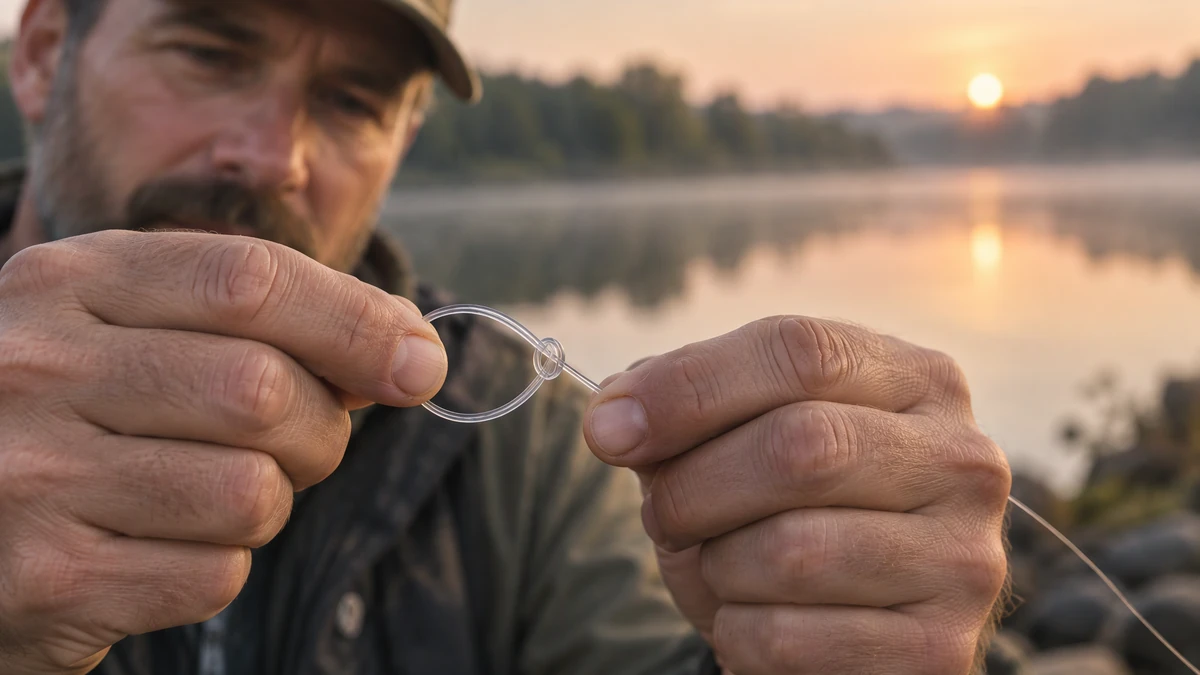
Uni Knot: One Knot for Everything
The uni knot earns its reputation because it does several jobs with one set of motions. Tied to a hook, swivel, or lure, it works as a terminal knot that slides down to the eye. Left partly open, it forms a sliding loop that lets a lure swing. Doubled back to back with another uni, it becomes the double uni, a common line-to-line join. The same knot covers monofilament, fluorocarbon, and braid with only small changes in wrap count. This guide explains what the uni knot is used for, how strong it is, how to tie it, how the loop and line-joining versions work, and the mistakes that weaken it.
What the Uni Knot Is Used For
The uni is a sliding knot. It is formed around the standing line and then slid down to the tackle, which means it can be used in three main ways.
As a terminal knot, the uni attaches hooks, swivels, snaps, and lures to the line. It seats tight against the eye and holds in all three common line materials.
As a loop knot, the uni can be stopped before it seats fully, leaving a loop between the knot and the eye. A lure on a loop swings more freely than one pinned tight, which suits plugs, jigs, and some soft-plastic presentations.
As a line join, two uni knots tied back to back make the double uni knot, which joins main line to leader. Because each uni grips its own line, the join works across different diameters and materials, including braid to fluorocarbon.
The uni is also the base for a few specialized knots. The drop shot knot uses a similar wrap to leave a long tag for the hook, and the uni's sliding grip is used in some snell-style applications.
How Strong the Uni Knot Is
The uni is commonly cited as retaining around 90 to 95 percent of line strength when tied with the right number of wraps. It performs well in braid, where the extra wraps give the coils enough grip on slippery line, and it holds in mono and fluorocarbon as well.
The knot's design helps. Each wrap passes through the loop and around both strands, so the coils compress against each other and against the standing line rather than relying on a single friction point. That structure is why the same knot works in materials as different as stiff fluoro and limp braid.
Strength still depends on the tie. Too few wraps in braid, coils that cross, or a knot tightened before the wraps are seated will all reduce it. The uni is also less forgiving than the Palomar of a badly formed loop, so the first wraps need to be clean.
How to Tie a Uni Knot
- Pass six to eight inches of tag end through the hook eye and bring it back alongside the standing line, forming a loop about the width of your finger.
- Hold the loop and wrap the tag end around both the standing line and the loop, passing through the loop on each turn, five to seven times. Use more wraps for braid and fewer for heavy mono.
- Wet the knot with saliva or water.
- Pull the tag end steadily to snug the coils into a compact barrel. Do not pull the standing line yet.
- Slide the barrel down against the eye by pulling the standing line, then pull both ends firmly to seat the knot and trim the tag.
The finished knot has the tag pointing back toward the eye, with the coils stacked in order. If the barrel looks loose or the wraps are crossed, cut it off and tie it again; a uni that seats unevenly is weaker than one tied cleanly.
The Uni as a Sliding Loop
To use the uni as a loop knot, follow the same steps but stop sliding the barrel when the loop is the size you want. Hold the loop at that size, pull the tag to lock the coils, and trim.
The loop should be large enough for the lure to swing without binding on the knot, but not so large that it fouls on the cast. A loop of roughly half an inch to an inch suits most plugs and jigs. For a fixed loop that will not change size under load, the non-slip loop knot is the more specific tool; the uni loop is a quick alternative when you already know the uni.
Joining Lines with the Double Uni
The double uni is two uni knots tied toward each other, each gripping its own line, with the two barrels pulled together. It is covered in full in the double uni knot guide, but the principle follows from the uni itself: each half grips its own line, and the join holds because the two barrels butt against each other.
The double uni handles line of different diameters and different materials, which makes it a practical braid-to-fluoro leader join. It is bulkier than a slim join like the FG knot, so it can catch in guides on long casts, but it is easier to tie and easier to inspect.
Line Types That Suit the Uni
Braid. One of the uni's strongest uses. Braid is slippery, and the multiple wraps through the loop give the coils grip. Use six or seven wraps, and seat the barrel firmly.
Monofilament. The uni ties easily and holds well. Five or six wraps is typical, and the knot slides smoothly to the eye.
Fluorocarbon. The uni works in fluoro, though stiff heavy leader material needs thorough wetting and careful seating. Five wraps is usually enough in heavy fluoro; more can make the barrel bulky.
Because the uni grips its own line, it is also a natural half of a mixed-material join. That flexibility is the reason it is often described as a knot that covers most terminal and joining needs.
Common Mistakes
- Not passing through the loop on every wrap. Each turn must go through the loop and around both strands. A wrap that misses the loop turns the knot into a loose spiral that slips.
- Too few wraps. Five is a working minimum in mono, and braid wants six or seven. Under-wrapped unis creep under load.
- Pulling the standing line first. Snug the coils with the tag before sliding the barrel. Pulling the standing line first can trap loose wraps.
- A twisted loop. If the loop is twisted when you start wrapping, the barrel seats crooked. Keep the loop flat and open.
- Tightening dry. Wet the knot so the coils slide into place without friction damage, especially in fluorocarbon.
- Using the loop version where a fixed loop is needed. A uni loop can change size under load. For a loop that stays put, use a non-slip loop knot.
FAQ
Is the uni knot good for braid? Yes. It is one of the more reliable braid terminal knots because the wraps through the loop grip slippery line. Use six or seven wraps and seat it firmly.
Can the uni knot be used as a loop knot? Yes. Stop sliding the barrel when the loop reaches the size you want, then lock the coils with the tag. The loop is not fixed, so it can shift under heavy load.
What is the difference between a uni knot and a double uni? A double uni is two uni knots tied back to back, one on each line, to join two lines. A single uni attaches line to terminal tackle or forms a loop.
How many wraps should a uni knot have? Five to seven. Use five or six for monofilament and fluorocarbon, and six or seven for braid. Heavier line needs fewer wraps to keep the barrel from becoming bulky.
Does the uni knot work for fluorocarbon? It does, with thorough wetting and careful seating. Very heavy fluoro is stiff, so keep the wrap count moderate and pull smoothly.
For the full set of terminal, loop, and joining knots, see the Fishing Knots category and the complete fishing knots guide.
About the author and how this was tested
About the author
FishermanGuy
Bank, boat and kayak angler · fishing, crabbing and shrimping since 2021
I buy the gear, fish it for a season and write down what failed. No sponsored verdicts, no free-sample flattery. Every rig on this page has landed fish in water I can point at on a map.
How this was tested
- Every rig gets at least six trips on the same water before it is published.
- Gear is bought at retail. Free samples are labelled in the first paragraph.
- Dates show first publication and the last time the page was updated.