Field notes
Non-Slip Loop Knot
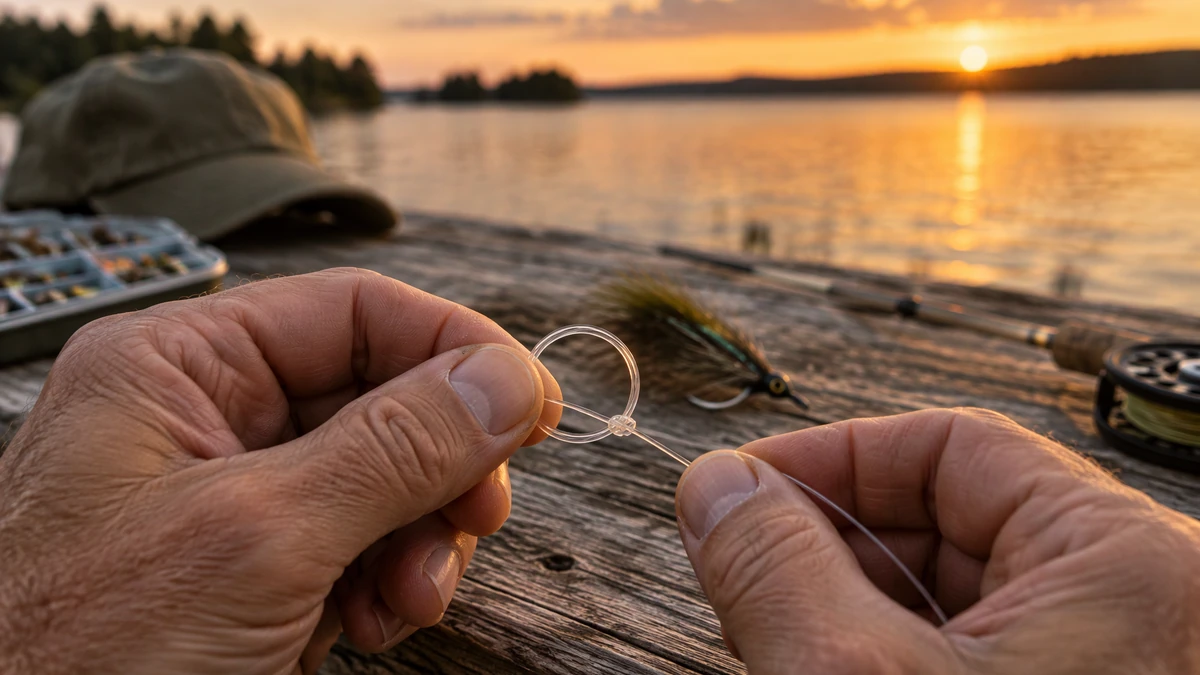
Non-Slip Loop Knot
The non-slip loop knot ties a fixed loop at the eye of a lure or fly, so the lure swings freely on a loop that keeps its size under load. It is a terminal knot for presentations where a lure pinned tight to the line loses action: walkers, poppers, jerkbaits, spoons, jigs, swimbaits, and streamer flies. The loop gives the lure room to move without binding on the knot, and because the loop is set when you tie it, it does not close down the way a sliding loop can. This guide covers what the non-slip loop knot is used for, how strong it is, the steps, the line types it suits, and the mistakes that weaken it.
What the Non-Slip Loop Knot Is Used For
The non-slip loop knot attaches a lure or fly with a loop at the eye. Unlike a sliding loop, the loop is set when you tie the knot and stays the same size, so the lure swings freely on a loop that will not close onto the eye.
That free swing gives many lures a livelier action than a knot that pins them tight. Topwater walkers and poppers sit and pivot better on a loop. Spoons and jigs swing and flutter more naturally. Streamers and other flies track with more movement. It is a common knot in saltwater inshore fishing for plugs and jigs, and in freshwater lure fishing where action matters.
It is a terminal loop knot, not a line join, and not a knot for every hook. Hooks that need a tight, rigid connection at the eye are better served by a Palomar or an improved clinch.
How Strong the Non-Slip Loop Is
The non-slip loop is commonly cited as retaining roughly 85 to 95 percent of line strength in monofilament and fluorocarbon, depending on the line and the tie. Loop knots as a group often test a little below tight knots such as the Palomar, because the line makes a bend at the eye and the load is carried by a loop rather than a straight pull.
The knot's holding power comes from the wraps around the standing line and the overhand knot that stops them from sliding. Because the loop size is fixed by the overhand's position, the knot does not creep the way a sliding loop can.
The weak points are slip and poor seating. Too few wraps, wraps that cross, or a tag passed around the overhand instead of through it will let the knot move under load. In braid, the slick line can slip through the wraps, so the knot is more reliable in mono and fluorocarbon.
How to Tie a Non-Slip Loop Knot Step by Step
- Tie a loose overhand knot in the standing line about four to six inches from the lure eye. That distance sets the finished loop size.
- Pass the tag end through the lure eye.
- Wrap the tag around the standing line four to five times, working up toward the overhand knot.
- Pass the tag back through the overhand knot, entering from the eye side just as the standing line does, so the tag runs alongside the standing line.
- Wet the knot, hold the loop at the size you want, and pull the tag steadily to snug the wraps.
- Pull the standing line to slide the overhand knot down to the eye, seat it, and trim the tag.
The step that is easy to get wrong is the fourth. The tag must pass through the overhand knot, not around it. Passing it around leaves the wraps free to slide and turns the knot into a weak, adjustable loop.
Best Line Types
Monofilament. The classic material for this knot. It ties easily, seats smoothly, and covers the range from light line for small plugs to heavy mono for big surface lures.
Fluorocarbon. Works well, especially for leader-shy fish, because the loop lets the lure move while the fluoro stays less visible. Stiff fluoro needs thorough wetting and steady pressure when seating.
Braid. Loop knots are less reliable in braid. The line is slick, and the wraps can slip under a hard pull. If you use the non-slip loop with braid, add wraps, wet the knot, and test it with a firm pull before fishing. In most setups the loop is tied in a mono or fluoro leader rather than in the braid main line.
Line size. The knot suits a wide range, from around 8-pound mono up to heavy 40- or 50-pound mono for large surface plugs. Very heavy line makes the wraps bulky and harder to seat.
Non-Slip Loop vs the Uni Loop
The uni knot can also be left as a loop, and the two knots look similar in use but behave differently.
The uni loop is a sliding loop. It is formed by stopping the uni before it seats fully, so the loop can change size under load. That is fine for many lures, and the uni is quick to tie if you already use it.
The non-slip loop is fixed. The overhand knot and the wraps lock the loop at the size you set, so it stays put through casts, retrieves, and fights. For lures where a consistent loop size matters, or where a sliding loop has closed up on the eye, the non-slip loop is the more specific tool.
For a tight connection at the eye instead of a loop, use the Palomar or the improved clinch.
Common Mistakes
- Passing the tag around the overhand knot. It must go through the knot. Going around leaves the wraps loose and the loop able to slide.
- Too few wraps. Four or five is the working range. Fewer wraps give less grip, especially in slick line.
- Setting the loop after tightening. The loop size is set by where you tie the overhand. Decide it before you snug the wraps.
- Jerking the knot tight. Pull steadily. A sharp jerk can cross the wraps or distort the loop.
- A loop that is too long or too short. A loop of about half an inch to an inch suits most lures. A very long loop can foul on the cast; a very short one limits action.
- Using it with braid without testing. Braid can slip through the wraps. Add wraps and pull hard on the knot before you fish it.
FAQ
What is a non-slip loop knot used for? It ties a fixed loop at the eye of a lure or fly so the lure swings freely. It is used for plugs, poppers, jerkbaits, spoons, jigs, swimbaits, and streamers.
What is the difference between a non-slip loop and a uni loop? A uni loop is a sliding loop that can change size under load. The non-slip loop is fixed at the size you set, so it stays consistent.
Can you tie a non-slip loop knot with braid? It can be tied in braid, but it is less reliable because slick line can slip through the wraps. Add wraps, wet the knot, and test it hard before fishing. In most setups the loop is tied in a mono or fluoro leader.
How big should the loop be? About half an inch to an inch for most lures. Set it by the distance between the overhand knot and the eye before you tighten.
Does a loop knot reduce line strength? Loop knots commonly test a little below tight knots, often in the 85 to 95 percent range in mono and fluoro. A clean tie with enough wraps keeps the loss small.
For lures that need free movement, the non-slip loop pairs well with the Palomar knot for tight connections and the uni knot as an all-purpose terminal option. Browse the Fishing Knots category for the rest of the series, or start with the complete fishing knots guide.
About the author and how this was tested
About the author
FishermanGuy
Bank, boat and kayak angler · fishing, crabbing and shrimping since 2021
I buy the gear, fish it for a season and write down what failed. No sponsored verdicts, no free-sample flattery. Every rig on this page has landed fish in water I can point at on a map.
How this was tested
- Every rig gets at least six trips on the same water before it is published.
- Gear is bought at retail. Free samples are labelled in the first paragraph.
- Dates show first publication and the last time the page was updated.