Field notes
FG Knot: Braid to Leader
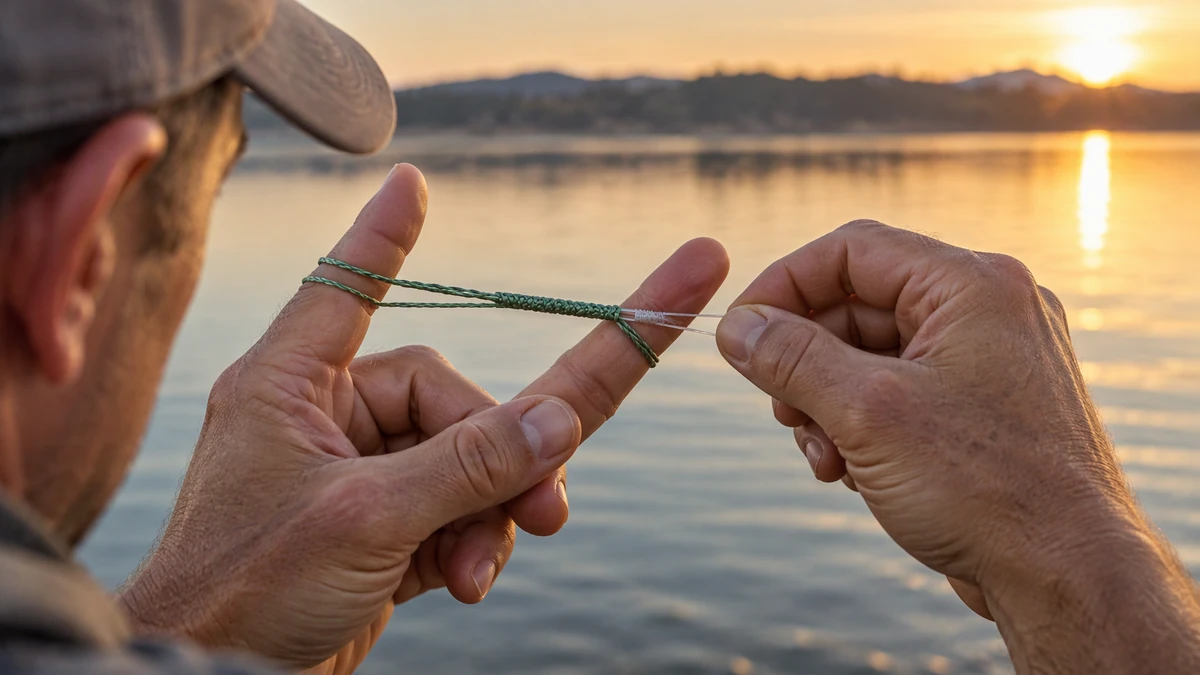
FG Knot: Braid to Leader
The FG knot connects a braided main line to a fluorocarbon or monofilament leader with a slim, tension-wrapped join that passes through guides with very little disturbance. Instead of knotting the two lines together, the braid wraps tightly around the leader and grips it along a length of line, which is why the finished knot is narrow and strong for its size. It is a demanding knot to tie well, but it is widely used wherever a long cast or a fine rod tip makes a bulky join a problem. This guide explains what the FG knot is for, how strong it is, how to tie it step by step, the lines it suits, and the errors that cause it to fail.
What the FG Knot Is Used For
The FG knot joins braid to a leader. It is used in spinning and baitcasting setups where a braided main line runs to a fluorocarbon or mono leader for abrasion resistance, stretch, or a less visible connection near the lure. It is common in saltwater inshore and offshore fishing, in lure fishing for bass and other freshwater species, and anywhere a long leader is cast through the guides.
The knot's advantage is its profile. The wraps taper along the leader, so the join is slim enough to travel through the rod guides and onto the reel with minimal ticking. That is the reason it is chosen over bulkier joins on long casts and on rods with small guides.
It is not a general-purpose knot. It is specifically a braid-to-leader join, and it depends on the braid gripping the leader along the wrap. Used with two lines of the same material, or with the leader as the wrapping line, it does not behave the same way.
How Strong the FG Knot Is
The FG knot is commonly cited as retaining close to the full strength of the braid, often in the 90 to 100 percent range in published tests, with the leader usually the limiting part of the system. Those figures assume a clean tie with even wrap tension and a properly finished knot.
The strength comes from the wrap, not from a single locking point. Each turn of braid crosses the leader at a slight angle and traps the standing braid, so the load is spread along the wrap length. A longer, evenly tensioned wrap grips better than a short one.
The knot is also sensitive to setup. Loose or crossed wraps, too few turns, or an unfinished knot that relies on a couple of half hitches will slip, and a slipping FG fails suddenly. The same knot tied with firm, even tension and a proper finish is reliable.
How to Tie an FG Knot Step by Step
- Anchor the leader under tension. Hold it taut against a fixed point, or grip it firmly with one hand and keep it straight.
- Lay the braid across the leader at a shallow angle, with a few inches of braid tag past the leader and the standing braid running back toward the reel.
- Wrap the braid tag around the leader sixteen to twenty times, crossing over the leader on one turn and under it on the next so each wrap locks against the one before. Keep every wrap snug and side by side.
- Tie one half hitch with the braid tag around the leader to lock the wraps in place.
- Pull the standing braid firmly to seat the wraps against the leader, then trim the leader tag close to the wrap.
- Finish with five to seven half hitches worked over both braid legs, alternating direction, and pull each one tight. Some anglers replace the last hitches with a Rizzuto finish. Wet the knot, cinch it hard, and trim the braid tag.
Tension is the whole method. If the leader goes slack while you are wrapping, the coils loosen and the knot has to be cut off and started again.
Best Line Types for the FG Knot
Braid to fluorocarbon. The primary use. Use a braid that is not excessively slick, and a leader that is clean and free of nicks. Fluorocarbon's hardness gives the braid something to grip.
Braid to monofilament. Also works. Mono is softer and can be easier to grip, though it stretches under load.
Braid weight and leader size. The knot scales well, from fine braid and a light leader for finesse fishing to heavy braid and a heavy leader offshore. The same sixteen to twenty wrap count covers most combinations.
Materials to avoid. The FG is not for mono-to-mono or fluoro-to-fluoro joins, and it is not used to attach line directly to a hook or lure. Use the double uni or blood knot for line joins, and a Palomar or San Diego Jam at the terminal end.
FG Knot vs Other Braid-to-Leader Joins
Against the double uni. The double uni is faster and easier, and it tolerates uneven diameters, but it is bulkier and tests lower in braid-to-leader work. The FG is slimmer and stronger but takes patience.
Against the blood knot. The blood knot is not suitable for braid because the coils slip. It is a matched mono or fluoro join.
Against the surgeon's knot. The surgeon's knot is the quickest leader join, but it is bulky and less consistent. It suits casual setups where a slim join is not critical.
Use the FG when the join must pass through guides, when you cast long distances, or when a slim, high-strength braid-to-leader join matters and you can tie it reliably. Use a faster knot when conditions make a careful tie impractical.
Common Mistakes
- Loose or uneven wraps. The FG grips through tension. A wrap that is loose or crossed lets the braid slide. Keep constant tension on the leader and pull each wrap snug.
- Too few wraps. Sixteen to twenty is the working range for most braid and leader combinations. A short wrap has less grip.
- Skipping the finish. A few half hitches that are not pulled tight can work loose. Finish with five to seven tight half hitches, or a Rizzuto finish, and cinch the whole knot hard.
- Trimming too early. Do not cut the leader tag until the wraps are seated. The tag gives you something to hold while tightening.
- Tying with a slack leader. The leader must stay straight and taut for the wraps to lie evenly. A leader that sags produces a loose knot.
- Using it where speed matters more. In wind, in the dark, or with cold hands, a simpler join you can tie correctly is more reliable than an FG tied badly.
FAQ
Is the FG knot hard to tie? It takes practice. The wraps must be made under constant leader tension, and the finish needs to be tight. Most anglers need a dozen or more attempts before the knot comes out clean.
How many wraps does an FG knot need? Sixteen to twenty wraps covers most braid and leader combinations. Use the upper end for slick braid or heavy leader.
Does the FG knot work with monofilament main line? It is designed for braid to leader. Mono-to-mono joins are better served by a blood knot or double uni.
Will the FG knot pass through the guides? Yes. Its slim, tapered profile is the main reason it is used. A clean tie passes through guides and onto the reel with little noise.
FG knot or double uni for braid to fluorocarbon? The FG is slimmer and generally tests higher; the double uni is faster and easier. Choose the FG when the join must cast through guides or when a slim profile matters.
For more line joins, compare the double uni knot and the blood knot, or see the complete fishing knots guide and the Fishing Knots category.
About the author and how this was tested
About the author
FishermanGuy
Bank, boat and kayak angler · fishing, crabbing and shrimping since 2021
I buy the gear, fish it for a season and write down what failed. No sponsored verdicts, no free-sample flattery. Every rig on this page has landed fish in water I can point at on a map.
How this was tested
- Every rig gets at least six trips on the same water before it is published.
- Gear is bought at retail. Free samples are labelled in the first paragraph.
- Dates show first publication and the last time the page was updated.