Field notes
Drop Shot Knot
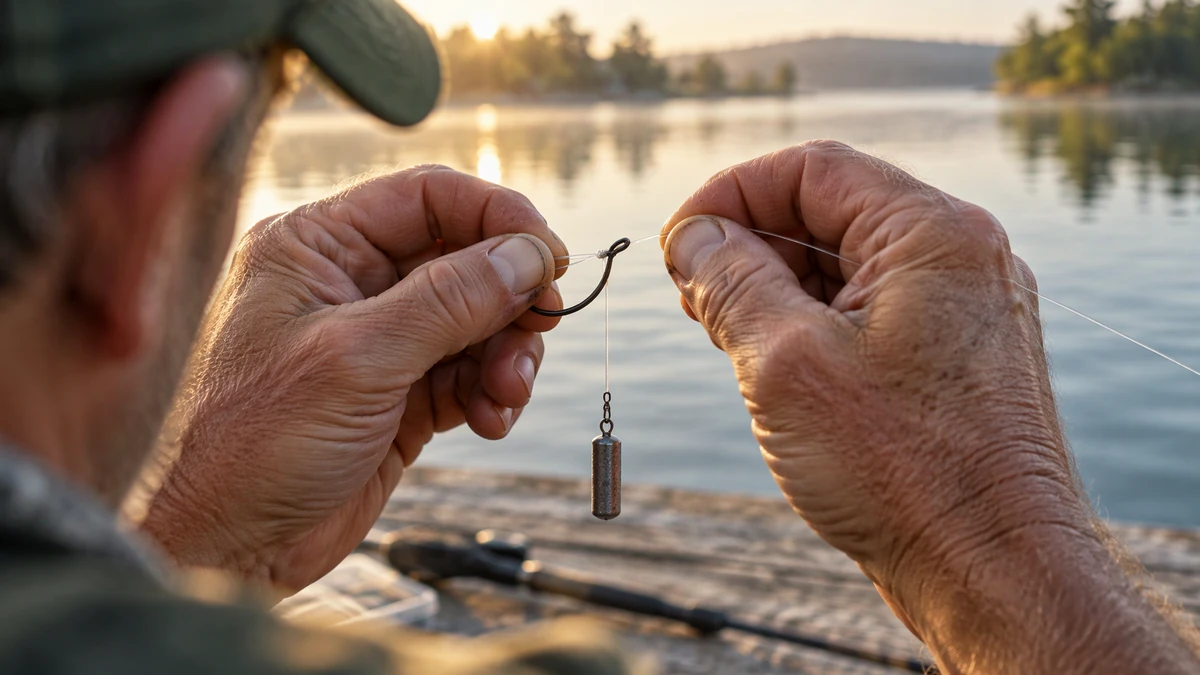
Drop Shot Knot
The drop shot knot is the hook connection at the center of a drop-shot rig. The hook is tied above the weight, not at the end of the line, and the line below the hook runs down to a sinker. That layout lets a soft plastic hover off the bottom and move with small rod-tip shakes while the weight stays put. The knot has two jobs at once: hold the hook so it stands out from the main line, and leave enough line below the hook to set the distance to the weight. This guide covers what the drop shot knot is used for, its reliability, the exact steps, alternatives, line choices, and common mistakes.
What the Drop Shot Knot Is Used For
The knot is used to attach a hook in the middle of a line for a drop-shot rig. The rig itself is a finesse presentation: a light-wire hook, a soft plastic nose-hooked or wacky-rigged, and a drop-shot weight on the tag end below. The weight keeps the bait in place; the hook knot keeps the bait above it, at the depth where fish are holding.
Drop-shot fishing is best known as a bass technique. It catches largemouth, smallmouth, and spotted bass in clear water, on pressured fish, through winter, and around deep structure where fish suspend off the bottom. The same rig also produces perch, walleye, and other fish that hold tight to cover or suspend above it.
The knot's specific job is to leave the hook free to stand out from the line. A hook pinned flat against the main line has less action and fouls more. A hook standing out on a short, stiff connection lets the bait pivot and shimmy with each shake of the rod tip. The long tag below the knot is not waste; it is the drop that carries the weight.
How Strong and Reliable a Drop Shot Knot Is
Most drop-shot tutorials use a Palomar tied with a long tag end, and the Palomar is commonly cited as retaining around 90 percent or more of line strength when tied cleanly. The long tag does not change the knot's strength; it just leaves line below the hook for the weight.
The weak points are not in the knot body. They are at the seat at the hook eye and at the hook itself. A knot that stops short of the eye lets the hook flop and twist the line. A heavy-wire hook on light line does not straighten under pressure, so a snag can break the line instead of opening the hook. Light-wire drop-shot hooks are made to bend and pull free, which protects the rig.
The weight connection is a separate decision. Many anglers tie the weight with a simple overhand knot through its eye so a snagged weight pulls free and costs only the weight. If you rig that way, the weight connection, not the hook knot, is the part designed to give first.
How to Tie a Drop Shot Knot Step by Step
- Double about eight inches of the end of the line and pass the loop through the hook eye, entering from the point side.
- Tie a loose overhand knot with the doubled line, letting the hook hang from the loop.
- Pass the loop over the hook, point first, and slide it up above the eye.
- Wet the knot and pull the standing line and the tag end evenly until the doubled line seats against the eye.
- Slide the knot so the hook stands out from the main line, then cut the tag below the hook to the depth you want, typically 12 to 24 inches, and tie the weight to the end.
Check the hook orientation before you tighten. For most drop-shot fishing the hook point faces up, away from the weight, so the bait sits above the hook shank and the point is exposed when a fish takes. If the hook hangs point down, retie or rotate it before the knot seats.
The Uni Alternative and Tying the Weight
A uni knot is the other common way to attach a drop-shot hook. It is tied with the tag through the eye, wrapped around the doubled line, and seated at the eye, with the tag left long for the weight. The uni seats tighter against the eye and lets the hook hang straighter than a Palomar; the Palomar leaves the hook standing out more. Which one suits depends on how you want the bait to sit.
The weight goes on the end of the tag. Pass the tag through the eye of the drop-shot weight, tie a simple overhand or clinch, and snug it. Keep the connection small so it does not catch on rocks. If the weight hangs from a swivel or clip molded into the weight, tie to that instead of the eye. The distance from hook to weight controls how high the bait sits: shorter in shallow water and around cover, longer in clear, deep water where fish suspend well off the bottom.
Line Types for Drop-Shot Fishing
Fluorocarbon leader. The usual choice. It sinks, resists abrasion around rock and wood, and is less visible in clear water. For bass, six to ten-pound test covers most situations; heavier leader is used around cover and for larger fish.
Monofilament. Works and costs less. Mono stretches more, which softens hooksets at long range, and it floats, which can lift the bait slightly. In shallow water it is a workable option.
Braid main line with a fluoro leader. A common bass setup. Braid gives sensitivity and casting distance; the fluoro leader provides the sink rate and abrasion resistance at the business end. The two are joined above the rig, and the leader takes the drop-shot knot.
Straight braid. A Palomar holds in braid, but braid is visible and does not sink. Straight braid is used in stained water or heavy cover, not in the clear-water finesse situations where drop-shotting shines.
Hooks. A light-wire, wide-gap hook in a size matched to the bait is standard. A hook that is too heavy will not straighten on a snag; one that is too light will open on a good fish. Match the wire to the line and the cover.
Common Mistakes
- Tag left too short. The weight ends up right under the hook, the bait sits in the mud, and fish ignore it.
- Tag left too long. A long drop swings and tangles on the cast, and the bait is harder to keep in the strike zone.
- Hook hanging point down. The bait covers the point and hooksets suffer. Set the hook point up before seating the knot.
- Knot not seated at the eye. The hook flops, the bait spins, and the line twists. Slide the knot down and retest.
- Weight too heavy for the rod and line. The rig needs a semi-slack line and small shakes. An oversized weight kills feel and action.
- Bait nose-hooked off-center. An unbalanced bait spins on the retrieve and twists the leader.
- Fishing it on a tight line. Drop-shotting is a slack-line, rod-tip technique. A tight line drags the bait and defeats the rig.
FAQ
Is the drop shot knot just a Palomar? In most tutorials, yes: a Palomar tied with a long tag end, which becomes the drop to the weight. The name describes the job the knot does in the rig, not a separate structure.
Can you tie a drop shot knot with braid? A Palomar holds in braid, but drop-shot rigs usually use a fluorocarbon leader for sink rate and visibility. If you tie straight to braid, expect the bait to sit higher and be more visible.
How far should the hook be above the weight? Twelve to 24 inches is the common range. Go shorter in shallow water and around cover, longer in deep, clear water where fish suspend.
Does the hook have to stand out from the line? It helps. A hook that stands out pivots freely and gives the bait more action; a hook pinned to the main line fouls more and moves less.
What weight should a drop-shot rig use? The lightest weight that holds bottom and keeps feel. Heavier weights hold in current and wind but reduce sensitivity and bait action.
For the hook knots that pair with this rig, see the Palomar and the uni knot, match your hook with the fishing hook sizes guide, and read the largemouth bass and smallmouth bass guides for where the rig fits. Start with the Fishing Knots guide, or browse the Fishing Knots category.
About the author and how this was tested
About the author
FishermanGuy
Bank, boat and kayak angler · fishing, crabbing and shrimping since 2021
I buy the gear, fish it for a season and write down what failed. No sponsored verdicts, no free-sample flattery. Every rig on this page has landed fish in water I can point at on a map.
How this was tested
- Every rig gets at least six trips on the same water before it is published.
- Gear is bought at retail. Free samples are labelled in the first paragraph.
- Dates show first publication and the last time the page was updated.