Field notes
Arbor Knot: Line to Reel
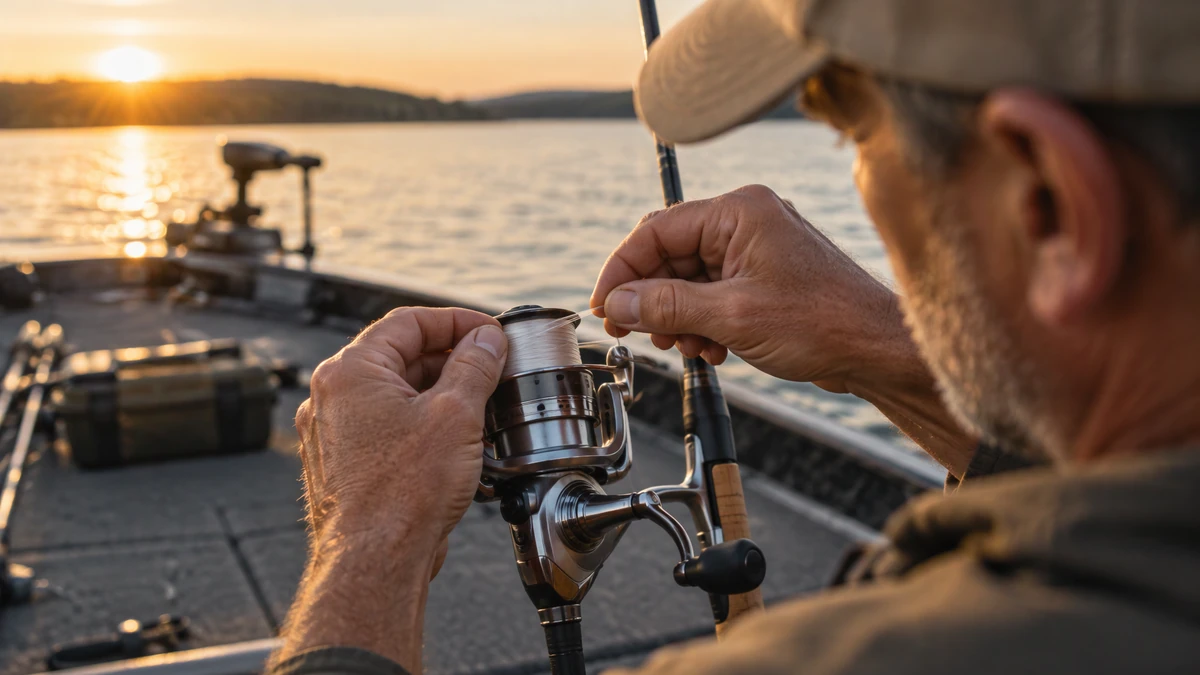
Arbor Knot: Line to Reel
The arbor knot attaches backing to the bare hub at the center of a reel spool. It is the first knot tied when a reel is spooled, and its only job is to stop the innermost wraps of line from slipping around the arbor. It is small, quick, and not designed to fight a fish. This guide covers what the arbor knot does, what it does not do, the exact steps, which lines suit it, and the reasons it sometimes slips.
What the Arbor Knot Is Used For
Every reel has an arbor, the bare hub under the line. Before line goes on, the end has to be anchored so the wound line grips itself instead of spinning on smooth metal or graphite. The arbor knot makes that anchor, and it is used on spinning reels, baitcasters, conventional reels, and fly reels alike.
The knot is tied in the backing, not in the main line. On a spinning reel, backing raises the line level so the spool fills correctly and gives braid something to bite into. On a baitcaster or conventional reel, backing fills space and saves expensive line. On a fly reel, backing adds capacity for long runs.
The arbor knot is not a terminal knot and not a line join in the usual sense. It has no role at a hook, lure, swivel, or leader connection. Its place is inside the spool, usually covered by hundreds of yards of line and never seen again until the reel is stripped.
What the Arbor Knot Does, and What It Does Not
The knot prevents the arbor end from slipping. That matters more than it sounds. If the innermost wraps can rotate around the spool, the drag has nothing to work against: line pays off in loose coils, the spool spins, and the drag setting stops meaning anything. A single small knot stops that.
The arbor knot is not load-bearing. Under a fight, the load travels through the line wrapped over itself and through the drag stack, not through the arbor knot. The knot only has to hold until enough line is wound on top of it. Its strength is not rated like a terminal knot because it does not need to be strong in that sense; it needs to be secure and small.
Small matters. A bulky knot under the first layers of line creates a bump that telegraphs through the spool and shows up as an uneven line lay. The knot should sit flat and centered on the arbor.
How to Tie an Arbor Knot Step by Step
- Pass the tag end of the backing around the reel arbor and bring it back alongside the standing line.
- Tie a loose overhand knot with the tag end around the standing line, leaving it open enough to slide.
- Tie a second overhand knot in the tag end itself, close to the first, to form a stopper.
- Moisten both knots and pull the standing line so the first overhand knot slides down and jams against the stopper.
- Snug the tag, trim it short, and wind the backing onto the spool under steady tension.
The order matters. The first knot has to slide; the second knot has to stop it. If the stopper is tied after the first knot is pulled tight, the sliding knot has nothing to jam against and the anchor can creep. Test the finished knot by pulling the standing line firmly before winding; the knot should lock solid instead of sliding.
Backing, Braid, and Arbor Knot Line Choices
Monofilament backing. The standard choice. Mono grips the arbor, compresses into a compact knot, and is inexpensive enough to fill a spool. It also gives braid something to bite into when braid is the main line.
Braid backing. Braid is thinner, so it adds more capacity, but it is slick and the arbor knot is only two overhand knots. A braid arbor knot can slip, and braid wound directly on a smooth arbor can rotate as a mass even with a knot. A strip of tape over the knot, or a short mono base under the braid, solves both problems.
Fluorocarbon. Rarely used as backing. It is expensive, stiff, and offers no advantage in a job that is never seen and never loaded.
Backing amount is a separate decision. The goal is a spool that fills to the right level once the main line is added, not a specific yardage. Line capacity figures on the reel assume a particular diameter, so backing volume has to be judged against the main line actually being used.
When the Arbor Knot Slips
A slipping arbor knot announces itself in a few ways. The drag feels inconsistent or weak. The whole spool of line turns as a unit when a fish pulls. Line comes off in loose coils rather than under tension. In bad cases the line spins freely on the arbor and no amount of drag adjustment helps.
The usual causes are slick line on a smooth arbor, a stopper knot too small to block the sliding knot, a sliding knot that was pulled tight before the stopper was formed, or backing wound on with no tension so the outer layers never grip the inner ones.
The fixes are simple. Add tape over the knot on slick lines. Use a mono base under braid. Retie with a larger stopper. Wind the backing under firm, steady tension so each layer presses on the one beneath it. A correctly installed arbor knot is invisible in use; the problems only appear when it is wrong.
Common Mistakes
- Tying only one overhand knot. Without the stopper in the tag, the anchor has nothing to jam against and will slide.
- Pulling the sliding knot before the stopper is tied. The knot seats in the wrong place and cannot be corrected.
- Leaving too short a tag for the stopper. The tag has to be long enough to tie a second overhand knot with a few inches to spare.
- Using braid on a bare, smooth arbor. The knot may hold while the entire line mass spins. Tape or a mono base is the fix.
- Letting the knot sit off-center. An off-center knot creates a bump that shows through the line lay. Center it on the arbor.
- Winding backing loosely. Loose backing never grips itself, and the arbor knot ends up carrying load it was never meant to carry.
- Making the stopper oversized. A fat stopper knot creates a lump under the line. It needs to block the sliding knot, not fill the spool.
FAQ
Is the arbor knot strong enough for big fish? It does not need to be. The load passes through the spooled line and the drag, not the arbor knot. It only has to hold the end until line is wound over it.
Can you tie an arbor knot with braid? Yes, but braid is slick. Use a strip of tape over the knot or a short mono base, and wind the braid on tightly. Without that, the knot or the whole line mass can slip on a smooth arbor.
Do you always need an arbor knot? Any line that goes directly onto a bare spool needs an anchor. Tape can substitute for the knot, but tape alone is less secure on a spinning reel arbor.
Should the arbor knot be tied in the backing or the main line? In the backing. The backing goes on first, and the main line is joined to it with a line-to-line knot or a loop.
Can an arbor knot cause line lay problems? Only if it is bulky or off-center. A compact knot sitting flat on the arbor is covered by the first few wraps and has no effect on line lay.
For the rest of the spooling process, see how to spool a reel. For the connections that come next, compare the nail knot for fly line to leader and the Palomar for terminal tackle, or browse the Fishing Knots guide and the Fishing Knots category.
About the author and how this was tested
About the author
FishermanGuy
Bank, boat and kayak angler · fishing, crabbing and shrimping since 2021
I buy the gear, fish it for a season and write down what failed. No sponsored verdicts, no free-sample flattery. Every rig on this page has landed fish in water I can point at on a map.
How this was tested
- Every rig gets at least six trips on the same water before it is published.
- Gear is bought at retail. Free samples are labelled in the first paragraph.
- Dates show first publication and the last time the page was updated.