Field notes
How to Clean a Fish: Field to Table
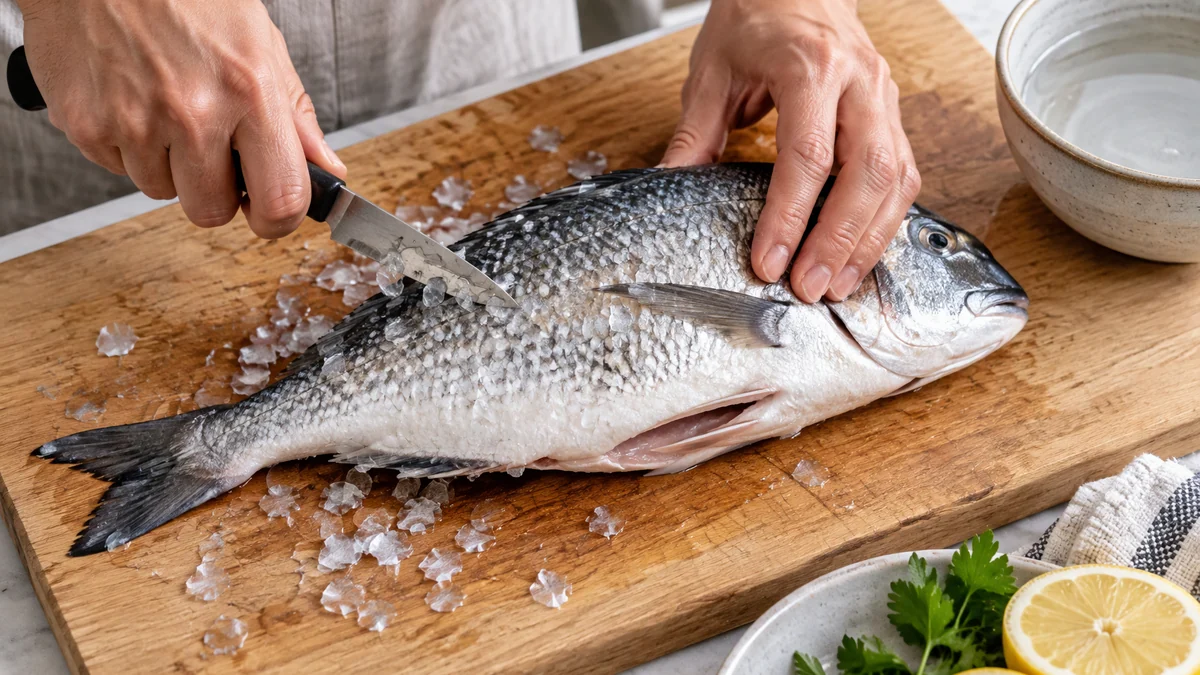
Cleaning a fish — dressing it — is the job that turns a whole fish into something fit to cook: rinse, scale, open the belly, take the head and entrails out, clear the blood, rinse again. It stops short of filleting, which is a separate set of cuts. The eight steps below are the ones the source gives, in order, with the safety and cold-chain rules that decide whether the fish is still good when it reaches the pan.
Species background for common cleaning candidates: channel catfish, bluegill, yellow perch, striped bass.
What You Need
- A fish scaler, or the back of a knife or spoon, for the scales
- A knife for opening the belly and taking the head off
- Clean, cold running water
Step-by-Step
- Rinse the fish. Wash the body to take off slime and dirt before anything else .
- Scale it. Scrape the scales off with the scaler or the back of a spoon, working from the head toward the tail .
- Open the belly. Cut along the belly from the vent to the gill collar, keeping the blade shallow so the internal organs are not punctured .
- Take off the head. Cut through at the base where the head joins the spine and lift it away . The alternative is a 45-degree cut just behind the head, which removes the pectoral fins at the same time .
- Remove the entrails. Cut around the vent, pull the entrails out, then remove every black membrane and all blood, especially the blood streak that runs along the backbone .
- Scrape the blood line. Run the knife along the kidney area beside the backbone to clear the blood left there .
- Trim the pelvic fins (optional). Cut around the pelvic fins and lift them off .
- Rinse the fish well under cold, running water, paying attention to the body cavity .
Safety & Hygiene
- Wash hands with soap and warm water for at least 20 seconds after handling raw seafood.
- Clean utensils, cutting boards and countertops with hot, soapy water, then sanitize with 1 tablespoon of unscented liquid bleach per gallon of water.
- Bleed the fish immediately and chill it fast, on ice or in an ice-and-saltwater slurry. Poor bleeding or a delay before gutting leaves blood clots in the flesh.
- Keep raw fish and its juices away from cooked food and from surfaces that will touch it later.
Storage
- Refrigerate raw fish at 40°F (4.4°C) or colder and use it within 3 days.
- Raw shrimp and crawfish keep for 5 days at 40°F; live or shucked shellfish such as clams and oysters keep up to 10 days.
- Cooked seafood keeps 4 days at the same temperature.
- If freezing is delayed, store the cleaned fish on ice until it goes in.
FAQ
What is the difference between cleaning and filleting a fish? Cleaning removes scales, head and entrails and leaves a whole or dressed fish; filleting takes the flesh off the backbone into boneless pieces.
Do I cut the head off before or after gutting? The source takes the head after the belly is opened: cut along the belly first, then cut the head off at its base on the spine.
Why remove the dark line along the backbone? It is the blood streak, and the method calls for removing all blood and black membrane, then scraping the kidney area beside the spine.
Does the fish still need rinsing after gutting? Yes, thoroughly, with attention to the cavity, under cold running water .
Recipe ideas: recipes.
About the author and how this was tested
About the author
FishermanGuy
Bank, boat and kayak angler · fishing, crabbing and shrimping since 2021
I buy the gear, fish it for a season and write down what failed. No sponsored verdicts, no free-sample flattery. Every rig on this page has landed fish in water I can point at on a map.
How this was tested
- Every rig gets at least six trips on the same water before it is published.
- Gear is bought at retail. Free samples are labelled in the first paragraph.
- Dates show first publication and the last time the page was updated.