Field notes
Nurse Shark: Identification, Habitat & Diet
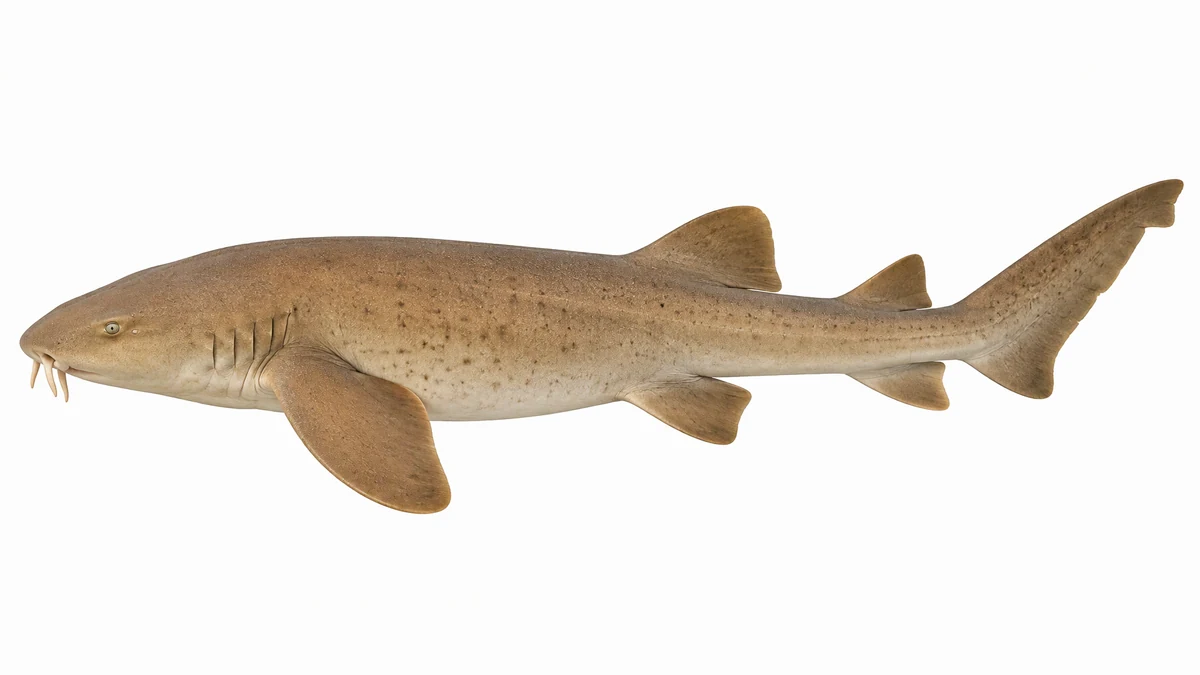
Nurse Shark: Identification, Habitat & Diet
The nurse shark (Ginglymostoma cirratum) is the couch potato of the shark world: a tan, bottom-hugging carpet shark that spends its days wedged under ledges, often stacked on top of its neighbors, and feeds slowly at night by sucking prey out of crevices. It is one of the most common large sharks in shallow tropical Atlantic water, one of the most frequently encountered by divers, and one of the most misunderstood. The name has nothing to do with nursing young — it likely comes from the sucking sound the fish makes while feeding. This guide covers nurse shark identification, habitat, diet, size, whether nurse sharks bite, how they differ from the Australian grey nurse, and how to fish for and handle them without hurting the fish or yourself.
Quick ID Card
| Field | Details |
|---|---|
| Scientific name | Ginglymostoma cirratum |
| Common names | Nurse shark, Atlantic nurse shark, tuna shark |
| Family | Ginglymostomatidae (nurse sharks) |
| Typical size | 7–9 feet; 150–250 pounds |
| Maximum size | About 14 feet (4.3 m); 150 kg (330 lb) |
| Water type | Shallow coastal salt and brackish water |
| Depth range | Surface to roughly 130 feet (40 m) |
| Range | Western and eastern Atlantic, eastern Pacific |
| Difficulty | Heavy tackle; strong, dogged fighter |
| Best season | Warm months; year-round in the tropics |
How to Identify a Nurse Shark
Nurse shark identification is mostly about shape. The head is broad and rounded, the eyes are tiny, and the mouth is small and set well under the snout, framed by short barbels that look like a pair of fleshy whiskers. The body is thick and soft-looking, tan to yellowish brown, sometimes with faint darker mottling on young fish. There are no spots, stripes, or fin markings to speak of.
The fins are the clincher. The first dorsal fin is rounded, not triangular, and sits far back on the body — its origin is roughly over or behind the pelvic fins. The pectoral fins are broad and rounded, the second dorsal is small and set near the tail, and the tail itself is long, often a quarter of the total length or more. A nurse shark resting on the bottom looks like a large, overstuffed cushion with a fin laid flat along its back.
Behavior helps too. Nurse sharks rest in the open or under ledges during the day, frequently in piles, and they often return to the same resting spot for years. If a tan, round-headed shark is sitting motionless on the sand, facing into a crevice, it is almost certainly a nurse.
Nurse Shark vs Grey Nurse and Other Lookalikes
Nurse shark vs grey nurse is a naming trap worth clearing up. The grey nurse shark is an Australian name for Carcharias taurus, the same species Americans call the sand tiger shark and South Africans call the ragged-tooth shark. It belongs to a different order entirely, has a pointed snout, a slender body with brownish spots, and a mouth full of long, protruding, ragged teeth. It also gulps air at the surface to control its buoyancy. The nurse shark is a rounded, bottom-dwelling carpet shark with a small mouth, barbels, and a first dorsal fin set far back. They share a name and almost nothing else.
The other confusion is with the tawny nurse shark (Nebrius ferrugineus) of the Indo-Pacific, which looks similar but has a different range and fin details. In the Atlantic and eastern Pacific, the nurse shark is the only common shark with this combination of rounded fins, barbels, and bottom-resting behavior.
If you need a one-line separation: nurse sharks are tan, sluggish, and built like a cushion; grey nurse sharks are grey-brown, spotted, pointed-nosed, and built like a torpedo with teeth showing.
Do Nurse Sharks Bite?
Yes. Nurse sharks bite, and they bite more often than their sleepy reputation suggests — but almost always after being provoked. The species is not aggressive in the way a bull or tiger shark can be. It does not stalk swimmers or test boats. What it does do is defend itself when grabbed, stepped on, or pulled by the tail, and it has a small mouth with a strong suction pump and rows of small, saw-like teeth that can clamp down and hold.
That latch-on bite is the reason dive operators warn against touching resting nurse sharks. A nurse shark that feels threatened will bite and hang on, and prying a 200-pound shark off a hand is not a simple matter. The suction it uses to extract prey from holes also makes it hard to pull away from. Most incidents involve divers or snorkelers trying to ride, drag, or pose with a shark, or anglers reaching for a hooked fish.
Unprovoked attacks on swimmers are extremely rare. The realistic risk is self-inflicted: touching a wild animal that has a very effective grip. Keep your hands to yourself, never corner a nurse shark in a cave, and do not pull one out of the water by its tail. On a boat, keep fingers away from the mouth, use a long dehooker, and cut the leader if needed. A nurse shark is not a man-eater, but it is also not a pet.
Where Do Nurse Sharks Live?
Where do nurse sharks live? In the warm, shallow western Atlantic, mostly. The species ranges from Rhode Island and the northern Gulf of Mexico south through Florida, the Bahamas, and the Caribbean to southern Brazil. There is a separate eastern Atlantic population from Senegal to Gabon, and another in the eastern Pacific. It is absent from the Indo-Pacific, which is why travelers sometimes confuse it with the tawny nurse shark.
Nurse shark habitat is shallow, structured bottom. They favor coral reefs, rock ledges, shipwrecks, sea grass beds, sand flats, and mangrove edges, usually in water less than 40 feet deep, though they can descend to about 130 feet. They need cover to rest under during the day, and they show strong site fidelity, returning to the same cave or ledge for years. Pups are born in shallow nurseries, including sea grass and mangrove areas, where small sharks can hide from larger predators.
Water temperature matters. Nurse sharks are tropical and subtropical animals, most comfortable above roughly 20°C (68°F), and they become inactive or move offshore as water cools at the edges of their range. In the Bahamas and Florida Keys they are a year-round fixture of the reef; in the northern Gulf they are a summer visitor.
Habits and Diet: What Do Nurse Sharks Eat?
What do nurse sharks eat? Fish, crustaceans, mollusks, and sea urchins, taken mostly at night. Lobster, crab, shrimp, octopus, squid, bivalves, and small bottom fish are staples, along with the occasional stingray. Nurse sharks are suction feeders: they expand the mouth and throat to vacuum prey out of holes and crevices, then crush it with small, powerful jaws. That is also how they handle hard-shelled prey like crabs and urchins.
Nurse sharks are nocturnal and social. During the day they rest in groups, sometimes piled on top of one another, and they can pump water over their gills while stationary instead of swimming to breathe. At night they become active, hunting along the reef and sand edges. Despite their slow appearance, they can move quickly when food is involved, and their suction feeding is strong enough to pull a lobster out of a ledge.
When do nurse sharks spawn? They do not spawn; they give birth to live young. Females are ovoviviparous, carrying litters of roughly 20 to 30 pups for a gestation of about five to six months before delivering in shallow nursery areas. They are slow-growing and late-maturing, which makes populations easy to deplete and slow to rebuild.
Size, Records and Regulations
How big do nurse sharks get? Most adults measure 7 to 9 feet and weigh 150 to 250 pounds. Large females can reach about 14 feet (4.3 m) and roughly 330 pounds (150 kg), though fish that size are uncommon. Pups are born around a foot long.
The nurse shark has no glamorous game-fish record to chase, and that is part of the point: it is a protected or restricted species across much of its range. The IUCN Red List assesses the nurse shark as Vulnerable in its most recent global assessment, reflecting slow reproduction, habitat loss, and fishing pressure. Check the latest listing before citing a status.
Regulations are stricter than many anglers expect. In U.S. Atlantic federal waters, the nurse shark is a prohibited species under NOAA's Highly Migratory Species rules and cannot be retained; it must be released unharmed. Florida also prohibits harvest of nurse sharks in state waters. The Bahamas has protected all sharks since 2011. Elsewhere, rules vary by country, and enforcement of shark protections is uneven, which is why the species still appears in markets.
The angler's rule is simple: treat every nurse shark as a release fish. If you hook one, use tackle heavy enough to control it — 50- to 80-pound class is reasonable around structure — with a heavy mono or wire leader and a circle hook. Nurse sharks fight with steady, stubborn power and will head for the nearest hole, so turn them early and keep them away from the reef. Do not lift a large one by the tail or gills, do not beach it, and do not let it thrash on deck. Keep it in the water, support the body if you must handle it, remove the hook with a long dehooker or cut the leader, and revive it until it swims off. Check current NOAA, state, and local rules before fishing. Last verified: November 2025.
How to fish for nurse sharks, where it is legal to target them, is a night bottom game. Anchor near a reef edge, wreck, or channel and fish fresh chunks of fish, whole crab, or lobster tail on the bottom. Nurse sharks pick up the scent and move in slowly; the take is often a heavy, deliberate pull rather than a run. Strike firmly, turn the fish immediately to keep it out of the rocks, and expect a long, plodding fight. Because they are protected in so much of their range, confirm the rules first — and plan on release regardless.
FAQ
How big do nurse sharks get? Most adults are 7–9 feet and 150–250 pounds. Large females reach about 14 feet (4.3 m) and roughly 330 pounds.
Do nurse sharks bite? Yes, usually when provoked or handled. They can clamp on with small, saw-like teeth and strong suction. Unprovoked attacks on swimmers are extremely rare.
Nurse shark vs grey nurse: what is the difference? The grey nurse is Carcharias taurus, a slender, spotted, pointed-nosed shark (also called sand tiger or ragged-tooth). The nurse shark is a rounded, tan, bottom-dwelling carpet shark with barbels and a rear-set dorsal fin.
Where do nurse sharks live? Shallow reefs, ledges, sea grass, and sand bottoms of the western Atlantic from Rhode Island to Brazil, plus West Africa and the eastern Pacific, usually in less than 40 feet of water.
What do nurse sharks eat? Fish, lobster, crab, shrimp, octopus, squid, bivalves, and sea urchins, sucked out of crevices at night.
When do nurse sharks spawn? They do not spawn. Females give birth to about 20–30 live pups after a gestation of roughly five to six months.
How to fish for nurse sharks? Bottom-fish at night near reefs, wrecks, or channels with fresh fish, crab, or lobster tail, heavy tackle, and a circle hook. Turn the fish early and release it in the water.
Can you keep a nurse shark? In U.S. Atlantic federal waters and Florida state waters, no — nurse sharks are protected from harvest. Rules vary elsewhere; check before you fish.
Related Articles
- Bull Shark — a stocky coastal predator with a very different temperament.
- Tiger Shark — the large warm-water generalist of reefs and channels.
- Lemon Shark — a shallow-water shark of the same Atlantic nursery habitats.
- All species profiles
The nurse shark is a gentle-looking animal with a real bite, a suction feeder that can drain a lobster hole in seconds, and a species that is protected across much of its range. Watch it, photograph it, and leave it alone. If you hook one, keep it in the water and let it go — a nurse shark released properly will be back on its ledge before you have stowed the rod.
Ready to catch one? Read our step-by-step guide: How to Catch Nurse Shark.
About the author and how this was tested
About the author
FishermanGuy
Bank, boat and kayak angler · fishing, crabbing and shrimping since 2021
I buy the gear, fish it for a season and write down what failed. No sponsored verdicts, no free-sample flattery. Every rig on this page has landed fish in water I can point at on a map.
How this was tested
- Every rig gets at least six trips on the same water before it is published.
- Gear is bought at retail. Free samples are labelled in the first paragraph.
- Dates show first publication and the last time the page was updated.