Field notes
Bull Shark: Identification, Habitat & Diet
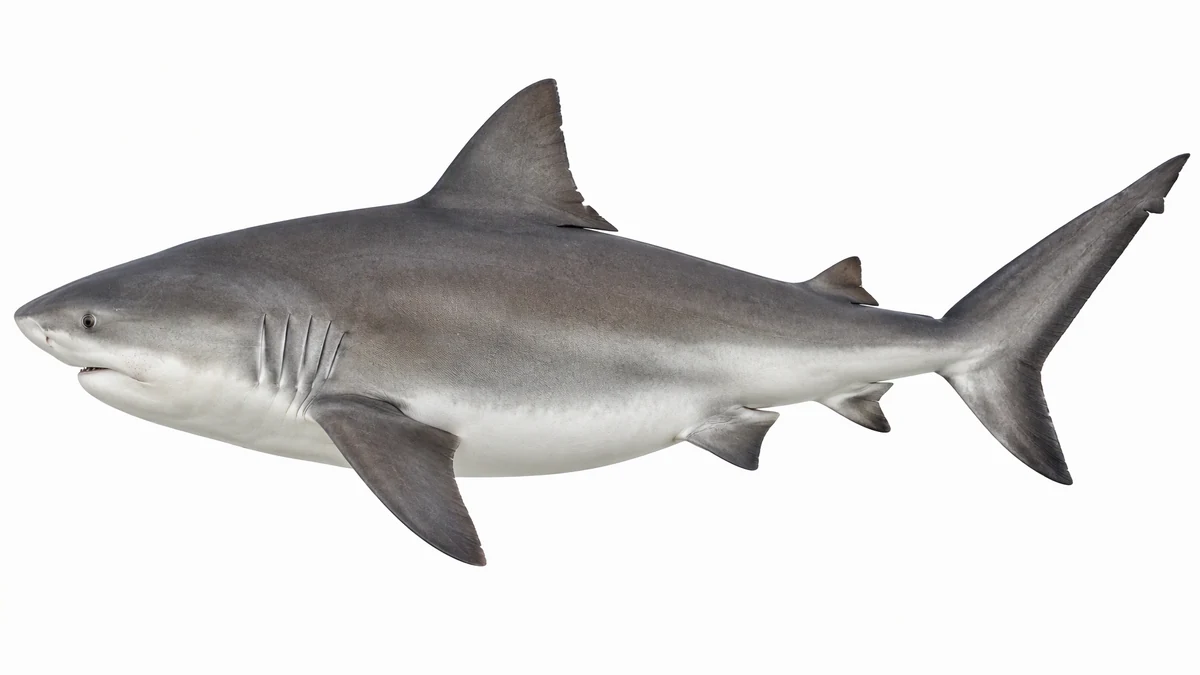
Bull Shark: Identification, Habitat & Diet
The bull shark (Carcharhinus leucas) is a broad-shouldered, blunt-nosed predator with a habit that sets it apart from nearly every other shark: it swims into fresh water. Bull sharks push far up rivers, take up residence in lakes, and turn up in places no saltwater fish has any business being, from the Amazon basin to Lake Nicaragua. That tolerance, combined with a heavy build, a short temper, and a preference for the same shallow, murky water people use, is why the bull shark sits with the great white and the tiger shark among the three species most often implicated in bites on humans. This guide covers bull shark identification, habitat, diet, size, the world record, how it compares with a great white, whether it can really live in fresh water, and the release rules that apply where it is caught.
Quick ID Card
| Field | Details |
|---|---|
| Scientific name | Carcharhinus leucas |
| Common names | Bull shark, Zambezi shark, Lake Nicaragua shark, cub shark |
| Family | Carcharhinidae (requiem sharks) |
| Typical size | 7–9 feet; 200–400 pounds |
| Maximum size | About 11.5 feet (3.5 m); 300+ kg (660+ lb) |
| Water type | Coastal salt water, estuaries, rivers, lakes |
| Depth range | Mostly shallows; rarely deeper than a few hundred feet |
| Range | Tropical and subtropical waters worldwide |
| Difficulty | Heavy tackle only; release is standard |
| Best season | Warm months; summer in subtropical regions |
How to Identify a Bull Shark
Bull shark identification starts with the body. This is the most thick-set of the requiem sharks, deep through the chest and heavy across the back, with a short, broad, bluntly rounded snout. The eye is small, the mouth is wide, and the snout is actually shorter than the mouth is wide — a useful field mark when a fish is close to the boat. The first dorsal fin is tall and triangular, the second dorsal is small, and there is no ridge running between the two dorsal fins. That last detail separates the bull shark from sandbar and dusky sharks, which carry a visible interdorsal ridge.
Coloration is plain and practical: grey to grey-brown above, white below, with a soft transition along the flank. Juveniles sometimes show dusky tips on the fins, but adults are unmarked. The pectoral fins are broad and relatively short, the tail is asymmetrical with a long upper lobe, and the overall impression is of a fish built for power in crowded, low-visibility water rather than speed in open blue.
Two comparisons cover most mistakes. A sandbar shark has a much taller, sail-like first dorsal fin and an interdorsal ridge. A dusky shark is slimmer, with a more pointed snout and the same ridge. If the shark is blocky, short-faced, ridge-free, and wearing a permanent scowl, it is probably a bull.
Bull Shark vs Great White and Other Lookalikes
Bull shark vs great white is the comparison most anglers ask about, and size usually settles it before anything else. A great white can exceed 20 feet and several thousand pounds; a bull shark tops out near 11.5 feet and a few hundred kilograms. The white also has a conical, pointed snout, a solid black eye, a very broad head, and a crisp line between its grey back and white belly. The bull's snout is blunt, its eye is small and not jet black, and its body is shorter and deeper in proportion.
Teeth tell the same story in miniature. Both species have broad, triangular, serrated teeth, but a white shark's are larger and more boldly serrated, and the white's dental layout is built for a sawing bite on large prey. A bull shark's teeth are smaller versions of the same design, suited to grabbing and shaking fish, rays, and the occasional turtle.
The freshwater habit is the clincher. Great whites are marine animals; bull sharks routinely enter rivers and lakes. No other large requiem shark combines that range with the bull's build and blunt face. Lemon sharks are yellowish with two dorsal fins of nearly equal size, and tiger sharks wear faded bars and have a much longer upper tail lobe. If you are still unsure at the boat, treat the fish as protected and cut it loose. A misidentified shark released in good condition is a far better outcome than a dead one.
Is the Bull Shark Dangerous?
Yes, and the reasons are specific. Bull sharks are large enough to do real damage, armed with serrated teeth and a bite built for crushing, and — most importantly — they share water with people. They hunt in estuaries, river mouths, lagoons, and shallow bays, often in murky conditions where a swimmer is just another shape. They are also territorial and quick to assert themselves, and they are known to bump before they bite. None of that makes attacks common; millions of people swim, dive, and fish in bull shark water every year without incident. But the bull shark has been implicated in a meaningful share of unprovoked bites worldwide, and it deserves more caution than its modest size suggests.
The practical rules are simple, and the question of how to avoid bull sharks comes down to a few habits. Do not swim at dawn, dusk, or night in murky water near river mouths, inlets, or known bull shark habitat. Avoid swimming after heavy rain, when runoff clouds the water and pushes bait fish — and the sharks that follow them — toward shore. Stay away from schools of bait, from people cleaning fish, and from any boat that is chumming. Do not swim alone, do not splash erratically, and take local warnings seriously, including temporary closures after sightings. Fresh water is not a safe zone; bull sharks have been caught hundreds of miles from the sea.
Handling is its own hazard. A hooked bull shark is still a bull shark. Keep your hands away from the mouth, never straddle a fish on deck, and never put a live shark in the boat. Use heavy leaders, long dehookers, and bolt cutters, and release the fish alongside the hull.
Where Do Bull Sharks Live? Habitat and Freshwater Range
Where do bull sharks live? Almost everywhere warm and shallow. The species is found in tropical and subtropical coastal waters around the world: the western Atlantic from New England to Brazil, the eastern Atlantic, the Indian Ocean, the western Pacific, and the Gulf of Mexico. In Asia they are regulars along the South China Sea coast and in major river systems. Bull shark habitat includes continental shelves, bays, harbors, estuaries, and the lower reaches of rivers.
The freshwater story is the famous one. Bull sharks have been documented in the Amazon system, the Ganges, the Zambezi, the Mississippi, and the Pearl River in China, and they can travel thousands of kilometers upstream. Lake Nicaragua holds a resident population, and the species has been recorded in landlocked water far from any coast. They manage this because their kidneys, rectal gland, and urea retention system let them hold salt and dilute waste in fresh water — an osmoregulatory trick most sharks cannot match. They do not live in fresh water permanently in most places; they move between river and sea, and females often use brackish nurseries to give birth.
Depth is usually shallow. Bull sharks hunt the top few dozen meters of the water column, often over sand, mud, or sea grass, and they are rarely reported from deep water. Warm water matters; the species is most active where surface temperatures stay above roughly 20°C (68°F), and it retreats from cooling coastal waters as winter arrives.
Habits and Diet: What Do Bull Sharks Eat?
What do bull sharks eat? Nearly anything they can catch. The diet includes bony fish, rays, other sharks, sea turtles, dolphins, crabs, shrimp, squid, seabirds, and carrion. Bull sharks are opportunistic rather than fussy, and they are known to hunt in low light and murky water, where their electroreception and lateral line give them an edge over sight-fed prey. They are mostly solitary, though they will gather where food is concentrated, and they are famous for working the same stretch of river or beach for years.
When do bull sharks spawn? They do not spawn at all — sharks mate and give birth to live young. Bull sharks are viviparous with a placental connection, and females carry litters of roughly 1 to 13 pups for about 10 to 11 months before delivering in estuaries, river mouths, and shallow coastal nurseries. Females mature slowly, likely in their mid-teens or later, and the species can live for decades. That combination — few young, late maturity — makes bull sharks vulnerable to fishing pressure even though they are widespread.
Bull sharks are also more migratory than their reputation suggests. Tagging work in the western Atlantic shows seasonal movements along the coast, with sharks shifting north in summer and south or offshore as water cools. Some individuals travel long distances; others stay put in river systems for years.
Size, World Record and Regulations
How big do bull sharks get? Most adults run 7 to 9 feet and 200 to 400 pounds. Large females reach about 11.5 feet (3.5 m) and can exceed 660 pounds (300 kg). Males are smaller. Pups are born around 2 feet long and grow slowly, which is one reason big bull sharks are old fish.
The world record bull shark, according to the IGFA all-tackle listing, is a fish of roughly 771 pounds taken from Lake Nicaragua — a fitting record for a species defined by its freshwater range. Check the current IGFA record book for the certified weight and any line-class marks, since records are occasionally revised.
Regulations are the part every angler needs to check on the day, not from an article. The bull shark is listed as Vulnerable on the IUCN Red List, and management is a patchwork. In U.S. Atlantic federal waters, sharks are managed under NOAA's Highly Migratory Species rules, with finning banned, reporting and gear requirements in place, and retention restricted for many species. State rules layer on top: Florida, which sees more bull shark encounters than any other U.S. state, requires a free shore-based shark fishing permit after an online course, restricts chumming and certain gear from beaches, and sets size and bag limits where retention is legal.
The responsible default is catch-and-release, and in many fisheries it is mandatory. If you plan to target bull sharks, use tackle heavy enough to land the fish quickly — 50- to 130-pound class gear, a heavy mono or wire leader, and a non-offset circle hook. Keep the shark in the water at the boat, never lift a large one by the gills or tail, support the body if you must handle it, and revive it alongside the hull until it swims off. Do not beach large sharks, do not gaff them, and do not pose with one on deck. Check current NOAA, state, and local rules before you fish; retention rules differ sharply between state and federal waters and are revised often. Last verified: November 2025.
FAQ
How big do bull sharks get? Most adults are 7–9 feet and 200–400 pounds. Large females reach about 11.5 feet (3.5 m) and can exceed 660 pounds (300 kg).
What is the world record bull shark? The IGFA all-tackle record is a fish of roughly 771 pounds taken from Lake Nicaragua. Confirm the certified figure in the current IGFA book.
Can bull sharks live in freshwater? Yes. They enter rivers and lakes and have been recorded thousands of kilometers upstream, thanks to a salt-retention system most sharks lack. They usually move between fresh and salt water rather than staying inland forever.
Where do bull sharks live? Warm coastal waters worldwide, including estuaries, river mouths, and major river systems in the Americas, Africa, Asia, and Australia.
What do bull sharks eat? Fish, rays, other sharks, sea turtles, dolphins, crustaceans, squid, birds, and carrion — whatever is available in murky, shallow water.
Bull shark vs great white: how do you tell them apart? Great whites are far larger, with pointed snouts, black eyes, and crisp two-tone color. Bull sharks are shorter and deeper-bodied, with blunt snouts, small eyes, and a tolerance for fresh water.
When do bull sharks spawn? Sharks do not spawn. Bull sharks give birth to 1–13 live pups after about 10–11 months, usually in estuarine nurseries.
How do you avoid bull sharks? Stay out of murky water at dawn, dusk, and night, especially near river mouths and after heavy rain. Avoid bait schools, fish cleaning, and chumming, and follow local warnings.
Can you keep a bull shark? Retention is limited or prohibited in many fisheries, especially U.S. federal waters. Treat the bull shark as a release fish unless you have confirmed local rules.
Related Articles
- Tiger Shark — the other big coastal predator with a reputation for eating anything.
- Lemon Shark — a yellowish Atlantic shark often found in the same shallow nurseries.
- Nurse Shark — a sluggish bottom-dweller that shares bull shark range but not its temperament.
- All species profiles
The bull shark is a contradiction: a coastal heavyweight that treats rivers as highways, and a fish that demands respect without deserving panic. Learn the field marks, give it room in murky water, and if you hook one, keep it in the water and send it back. A released bull shark is the best possible outcome for a fish this slow to replace itself.
Ready to catch one? Read our step-by-step guide: How to Catch Bull Shark.
About the author and how this was tested
About the author
FishermanGuy
Bank, boat and kayak angler · fishing, crabbing and shrimping since 2021
I buy the gear, fish it for a season and write down what failed. No sponsored verdicts, no free-sample flattery. Every rig on this page has landed fish in water I can point at on a map.
How this was tested
- Every rig gets at least six trips on the same water before it is published.
- Gear is bought at retail. Free samples are labelled in the first paragraph.
- Dates show first publication and the last time the page was updated.