Field notes
Nile Perch: Identification, Habitat & Diet
Nile Perch: Identification, Habitat & Diet
The Nile perch (Lates niloticus) is Africa's biggest freshwater predator and one of the most controversial fish in the world. A silvery, big-eyed, hard-mouthed hunter that can pass two metres and 100 kilograms, it is a powerful sportfish, a commercial mainstay, and the species blamed for wiping out hundreds of cichlids after it was introduced to Lake Victoria. This Nile perch profile covers identification, habitat, diet, size, records, how it differs from bass, and how to catch one responsibly.
Quick ID Card
| Field | Details |
|---|---|
| Scientific name | Lates niloticus |
| Common names | Nile perch, Nile giant perch, African snook, capitaine, mbuta |
| Family | Latidae (giant perches) |
| Typical size | 50–100 cm (20–40 in); 3–20 kg |
| Maximum size | Over 2 m (6.5 ft) and about 200 kg (440 lb) |
| Water type | Warm fresh water; rivers and large lakes |
| Depth range | Surface to about 60 m in deep lakes |
| Active water temperature | Roughly 22–30°C (72–86°F) |
| Difficulty | Hard; heavy tackle and long fights |
| Best season | Warm months; local closures and permits vary |
How to Identify a Nile Perch
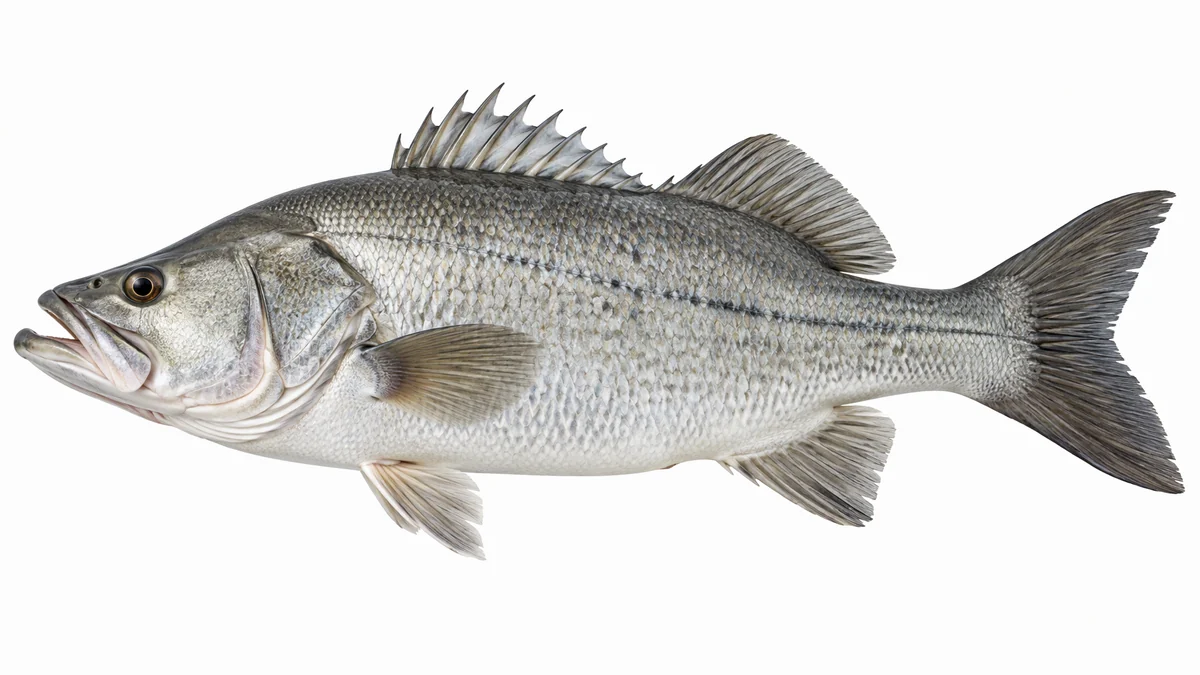
Nile perch identification starts with the head. The fish has a large, slightly concave head, a big mouth with a protruding lower jaw, and a large eye with a dark pupil and a golden or silvery iris. The body is elongated and powerful, silver-grey to olive above and pale below, with a faint dark lateral line and a slightly humped back behind the head.
The fins settle it. There is a spiny first dorsal fin, a distinct gap, then a soft second dorsal fin, followed by a forked tail. The anal fin has spines, the pectoral fins are long, and the whole fish looks built for acceleration rather than endurance. Big specimens are thick through the shoulders and carry a broad, heavy head.
The mouth is the quickest field check against other African fish. A Nile perch's jaw is massive, and the lower jaw projects beyond the upper. The gill covers are sharp and rigid. Juveniles are slender and silvery, often with faint vertical bars, and they can be mistaken for other perches until the head and mouth give them away.
Nile Perch vs Bass and Other Relatives
Nile perch vs bass is a common search, but the two are not close relatives. Largemouth and smallmouth bass are centrarchids from North America, with a spiny dorsal fin broadly joined to the soft dorsal, a different mouth, and a much smaller maximum size. A Nile perch has a clear gap between the two dorsal fins, a more streamlined body, and the potential to reach 100 kg or more. If a fish has the separate spiny and soft dorsals and a protruding lower jaw in Africa, it is a Nile perch.
The closer relative is the barramundi (Lates calcarifer), which belongs to the same family and looks similar. Barramundi are native to Australia and the Indo-Pacific, are catadromous, and are much smaller on average, though big females can pass a metre. The two are separated by geography rather than subtle fin counts. Other Lates species occur in African lakes and rivers, and local guides are the best identification source.
Is the Nile Perch Dangerous?
The Nile perch is not venomous, but it is a physically dangerous fish to handle. The gill covers are sharp and strong enough to cut a hand, the dorsal and anal spines are stiff, and a big fish thrashing in a boat can break tackle, rods, and fingers. A 50 kg perch is not a fish to lift by the jaw or the gill plate.
Handle big fish horizontally with a wet cloth or a large lip grip, support the belly, and keep the fish in the water while you unhook it. Use heavy gloves around the gills, and keep your face away from the head when the fish is fresh. If you plan to release the fish, minimise air time and revive it properly.
The environment carries its own risks. Nile perch fishing often happens on big African lakes and rivers with hippos, crocodiles, storms, and malaria. Never fish from a small boat near hippos, use a local guide on unfamiliar water, and take malaria precautions. On the plate, cook perch thoroughly; freshwater fish can carry parasites, and the flesh spoils quickly in tropical heat.
Where Do Nile Perch Live?
Where do Nile perch live? Naturally, in the Nile system and associated basins: the Nile itself, Lake Albert, Lake Kyoga, Lake Nasser, Lake Chad, the Volta system, and the Senegal and Gambia rivers. The species is native to much of northern and western Africa and has been moved widely by people, most famously into Lake Victoria in 1954.
Nile perch habitat is warm, well-oxygenated fresh water. Adults use deep water by day and move shallower at night to hunt, while juveniles prefer shallow, vegetated margins and river edges. They tolerate a range of conditions but are most active at roughly 22 to 30°C, which is why the tropical lakes and rivers of the Nile basin suit them so well. In Lake Victoria they have been recorded down to about 60 m, though most fishing happens much shallower.
The Lake Victoria introduction is the reason the species is famous beyond angling circles. Deliberately stocked in 1954, Nile perch spread through the lake and became its dominant predator. Hundreds of endemic haplochromine cichlids disappeared or crashed, and the food web was rebuilt around the perch. The fishery that followed is economically important, but the ecological cost is one of the classic examples of an introduced predator reshaping a lake.
Habits and Diet: What Do Nile Perch Eat?
What do Nile perch eat? Mostly fish. The diet includes cichlids, haplochromines, small cyprinids, catfish, and shrimp, and large adults will take whatever fits in their mouths, including other Nile perch. Cannibalism is normal, and it helps the species dominate crowded lakes. Juveniles take insects, crustaceans, and small fish before switching to a fish diet.
Nile perch are ambush hunters as well as open-water chasers. They use the big eye to hunt in low light, and they are most active at dawn, dusk, and at night. In Lake Victoria they follow schools of cichlids and small pelagics, and in rivers they sit in current breaks and eddies. The strike is fast and the first run is heavy, which is why the fish is nicknamed the water buffalo.
Growth is fast where food is abundant. Nile perch can mature within a few years and live well over a decade. Spawning happens in shallow water, often near river mouths or vegetated margins, and a big female produces huge numbers of eggs. That reproductive capacity is part of why the species establishes so quickly in new water.
Size, Limits and Regulations
How big do Nile perch get? Fish over 2 m and 200 kg have been reported, and specimens of 100 kg or more are caught in Lake Nasser and Lake Victoria. A typical large adult is 50 to 100 cm and 3 to 20 kg. The world record Nile perch is usually quoted in the region of 250 lb (about 113 kg), with the biggest authenticated fish coming from Lake Nasser and the Ugandan lakes. Record claims should always be checked against the IGFA list, because unverified weights are common.
Best bait for Nile perch is a live or fresh fish bait, a large spoon, or a deep-diving minnow trolled along drop-offs. Big perch also take dead baits on the bottom. Heavy tackle is standard: a strong rod, a reel with a reliable drag, and a leader that can survive the gill covers. In Lake Victoria, trolling deep divers and fishing live bait around schools of cichlids are the classic approaches.
When do Nile perch spawn? In the warmer months, in shallow water, with peaks that vary by lake and latitude. There is no single closed season across Africa, and rules differ between countries and even between lakes. Commercial fisheries often use mesh-size and export rules rather than a recreational size limit, while sport fisheries rely on permits and voluntary catch-and-release.
As of 2025, check the current rules before you fish. In Uganda, sport fishing in Murchison Falls National Park is controlled by the Uganda Wildlife Authority, with permits and catch-and-release conditions. In Egypt, Lake Nasser fishing is regulated by the national authorities. In Kenya and Tanzania, the Lake Victoria fishery is managed by national fisheries agencies with mesh, gear, and landing rules. Last verified: November 2025.
How to catch Nile perch: fish dawn and dusk, find baitfish and structure, and present a big lure or live bait at the right depth. Troll deep divers along drop-offs, cast large spoons at river mouths, or soak a fresh fish bait on the bottom. Use heavy gear, set the drag properly, and be ready for a long first run. Release trophy fish where the rules allow, and keep only what you will eat.
FAQ
How big do Nile perch get? Over 2 m and about 200 kg in exceptional cases; most large adults are 50–100 cm and 3–20 kg.
What is the world record Nile perch? Usually quoted around 250 lb (about 113 kg). The biggest authenticated fish come from Lake Nasser and the Ugandan lakes; check the IGFA list for current records.
What is the best bait for Nile perch? Live or fresh fish bait, large spoons, and deep-diving minnows trolled along drop-offs. Big perch also take dead baits on the bottom.
Where do Nile perch live? Naturally in the Nile basin, Lake Chad, and West African rivers; introduced to Lake Victoria in 1954 and now widespread in East African lakes.
Nile perch vs bass: what is the difference? Bass are North American centrarchids with joined dorsal fins and a much smaller maximum size. Nile perch have separate spiny and soft dorsals and can exceed 100 kg.
When do Nile perch spawn? In the warmer months, in shallow water, with peaks that vary by lake. There is no single continent-wide season.
How do you catch Nile perch? Fish dawn and dusk with heavy tackle, big lures, or live bait around baitfish and structure. Troll deep divers or soak baits on the bottom.
Is the Nile perch dangerous? Not venomous, but the sharp gill covers and spines can injure, and African waters carry hippo, crocodile, and malaria risks.
Related Articles
- Arapaima — South America's air-breathing freshwater giant.
- Giant Tiger Prawn — a very different kind of African and Indo-Pacific harvest.
- Mud Crab — an estuarine crustacean from the same tropical belt.
- Ornate Rock Lobster — a reef crustacean with its own management story.
- All species profiles
The Nile perch is a magnificent animal and an ecological cautionary tale in one package: a silver, big-eyed predator that can reach 100 kg, and a species that rewrote the food web of Lake Victoria after people moved it there. Learn the separate dorsal fins and the protruding jaw, fish warm water at dawn and dusk, use tackle that can handle the first run, and follow the permits and closures that apply where you are. The Nile perch rewards preparation, and it punishes anything less.
Ready to catch one? Read our step-by-step guide: How to Catch Nile Perch.
About the author and how this was tested
About the author
FishermanGuy
Bank, boat and kayak angler · fishing, crabbing and shrimping since 2021
I buy the gear, fish it for a season and write down what failed. No sponsored verdicts, no free-sample flattery. Every rig on this page has landed fish in water I can point at on a map.
How this was tested
- Every rig gets at least six trips on the same water before it is published.
- Gear is bought at retail. Free samples are labelled in the first paragraph.
- Dates show first publication and the last time the page was updated.