Field notes
How to Catch Golden Trout: Alpine Lake & Creek Guide
How to Catch Golden Trout
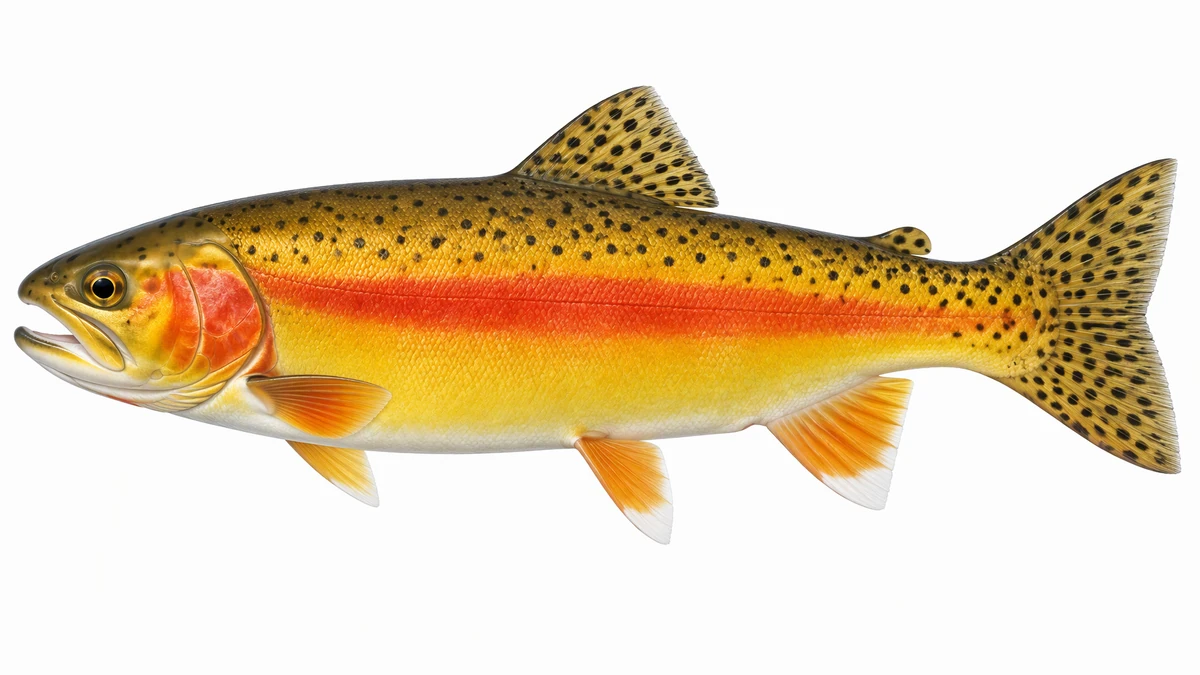
The golden trout is one of the most beautiful freshwater fish in North America, and one of the hardest to reach. It is a small, high-country trout native to a couple of cold drainages in the southern Sierra Nevada of California, living where the air is thin and the snow stays late. Learning how to catch golden trout is really a lesson in effort and stealth: hike far, stay low, present something tiny, and release the fish fast. This guide covers timing, tackle, bait, rigs, lake and stream tactics, regulations, and the handling that protects a fragile native population. Read the full Golden Trout species profile for identification, range, and how it differs from the hatchery "golden rainbow."
Best Time to Catch Golden Trout
Plan around snowmelt, not the calendar. Golden trout live in cold water and do best from the low 50s to mid-60s Fahrenheit. In the high Sierra, that means the season opens late and runs short.
July through September is the reliable window, after the snow recedes and the trails open. Early season, right after ice-out, finds hungry fish in lakes and inlet streams. Mid-summer is the classic time for alpine lakes: fish cruise shorelines, inlets, and drop-offs, and terrestrial insects fall from the brush. Late season, before the first snow, can be good as fish feed ahead of winter, but weather turns fast.
Time of day matters. Fish first light and the last hour before dark, when insects are active and fish feel safe in clear water. Overcast days fish well all day. Avoid the bright, calm midday, or fish deep shade and the inlet current. At high elevation, afternoon thunderstorms are a real hazard; plan to be off exposed ridges and water by early afternoon. Water temperature is the limit: if a stream feels warm to your hand in July, the fish are stacked in the few cold pockets that remain.
Best Gear for Golden Trout
Golden trout are small, the water is crystal clear, and the terrain is rough. Light, packable gear is the answer.
| Component | Golden trout-ready choice |
|---|---|
| Rod | 5–6 ft ultralight spinning rod, or a 3–5 wt pack fly rod |
| Reel | 500–1000 size spinning reel with a smooth drag |
| Main line | 2–4 lb monofilament or fluorocarbon; 4–6X tippet for flies |
| Hook | Size 10–14 hook; barbless where required |
| Lures | 1/16 oz spinners and tiny spoons |
| Flies | Small dry flies, bead-head nymphs, tiny streamers |
| Extras | Polarised glasses, rubber net, layers, rain gear |
A short pack rod fits a backpack and handles brush. Two- to four-pound line is enough for a 10-inch fish and much easier to present naturally in clear water. Many native waters require barbless hooks and artificial lures only, so carry small spinners, tiny spoons, and a handful of dries and nymphs. Bring polarised glasses to spot fish before you spook them, a rubber net for a clean release, and real layers: high lakes sit above 10,000 feet, and the weather changes without warning.
Best Bait for Golden Trout
Golden trout eat insects at every level of the water column. Aquatic nymphs such as mayflies, caddisflies, stoneflies, and midges form the base of the diet. In summer, terrestrial insects matter a lot: ants, beetles, and grasshoppers that fall from the bank. In lakes, they also feed on zooplankton, which pulls them offshore.
Natural bait is effective where legal. A small worm or a single salmon egg fished gently in a pool works, but in most native golden trout water, bait is not legal. Do not assume you can use it.
Artificial lures are the practical default. A 1/16 oz spinner or a tiny spoon is the standard, and in remote water golden trout strike without hesitation. Fish them slow enough to swing through a pool without spinning out.
Flies are the purist's choice and often the only legal one. In remote water, golden trout are not selective and rise readily to a small dry fly or take a bead-head nymph. In heavily visited lakes they get wiser, and a drag-free drift with light tippet makes the difference. Match the size to the local insects: small is almost always right.
Golden Trout Rigs
A golden trout rig should be tiny and delicate, built for clear water and small fish.
Dry-fly dead drift. Tie a small attractor dry to a 5–6X tippet and drift it drag-free over a pool or along a lake shoreline. In remote water, this is often all you need.
Dry-dropper. Tie the dry with 12–18 inches of tippet to a small bead-head nymph below it. The dry shows the take and catches fish; the nymph works underneath.
Micro-spinner. Tie a 1/16 oz spinner to 2–4 lb line, or add a small swivel to cut twist. Cast upstream and across, and retrieve just fast enough to feel the blade turn.
Indicator nymph for lakes. Suspend a small nymph under a tiny indicator at the depth where fish are cruising, and let wind drift it along the drop-off or inlet.
Keep the weight minimal. In clear alpine water, a heavy rig sinks out of the strike zone and spooks fish.
How to Catch Golden Trout, Step by Step
- Earn the water. Most golden trout water is a long hike. Plan the trip, carry layers, and tell someone your route.
- Approach quietly. Clear, shallow water means fish see everything. Stay back from the bank, keep low, and look before you cast.
- Read the water. In streams, fish hold in pools, undercut banks, and the soft water behind boulders. In lakes, work inlets, shorelines, and drop-offs.
- Cast upstream in creeks. Present the fly or lure above the fish and let it drift down naturally. A downstream cast drags.
- Get a drag-free drift. Mend the line or lift the rod to keep slack out without pulling the offering off its path.
- Watch for the take. Golden trout take softly. A stop, a flash, or a small swirl is your cue.
- Keep the fight short. These are small, fragile fish. Land them quickly on light line.
- Release wet and fast. Wet your hands, use a rubber net, keep the fish in the water, and limit air exposure to a few seconds.
Where to Catch Golden Trout
Golden trout are native to a tiny range and have been stocked into many high lakes beyond it.
- Native drainages. The South Fork Kern River and Golden Trout Creek on the Kern Plateau in the southern Sierra Nevada, mostly at 6,900–10,000 feet.
- Alpine lakes. Stocked high lakes above treeline with rocky shorelines and inlet streams hold fish that use inlets to spawn and the lake to feed.
- Inlets and outlets. Moving water draws fish, especially around the spawn.
- Cold pockets in streams. In summer, fish stack in springs, shaded pools, and deeper lake water.
- The Golden Trout Wilderness. Within Inyo and Sequoia National Forests, this area protects much of the core habitat and is reached by trail.
Access is by foot, often a long hike. That isolation has saved the fish from some of the pressure that hit other western trout.
Golden Trout Regulations and Safety
California manages golden trout as a heritage species, and the rules are strict. Many waters in the native range are catch-and-release only, with artificial-lure and barbless-hook requirements. Some lakes allow limited harvest. Some streams close to protect spawning fish. The California Department of Fish and Wildlife sets the rules, and the U.S. Forest Service and National Park Service manage much of the land.
A valid California fishing license is required, and some waters need a report card or special validation. Read the current CDFW freshwater regulations for the specific drainage before you hike in, because rules can differ from one lake to the next. Check wilderness and fire restrictions too. Last verified: November 2025.
Safety at altitude is serious. Waters above 10,000 feet bring fast weather: afternoon thunderstorms, snowfields, lightning, and cold water. Carry layers and rain gear, fish with a partner, and turn around before the weather does. Handling matters as much as safety: keep fish wet, use a rubber net, and release quickly, because a fish held out for a photo on dry granite may not survive.
Common Mistakes and Golden Trout Fishing Tips
- Underestimating the hike. Golden trout water is remote. Plan distance, water, and weather.
- Spooking fish in clear water. Stay back, stay low, and look before you cast.
- Gear too heavy. Use 2–4 lb line and tiny lures. Big tackle kills the presentation.
- Ignoring the rules. Many native waters require barbless, artificial-lure-only, catch-and-release. Check first.
- Confusing species. A stocked "golden rainbow" is a different fish. Know what you are catching.
- Holding fish for photos. Keep air exposure to seconds, or skip the photo.
- Transplanting fish. Never move fish or dump baitfish into alpine water; it damages native populations.
- Fishing the spawn. Stay off the gravel and leave spawning fish alone.
FAQ
What is the best time to catch golden trout? July through September, after snowmelt opens the high country. Fish early and late in the day, and target alpine lakes and inlets in mid-summer.
What bait for golden trout works best? Where legal, a small worm or salmon egg. In most native water, bait is illegal, so use a small dry fly, a bead-head nymph, or a 1/16 oz spinner.
What are the best golden trout fishing techniques? Hike in, stay low, and present tiny flies or lures naturally. Drift upstream in creeks, and fish inlets and drop-offs in lakes.
What is a good golden trout rig? A small dry fly on light tippet, or a dry-dropper. Where lures are allowed, a 1/16 oz micro-spinner on 2–4 lb line.
How big do golden trout get? Most adults run 6–10 inches, and a 12-inch native fish is a trophy. Lake fish can reach the low teens. The hatchery golden rainbow, a different fish, grows larger.
Are golden trout endangered? The California golden trout is not listed under the federal Endangered Species Act, but it has a tiny native range and is managed as a heritage species. Hybridization, nonnative trout, and habitat loss are ongoing threats.
Golden trout are a bucket-list fish because they are small, wild, and beautiful, and they live where effort is the price of admission. Find the cold water, present something tiny, and release the fish as carefully as you found it. That is how to catch golden trout, and why the hike is part of the catch.
Related Articles
- How to Catch Apache Trout — another rare native trout of the desert Southwest.
- How to Catch Cutthroat Trout — the native trout of the American West.
- How to Catch Brook Trout — the native char of cold eastern streams.
- How to Catch Rainbow Trout — the trout that hybridizes with golden trout.
- All species profiles
About the author and how this was tested
About the author
FishermanGuy
Bank, boat and kayak angler · fishing, crabbing and shrimping since 2021
I buy the gear, fish it for a season and write down what failed. No sponsored verdicts, no free-sample flattery. Every rig on this page has landed fish in water I can point at on a map.
How this was tested
- Every rig gets at least six trips on the same water before it is published.
- Gear is bought at retail. Free samples are labelled in the first paragraph.
- Dates show first publication and the last time the page was updated.