Field notes
Coral Trout: Identification, Habitat & Diet
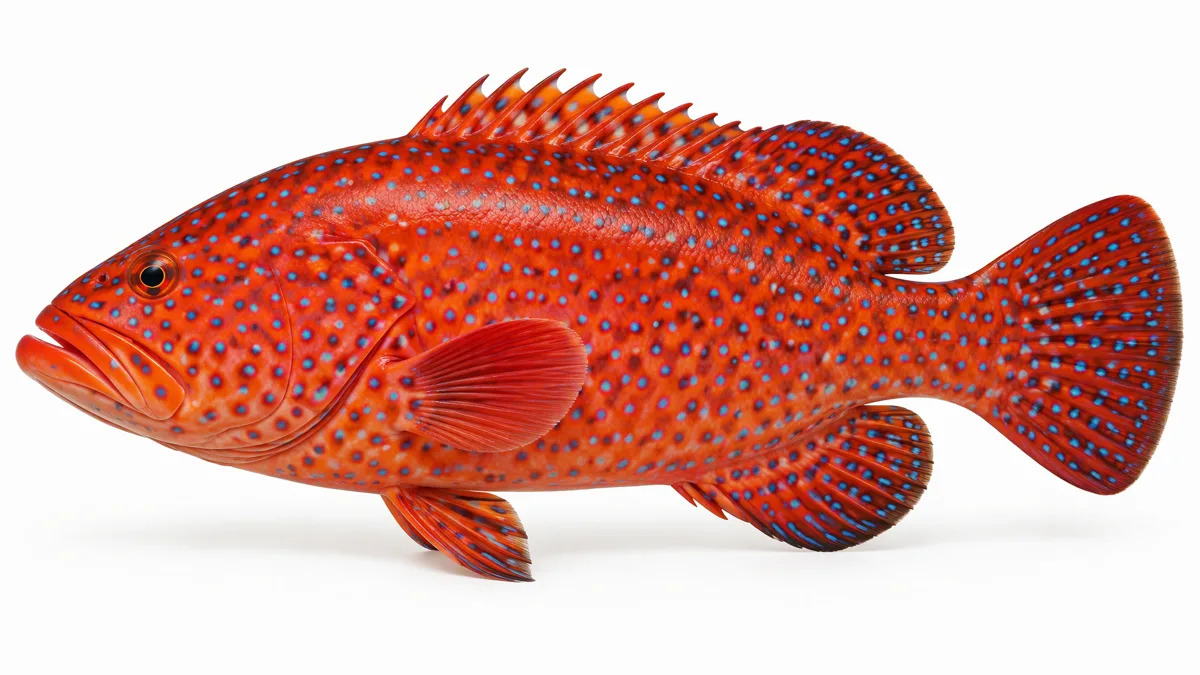
Coral Trout: Identification, Habitat & Diet
The coral trout is the fish that makes a reef angler's heart race. Bright scarlet, studded with electric-blue spots, and built like a small submarine, it is one of the most beautiful and most prized fish on the Indo-Pacific reef. In Australia it is a beloved sportfish and a protected reef resource; in Hong Kong and southern China the same fish, sold as leopard coral grouper or dongxing grouper, is a banquet dish. This profile covers coral trout identification, habitat, diet, size, records, how it differs from other groupers, and how to catch one, with a serious word on ciguatera and reef regulations.
Quick ID Card
| Field | Details |
|---|---|
| Scientific name | Plectropomus leopardus |
| Common names | Coral trout, leopard coral trout, leopard coral grouper, bluespotted coral trout (related species) |
| Family | Serranidae (groupers and sea basses) |
| Typical size | 14–24 inches (35–60 cm); 3–15 lb (1.5–7 kg) |
| Maximum size | About 47 inches (120 cm) and over 44 lb (20 kg) |
| Water type | Warm salt water, coral reefs and lagoons |
| Depth range | About 3–100 m, mostly 3–30 m |
| Active water temperature | Roughly 72–84°F (22–29°C) |
| Difficulty | Moderate to hard; powerful, structure-bound, and regulated |
| Best season | Warmer months; spawning closures apply in some areas |
How to Identify a Coral Trout
Coral trout identification is mostly a matter of colour and spots. The body is bright red, orange-red, or scarlet, and it is covered in small, vivid blue spots. The spots continue onto the head, the dorsal fin, the anal fin, and the tail. The body is streamlined for a grouper, with a large mouth, a heavy lower jaw, and a rounded tail fin. The eye is prominent, and the gill covers carry small spines.
The overall impression is a red fish with blue freckles. Some fish are paler, almost pink, and some are darker and more maroon, especially in deeper water or at night. Coral trout can change colour to match their surroundings, which is one reason they can be hard to spot against a reef. The blue spots usually remain visible, and they are the most reliable field mark.
There are several species sold as coral trout, and the leopard coral trout is the best known. The bluespotted coral trout (Plectropomus laevis) often has a darker, more mottled phase as well as a pale phase, and its spots are larger. For most anglers, the practical identification is simple: a red grouper with small blue spots, taken on a coral reef, is a coral trout.
Coral Trout vs Grouper
Coral trout vs grouper is a question that confuses people because a coral trout is, technically, a grouper. It belongs to the grouper family, but to a different genus, Plectropomus, and it behaves and looks different from the classic brown groupers.
| Feature | Coral trout | Typical grouper (e.g. Epinephelus) |
|---|---|---|
| Colour | Bright red with small blue spots | Brown, grey, olive, or mottled |
| Body | Streamlined for a grouper | Heavier, more robust |
| Tail | Rounded, often red | Rounded or square, often dull |
| Behaviour | Active, fast, often hunts in open water | Slower, more sedentary ambush |
| Market | Premium live reef fish | Wide range, from cheap to premium |
The other confusion is between coral trout species. The common coral trout, the bluespotted coral trout, the squaretail coral trout, and the vermicular coral trout all look similar and all live on Indo-Pacific reefs. The leopard coral trout is the one with dense small blue spots and a rounded tail. If you are unsure, treat the fish as a coral trout and follow the local rules, because several species are managed together.
Is the Coral Trout Dangerous?
Coral trout are not venomous, but they carry one of the most important food-safety risks in reef fishing: ciguatera.
Ciguatera is caused by ciguatoxins, which are produced by microscopic algae on coral reefs and accumulate up the food chain. Large predatory reef fish, including coral trout, barracuda, and some groupers, can carry the toxin in their flesh. The toxin is not destroyed by cooking, freezing, or marinating, and there is no simple test at the dock. Symptoms include stomach upset, numbness and tingling around the mouth, reversal of hot and cold sensations, muscle pain, and fatigue. They can last for days or longer.
The risk is not the same everywhere. Some reefs and some regions have much higher ciguatera levels than others, and bigger, older fish tend to carry more toxin than small ones. Local knowledge matters enormously: ask before you keep a big reef predator, and avoid eating the organs, head, and roe, where toxin concentrates. In Australia, coral trout from the Great Barrier Reef are generally considered lower risk than some other reef species, but the risk is not zero, and authorities advise caution with large fish. As of 2025, follow local health advice and never assume a reef is safe because another one was.
Handling hazards are ordinary. Coral trout have sharp gill covers and small teeth, and a big fish on a boat deck can do damage. Support the body, avoid the gill plates, and use a net or a wet cloth. Reef fish pulled from depth can also suffer barotrauma; release them quickly with a venting tool or a descending device if the rules require release.
Where Do Coral Trout Live?
Coral trout habitat is the warm, clear water of Indo-Pacific coral reefs. The range runs from southern Japan and the Ryukyu Islands through Taiwan and the South China Sea, the Philippines, Indonesia, Malaysia, and Papua New Guinea, down to the Great Barrier Reef and the Coral Sea. The species is a reef fish through and through: it lives on reef slopes, in lagoons, around coral heads, and along channels and drop-offs.
Depth matters. Most coral trout are caught between 3 and 30 m, though they occur deeper, and big fish are often found on the outer reef slope and around current-swept points. They are territorial, and a good piece of reef holds a resident fish or a small group. That territorial habit is why reef fishing is so local: find the right coral head, and you may find the same fish or its neighbours again.
Water temperature and reef health set the map. Coral trout need warm water, roughly 22 to 29°C, and healthy coral. Bleaching, sedimentation, and destructive fishing damage the habitat, and the live reef food fish trade has depleted populations near some markets. Marine protected areas, size limits, and spawning closures are the main tools used to keep the fishery sustainable.
Habits and Diet: What Do Coral Trout Eat?
What do coral trout eat? Fish and crustaceans, taken with a fast, suction-driven strike. The diet includes damselfish, wrasses, gobies, and other small reef fish, along with shrimp, crabs, and squid. Coral trout are ambush predators, but they are more active than many groupers: they hover above the reef, inspect a lure, and strike with speed.
Coral trout are protogynous hermaphrodites. They begin life as females and some later change into males, usually the largest and oldest fish in a group. That means fishing pressure that removes big fish can skew the sex ratio and affect spawning. It is one more reason to release the largest fish where the rules allow.
When do coral trout spawn? Spawning happens in the warmer months, often around the new and full moon, when fish gather at reef passes, channels, and promontories. They release eggs and sperm into the water column, and the larvae drift before settling on a reef. In Queensland, the timing of spawning aggregations is important enough that coral reef fin fish closures are built around the new moon in spring. If you fish a reef during a closure, you are fishing a spawning aggregation, which is exactly what the rules are designed to protect.
Size, Records and Regulations
How big do coral trout get? Most caught fish are 35 to 60 cm and 1.5 to 7 kg. A 70 cm fish is a good one, and a fish over 80 cm is a trophy. The species maximum is around 120 cm and more than 20 kg, but fish that size are rare and should be released.
The coral trout is not a classic record species in the way marlin or tuna are, but large fish are weighed and celebrated, especially in Australia. The important number is not a world record; it is the minimum size and the bag limit, which vary by jurisdiction and change with management advice.
In Queensland, coral trout are managed with a minimum size of about 38 cm for common coral trout, a combined reef-fish bag limit, and spawning closures around the new moon in spring. The Great Barrier Reef Marine Park also has zoning that restricts where and how you can fish. In Asia, the live reef food fish trade is regulated differently from country to country, and enforcement varies. As of 2025, check the current rules for the state, marine park, and reef where you plan to fish; the relevant authorities are the Queensland Department of Agriculture and Fisheries and the Great Barrier Reef Marine Park Authority. Last verified: November 2025.
The best bait for coral trout is fresh and natural: a whole or cut fish, a squid strip, or a live prawn fished on the reef edge. Coral trout also take lures aggressively. Large soft plastics, jigs, poppers, stickbaits, and deep-diving minnows all work, especially when fished along the reef slope or over coral heads. A slow, natural presentation beats a fast retrieve in most reef situations.
How to catch coral trout: find the reef, fish the edges, and apply pressure immediately. Drop a bait or lure down the reef slope, keep in contact with the bottom, and work it slowly. When a coral trout takes, it will try to get back into the coral, so a fast, firm hookset and heavy drag are essential. Use strong braid, a heavy leader, and a rod with lifting power. Circle hooks reduce gut-hooking, and a quick release with a descending device helps fish from deep water. Keep only what you will eat, follow the size and bag rules, and release the big breeding fish.
FAQ
How big do coral trout get? Most are 35–60 cm and 1.5–7 kg. A 70 cm fish is a good one, and the species maximum is about 120 cm and over 20 kg.
Where do coral trout live? On Indo-Pacific coral reefs, from southern Japan and the South China Sea through the Philippines and Indonesia to the Great Barrier Reef and Coral Sea.
What do coral trout eat? Small reef fish such as damselfish and wrasses, plus shrimp, crabs, and squid. They are fast ambush predators.
Coral trout vs grouper: what is the difference? A coral trout is a type of grouper, but it is brighter, more streamlined, and more active than typical brown groupers, and it belongs to a different genus.
When do coral trout spawn? In the warmer months, often around the new and full moon, at reef passes and promontories. Some areas close fishing around these aggregations.
Is coral trout safe to eat? Usually, but large reef fish can carry ciguatoxins, which cooking does not destroy. Ask locally and avoid the organs.
What is the best bait for coral trout? Fresh fish, squid, or live prawns on the reef edge. Soft plastics, jigs, and poppers also work well.
How do you catch coral trout? Fish the reef slope slowly, set the hook hard, and keep the fish out of the coral. Follow size, bag, and zoning rules.
Related Articles
- Murray Cod — another structure-loving ambush predator with a strong following.
- Mackerel — a pelagic fish that shares some of the same reef-edge water.
- Taimen — a freshwater giant for anglers who like big, rare predators.
- All species profiles
The coral trout is a fish of colour, current, and coral. Learn the red body and blue spots, respect the spawning closures, and treat ciguatera as a real risk rather than a rumour. Catch one, release the big ones, and you have met one of the most beautiful predators on the reef.
Ready to catch one? Read our step-by-step guide: How to Catch Coral Trout.
About the author and how this was tested
About the author
FishermanGuy
Bank, boat and kayak angler · fishing, crabbing and shrimping since 2021
I buy the gear, fish it for a season and write down what failed. No sponsored verdicts, no free-sample flattery. Every rig on this page has landed fish in water I can point at on a map.
How this was tested
- Every rig gets at least six trips on the same water before it is published.
- Gear is bought at retail. Free samples are labelled in the first paragraph.
- Dates show first publication and the last time the page was updated.