Field notes
Wels Catfish: Identification, Habitat & Diet
Wels Catfish: Identification, Habitat & Diet
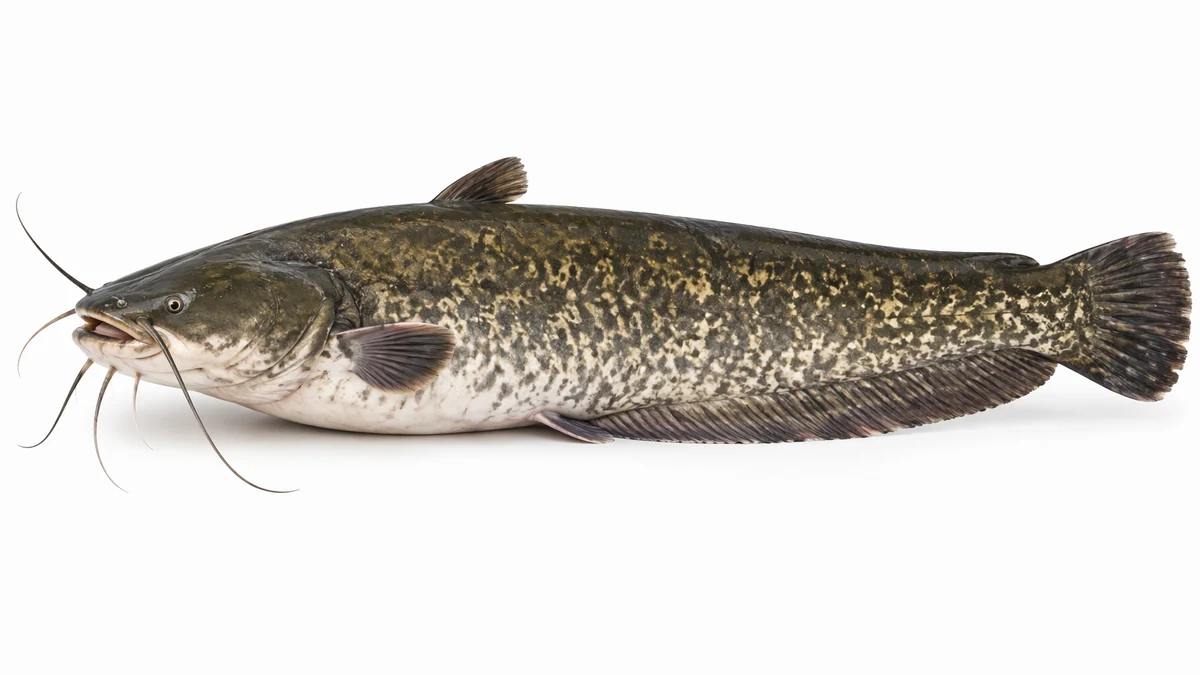
The wels catfish (Silurus glanis) is the largest freshwater fish in Europe and one of the largest in the world. A long, mottled, almost eel-like predator with a broad head and six fleshy barbels, it hunts in the dark and grows to weights that strain ordinary tackle. In the big rivers and reservoirs of central and southern Europe, the wels catfish has become a trophy species in its own right, drawing anglers who want to do battle with a fish that can out-weigh them. This profile covers wels catfish identification, habitat, diet, size, records, how it differs from other catfish, and how to catch one.
Quick ID Card
| Field | Details |
|---|---|
| Scientific name | Silurus glanis |
| Common names | Wels catfish, European catfish, sheatfish, Danube catfish |
| Family | Siluridae (sheatfishes) |
| Typical size | 20–55 in (50–140 cm); 5–45 lb (2–20 kg) |
| Trophy size | 6.5 ft (2 m) and 60 lb (27 kg) plus; giants exceed 100 kg |
| Water type | Large rivers, reservoirs, lakes; warm, slow, deep water |
| Depth range | Mostly bottom, to 20 m or more in big rivers |
| Active water temperature | About 59–82°F (15–28°C) |
| Preferred temperature | 68–79°F (20–26°C) |
| Best season | Late spring through autumn; night |
| Difficulty | High; needs heavy tackle and patience |
How to Identify a Wels Catfish
Wels catfish identification comes down to the barbels, the fin, and the skin. The fish has six barbels in three pairs: two long ones on the upper jaw, two long ones at the corners of the mouth, and two shorter ones underneath. Those barbels are sensory organs, packed with taste buds, and they let the fish hunt in total darkness. The head is broad and flat, the mouth is enormous and lined with pads of tiny, gripping teeth, and the eyes are small and set high.
The body is long, scaleless, and covered in thick skin rather than scales. The colour is mottled olive-brown to nearly black on the back, fading to a marbled, paler flank and a whitish belly. The pattern of dark blotches over a lighter ground is a good field mark, though it varies with water and age. The dorsal fin is tiny and set far forward, near the head.
The anal fin is the clincher. In a wels, the anal fin is extremely long, with dozens of rays, running from the vent almost all the way to the tail. No other European freshwater fish has an anal fin that long. If you are looking at a long, mottled, scaleless fish with six barbels and an anal fin that reaches the tail, it is a wels.
Wels Catfish vs Blue Catfish
Anglers who know North American catfish often ask how the wels compares to the blue catfish (Ictalurus furcatus). They are unrelated beyond both being catfish, and the differences are clear.
| Feature | Wels catfish | Blue catfish |
|---|---|---|
| Barbels | Six | Four to eight, arranged differently |
| Anal fin | Very long, almost to the tail | Short, well short of the tail |
| Tail | Rounded or slightly notched | Deeply forked |
| Adipose fin | Absent | Present |
| Range | Europe and western Asia | North America |
| Maximum size | Over 2.5 m and 100 kg | Large, but rarely over 1.5 m |
The anal fin is the fastest test. A blue catfish has a short anal fin and a deeply forked tail; a wels has an anal fin that runs most of the way to the tail and a rounded tail. Blue catfish also have an adipose fin, the small fleshy fin between the dorsal and tail, which wels lack. And of course, the wels lives in Europe and the blue cat in North America.
Within Europe, wels are sometimes confused with smaller catfish such as the Amur catfish or the brown bullhead. The wels is far larger, has six barbels rather than four, and shows the long anal fin. Size and the anal fin settle it.
Are Wels Catfish Dangerous?
Wels catfish are not venomous. They have no sting and no poison glands. The danger is their size and their mouth.
The jaws are lined not with sharp fangs but with broad pads of small, inward-curving teeth that grip and hold. A wels can clamp down hard, and a hand or finger near the mouth of a big fish can be bruised or punctured. Keep fingers well clear of the mouth and use a proper lip grip, a chin hold, or a sling for large fish. Never put a hand inside the mouth.
The bigger risk is the fish itself. A 100 lb wels is a powerful animal with a thrashing, twisting body, and handling one on a bank at night is genuinely hazardous. A big fish can knock over tackle, bruise an arm, or pull an unbalanced angler toward the water. Use a large, soft cradle or sling, support the body, and keep the fish low. Wear a headlamp, fish with a companion on big rivers, and have a plan for landing and releasing a fish that may be longer than you are tall.
Wels are also known to take prey at the surface, including waterbirds and small mammals, and reports of them grabbing swimming birds are well documented. They do not target people, but a large wels in the water deserves respect.
Where Do Wels Catfish Live?
Wels catfish habitat is warm, slow, deep fresh water. The native range covers central and eastern Europe, from the Danube and its tributaries east through the Volga and into western Asia, including parts of the Aral and Caspian drainages. From there, wels have been introduced widely: into the Po and other Italian rivers, the Ebro in Spain, rivers and lakes in France, and a few waters in Britain, usually by anglers seeking a giant.
They favour big, warm rivers with deep pools, and large reservoirs and lakes with plenty of cover. Where do wels catfish live in a river? In the deepest holes, below dams and weirs, around the roots of big trees, under overhanging banks, and near sluice gates and bridge pilings. They like structure and they like depth, and they hold tight to both during the day.
At night they become active and range more widely, hunting the shallows and the edges where prey gathers. Temperature drives them: wels are most active from about 15 to 28°C, with a peak in the warm months, and they feed little in cold water. In southern Europe, where rivers stay warm, they grow fastest and reach the biggest sizes.
Habits and Diet: What Do Wels Catfish Eat?
What do wels catfish eat? Almost any animal they can swallow. Fish form the bulk of the diet: bream, roach, carp, tench, and other river fish, along with crayfish. But wels are opportunistic and will take frogs, waterbirds, rats and other small mammals, and large insects. Big fish are ambush hunters that lie in wait in deep cover and engulf prey with a sudden, powerful suck.
Wels are nocturnal. By day they rest in deep holes and under cover, and they hunt most actively after dark. That night habit is central to catching them: the best wels fishing happens in the hours of darkness, when the fish move out of their daytime lies and feed. Their barbels and lateral line let them find prey in black water, and their huge mouth lets them take meals far bigger than a typical predator could manage.
When do wels catfish spawn? Spawning happens in late spring and early summer, when the water reaches roughly 18–22°C. Pairs move into shallow water, often into a nest depression among roots or vegetation, and the female lays a large mass of eggs. The male guards the nest and the young, fanning the eggs and driving off intruders, which is unusual parental care for a fish this size. After spawning, wels feed hard through the summer and autumn.
Wels grow fast and live long. They can live for decades, and the biggest fish are usually old females. A fish of 2 m may be many years old, and the true giants are rare animals that have survived a long time.
Size, Records and Regulations
How big do wels catfish get? This is a genuinely huge fish. Adults commonly reach 1 to 1.5 m and 10 to 30 kg. Specimens over 2 m and 50 kg are caught every year in the big southern European rivers, and the largest documented fish reach about 2.7 to 2.8 m and well over 100 kg, with some reports approaching 130 kg.
The world record wels catfish sits in that range. Fish of around 2.5 to 2.7 m and 120 to 130 kg have been caught and documented in Italy's Po system and Spain's Ebro, which are the premier big-wels fisheries in Europe. Older stories of 3 m and 300 kg fish circulate widely, but such sizes are not reliably verified. Treat extreme claims with caution and check which record list a figure comes from.
Regulations differ sharply by country. In much of central and eastern Europe, wels are a managed food and sport fish with minimum sizes, closed seasons in spring, and daily limits. In Italy and Spain, they are often fished as a catch-and-release trophy species, and some waters require the fish to be released. In Britain, where wels are introduced and localised, rules vary by fishery and some waters ban keeping them.
As of 2025, check the current rules for the specific water before you fish. National fisheries authorities set the framework, and the fishery owner or river club usually adds stricter conditions. For big continental rivers, local permits often specify handling and release rules for catfish. Last verified: November 2025.
How to Catch Wels Catfish
The best bait for wels catfish is a big, oily, smelly one. Whole dead fish, fish heads, and clusters of worms are classic. Live baits such as small fish or loach, fished on the bottom at night, are deadly. In southern Europe, anglers also use large pellets, boilies, and "clonk" rigs, where a special lure is slapped on the surface to make a plopping sound that draws catfish up.
Tackle must be heavy. A wels can run, roll, and refuse to come to the bank, so use a stout rod, strong braid, a large reel with a smooth drag, and a heavy lead to hold bottom in a big river. A strong hook and a wire or heavy mono trace are sensible where big fish and snags are present.
How to catch wels catfish: fish at night, fish deep, and fish near cover. Cast into deep pools, below dams, around tree roots, and beside sluice gates, and leave the bait on the bottom. Use a bite alarm or a bell on the rod tip so you can rest while you wait. When a wels takes, do not strike too early; let the fish load the rod, then set the hook hard. Play the fish patiently, keeping it away from snags, and land it on a soft cradle with help. Release it carefully, supporting the body and reviving it in the water.
FAQ
How big do wels catfish get? Adults reach 1–1.5 m and 10–30 kg. Specimens over 2 m and 50 kg are common in big southern rivers, and the largest documented fish reach about 2.7–2.8 m and over 100 kg.
What is the world record wels catfish? Fish of around 2.5–2.7 m and 120–130 kg have been documented, mainly in Italy and Spain. Stories of 3 m and 300 kg fish are not reliably verified.
Where do wels catfish live? In warm, slow, deep rivers, reservoirs, and lakes across central and southern Europe, usually in deep holes near cover.
What do wels catfish eat? Mostly fish, plus crayfish, frogs, waterbirds, and small mammals. They are nocturnal ambush hunters with huge mouths.
Wels catfish vs blue catfish: how do you tell them apart? A wels has six barbels and an anal fin that runs almost to the tail. A blue catfish has a short anal fin, a deeply forked tail, an adipose fin, and lives in North America.
When do wels catfish spawn? In late spring and early summer, when the water reaches about 18–22°C. Males guard the nest.
What is the best bait for wels catfish? Whole dead fish, fish heads, worm clusters, and live fish fished on the bottom at night.
How do you catch wels catfish? Fish deep cover at night with heavy tackle and smelly bait, wait for the fish to load the rod, and play it patiently away from snags.
Related Articles
- Carp — a staple prey species in the big rivers where wels hunt.
- Perch — a smaller predator from the same European waters.
- All species profiles
The wels catfish is Europe's freshwater giant, a night hunter built for darkness and depth. Learn the six barbels and the long anal fin, fish the deep holes after dark with heavy gear, and you give yourself a chance at the fight of a lifetime.
Ready to catch one? Read our step-by-step guide: How to Catch Wels Catfish.
About the author and how this was tested
About the author
FishermanGuy
Bank, boat and kayak angler · fishing, crabbing and shrimping since 2021
I buy the gear, fish it for a season and write down what failed. No sponsored verdicts, no free-sample flattery. Every rig on this page has landed fish in water I can point at on a map.
How this was tested
- Every rig gets at least six trips on the same water before it is published.
- Gear is bought at retail. Free samples are labelled in the first paragraph.
- Dates show first publication and the last time the page was updated.