Field notes
Bowfin: Identification, Habitat & Diet
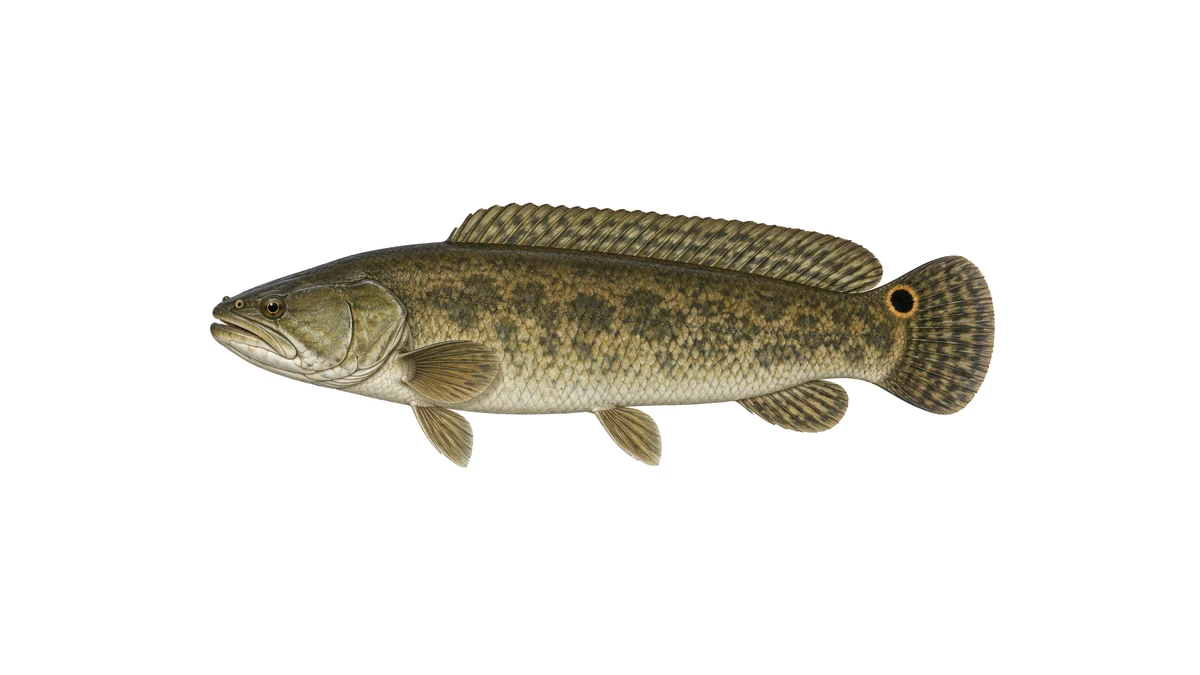
Bowfin: Identification, Habitat & Diet
The bowfin is a living fossil that still patrols the swamps and backwaters of eastern North America. Its lineage reaches back to the Jurassic, and it looks the part: a long, muscular body, a dorsal fin that runs most of its back, and a mouth full of teeth. Anglers either love it for its savage strike or curse it as a bait thief. Either way, few native freshwater fish fight harder pound for pound. This profile covers bowfin identification, habitat, diet, size, spawning, regulations, and how to catch one.
Quick ID Card
| Field | Details |
|---|---|
| Scientific name | Amia calva |
| Common names | Bowfin, mudfish, dogfish, grinnel, cypress trout, cottonfish, blackfish |
| Family | Amiidae (the only living family in its order) |
| Typical size | 15–25 inches (38–64 cm), 1–3 lb |
| Trophy size | 28+ inches, 8+ lb |
| Water type | Slow rivers, swamps, bayous, oxbows, and shallow lakes |
| Active water temperature | 60–85°F (16–29°C); tolerates much warmer, low-oxygen water |
| Difficulty | Low to moderate; easy to catch, hard to land on light tackle |
| Best season | Spring through fall; best around spawning in spring |
How to Identify a Bowfin
The dorsal fin is the first thing to notice. On a bowfin, it is long and low, with roughly 46 to 50 soft rays, and it stretches across more than half the length of the back. No other native fish in its range combines that long dorsal fin with a rounded tail and a short anal fin.
The body is thick and cylindrical, olive to brown on top, paler below, often mottled or blotchy. The head is bony and the mouth is large. Look underneath the lower jaw for a gular plate, a hard bony plate between the jaw bones. That plate is a bowfin trademark and one of the quickest ways to separate it from lookalikes. The nostrils sit on short tubes, which help the fish smell in muddy water.
Mature males carry a dark eyespot, ringed with orange or yellow, at the upper base of the tail. The spot is present in both sexes but is usually darker and more defined in males, especially in spring. Breeding males also develop bright green fins and a swollen, colorful appearance.
Juveniles are slender and can be mistaken for other dark, long-bodied fish. The long dorsal fin, rounded tail, and gular plate still give them away.
Bowfin vs Snakehead
The comparison comes up constantly, and it matters. The northern snakehead is an invasive species in much of the United States, while the bowfin is native and should be released. Anglers who kill the wrong fish, or release the wrong one, cause real harm.
| Feature | Bowfin | Northern snakehead |
|---|---|---|
| Anal fin | Short, about 10–12 rays | Long, nearly as long as the dorsal fin |
| Gular plate | Present under the lower jaw | Absent |
| Tail spot | Usually present, especially on males | Absent |
| Head scales | Small | Large, plate-like scales on top of the head |
| Pelvic fins | Set far back on the belly | Set forward, just behind the pectorals |
| Origin | Native to eastern North America | Native to Asia; invasive in the U.S. |
The anal fin is the fastest field test. A bowfin's anal fin is short and sits close to the tail. A snakehead's anal fin runs long along the belly, matching the long dorsal fin above. The gular plate confirms it. If the fish has a bony plate under the chin and a short anal fin, it is a bowfin.
Snakeheads also have a snake-like head with large scales on top, and some species can survive out of water and move across wet ground. If you catch a snakehead, do not release it. Report it to the state fish and wildlife agency and follow their instructions.
Is the Bowfin Dangerous?
Do bowfin have teeth? Yes. The bowfin's mouth is lined with sharp, cardiform teeth, and its jaws are strong enough to crush a crayfish. A hooked fish can bite down on a thumb or rake a hand, and the result is a painful cut rather than a venomous wound. The bowfin is not venomous and has no spines.
Handle bowfin with a firm grip behind the head and support the body. A wet glove or a jaw grip helps. Keep fingers away from the mouth, and use pliers to remove hooks. Bowfin are tough and survive handling well, but they should still be released quickly if you are not keeping them.
The fish can also breathe air, which is why it survives in water that would kill most species. That ability makes it resilient, not dangerous.
Range and Habitat
The bowfin is native to eastern North America, from the Great Lakes and the St. Lawrence River system south through the Mississippi River drainage to the Gulf Coast, and along the Atlantic coastal plain from the Mid-Atlantic states to Florida. It reaches west into Texas and north into Minnesota, Ontario, and Quebec.
Bowfin habitat is slow, warm, and weedy. Swamps, bayous, oxbow lakes, sloughs, backwater channels, and shallow lake bays are home water. The fish tolerates mud, silt, low oxygen, and high summer temperatures that push other predators out. That tolerance is why bowfin thrive in places where bass and pike struggle.
The swim bladder works like a lung. The bowfin gulps air at the surface, which lets it live in stagnant water and survive for extended periods out of water if it stays moist. In hot, low-oxygen summer conditions, you may see fish rolling and gulping at the surface, especially at dawn and dusk.
Cover matters more than depth. Bowfin sit under weed mats, around sunken logs, in root tangles, and along shaded banks. During high water, they spread into flooded timber and marsh. When the water drops, they pull back to deeper holes and channels.
Behavior and Diet
The bowfin is an aggressive predator and an opportunistic one. What do bowfin eat? Fish make up most of the adult diet, including sunfish, shiners, bullheads, and other bowfin. Crayfish are a major food source, especially for smaller fish. Bowfin also eat frogs, insects, snakes, turtles, mice, and just about anything that moves and fits in the mouth.
Feeding is strongest in low light and warm water. Bowfin hunt by ambush and by cruising through weed cover, and they are not shy about taking a bait meant for something else. That habit is why bass anglers fishing soft plastics in weedy water hook so many of them.
When do bowfin spawn? Spawning runs from April into June, depending on latitude, when water reaches about 60–70°F (16–21°C). Males clear a nest in shallow vegetation and guard the eggs and fry aggressively. A male on a nest will strike at almost anything that comes close, which makes spring the easiest time to catch a bowfin and the most important time to release one quickly.
Bowfin are solitary outside the spawn and tolerate each other in crowded backwaters. They are curious and territorial, and they often follow a lure before committing. In clear water, you may see one rise to inspect a bait and then turn away.
Size, Records and Regulations
Most adult bowfin run 15–25 inches and 1–3 pounds. A 28-inch fish is a good one, and anything over 8 pounds is a trophy in most waters. The species can reach about 3 feet (roughly 1 m) and close to 10 kg, though fish that size are uncommon.
Record keeping for bowfin is inconsistent. Some state agencies do not track a separate record, and the species is not managed as a trophy fish in most places. Where state records exist, they run into the low double digits in pounds. Treat any record claim you see online with caution and check the state agency if it matters to you.
Regulations are usually light because bowfin are classified as rough fish or unprotected in many states. Some states set daily limits, and a few give bowfin game-fish status or protect them during the spawn. Bowfin are also a bowfishing target in some areas, and bowfishing rules can differ from rod-and-reel rules.
Because bowfin are native and ecologically important, many anglers release them even where harvest is legal. If you plan to keep one, check your state's rules first. The agency that manages the water is the authority: for example, the state Department of Natural Resources or fish and wildlife commission. Last verified: November 2025.
FAQ
How big do bowfin get? Most adults are 15–25 inches and 1–3 pounds. Fish over 28 inches and 8 pounds are trophies, and the species can reach about 3 feet and nearly 10 kg in exceptional cases.
What is the difference between a bowfin and a snakehead? A bowfin has a short anal fin, a bony gular plate under the jaw, and usually a dark tail spot. A snakehead has a long anal fin, no gular plate, large scales on top of the head, and no tail spot. Bowfin are native; snakeheads are invasive and should not be released.
What do bowfin eat? Fish, crayfish, frogs, insects, snakes, turtles, and mice. They are opportunistic ambush predators and will take almost anything that fits in their mouths.
Where do bowfin live? In slow, weedy, warm water across eastern North America, from the Great Lakes and St. Lawrence system through the Mississippi drainage to the Gulf Coast and the Atlantic coastal plain. Swamps, bayous, oxbows, and shallow lake bays are prime habitat.
When do bowfin spawn? From April to June, when water reaches about 60–70°F (16–21°C). Males build and guard nests in shallow vegetation and defend them aggressively.
Do bowfin have teeth? Yes. Bowfin have sharp, brush-like teeth and strong jaws. They are not venomous, but a hooked fish can cut a hand, so handle them carefully.
What is the best bait for bowfin? Live or cut bait, nightcrawlers, crayfish, and soft-plastic swimbaits all work. Bowfin also hit topwater frogs, spinnerbaits, and crankbaits. Heavy line helps, because the fish fights hard and has a bony mouth.
How do you catch a bowfin? Fish weedy backwaters and slow current in warm months, especially around spawning season. Cast soft plastics, frogs, or live bait near cover and be ready for a violent strike. Use a firm hookset, keep the rod loaded, and net the fish rather than lifting it by the line.
The bowfin has outlasted dinosaurs, ice ages, and the draining of half its wetlands. It is native, tough, and worth releasing. Treat it as a sport fish and it will keep surprising you.
Related Articles
- Muskellunge — another big, toothy ambush predator of northern waters.
- Spotted Gar — an armored living fossil that shares southern backwaters.
- Alligator Gar — the giant of the gar family and a fellow air-breather.
- All species profiles
Ready to catch one? Read our step-by-step guide: How to Catch Bowfin.
About the author and how this was tested
About the author
FishermanGuy
Bank, boat and kayak angler · fishing, crabbing and shrimping since 2021
I buy the gear, fish it for a season and write down what failed. No sponsored verdicts, no free-sample flattery. Every rig on this page has landed fish in water I can point at on a map.
How this was tested
- Every rig gets at least six trips on the same water before it is published.
- Gear is bought at retail. Free samples are labelled in the first paragraph.
- Dates show first publication and the last time the page was updated.