Field notes
Spotted Gar: Identification, Habitat & Diet
Spotted Gar: Identification, Habitat & Diet
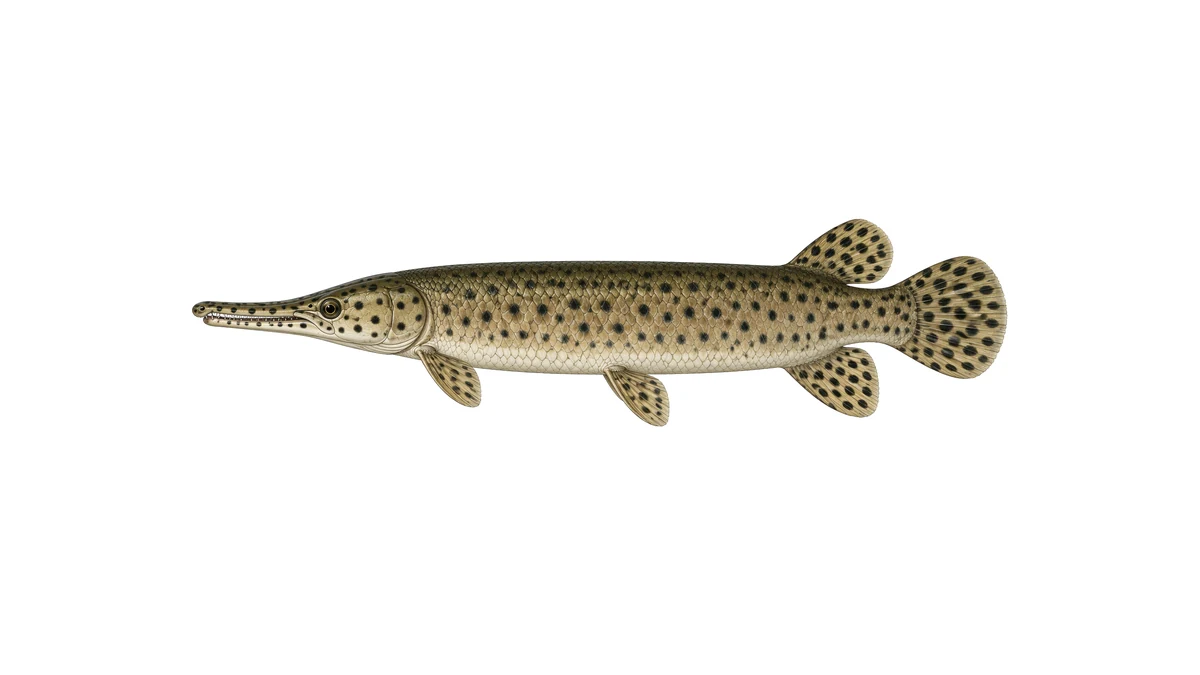
The spotted gar is a small, heavily armored ambush predator that hides in the weeds of southern backwaters and strikes with a snap. It is the most spotted of the North American gars, with dark dots scattered across its head, body, and every fin. Anglers often meet it while fishing for bass or bowfin, and its needle teeth and diamond-hard scales make it memorable. This profile covers spotted gar identification, habitat, diet, size, spawning, regulations, and how to catch one.
Quick ID Card
| Field | Details |
|---|---|
| Scientific name | Lepisosteus oculatus |
| Common names | Spotted gar, gar, garfish |
| Family | Lepisosteidae (gars) |
| Typical size | 20–30 inches (51–76 cm), 2–5 lb |
| Trophy size | 36+ inches, 8+ lb (rare) |
| Water type | Clear, slow rivers, bayous, swamps, and vegetated lakes |
| Active water temperature | 70–85°F (21–29°C); tolerates warm, low-oxygen water |
| Difficulty | Moderate; hard mouth, sharp teeth, bony scales |
| Best season | Late spring and summer, especially around spawning |
How to Identify a Spotted Gar
Start with the spots. A spotted gar carries round, dark spots on top of its head, along its body, and on all of its fins, including the dorsal, anal, and tail fins. The spots are usually clear and distinct, not a vague mottling. No other gar in most of its range shows that combination so strongly.
The snout is the second clue. A spotted gar has a relatively short, broad snout compared with a longnose gar. It is still a gar snout, with rows of sharp teeth, but it looks stubby beside the needle bill of a longnose. The body is cylindrical and covered in ganoid scales, hard, diamond-shaped plates that overlap like armor. Those scales are one reason gars feel like they are made of bone.
Coloration is olive to brown on the back, lighter on the belly, with the dark spots over the top. The fins are rounded and often spotted. The tail is rounded rather than deeply forked. Juveniles look like small adults, already spotted and already armored.
The eyes are large and sit high on the head, which suits a fish that watches for prey from below the surface. In clear water, a spotted gar often hangs motionless near weed edges, looking like a stick until it moves.
Spotted Gar vs Longnose Gar
These two gars overlap across much of the Southeast and the Mississippi basin, and anglers mix them up constantly. The table below covers the differences that matter.
| Feature | Spotted gar | Longnose gar |
|---|---|---|
| Snout | Short and broad | Extremely long and slender |
| Spots on head | Yes, clearly spotted | Usually few or absent on top of head |
| Spots on fins | Heavy on all fins | Present but often less dense |
| Maximum size | About 3.5 feet (1.1 m) | Up to about 6 feet (1.8 m) |
| Body shape | Moderately stout | Very slender |
| Typical habitat | Clear, weedy backwaters and bayous | Rivers, reservoirs, and open water; tolerates brackish |
The snout tells most of the story. If the bill looks like a pair of long tweezers, it is a longnose gar. If it looks short and wide enough to be a duck's beak, it is more likely a spotted gar. Head spots confirm it: a spotted gar is freckled on top of the skull, while a longnose gar's head is mostly plain.
Florida has its own near-twin, the Florida gar, which looks very similar to a spotted gar. Range and subtle differences in snout length and spotting separate them. If you are in peninsular Florida, check a state identification guide before you decide.
Is the Spotted Gar Dangerous?
The spotted gar is not venomous, but it is not a fish to handle carelessly. Its jaws are lined with sharp teeth, and a hooked fish can rake a hand. The ganoid scales are hard and edged, and they can abrade skin. A thrashing gar also has a habit of twisting, which drives hooks and teeth where you do not want them.
The bigger hazard is the roe. Gar eggs are toxic to humans and other animals, and eating them can cause serious illness. The flesh is edible when properly cleaned, but the eggs should never be eaten. Keep gar roe away from pets and children, and wash your hands after handling a ripe female.
Handle a spotted gar with a jaw grip or a firm hold behind the head, and support the body. Use pliers or a hook-out, and keep your fingers clear of the mouth. Gar are tough and release well, but they should not be left flopping on hot rocks.
Range and Habitat
The spotted gar is native to the Great Lakes basin, especially Lake Erie and southern Lake Michigan, and to the Mississippi River drainage from Minnesota and Wisconsin south to the Gulf. It is common along the Gulf Coastal Plain from Texas to the Florida panhandle, and it has been introduced in a few waters outside that range.
Spotted gar habitat is clear, slow, and weedy. Bayous, oxbows, swamps, sloughs, vegetated lake bays, and quiet river backwaters are home. The fish likes still water with cover, and it tolerates low oxygen better than most sport fish. Like other gars, it can gulp air at the surface using a vascularized swim bladder, which lets it live in stagnant, warm places where bass and crappie would struggle.
Look for spotted gar along weed edges, under overhanging trees, around cypress knees, and in the shade of docks and fallen logs. They often suspend just below the surface in shallow water, especially in summer. In rivers, they hold in eddies and backwater pools away from strong current.
Water temperature drives the pattern. Spotted gar are most active in warm water from about 70°F to 85°F (21–29°C). In winter, they move to deeper holes and become sluggish. In spring, they push into shallow, vegetated flats to spawn.
Behavior and Diet
A spotted gar is an ambush hunter. It hangs almost motionless in cover, aligns its body with a weed stem or a sunken branch, and waits. When prey comes within range, the gar lunges and grabs it sideways with those needle teeth, then turns the prey head-first to swallow it. The strike is fast and easy to miss.
What do spotted gar eat? Fish make up most of the diet, including shiners, minnows, sunfish, and small bass. Crayfish, shrimp, and aquatic insects are also important, especially for smaller fish. A spotted gar in a weedy bayou may eat a mixed diet of fish and crustaceans through the warm months.
Feeding is strongest at dawn, dusk, and night, though gar will strike during the day in shaded water. They are not schooling fish, but they tolerate crowding in good cover, and a productive bayou may hold dozens within a short stretch.
When do spotted gar spawn? Spawning occurs in spring, usually from April into June, when water warms into the mid-60s to low 70s Fahrenheit. Fish move into shallow, vegetated areas, often flooded grass or marsh. Eggs are scattered over vegetation and hatch quickly. Adults do not guard the nest, and the young stay in shallow cover as they grow.
Size, Records and Regulations
Most spotted gar run 20–30 inches and 2–5 pounds. A 36-inch fish is a good one, and fish over 8 pounds are uncommon. The species can reach about 3.5 feet (1.1 m), but fish that size are exceptional.
Record keeping is thin. Spotted gar are not a mainstream record category, and many states do not track them separately. If a record matters to you, check with the state agency that manages the water.
Regulations vary widely. In many states, gars are classified as rough fish or unprotected, with no closed season and no bag limit. Some states set limits or protect them in certain waters, and bowfishing rules can differ from rod-and-reel rules. Spotted gar are native and ecologically important, so many anglers release them even where harvest is legal.
Check your state's current rules before you keep a gar. The managing agency is the authority, whether that is a Department of Natural Resources, a fish and wildlife commission, or a similar body. Last verified: November 2025.
FAQ
How big do spotted gar get? Most adults are 20–30 inches and 2–5 pounds. A 36-inch fish is a trophy in most waters, and the species can reach about 3.5 feet (1.1 m), though rarely.
What is the difference between a spotted gar and a longnose gar? The snout and the spots. A spotted gar has a short, broad snout and clear spots on its head, body, and all fins. A longnose gar has an extremely long, slender snout, few or no spots on top of its head, and a much longer, thinner body.
What do spotted gar eat? Mostly fish, along with crayfish, shrimp, and aquatic insects. They are ambush predators that strike from cover in weeds and brush.
Where do spotted gar live? In clear, slow, weedy water across the Great Lakes basin, the Mississippi drainage, and the Gulf Coastal Plain from Texas to Florida. Bayous, swamps, oxbows, and vegetated lake bays are prime habitat.
When do spotted gar spawn? From April to June, when shallow backwaters warm into the mid-60s to low 70s Fahrenheit. They scatter eggs over vegetation and do not guard them.
Are spotted gar poisonous? The fish is not venomous, but its eggs are toxic. Do not eat gar roe, and keep it away from pets. The flesh is edible when cleaned properly.
What is the best bait for spotted gar? Live minnows, cut bait, and shrimp work well. Gar also take small soft plastics, spinnerbaits, and flies. A baitfish or a piece of cut fish under a float is a reliable approach.
How do you catch a spotted gar? Fish weed edges and shaded backwaters in warm months, and present bait or lures close to cover. Gar have hard mouths, so use sharp hooks and a firm hookset. A rope lure or a frayed nylon lure can tangle in the teeth, and a landing net helps at the boat.
The spotted gar is a relic of an older world, still doing what it has done for millions of years: waiting in the weeds, then striking. Handle it with respect, release it if you can, and it will keep patrolling the backwaters.
Related Articles
- Longnose Gar — the needle-snouted cousin that shares much of the same range.
- Alligator Gar — the giant of the family, built for big rivers.
- Bowfin — another air-breathing living fossil of southern swamps.
- All species profiles
Ready to catch one? Read our step-by-step guide: How to Catch Spotted Gar.
About the author and how this was tested
About the author
FishermanGuy
Bank, boat and kayak angler · fishing, crabbing and shrimping since 2021
I buy the gear, fish it for a season and write down what failed. No sponsored verdicts, no free-sample flattery. Every rig on this page has landed fish in water I can point at on a map.
How this was tested
- Every rig gets at least six trips on the same water before it is published.
- Gear is bought at retail. Free samples are labelled in the first paragraph.
- Dates show first publication and the last time the page was updated.