Field notes
Whiteleg Shrimp: Identification, Habitat & Diet
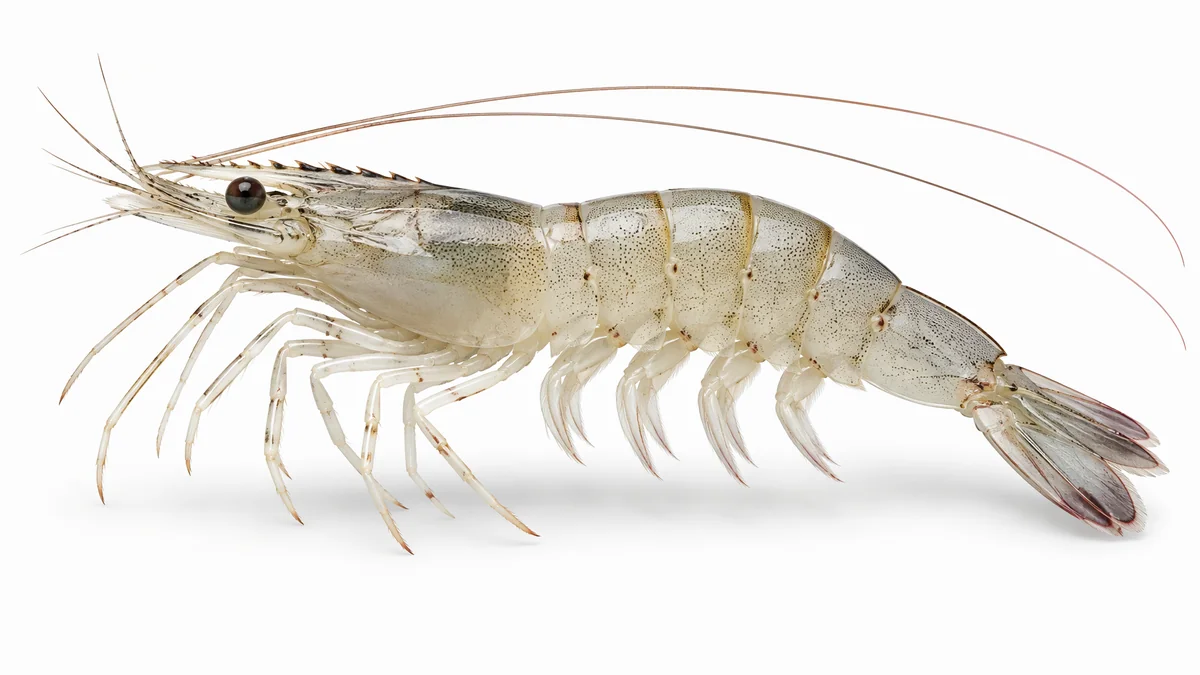
Whiteleg Shrimp: Identification, Habitat & Diet
Ask a Gulf Coast angler what's in the bait bucket and they'll say white shrimp. Ask a seafood buyer what's in that frozen bag in the supermarket aisle and they'll say whiteleg shrimp. Both answers are correct, and they're describing two different animals. The whiteleg shrimp (Litopenaeus vannamei), also called the Pacific white shrimp, is the most heavily farmed shrimp species on Earth and the animal behind most of the shrimp sold in American grocery stores. The wild white shrimp of the Gulf of Mexico and South Atlantic (Litopenaeus setiferus) is its close cousin and the one that ends up in cast nets from North Carolina to Texas every fall.
This profile covers both, because if you searched "whiteleg shrimp" you're almost certainly holding either a cast net or a bag of frozen shrimp — and the difference between the two decides what you can legally put in your cooler.
Quick Identification Card
| Field | Detail |
|---|---|
| Scientific name | Litopenaeus vannamei (whiteleg / farmed); Litopenaeus setiferus (wild Gulf and Atlantic white shrimp) |
| Common names | Whiteleg shrimp, Pacific white shrimp, white shrimp |
| Common size | Farmed: 4–7 in; wild white shrimp: 4–6 in, up to 8 in |
| Waters | Gulf of Mexico, South Atlantic coast (wild white shrimp); eastern Pacific, farmed in the U.S. (whiteleg) |
| Difficulty | Easy — cast net from a dock, pier, boat, or wading |
| Best season | Fall — the white shrimp run, roughly mid-August through December |
How to Recognize a White Shrimp
Wild white shrimp are the lightest of the three big penaeid shrimp in the Gulf. The body runs grayish-white to nearly translucent, sometimes with a faint blue or greenish cast. The field mark that settles every argument at the cleaning table is the tail: the uropods, or tail flippers, are black near the base with bright yellow and green along the edges. Brown and pink shrimp don't have that combination.
Look at the head next. White shrimp have a smooth carapace — no grooves running along the top of the head — and a rostrum (the "horn") that's longer than a brown or pink shrimp's, with teeth on both the top and bottom edge. The antennae are absurdly long, two and a half to three times the length of the body. Brown and pink shrimp carry short antennae and deep grooves down the carapace, which is the fastest way to tell them apart.
Farmed whiteleg shrimp are what you already know from the grocery store: uniformly pale, almost white when raw, with mild flesh and a firm texture. You won't confuse them with anything at the dock, because you won't net them there. This is a Pacific species raised in ponds; the wild white shrimp in your cast net is a different animal that happens to share the name.
White Shrimp vs Brown Shrimp vs Pink Shrimp
All three penaeid shrimp look nearly identical at a glance, which is why a side-by-side beats a paragraph. Here's the Gulf and South Atlantic trio:
| Feature | White shrimp (L. setiferus) | Brown shrimp (F. aztecus) | Pink shrimp (F. duorarum) |
|---|---|---|---|
| Body color | Grayish-white to translucent | Reddish-brown | Pink to lemon-yellow, varies by area |
| Tail (uropods) | Black base, yellow-green edges | Red, dark green, sometimes blue | Light purplish-blue, dark red spot on the side |
| Carapace grooves | None | Deep | Deep, slightly narrower |
| Antennae | 2.5–3× body length | Under 2× body length | Under 2× body length |
| Peak season | Fall (mid-Aug to Dec) | Spring and summer (May–July) | Varies by region |
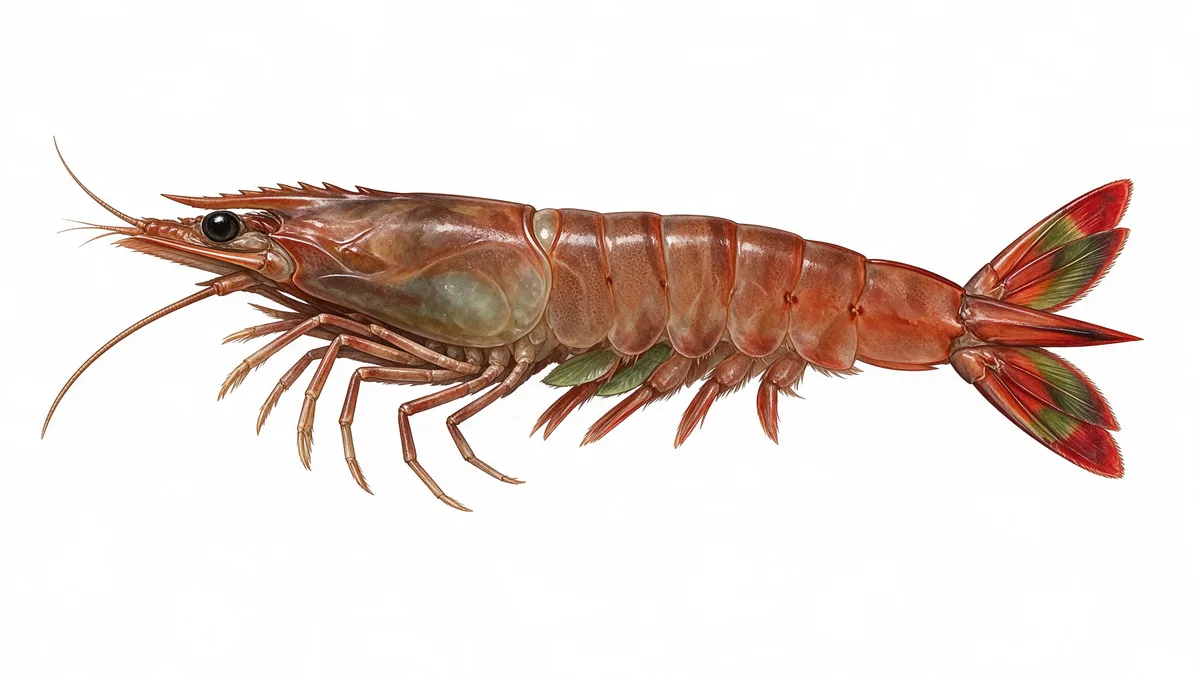
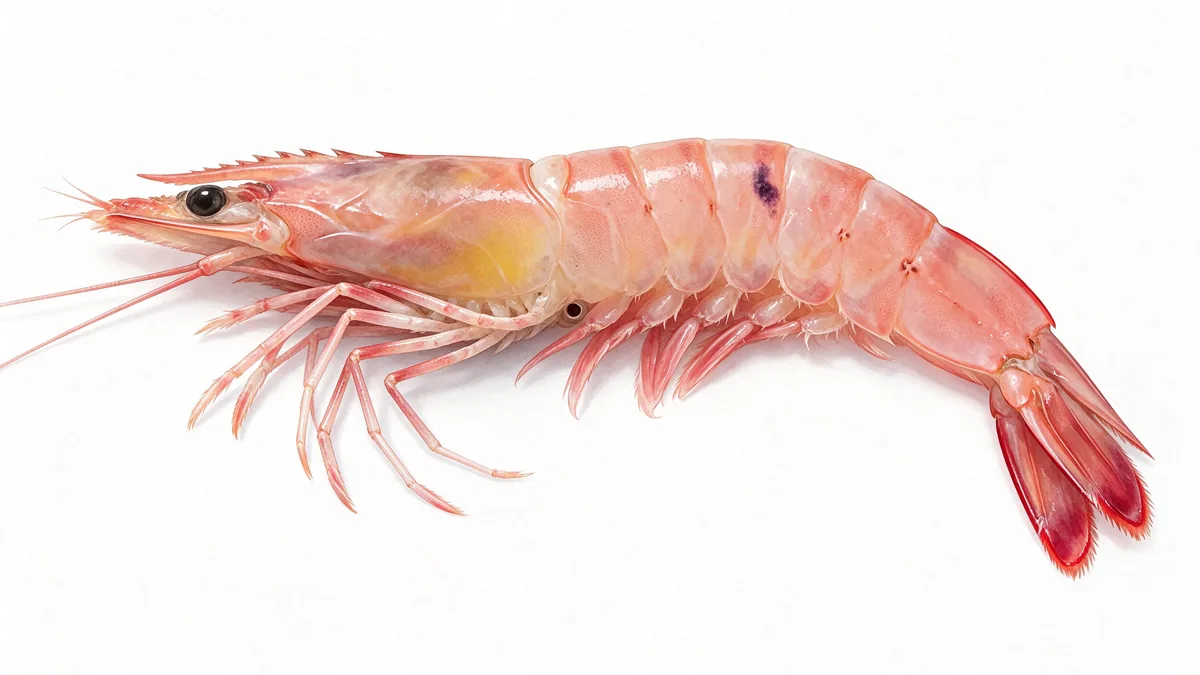
If you only remember one thing: white shrimp have a smooth head, a green-tipped tail, and long antennae. Brown shrimp have grooves and a reddish tail. Pink shrimp have grooves plus a dark spot on the side of the abdomen.
Where Do Shrimp Live: Distribution and Habitat
The Pacific white shrimp is native to the eastern Pacific, from Sonora, Mexico, down to the coast of Peru. It never swam in the Gulf of Mexico — it got there by the truckload instead, as the species the global aquaculture industry settled on for its speed, hardiness, and tolerance of a huge salinity range, growing in water anywhere from nearly fresh to full-strength seawater. In the United States, commercial ponds raise it in Texas, Alabama, South Carolina, and inland low-salinity systems. When a menu or a label says gulf shrimp, be aware that term usually means wild brown, white, or pink shrimp caught in the Gulf, not a farmed pond-raised shrimp — though farmed shrimp labeled "Gulf" or "U.S. farmed" do exist and are a different product.
The wild white shrimp is a different map. Its range runs from New York, where it's an occasional stray, down the entire Atlantic coast, around Florida, and across the Gulf to Campeche, Mexico. It's most abundant from North Carolina to Texas, which is why that stretch drives the U.S. white shrimp fishery. This is the gulf shrimp — and the Atlantic shrimp — that recreational shrimpers actually target.
Habitat is the estuarine zone. Juveniles ride the tides into marsh creeks, tidal flats, and grassy shallows, where brackish water lets them grow fast with less predation. Adults move toward higher-salinity nearshore water to spawn. By day, white shrimp bury in soft mud and sand with little more than the tail exposed; at night they rise, feed, and move with the tide.
Behavior: Shrimp Season, Diet, and Habits
White shrimp are the warm-water, fall arm of the Gulf shrimp fishery. The brown shrimp run anchors spring, generally May through July. The white shrimp run is the fall event, generally mid-August through mid-December in Louisiana, with some inshore waters staying open into January. Water temperature calls the tune — the first real cold snaps of late fall push the shrimp out of the shallows and toward the passes.
Diet is unglamorous. Shrimp are omnivorous scavengers that eat plankton, small worms, tiny crustaceans, and decaying organic matter off the bottom. That scavenging habit is exactly why chum works on them, which you'll see in a minute.
They hide in soft bottom by day and move at night, and moving water is everything. A rising or falling tide pushes shrimp into the neck-downs, passes, and along bridge pilings where current concentrates food. Dead slack water is dead water for shrimping.
How to Catch Shrimp
A cast net is the standard tool, and it's worth learning to throw a full, flat circle before you spend a night on a dock. Buy a net that's legal in your state first — Louisiana, for example, caps recreational cast nets at 8.5 feet in radius — and look for fine 1/4-inch mesh that holds shrimp without gilling them.
Night plus light equals shrimp. Dock lights, bridge lights, and submersible green lights draw plankton to the surface, and shrimp follow that food chain into tight, castable concentrations. Position yourself upglow, just outside the lit ring, and throw so the net opens into the light from the edge inward. Let the lead line sink all the way to the bottom, then pull the horn line steadily to purse the net shut before you lift.
Dip nets work where shrimp funnel through passes and tidal creeks on a running tide, and a fine-mesh dip net under a bridge light is the cheapest way to fill a bucket a pint at a time. Work the moving tide, cover different depths, and move on when a spot goes cold.
Best Bait for Shrimp
Shrimp bait means chum, not hook bait. The classic Gulf recipe is a fish-meal patty: mix fine fish meal with flour and rock salt, add canned fish-scented cat food, form the paste into palm-size patties, and toss them into 3 to 8 feet of water where shrimp run. Hang a lantern or submersible light over the baited spot — the chum pulls shrimp in, the light holds them, and the cast net does the rest.
Shrimp Size, Limits, and Regulations
Shrimp size tops out quickly. Wild white shrimp run 4 to 6 inches in most catches and reach a maximum of about 7 to 8 inches. Farmed Pacific white shrimp can push 9 inches, but you'll only see that on a menu. At the grocery store, shrimp are sold by count per pound: 16/20 means 16 to 20 shrimp per pound (jumbo), 41/50 is medium-small, and 71/90 is the little salad shrimp.
There is no IGFA all-tackle record for shrimp, because shrimp aren't caught on rod and reel — a shrimp has never chased a lure. The honest "record" for a recreational shrimper is filling the legal limit of the bucket.
Regulations are set state by state and seasons shift annually with shrimp abundance, so check your agency before you go. The headline rules:
- Louisiana — recreational shrimping by cast net is limited to 100 pounds per boat per day in the open season and 50 pounds in the closed season; inside-waters open season caps at 25 pounds heads-on per boat or vehicle. Cast nets max 8.5 feet in radius. A basic and saltwater fishing license is required. Louisiana Department of Wildlife and Fisheries — Shrimp Season — Last verified: November 2026.
- Florida — daily recreational bag limit of 5 gallons heads-on per harvester or vessel, whichever is less. The northeast region (Nassau, Duval, St. Johns, Putnam, Flagler, and Clay counties) is closed April 1 through May 31. A saltwater fishing license is required. FWC — Recreational Shrimping Regulations — Last verified: November 2026.
- South Carolina — white shrimp are the fall species, and SCDNR manages a fall bait-and-food shrimp season with its own license and gear rules. SCDNR — Shrimp in South Carolina — Last verified: November 2026.
Licenses are cheap relative to a citation. Every Gulf and South Atlantic state requires at least a basic saltwater fishing license for cast-netting shrimp, and commercial or live-bait sale is a whole different permit.
Frequently Asked Questions
What's the difference between whiteleg shrimp and white shrimp?
The whiteleg shrimp (Litopenaeus vannamei) is a Pacific species raised on farms worldwide and sold frozen in American stores. The white shrimp (Litopenaeus setiferus) is a wild Atlantic and Gulf species that recreational shrimpers catch with cast nets every fall. Same "white" name, different oceans.
When is shrimp season?
It splits by species. The brown shrimp run is spring, roughly May through July. The white shrimp run is fall, generally mid-August through mid-December, with some inshore waters staying open into January. Check your state agency — seasons are set annually and move by weeks.
Where do shrimp live?
In warm coastal waters, white shrimp live in estuaries and inshore shallows — marsh creeks, tidal flats, and grassy bottom — as juveniles, then move to higher-salinity nearshore water to spawn. At night they concentrate under dock and bridge lights, which is where most people net them.
What's the best bait for shrimp?
Chum, not hook bait. Fish-meal patties mixed with flour, rock salt, and canned cat food, tossed into 3 to 8 feet of water and paired with a light over the spot, is the classic Gulf method for pulling shrimp into cast-net range.
How big do white shrimp get?
Most run 4 to 6 inches; wild white shrimp top out around 7 to 8 inches. Farmed whiteleg shrimp can reach about 9 inches, but grocery shrimp are sold by count per pound, not inches.
Do I need a license to catch shrimp?
Yes, in every Gulf and South Atlantic state. A basic saltwater fishing license is the minimum, and some states add a separate cast-net or bait-shrimp requirement. Commercial sale needs a commercial permit.
What's the difference between white shrimp and brown shrimp?
Color and tail. White shrimp are grayish-white with a smooth head, long antennae, and a tail edged in yellow-green. Brown shrimp are reddish-brown with grooves on the carapace and a red, green, or blue tail. White shrimp run in fall, brown shrimp in spring.
Can I eat farmed Pacific white shrimp?
Yes — it's the most widely eaten shrimp in the country. Farmed Pacific white shrimp is mild, firm, and safe to eat, and U.S. farmed product from Texas, Alabama, and South Carolina is a growing alternative to imports.
Related Articles
- gulf-shrimp-species-guide
- how-to-throw-a-cast-net
- best-bait-for-inshore-fishing
Ready to catch one? Read our step-by-step guide: How to Catch Whiteleg Shrimp.
About the author and how this was tested
About the author
FishermanGuy
Bank, boat and kayak angler · fishing, crabbing and shrimping since 2021
I buy the gear, fish it for a season and write down what failed. No sponsored verdicts, no free-sample flattery. Every rig on this page has landed fish in water I can point at on a map.
How this was tested
- Every rig gets at least six trips on the same water before it is published.
- Gear is bought at retail. Free samples are labelled in the first paragraph.
- Dates show first publication and the last time the page was updated.