Field notes
Rainbow Trout: Identification, Habitat & Diet
Rainbow Trout: Identification, Habitat & Diet
Rainbow trout are the most heavily stocked gamefish in North America, and plenty of anglers catch their first one on their first trip. A wild rainbow trout out of a mountain creek is a different animal entirely—wary, hard-fighting, and every bit the trophy a salmon is. This guide covers rainbow trout identification, where they live, what they eat, how big they get, and the tackle that puts them in the net. Before you head out, check your state's rules; limits, seasons, and gear restrictions vary everywhere.
Rainbow Trout at a Glance
| Field | Details |
|---|---|
| Scientific name | Oncorhynchus mykiss |
| Common names | Rainbow trout; steelhead (the anadromous, sea-run form of the same species) |
| Typical size | Stocked fish 8–12 in and 0.5–2 lb; wild river fish 12–18 in; Great Lakes and tailwater steelhead commonly 8–12 lb |
| Water | Cold, oxygen-rich rivers, streams, lakes, reservoirs, and stocked ponds |
| Difficulty | Beginner-friendly on stocked water; wild trout are wary and reward a stealthy approach |
| Best season | Spring and fall, when water runs 50–65°F; dawn and dusk through summer |
Rainbow Trout Identification
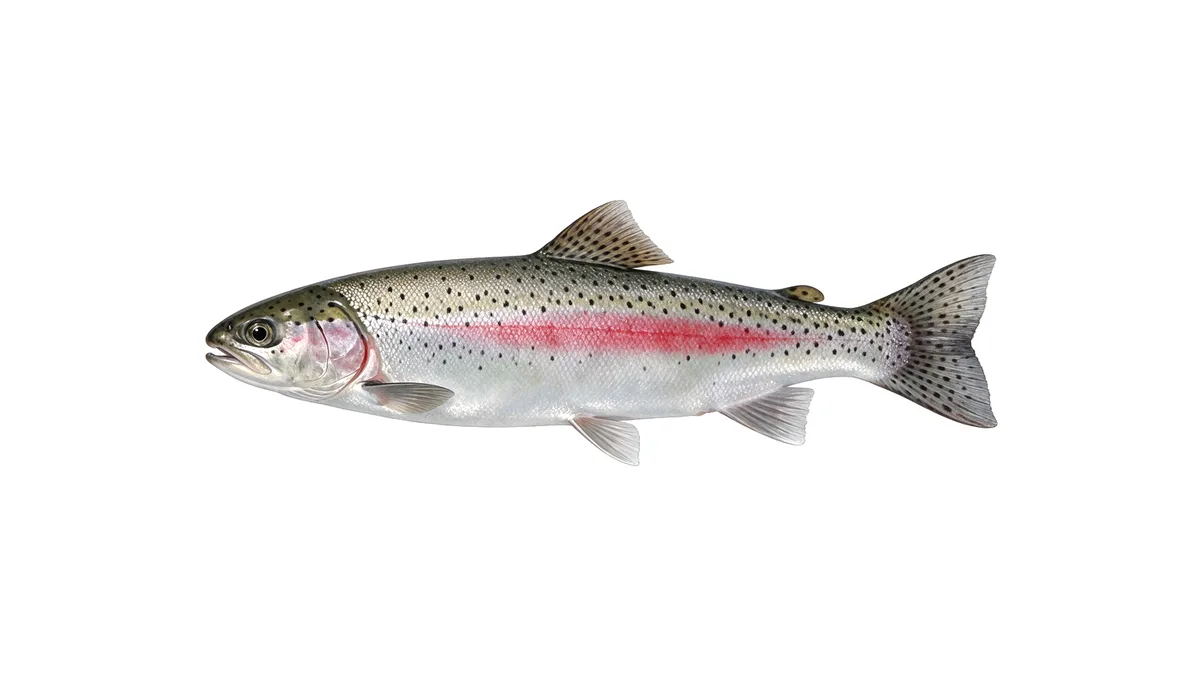
The name tells you half the story. A pink-to-red band runs the length of the body along the lateral line, and it's this "rainbow" stripe that gives the fish its name. The band is brightest on spawning males and on fish from the Great Lakes and the Pacific Northwest.
From there, work through the other marks. Black spots crowd the back, the dorsal fin, and the entire tail fin. The back runs olive to blue-green, and the belly is silvery white. The mouth is small, with fine teeth on the tongue—a useful tell, because a cutthroat trout carries large, obvious teeth in the same spot. The tail is slightly forked; a trout's tail is more squared off, while a salmon's is deeply forked.
Juvenile fish, called parr, show 8–13 dark vertical bars along the sides. Those parr marks fade as the fish grows. Young steelhead go through a silvering phase where most of the spots disappear, which is why juvenile steelhead are often mistaken for salmon.
Rainbow Trout vs Steelhead
Same species, two life histories. A steelhead is simply a rainbow trout that migrates to the ocean (or a Great Lake) to feed and grow, then returns to freshwater to spawn. Ocean feeding makes steelhead much larger—commonly 8–12 lb, against 1–3 lb for a typical stream-resident rainbow trout. The fish you're comparing aren't different species; they're the same animal making different choices.
Similar Species: Brown, Brook, and Cutthroat Trout
| Species | Key differences |
|---|---|
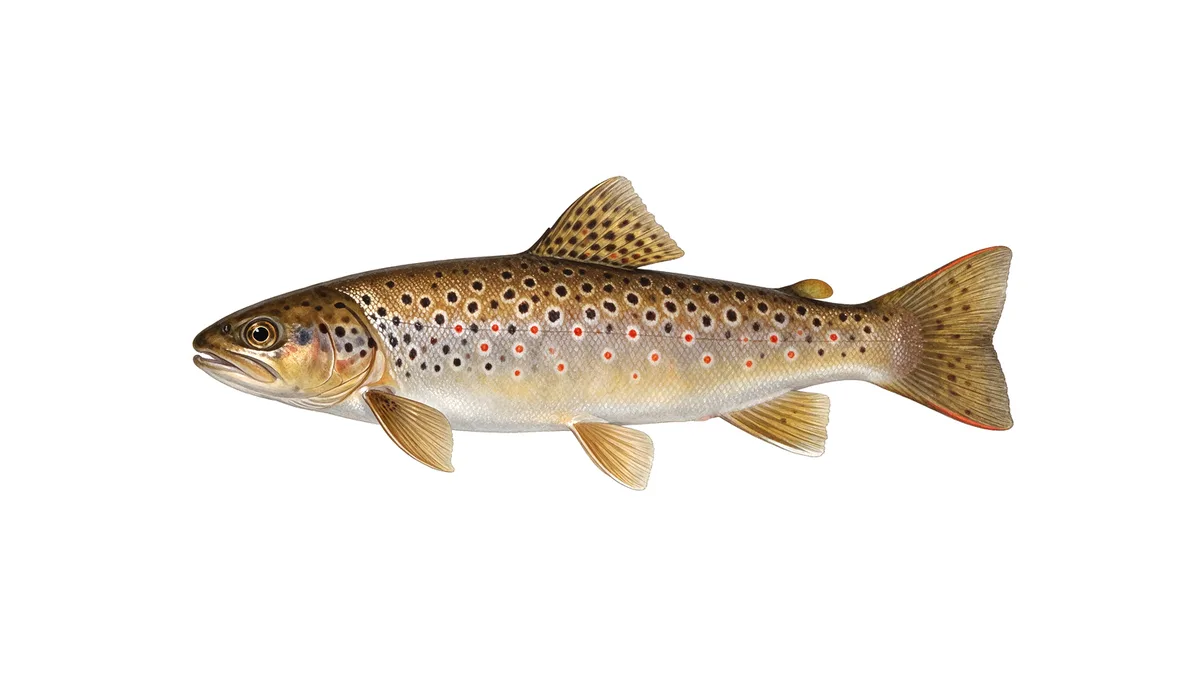
| Brown trout | Golden-brown body, no pink lateral band; black spots with pale halos plus red-orange spots; plain fins with spots; a near-square tail with few or no spots |
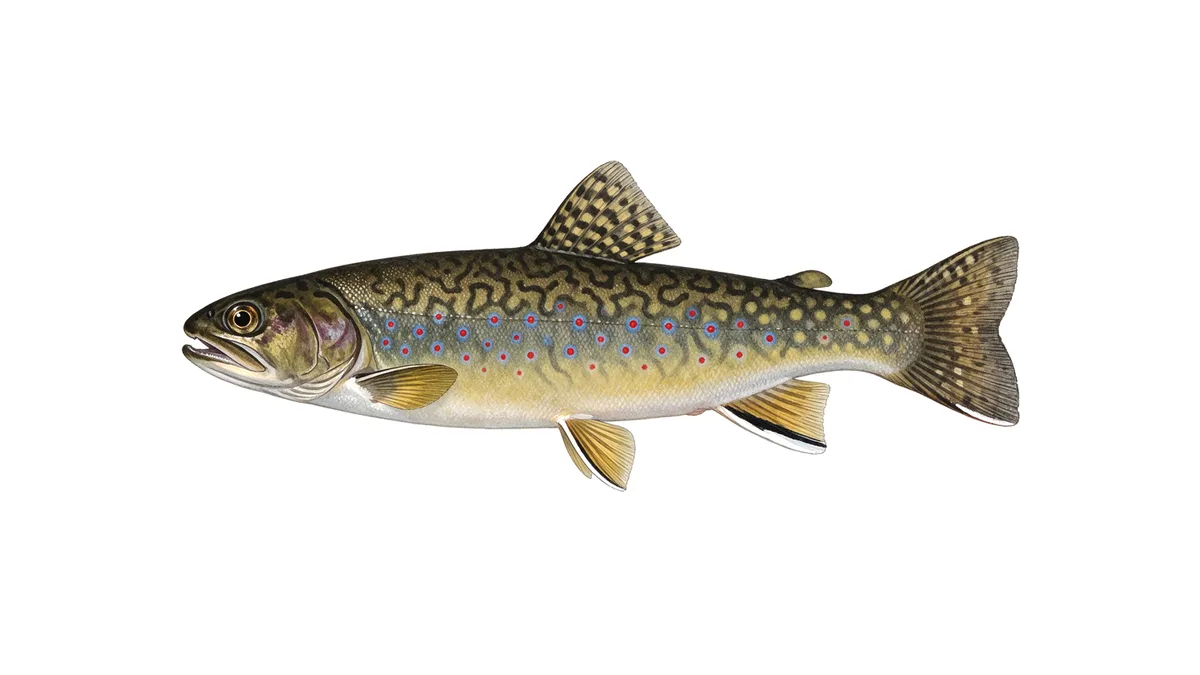
| Brook trout | Dark olive body with worm-like markings on the sides; red spots ringed with blue; a white leading edge on the lower fins; slightly forked tail with faint spots |
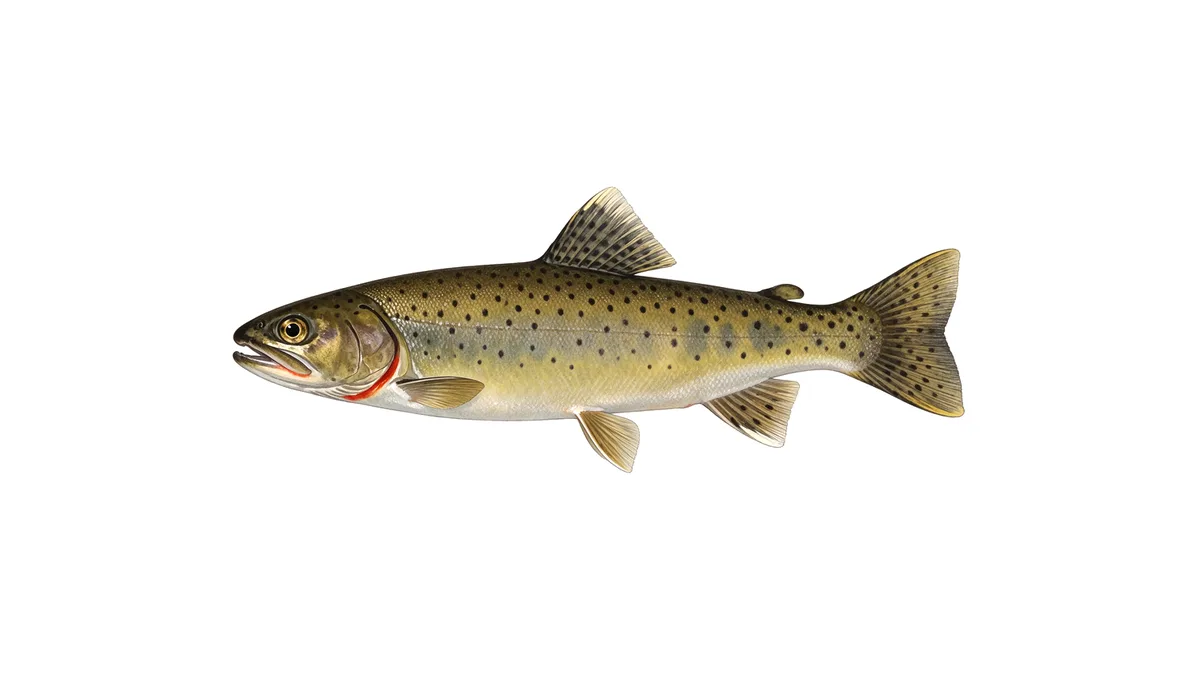
| Cutthroat trout | Large, obvious teeth on the tongue, where a rainbow trout's tongue teeth are fine and small |
Is It Dangerous?
No. Rainbow trout aren't venomous, and they won't hurt you. They carry fine teeth on the tongue—small, nothing like a cutthroat's—and the real caution is about the fish, not you: a rainbow trout played out in water above 70°F is badly stressed and may not survive release. When summer water warms, land fish fast and keep them wet.
Where Do Rainbow Trout Live? Rainbow Trout Habitat and Range
Rainbow trout are native to Pacific-coast drainages, from Kodiak Island in Alaska south to Baja California, reaching inland through the Columbia and Snake river systems into Idaho and the Montana Rockies. Because they hatch easily in hatcheries and grow fast, they've been stocked across nearly every state since the late 1800s. Today they're found in 49 states. The West holds wild, self-sustaining populations; most fisheries in the Midwest, South, and East run on stocked fish.
The famous water reads like a bucket list. Montana's Madison and Yellowstone rivers, Idaho's Henry's Fork, Oregon's Deschutes, New Mexico's San Juan, the White River tailwaters of Arkansas and Missouri (including Lake Taneycomo), and the Great Lakes tributaries of Michigan and New York all carry reputations.
In a river, rainbow trout hold where current meets cover. Riffles, pocket water behind boulders, undercut banks, and pool heads are classic lies. Anglers break river lies into seven types: riffle tail, pool head, deep hole, current seam, eddy, undercut bank, and boulder or logjam. In lakes, look to the thermocline, stream inlets, springs, and points. In a freshly stocked pond, the fish cruise the whole pond for the first few weeks, then settle near the deepest cover and the inlet.
Rainbow Trout Behavior
Rainbow trout are coldwater fish that need high dissolved oxygen. They're most active between 50 and 65°F, with a peak in the 55–65°F range. From 65 to 70°F they slow down and retreat to deep pools, shade, and fast current. Above 70°F they're stressed and barely feed; 75–77°F is lethal.
They live in the current. In a stream, a rainbow trout holds near moving water—riffles, runs, pool heads—and rarely sits in slack water. Feeding is ambush-style: the fish holds one spot and lets the current deliver food, darting out only when something drifts past. That habit is why riffle tails, pool heads, seams, and eddies are such reliable spots.
What Do Rainbow Trout Eat?
Rainbow trout are opportunistic. The menu runs from mayflies, caddisflies, stoneflies, and midges (in every life stage) to terrestrial insects like grasshoppers, ants, beetles, and crickets that blow onto the water. They take small fish—minnows, sculpins, juvenile trout—as well as fish eggs, crustaceans like scuds, crayfish, and freshwater shrimp, and zooplankton.
The menu scales with the fish. A 6-inch stocker works midges and zooplankton. A 14-inch river fish eats nymphs, mayflies, and the occasional minnow. A 20-inch trophy hunts baitfish and sculpins—and has been known to take a mouse.
When Do Rainbow Trout Spawn?
Most rainbow trout spawn in spring, roughly March through June, once water temperatures climb through the mid-40s°F. The female digs a redd in clean gravel while males compete for position beside her. Some tailwater populations below dams spawn in fall or winter instead. Great Lakes steelhead run upstream in fall and spawn the following spring—check your state for season specifics.
The seasonal rhythm shapes the fishing. Spring fish are at their most aggressive around the spawn. Summer pushes feeding to dawn and dusk, with fish holding deep and shaded through the day. Fall brings a pre-winter feeding binge, and Great Lakes steelhead move upriver. Winter is slow—fish at 35–45°F take small baits fished deep and slow—but stocked lakes and tailwaters still produce.
Size and Regulations: How Big Do Rainbow Trout Get?
Most stocked rainbow trout run 8–12 in and 0.5–2 lb. Wild river fish average 12–18 in, and a 20-inch fish is a genuine trophy in most streams. Put-and-take lakes grow fish to 10–14 in within a year or two, while fertile streams hold wild fish of 16–20 in. Great Lakes and big-tailwater steelhead and lake fish commonly run 8–12 lb, with 15 lb-plus fish caught every year.
In most states, 5 lb counts as a trophy and 10 lb is a once-in-a-lifetime fish. The biggest American rainbow trout come from the Great Lakes (as steelhead), Alaska, and large western lakes.
World Record Rainbow Trout
The IGFA all-tackle world record rainbow trout weighed 48 lb, caught by Sean Konrad in 2009 at Lake Diefenbaker in Saskatchewan, Canada.
Lifespan runs 4–6 years for most fish; stocked fish rarely live past 2–3 years, wild fish commonly reach 5–7, and the longest on record is 11 years. Warm water changes everything: above 70°F the fish are stressed and nearly stop feeding, and many rivers close or restrict trout fishing as temperatures approach 75–77°F. On big lakes and tailwaters, large fish can accumulate contaminants, so check local consumption advisories before keeping one—and many anglers release their trophy fish anyway.
Size limits, bag limits, open seasons, and license requirements all differ by state. Regulations vary by state—always check your local rules before you fish.
Frequently Asked Questions
What's the best bait for rainbow trout?
Small spinners, spoons, and tiny jigs cover most situations, especially on stocked ponds and lakes. When you want to match a river hatch, reach for imitations of mayflies, caddisflies, stoneflies, and midges; for bigger fish, fish dark streamers or large baits slow. Summer terrestrials—grasshoppers, ants, beetles—are hard to beat when the hatch is on.
How long do rainbow trout live?
Most live 4–6 years. Stocked fish in put-and-take waters rarely survive past 2–3 years. Wild fish commonly reach 5–7 years, and the longest-lived rainbow trout on record made it to 11 years.
Do rainbow trout bite at night?
Yes—especially big rainbows and steelhead. Summer nights are prime time for large lake fish and river trophies, with dark streamers or large baits retrieved slowly. In daylight, hatch windows and the low light of dawn and dusk are most effective.
Why do rainbow trout jump?
Two reasons. One, they're chasing emerging insects during a hatch. Two, they're trying to shake the hook—the classic tail-walk. A hooked rainbow often jumps three to five times, which is exactly why light tackle and sharp hooks matter.
Can you eat stocked rainbow trout?
Yes—stocked trout are the backbone of American trout on the table. Hatchery fish eat pellets, so the meat runs whiter and milder, but they cook up the same. Check your local consumption advisory and keep only what you'll eat.
What's the best time of day to fish for rainbow trout?
The two hours after sunrise and the two hours before sunset are the most reliable. A falling barometer before a storm can extend the bite all day, while clear high-pressure days usually leave only dawn and dusk. During summer hatches, evenings around 6–9 pm light up the surface.
Do I need a fly rod for rainbow trout?
No. Spinning gear often out-produces the fly rod on stocked ponds and lakes. Four-to-six-pound line with a small spinner, spoon, or bait is all you need. Reach for the fly rod when you want to match a specific river insect hatch.
Do rainbow trout bite in winter?
Yes, but slowly. Cold water drops their metabolism, so fish small offerings—1/32 oz jigs, midge nymphs, small baits—on the bottom with long pauses. Plenty of stocked lakes and tailwaters fish well through winter.
Related Articles
- Rainbow Trout Fishing: How to Catch Them
- Best Baits and Lures for Trout
- Brown Trout Species Guide
- Brook Trout Species Guide
- Cutthroat Trout Species Guide
- Steelhead Fishing Guide
- Where Trout Hold in a River
Ready to catch one? Read our step-by-step guide: How to Catch Rainbow Trout.
About the author and how this was tested
About the author
FishermanGuy
Bank, boat and kayak angler · fishing, crabbing and shrimping since 2021
I buy the gear, fish it for a season and write down what failed. No sponsored verdicts, no free-sample flattery. Every rig on this page has landed fish in water I can point at on a map.
How this was tested
- Every rig gets at least six trips on the same water before it is published.
- Gear is bought at retail. Free samples are labelled in the first paragraph.
- Dates show first publication and the last time the page was updated.