Field notes
Largemouth Bass: Identification, Habitat & Diet
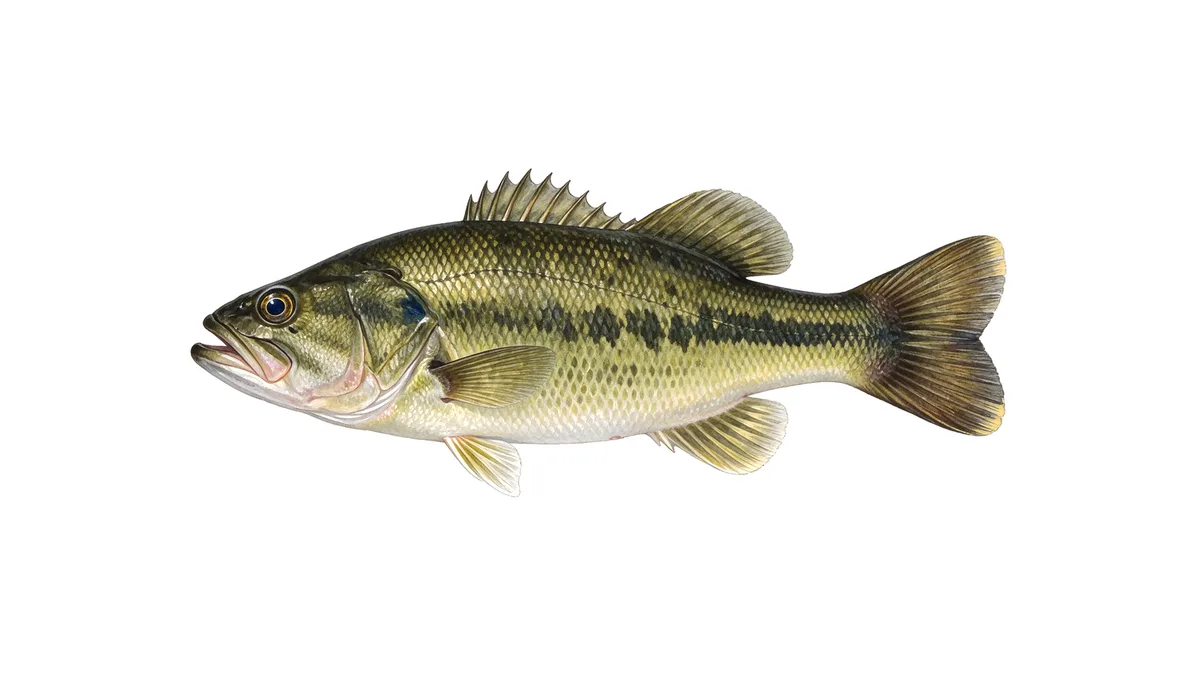
Largemouth Bass: Identification, Habitat & Diet
The largemouth bass (Micropterus salmoides) is the most popular freshwater game fish in the United States, and it earns that title every time it blows up on a topwater lure. No other fish gets chased by as many anglers, in as many kinds of water, as the largemouth bass does — from a half-acre farm pond to a sprawling Southern reservoir, this fish is almost always within casting distance of somebody.
The appeal is the whole package. A largemouth bass is aggressive, it's everywhere, and it grows big enough to leave your hands shaking. This largemouth bass guide runs through how to identify one, the bass habitat it prefers, what do bass eat, and when you have the best odds of hooking a genuine giant.
Largemouth Bass Quick Facts
| Scientific name | Micropterus salmoides |
| Common names | Largemouth bass (often shortened to "largemouth") |
| Typical size | Adults typically 12–20 in and 1–5 lb; most fish caught run 1–3 lb |
| Water | Freshwater — lakes, ponds, slow-moving rivers |
| Difficulty | Not rated by the source; an aggressive striker that takes lures, bait, and flies |
| Best season | Spring — spawning males guard nests and strike at nearly anything nearby |
How to Identify a Largemouth Bass
Three features nail the identification almost every time.
First, the body. A largemouth bass is deep-bodied and colored green to olive, with a dark horizontal stripe running down each flank that breaks into blotches toward the tail. The stripe is the first thing most people notice, but it isn't the field mark you should trust most.
That honor goes to the jaw. On a largemouth bass, the upper jaw extends past the rear edge of the eye when the mouth is closed. This is the single most reliable feature for separating it from its close relatives, and it's the reason the fish earned the "largemouth" name.
Third, look at the dorsal fin. There's a deep notch between the spiny front portion and the soft-rayed back portion — the two sections are almost separate fins. Combine that notch with the long jaw and the dark broken stripe, and you have a positive ID.
Largemouth Bass vs Smallmouth Bass (and Spotted Bass)
Anglers confuse these three constantly, especially when a small largemouth shows up next to a big smallmouth. Here's how they stack up.
| Species | Key differences |
|---|---|
| Smallmouth bass | Jaw ends at or before the eye; bronze to brown body with vertical bars instead of a horizontal stripe; shallow dorsal notch; adults typically 10–18 in and 1–3 lb |
| Spotted bass (Micropterus punctulatus) | Small tooth patch on the tongue; lateral stripe breaks up even more distinctly; routinely mistaken for a small largemouth |
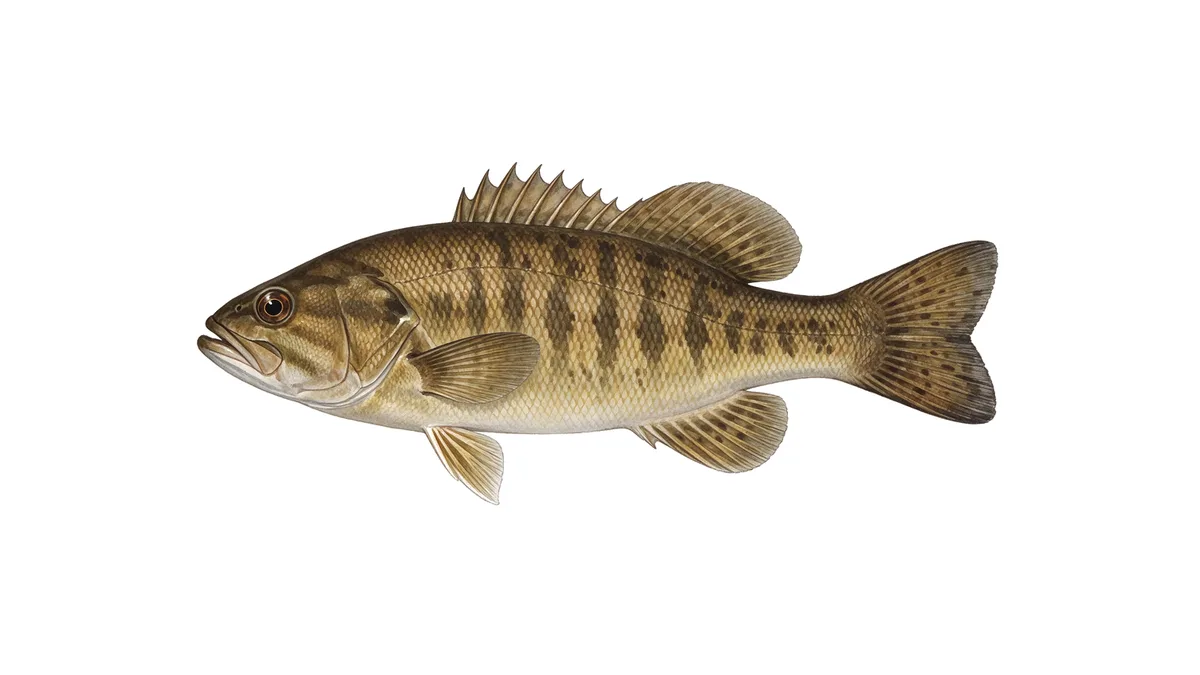
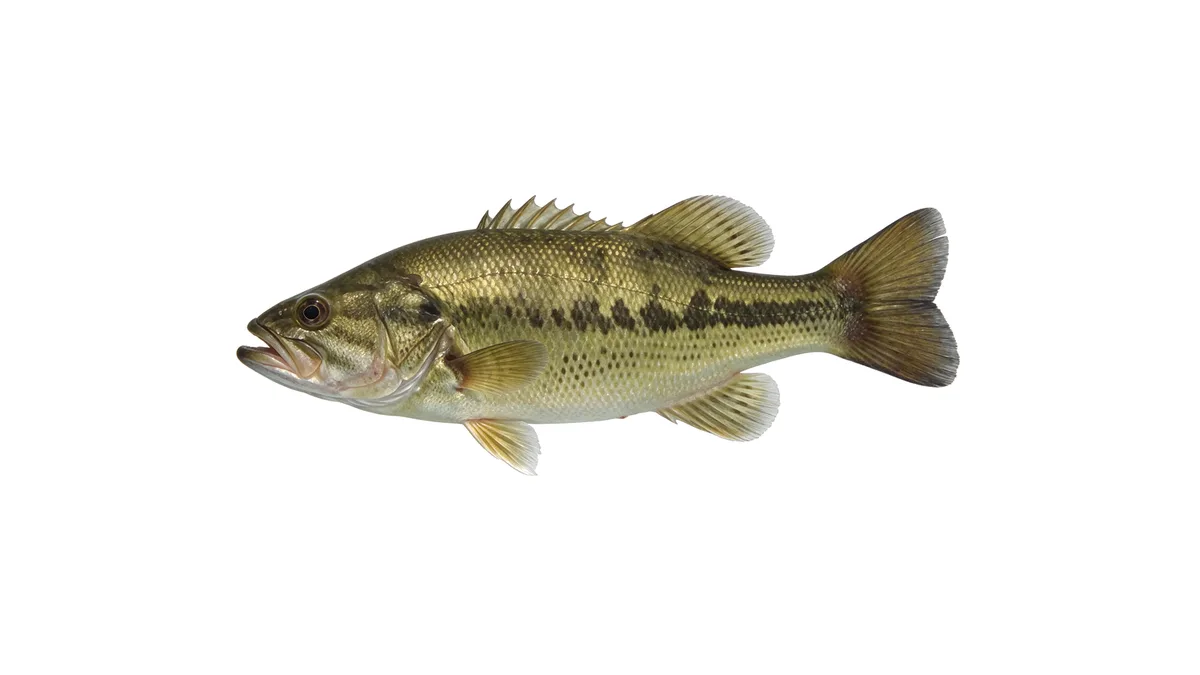
The jaw is the tiebreaker. If the jaw runs well past the eye, you're holding a largemouth bass.
Where Do Largemouth Bass Live? Bass Habitat and Range
Largemouth bass are native to the Mississippi River basin, the southeastern United States, and the East Coast, ranging from Florida up to the Great Lakes. After more than a century of stocking, that range now covers all 48 contiguous states plus Hawaii — every state except Alaska holds largemouth bass.
The bass habitat they prefer is warm, shallow, and full of cover. These fish are structure-oriented to a degree that shapes every casting decision you'll make. The classic spots include weed lines and lily pads, sunken wood and laydowns, docks, piers, and boathouses, rock piles and riprap, points, underwater humps, and drop-offs, plus brush piles and artificial reefs. The general rule that ties it all together: thick structure in 3–15 ft of water is the strike zone.
In rivers, largemouth bass tuck behind current breaks — behind boulders, in eddies, under undercut banks, and in deep holes where the water slows down.
Some waters are famous for a reason. Texas holds Lake Fork, Sam Rayburn, and Falcon; Florida has the Kissimmee chain and Lake Okeechobee; California offers Castaic, Lake Dixon, and Clear Lake; Georgia's Montgomery Lake produced a world record; and the lakes of Minnesota, Wisconsin, and Michigan round out the northern trophy scene.
Behavior: What Do Bass Eat and When They Bite
A largemouth bass is an ambush predator. It doesn't chase bait across open water. It hugs cover and explodes on whatever swims past. That single fact explains where they sit, when they feed, and how you should fish for them.
They're most active at dawn, at dusk, and on overcast days. Under bright midday sun, a largemouth bass drops deep or buries itself in cover. In summer, fishing big dark baits at night is a proven way to target the largest fish in the lake.
Water temperature drives everything else:
- Below 45°F: sluggish, deep, barely feeding.
- 45–55°F: pre-spawn, sliding up onto the shallows.
- 55–65°F: preparing to spawn; at around 60°F, males start building nests in 1–6 ft of water.
- 65–78°F: peak feeding — the best window of the year.
- 78–85°F: feeding only at dawn and dusk, holding deep at midday.
- Above 85°F: stressed, retreating to deeper, oxygen-rich water.
Best Time to Catch Largemouth Bass
For most waters, spring wins outright. During the spawn, males guard nests and attack anything that comes close, which makes largemouth bass the easiest to catch — and the most likely to produce a big fish — of any time of year. Dawn, dusk, and overcast days deliver all season long, and summer nights belong to the big ones.
Largemouth Bass Spawning Season
The spawn unfolds in stages. Pre-spawn fish move shallow at 45–55°F, nest-building begins around 60°F, and males hold those nests in 1–6 ft of water until the fry leave. Because guarding males strike so aggressively, responsible anglers release spawning fish to protect the next generation.
What Do Bass Eat?
The menu shifts with size and season. Crayfish, baitfish like threadfin and gizzard shad, and sunfish like bluegill form the core diet. Frogs show up in summer. Young bass eat insects. Trophy fish occasionally take mice, ducklings, and snakes, and worms and leeches matter more in rivers and small ponds.
The scaling is clean enough to remember: a 1-lb bass eats insects and small shad, a 5-lb bass eats bluegill and crayfish, and a 10-lb bass eats whatever it can fit in its mouth. On summer nights, big bass move shallow and feed on shad, bluegill, and frogs.
One more habit worth exploiting: catch a bass from a piece of cover, and the same spot will often give up another. Revisit it the same day.
Size and Regulations: How Big Do Largemouth Bass Get?
A typical largemouth bass runs 12–20 in and 1–5 lb. Most fish that come over the rail weigh 1–3 lb and measure 12–18 in. A 4–6 lb fish is a solid catch. In most states, 8+ lb earns "trophy" status, and 10 lb is the "double-digit" milestone every bass angler chases. These figures are general — check your state's fish records for local expectations.
World Record Largemouth Bass
The recognized IGFA world record is 22 lb 4 oz, caught by George Perry in 1932 at Montgomery Lake, Georgia. That fish has stood for nearly a century. California's reported state record is 21.7 lb, taken from Lake Dixon in 2006; a 21.76-lb fish caught at Castaic Lake in 1990 was never certified because the scale wasn't. Florida's record sits at 17.27 lb, caught by Billy O'Berry in Polk County in 1986. State records change, so check your state's current list before you measure any catch against it.
How Big Do Largemouth Bass Get?
Growth depends on latitude. In southern waters, a bass can reach 12–15 in in 3–4 years and add 1–2 lb a year. Northern fish grow slower but live longer. Wild largemouth bass live 10–16 years, with the oldest individuals in the north; the longest-lived on record reached 23 years.
On regulations: size limits, bag limits, seasons, and license requirements vary by state, always check your local rules. Some states also restrict or ban certain live baits, including live bluegill and crayfish, so confirm before you rig one up. For the table, 1–3 lb fish from clean water are best; fish over 5 lb and warm-water summer fish can taste muddy, and you should check local consumption advisories.
Frequently Asked Questions
What's the best bait for largemouth bass?
A Texas-rigged soft plastic worm is the historical standard, followed by jigs, spinnerbaits, crankbaits, and topwater frogs. Live shiners, bluegill, and crayfish also produce, and many anglers carry both live bait and lures.
How long do largemouth bass live?
Wild largemouth bass typically live 10–16 years, with northern fish living longest. The oldest on record reached 23 years.
Where do largemouth bass hide in a lake?
Around grass beds, sunken wood, docks, brush piles, and drop-offs. Any structure sitting in 3–15 ft of water is a potential ambush point.
Can you eat largemouth bass?
Yes. One- to 3-lb fish from clean water taste best. Bigger fish and summer-caught warm-water fish can go muddy, and many anglers release their catch to protect the fishery. Check local consumption advisories before keeping fish.
Do largemouth bass bite at night?
They do. In summer, big bass are often more active at night, especially in shallow cover, and dark baits like black buzzbaits and jigs are the standard answer.
How do you set the hook on a soft plastic?
Don't strike on the first light tap. Wait until you feel the weight of the fish, reel down to take up slack, then swing hard to the side. A Texas rig buries the hook point in the plastic, so you need real force to drive it through.
How deep are bass in summer?
Under bright daytime sun, largemouth bass often hold 10–20 ft down on deep structure like points, drop-offs, and old creek channels. They move shallow to feed at dawn, dusk, and night.
Do you need a boat to catch largemouth bass?
No. Shore fishing reaches docks, weed lines, and laydowns, and plenty of big bass live within casting distance of the bank.
Related Articles
- Largemouth Bass vs Smallmouth Bass: Full Comparison
- Best Bait for Largemouth Bass
- When Do Largemouth Bass Spawn?
- Smallmouth Bass Species Guide
- Spotted Bass Species Guide
Ready to catch one? Read our step-by-step guide: How to Catch Largemouth Bass.
About the author and how this was tested
About the author
FishermanGuy
Bank, boat and kayak angler · fishing, crabbing and shrimping since 2021
I buy the gear, fish it for a season and write down what failed. No sponsored verdicts, no free-sample flattery. Every rig on this page has landed fish in water I can point at on a map.
How this was tested
- Every rig gets at least six trips on the same water before it is published.
- Gear is bought at retail. Free samples are labelled in the first paragraph.
- Dates show first publication and the last time the page was updated.